
Opinion
Why ASUU Strike Persists

Picking my pen to write this article, a question flashed in my head, “but how many times will you write about ASUU strike?” Indeed, there is hardly any year in recent times that I have not poured out my heart on the persistent industrial action by the Academic Staff Union of Universities (ASUU). And I wish I could help not commenting on that; but as long as the strike action continues to take a toll on Nigerian students and their parents, we will continue to write, hoping that the authority and the university lecturers would listen, reason and resolve their issues once and for all in the interest of the students, their parents and the nation.
The other day, a friend came to me fuming after she was told that the school fees for medical students in a private university where she was seeking admission for her son was N7 million per semester. To her, it was incomprehensible and she queried, “What is the big deal about the private university? How can they charge N7 million for a semester while in federal universities you may not even pay up to N200,000.00 for the same course in a semester? Is it that when these children graduate as medical doctors a special preference will be given to those that attended private schools in terms of employment, salary and other welfare packages or what?”
It is hard to see anybody that schooled in the country in the past four decades or even more that did not witness one ASUU strike or another. Between 1999 and now, not less than 15 strikes have been initiated and each time the reasons are the same: poor funding of Nigerian universities, government reneging on its previous promises to the body and many more.
Not surprisingly, the ongoing one-month warning strike by the varsity lecturers is toeing the same line. The union is protesting the government’s failure to fulfil some of the agreements it reached with it to suspend its last strike in 2020. Some of their demands are funding for revitalisation of public universities, earned academic allowances, University Transparency Accountability Solution (UTAS); promotion arrears, renegotiation of 2009 ASUU-FGN Agreement, and the inconsistencies in Integrated Payroll and Personnel Information System (IPPIS) payment format.
ASUU strikes and agreements with the government have come a long way. The agreements, according to the union, started from 1981, 1982, 1999 to 2001, till date. In all these years, agreements that addressed salient areas concerning the welfare of lecturers and the education sector were signed. But painfully, one of the parties, the Federal Government, would always fail to implement these agreements which has been largely blamed for the instability in the tertiary education sector in the country.
Why the government would enter into an agreement with a group and fail to fulfil same is what many do not understand. Again, why should the government wait for labour unions to down tools before giving listening ears to their demands? What about nipping the situation in the bud? Is the ability of a government to honour its words not what makes such a government responsible? When will the federal government learn to fulfil whatever agreement it entered into with labour unions so as to save the country from sufferings and hardships occasioned by incessant strikes?
Coming from a university town, I know exactly how the strikes impact negatively on the economic life of not only the university community but the entire university town. Many of these people can barely eat or take care of their other needs at strike periods like this.
What about the students, the main victims of ASUU versus federal government showdowns? Reports say, the National Association of Nigerian Students (NANS) has threatened to embark on mass protests across the country, particularly in Abuja, the Federal Capital Territory, to demand an end to the incessant industrial action by ASUU. The leadership of the union said they do not care whose shoulders the blame lies; all they want is that the impasse be resolved so that they can go back to school.
Do we really blame the students? Their colleagues in private and some state-owned universities are in schools learning and they are forced to stay at home for one month or beyond if care is not taken. Each time we complain over the poor quality of graduates produced from Nigerian universities without reasoning that these graduates were not properly groomed. Many of them spent half of their school years at home due to one ASUU strike or the other.
Today, many lament over the high number of Nigerian students in foreign universities. But I wonder which parents who can afford to send their children to schools abroad for quality education will fail to do so going by the back and forth nature of Nigeria’s education system? No parent is happy when a child is forced to spend six years over a four-year course because the school system is constantly disrupted by strike actions.
The other day, the Minister of Labour and Employment, Dr Chris Ngige, while addressing some stakeholders declared the ongoing strike by ASUU as illegal, describing it as a clear breach of the law and that ASUU did not go through the normal process before embarking on the current industrial action. This is not so relevant at this time. Had the government done what was expected of them, would the lecturers have downed tool?
Of course, we are aware that the government has a lot on their table right now. A lot of things are competing for the available resources, but education should be among the top priorities. When you compare the amount budgeted for education, health and other key sectors of the economy to the amount voted for elections and politics you will just know clearly where the interest of our leaders lie and it is so unfortunate. “An investment in education always pays the highest returns”, says Benjamin Franklin.
We cannot expect things to be better except government, at all levels, begin to take the right steps at the right time. Federal government and lecturers, who are primary enforcers in the tertiary education system, should put an end to the age-long bickering, realising that their actions or inactions leave a negative imprint on their direct subject, the students. As the saying goes, when two elephants are fighting, the grass suffers. Governments at all levels should be more sensitive to the plight of workers. The welfare of workers should be the top priority of any responsible government.
By: Calista Ezeaku



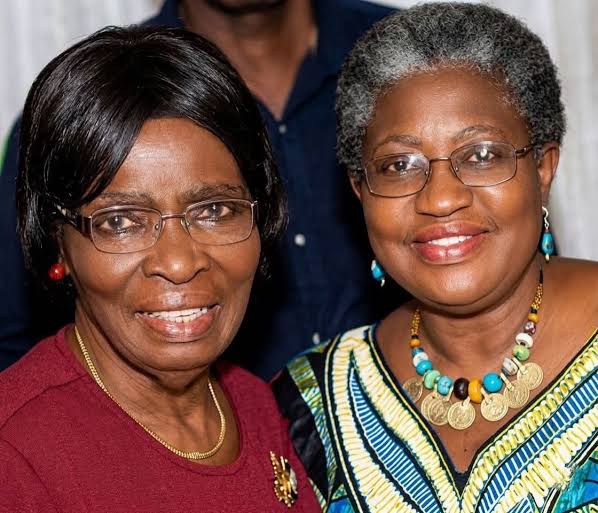
Quote “Professor Kamene Okonjo
Some women leave behind more t
Yet, to remember Professor Kam
Professor Okonjo was the belov
one of the most dramatic chapt
On December 14, 2012, the then
She leaves behind children, gr
Professor Kamene Okonjo deserv
By: Sylvia ThankGod-Amadi

Quote: An African who invokes
This is the concluding part
… Given the fact that I was
At the end of the visit by the
Back to my apartment, at abo
Under normal circumstances, yo
That all she asks is that Chie
For some reason that I do not
I believe that everyone in hu
Our ancestors have not gone fa
By: Jason Osai
The Federal Government’s approval of a N70,000 monthly transport intervention for public service workers for six months, beginning in November 2026, offers hope to employees struggling with the rising cost of living. The agreement with the Nigeria Labour Congress (NLC), reached at a conciliation meeting in Abuja on October 27, is intended to cushion transport costs and ease pressure on workers’ incomes. But for public servants in Rivers State, it raises a familiar question: will the State Government key into the intervention and ensure that its workers benefit? The agreement provides for N70,000 monthly across all levels, for six months. The Federal Government also approved peculiar allowance arrears effective from May 1, 2026, to be paid in three equal instalments beginning in November.
The parties agreed to reconvene after one month to assess implementation. Ultimately, the value of these resolutions will be measured not by announcements but by whether eligible workers receive the money. Transport costs consume a substantial share of many civil servants’ earnings before they can meet household needs. Support for commuting is therefore not a luxury or political favour; it is temporary assistance to help workers remain at their jobs without sinking further into hardship. For lower-paid employees, transport costs can turn modest salaries into a daily exercise in difficult choices and sacrifice.
The agreement also urges State and Local Governments to participate and unions to press for implementation. The federal agreement does not automatically guarantee that every State and Local Government employee will receive the support. State authorities must clarify how it will apply to their workforce, make the necessary arrangements and publish a payment timetable. Rivers State must approach the arrangement with urgency and transparency. The Government should State whether it will implement the intervention and when payments will begin. Any administrative or financial question should be addressed promptly with organised labour, not allowed to become excuses for delay.
The concern is sharpened by the earlier N35,000 monthly wage award introduced by the Federal Government in 2023 after petrol subsidy removal. It was intended as temporary relief pending a new national minimum wage. While several States negotiated and paid wage awards or related sums, implementation nationwide was uneven. Reports in 2024 indicated that many States had failed to pay the federal award, while others provided different amounts. In Rivers, labour and media reports raised concerns about implementation of the N35,000 award for State workers, amid separate announcements and arrangements concerning Local Government employees.
The wage award was meant to ease the immediate effects of subsidy removal, yet workers faced uncertainty over whether the promised relief would reach them. In February 2024, the Rivers State Government announced approval of the N35,000 award for local government workers, but subsequent reports showed that implementation across worker categories remained a concern. The lesson is clear: approval and implementation are not the same. A declaration at a meeting offers little comfort to a worker whose account does not reflect the promised payment. For workers who travel to their offices daily, the implications of delayed support are significant. Transportation expenses compete with food, rent, school fees, healthcare and other essential household needs.
As fares rise, employees may be forced to reduce spending on necessities or borrow to sustain their families. A timely transport intervention would therefore provide practical relief and demonstrate that government understands the economic pressures confronting its workforce. Its temporary nature makes prompt implementation even more important. It is fair to acknowledge that this transport intervention is a new agreement and that its administrative details may require clarification. Rivers State should not be condemned in advance for a failure that has not occurred. Nevertheless, the earlier experience gives workers legitimate grounds to seek assurances before the November commencement date. The State should avoid allowing uncertainty to persist until workers begin asking why the promised assistance has not arrived.
The NLC and unions in Rivers State should engage the State Government immediately and seek a written commitment, an implementation plan and a process for reporting missed payments. If clarification from the Federal Government is needed, the State should seek it without abandoning the goal of providing relief. Labour leaders must also keep members informed about progress and insist that any agreed arrangements are applied fairly and transparently. The Rivers State Government should treat this intervention as an opportunity to rebuild confidence. Timely support would show that workers’ welfare is more than a talking point and that the State recognises the economic realities confronting its employees.
Silence, delay or selective implementation, by contrast, would revive frustration over earlier relief measures and weaken trust between government and labour. Every month lost to administrative delay leaves workers facing the same transport burden without the intended assistance. The State should consult labour, publish arrangements and pay eligible workers on time. Rivers workers should not have to wonder whether federal relief will reach them. The Federal Government has announced the support; now the State must make its position clear. We hope the N70,000 monthly transport intervention will not follow the troubling path of the earlier wage award. Rivers State should learn from that experience and ensure that this time, relief is not merely promised but delivered.
Sylvia ThankGod-Amadi
-
Rivers2 days ago
NUJ Set To Attend UNIPORT’s 217th Inaugural Lecture
-
 News2 days ago
NJC Suspends Three Judges, Sanctions Eight Others
-
Politics2 days ago
Atiku Kicks-Off 2027 Campaign, Promises To Tackle Nigeria’s Challenges
-
 Featured2 days ago
APC Presidential Campaign Storms PH, ‘Morrow
-
News2 days ago
FG Explains Supply Disruption As Power Generation Drops To 3,659MW
-
Metro2 days ago
Port Harcourt Prepares For 10,000 Runners As International Marathon Returns
-
 News2 days ago
Bille Gas Leak: Coalition Tasks FG On Proactive Measures
-

 News2 days ago
IGP Orders Arrest, Prosecution Of Campaign Billboard Vandals