
Editorial
Task Before Eguavoen, Amuneke

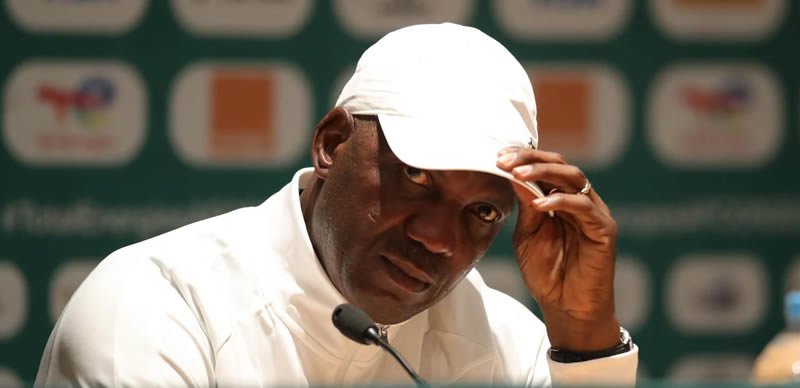
Few days ago, the football ruling body in Nigeria, Nigeria Football Federation (NFF) confirmed the duo of ex-
internationals, Austin Eguavoen and Emmanuel Amuneke as substantive technical heads of the national team, Super Eagles. This followed the not-so- successful outing of the national team under the tutelage of Eguavoen in interim capacity at the recently concluded 33rd edition of the African Cup of Nations ( AFCON) tagged Cameroon 2021, and the failed attempt to engage Portuguese tactician, Jose Peseiro. While Eguavoen remains the Technical Adviser and Head of the coaching crew, Amuneke was drafted as the coach.
At the Cameroon 2021 Championship, Eguavoen and the Super Eagles, after flying off the blocks in impressive fashion ended up flattering to deceive. They won all their group matches to raise the expectations of not only Nigerians but their fans across the globe. But the Eagles came unstuck in the very first knock out stage and game against their counterparts from Tunisia.
That is why, we think that the combination of Eguavoen and Amuneke could not have come at a better time, especially as the final qualifying matches for Qatar 2022 World Cup looms by the corner. Indeed, the Super Eagles team, as presently constituted, boasts of young and enterprising talents that have the potential to become world beaters, if only technically and tactically sound minds could work to weave their talents into a consistent formidable unit in the field of play.
We are glad that the new gaffers played the game to the highest level and have proved themselves as technical managers with relative successes. Both played professional club football with reputable sides in Europe, played for the national team and won the Nations Cup in 1994, with Amuneke also winning the Olympic football gold medal in 1996.
As coaches, both have some cognate experience to fall back on. While Eguavoen has been in the saddle of the Super Eagles before now and has the record as the only coach to have seen the team eke out perfect record in group matches as the AFCON in more than one edition, the recent disappointment of Cameroon 2021 should be handy. Amuneke, on his part, has brought world youth football glory to the country as an assistant and substantive coach of the Golden Eaglets in 2013 and 2015. He also broke new grounds, leading the Taifa Stars of Tanzania to their second African Cup of Nations outing in 2019, 39 years after their debut outing in 1980.
Now, therefore, we think is the time for both coaches to bring their experiences to bear on the national team and steer it to greater height and glory, beginning with the momentous two-legged encounters with neighbours and archrivals, Ghana, next month. The Black Stars of Ghana are the last hurdle between Nigeria and an appearance at the next mundial and qualifying for the biggest football rendezvous in the world is non-negotiable. It is indeed an acid test for the Eagles’ handlers and inkling into what their tenure holds for the national team and Nigeria.
We expect Eguavoen and Amuneke to close ranks and work with mutual respect and unity of purpose to ensure that their names are not only written in gold but serve as positive milestones for indigenous coaches in their quest for opportunities in the continent and beyond. These we believe are achievable with clearly stated goals, programmes and methods, which should have long, medium and short term strategies.
Over the years, it is on record that the NFF tended to treat indigenous coaches with less respect than their expatriate counterparts. While we are not encouraging confrontational attitude or insubordination, we expect that, as professionals, the coaches have a clear contract with stipulated rule of engagement in place in order to avoid the cataclysmic developments that have inundated past arrangements.
Being ex-players, Eguavoen and Amuneke must be ready to enforce discipline in the Super Eagles without being unduly high handed in order to have and maintain a peaceful dressing room. In fact, the onus lies on the coaches to provide leadership and act as role models for the players, without hesitating to whip into line any one that steps out of order, no matter his status in the team.
Hassan Shehata, who won multiple Nations Cup title for Egypt, Djamel Belmadi of Algeria, who led Algeria to the title at the penultimate AFCON, our own late Stephen Keshi, who won with the Super Eagles in 2013 and Aliou Cisse, coach of current AFCON Champions, Teranga Lions of Senegal are some examples of indigenous coaches to have led their countries to glory. Taking some leaves off their books, especially, Cisse, who stuck to his beliefs and methods to finally achieve with Senegal, would not be a bad idea. The duo should strive to be shining examples of ideal local coaches with capacity.
Apart from a healthy working relationship between both men on and off the field, we demand fair and firm disposition from them in scouting, selecting and fielding players for the national team. The practice of favouritism or double standard should not find room in the choice of personnel to prosecute one match or another. Also, some Nigerian coaches have in the recent past run foul of FIFA rules and stand against corruption, match-fixing and other forms of bribery, Eguavoen and Amuneke must at all times maintain high moral grounds against any matter that may blemish their integrity.
The two coaches will, at the end of the day be judged by how far they would have taken the national team to the next level and their ability to identify, wean and integrate new players to the Super Eagles. We, therefore, think that while going for the best legs to represent the country in the national teams, products of the domestic league must not be forgotten players from the Nigerian Professional Football League, (NPFL) should not be outrightly dismissed as second class players but ought to be given ample opportunities to prove themselves among the litany of usually favoured foreign- based counterparts.
For sure, Nigerians are looking up to the coaches to bring positive vibes, especially better technical depth, good spirits and undivided commitment to the team. The Super Eagles are being expected to re-enact their exhilarating performances of the past and hopefully hit the form that saw them captivate the world at Tunisia ’94 AFCON and the FIFA World Cup of 1994 in the United States of America.
As the country looks to be part of the party come Qatar 2022 World Cup, Eguavoen and Amuneke must make a loud and clear statement of intent with the upcoming final qualifiers against the Black Stars of Ghana in March.



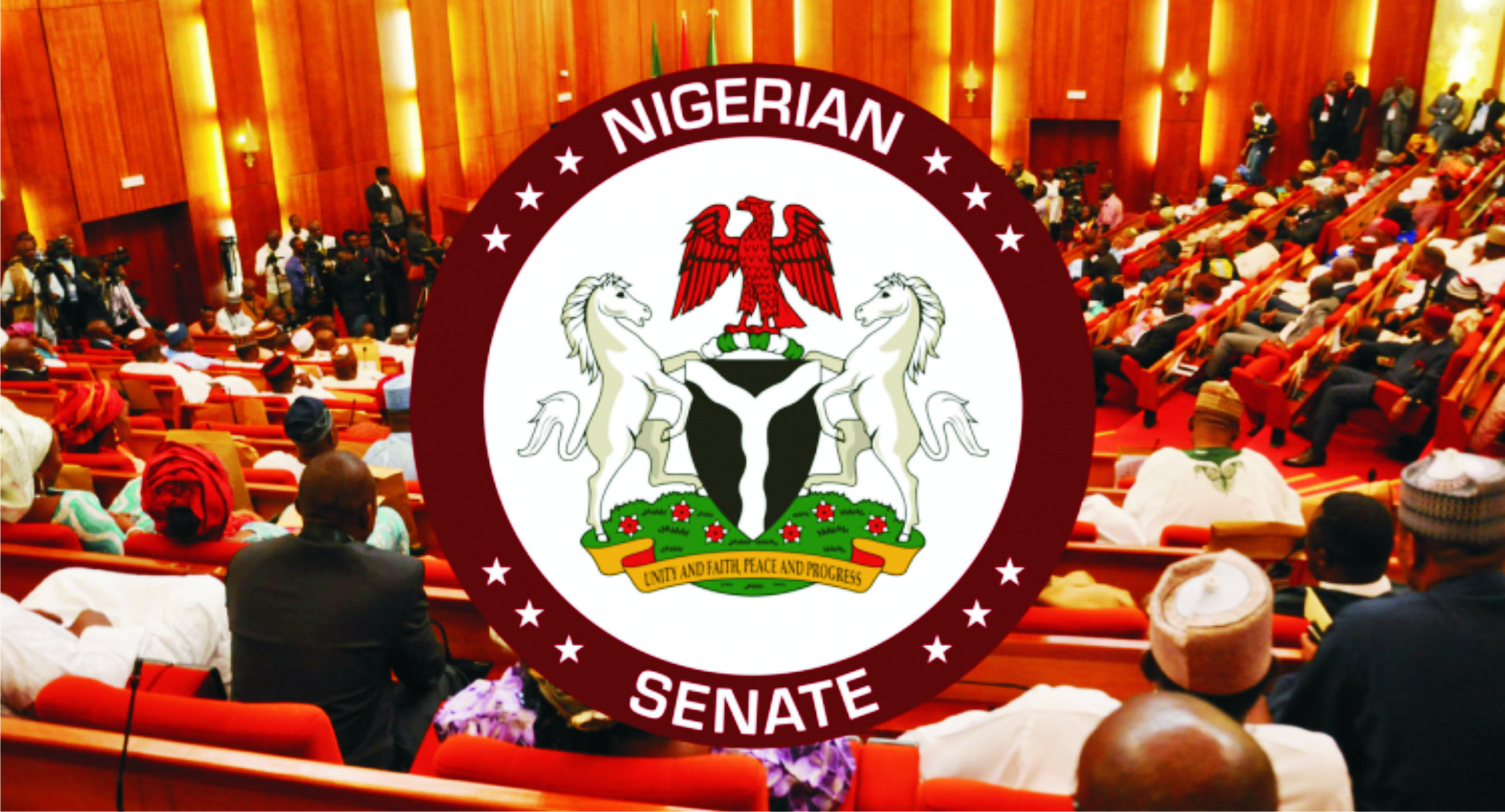
There are moments in the life of a legislature when plain speaking becomes a public service. Senator Adams Oshiomhole provided such a moment on the floor of the Senate when he accused the Minister of Works, Senator David Umahi, of manifestly neglecting critical federal arteries in Edo and Delta States, and implored his colleagues to prevail on the Minister to adopt a more equitable and genuinely national approach to road infrastructure delivery. It was blunt, it was uncomfortable, and it was necessary.
The specifics of his complaint deserve restating. Drawing attention to the recent approval of some 20 new road projects despite the parlous state of existing ones, the former Edo State governor lamented that Nigerians cannot travel from Benin to Warri, Benin to Asaba, Benin to Auchi, or Auchi to Okene without encountering severe distress. He alleged a deliberate omission of these corridors from the national budget in the last three years, save for palliative interventions directed by President Bola Tinubu through tax credit arrangements. His question — “What have we done wrong?” — resonates far beyond the chambers of the National Assembly.
We lend our full and unequivocal support to that call. The Auchi-Benin Road, for instance, has been in a deplorable and near-impassable condition for several years, turning what should be a two-hour journey into an all-day ordeal of broken axles, extortionate fares, and despondent commuters. The media have, on multiple occasions, chronicled the suffering of motorists, traders, and students who ply that route. To describe it as a federal road today is to stretch the meaning of the term beyond recognition.
This pattern of sidelining is not confined to Edo or Delta. Even here in Rivers State, the disposition of the Federal Ministry of Works has left much to be desired, particularly along the Eleme axis of the East-West Road. That road, which ought to be a flagship of federal presence in the Niger Delta, has remained in a wretched state for long. Those who use it daily — workers at the Eleme Petrochemical Complex, the two refineries, Onne Port, and the countless ancillary industries — can attest to its deterioration. Work has proceeded in fits and starts without the sustained urgency such a strategic road demands.
The Eleme stretch is not a mere intra-state byway. It is the gateway to the nation’s economic jugular. According to the Federal Ministry of Works and Housing’s 2023 Highway Condition Survey, only about 35 per cent of the country’s 36,000 kilometres of federal roads are rated as being in good or fair condition, with the remainder classified as poor or very poor. The East-West Road, conceived in the 1970s to bind the entire Niger Delta, remains unfinished in critical sections more than four decades after. If it had been treated as a priority, the perennial gridlock, carnage, and economic loss on the Eleme-Refinery junction would have long been consigned to history.
The irony is as painful as it is glaring. The Niger Delta remains the goose that lays the golden eggs. Data from the Nigeria Extractive Industries Transparency Initiative [NEITI 2023 Oil and Gas Audit] show that the region still accounts for over 78 per cent of Nigeria’s federally collected export earnings and about 65 per cent of total government revenue. The National Bureau of Statistics [NBS Foreign Trade Report Q4 2024] similarly confirms that crude oil continues to dominate export receipts. By every metric of equity and economic logic, a region that sustains the national purse deserves first-rate consideration in the allocation of infrastructure, not afterthoughts and tokenism.
Road infrastructure is not largesse to be dispensed by favour; it is the skeleton upon which commerce, cohesion, and citizenship hang. When contracts are concentrated in one geopolitical zone while other zones are left to contend with craters, it erodes trust in the federation itself. The World Bank’s Nigeria Development Update [June 2023] estimated that poor transport connectivity inflates the cost of moving goods by up to 40 per cent and costs the Nigerian economy an estimated $1.5 billion annually in lost man-hours and vehicle maintenance. If we profess to be one country, then equity must be the compass that guides key institutions before any project is executed. Development must spread round, not pool in one place as though other regions do not matter.
There is also a grave security dimension that can no longer be ignored. The deplorable condition of federal roads has become a veritable enabler of criminality. The NBS Crime Experience and Security Perception Survey reported over 2.5 million incidents of kidnapping-related occurrences nationally, with transport workers identifying bad road spots as prime ambush points. When vehicles are forced to crawl at 10 kilometres per hour through failed sections at Auchi, Sapele Road, or Eleme, they become sitting ducks for armed gangs. Fixing bad roads, therefore, is not merely about convenience; it is about safeguarding lives.
By his intervention, Senator Oshiomhole has hit the nail on the head and reminded Minister Umahi of a fundamental constitutional truth: public office is held in trust. The Ministry of Works is not a personal estate where contracts are awarded according to whim or political convenience. It is a national institution funded by the collective resources of Nigerians, including the oil and gas rents from the very communities whose roads are now neglected. The Minister must demonstrate balance, transparency, and a pan-Nigerian outlook in the distribution of projects that impact the daily existence of citizens. Selective neglect breeds suspicion, and suspicion is corrosive at a time when the nation is preaching unity, oneness, equity, and justice.
Consequently, the National Assembly must go beyond rhetoric and assert its oversight powers with vigour. Sections 88 and 89 of the 1999 Constitution [as amended] empower the legislature to investigate and expose any maladministration in the execution of federal projects. If an office holder is not acting rightly, it is the duty of the Senate and the House of Representatives to call him to order. Oversight must not be reduced to budget approval ceremonies; it must translate to field verification, public hearings, and insistence that the Federal Character principle, as enshrined in Section 14(3) of the Constitution, reflects in road awards.
Let the Auchi-Okene, Benin-Warri, Benin-Asaba, and Eleme East-West gangways be restored to motorable dignity. Let priority be given to completing existing, economically vital roads before embarking on new ones. If those who, through their resources, sustain the federation are sidelined in the distribution of tangible dividends, it tells poorly of our nationhood. Bad roads must be fixed, and they must be fixed now, with fairness as the guiding standard.
-

 News2 days ago
RSG Targets Nine Million Residents in Mosquito Net Distribution Campaign
-

 Oil & Energy2 days ago
Aiyedatiwa Signs New Electricity Bill
-

 Maritime2 days ago
Marine Minister Commends President Tinubu On NPERA Bill Assent
-

 Oil & Energy2 days ago
NLNG Commissions Research And Innovation Centre In RSU
-

 News2 days ago
KenPoly Holds Eight Convocations, August 29
-

 News2 days ago
RSG Begins Another Phase of Projects Commissioning Today
-

 News2 days ago
RMAFC Completes Revenue Sharing Review, Proposes New Pay
-

 Maritime2 days ago
NAGAFF Petitions IGP Over Alleged Maritime Police Harassment