
News
I’ll Never Shut Up, You’ve Failed, Ortom Tells Buhari

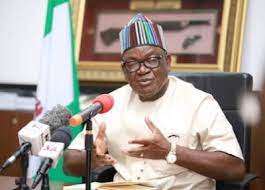
Benue State Governor, Samuel Ortom, yesterday, came hard again on the President MuhammaduBuhari-led Federal Government, accusing it of trying to silence every dissenting voice.
Ortom, who said he would never be cowed, maintained that the All Progressives Congress (APC), government had failed in every indices.
The Benue governor made the assertion in Enugu during an event on organized by the Radio Nigeria chapel of the Nigeria Union of Journalists (NUJ).
He said the government was busy fighting perceived oppositionwhile at the same time looking the other way amid mindless killing and maiming of Nigerians by herdsmen.
Ortom said, “the present administration at the centre has adopted the approach of intimidation of those who dare to voice out their frustrations and concerns over growing insecurity and marginalization.
“But I, Samuel Ortom, will never keep quiet as long as injustice and marginalization prevail in the affairs of our country. I uphold the words of Dr. Martin Luther King Junior when he said and I quote: ‘If peace means accepting second class citizenship, I don’t want it. If peace means keeping my mouth shut in the midst of injustice and evil, I don’t want it. If peace means being complacently adjusted to a deadening status-quo, I don’t want peace. If peace means a willingness to be exploited economically, dominated politically, humiliated and segregated, I don’t want peace.’
Ortom’s full speech read, “It is an honour and delight for me to stand before this august gathering on the invitation of Nigeria Union of Journalists (NUJ), Radio Nigeria, Enugu Chapel, to address you on a very important issue affecting our country.
“I must commend the NUJ, FRCN for also finding me worthy of its esteemed recognition and award. I therefore, bring you warm felicitations and goodwill of the government and people of Benue State.
“This event comes up at a time we face a lot of challenges nationwide. Consequently, the South-East is one of the geo-political zones of this country which have been adversely affected by insecurity in the last couple of years. It is for this reason that the theme for this lecture ‘Emerging Security Situation in the South East: The Place Of Good Governance’ is apt.
“Journalists in this country have been reliable partners with government in ensuring that good governance takes place at the national, state and local government levels. Let me particularly acknowledge the critical role which the Federal Radio Corporation of Nigeria plays in its wide coverage of events with timely, balanced, accurate and objective reports, as well as programmes. This underscores the fact that the Nigerian media has made significant contributions to nation building.
“It is on this note that the current spate of insecurity in different parts of the country places a greater burden on media professionals to do more in assisting security agencies in particular, and the general public with unbiased information that can assist in tackling challenges in this regard.
“The theme of this lecture has posed a serious question on the role of good governance in addressing the security situation in the South-East region. The puzzle that readily comes to mind whenever the issue of security is to be discussed is that of insincerity on the part of the leadership of this country especially at the Federal level. The coercive forces are owned and controlled by the Federal Government and they can deploy the forces whenever and wherever they want.
“It is evident that the Federal Government has chosen to play double standards in its handling of the security situation as it affects some regions especially the South-East, North-Central, South-South and South-West, while at the same time treating with kid gloves, the menace of killer Fulani herdsmen, bandits and other terrorists in the North-East and North-West.
“The speed with which the leader of the Indigenous Peoples of Biafra (IPOB), NnamdiKanu and the Yoruba Nation agitator, Sunday Igboho, were arrested confirmed the fact that the Federal Government has the capacity to tackle insecurity with determination and commitment. We live in a country today where those who demand for equal rights and freedom to end the wave of injustice and marginalization are hurriedly declared terrorists, while real terrorists who invade communities and kill hundreds of innocent people are pampered and given government protection.
“The South-East has been at the receiving end of such levels of injustice, impunity and marginalization. Let me make myself very clear. I am not a supporter of violence in any form, neither am I here to justify the violence being witnessed in parts of the East. This is why I condemn in strong terms, the destruction of Federal Government properties such as INEC offices, attacks on police stations, law enforcement operatives and even traditional rulers. Such attacks and destruction do not make a positive case for freedom fighters and campaigners for justice. Dialogue remains the best option in any dispute. We must however admit that the ongoing agitations by youths of the South-East are as a result of years of neglect, injustice, unfairness and lack of equity by those who have held this country to ransom.
“The lopsided federal appointments, nepotism and other acts of sectionalism, particularly from 2015 to date, have divided Nigeria now more than at any other time in the country’s history. The Federal Character Principle as enshrined in the Constitution has been abused and abandoned by the present administration. This is where leadership has failed Nigerians and good governance has also been relegated to the back seat.
“Eastern Nigeria, like other parts of the country, deserves equal attention with the provision of critical infrastructure and development projects, as well as allocation of resources and key appointments at the federal level. No section of this nation is more Nigerian than another. My definition of democracy is doing what the people want the way they want things done. As leaders, we owe the people who voted us a duty to serve them without prejudice and sentiments on account of region, religion, ethnicity, language and political affiliation.
“The founding fathers of this nation saw a vision for a united Nigeria where the place of someone’s origin should not supersede the quality of what he or she has to offer the country.
“The present administration at the centre has adopted the approach of intimidation of those who dare to voice out their frustrations and concerns over growing insecurity and marginalization. But I, Samuel Ortom, will never keep quiet as long as injustice and marginalization prevail in the affairs of our country. I uphold the words of Dr. Martin Luther King Junior when he said and I quote: ‘If peace means accepting second class citizenship, I don’t want it. If peace means keeping my mouth shut in the midst of injustice and evil, I don’t want it. If peace means being complacently adjusted to a deadening status-quo, I don’t want peace. If peace means a willingness to be exploited economically, dominated politically, humiliated and segregated, I don’t want peace’.
“I want peace that is anchored on equity, fairness and justice.
“The current Presidency is on record to have levelled weighty allegations and criticisms against the Goodluck Jonathan administration.
“They even threatened that if they were not allowed to take over power in 2015, ‘the dog and the baboon would be soaked in blood’.
“As you may recall, they also claimed that the fight against Boko Haram was an attack on the north. Perhaps, that explains why Boko Haram chose the then Presidential candidate of All Progressives Congress as their representative in negotiation with the Jonathan administration.
“These people occupying the Presidency at the moment also blamed the government of Jonathan for falling to tackle insecurity, but today, they are the same people harassing and intimidating Nigerians who speak against their failures.
“The present administration has introduced selective persecution and prosecution of perceived political opponents.
“Its fight against corruption is only targeted at those who hold alternative views. No matter how corrupt someone is said to be, the moment such a person defects to APC, he becomes a saint. That is why some of my colleagues have already joined them. They have been intimidating members of other political parties with EFCC and other anti-corruption agencies. For instance, in Benue State, no day passes without one or more appointees of Government being invited and intimidated by EFCC simply because I have refused to bow to the strings of threats and harassment from Abuja to betray my people.
“Until the Presidency is willing to listen to the voices of patriotic Nigerians and take steps to address the worsening insecurity, excruciating poverty, hunger, unemployment and increasing prices of commodities, the agitations may not go away so soon.
“Our universities and other tertiary institutions keep producing graduates on a yearly basis without commensurate efforts by the Federal Government to create an enabling environment for youths’ engagement and empowerment.
“The World Bank reported a few months ago that seven million Nigerians had plunged below the poverty line due to increase in inflation in the country in 2020. The statement came on the heels of the Presidency’s claim that in the last two years, the present administration lifted 10.5million Nigerians out of poverty. The World Bank had earlier projected that an additional 20million Nigerians could be impoverished by the year 2022.
“Similarly, Statistical Research Department in its January 29, 2021 Report, stated that Jihadist Fulani herdsmen activities in Nigeria from 2015 to 2020, led to the killing of over 7,400 Christians particularly in the Northern region. The Report further indicated that over five million people were displaced and their properties destroyed. Even the South-East, South-South and South-West were not spared.
“Let me start by once again commending the state governments of Southern Nigeria for taking the bold step of enacting open grazing prohibition laws. There is no doubt that livestock production, as currently being carried out contributes significantly to food security and poverty reduction, but not without massive environmental implications like any other economic activity. In Nigeria, open grazing has been the practice of livestock production.
“However, in recent times, livestock production system has led to unwarranted attacks on farmers in all parts of the country. This is due largely to population growth, infrastructural development and increased economic activities and above all, the Fulanisation agenda of Fulani nationalities worldwide who have vowed to make Nigeria their own country exclusively.
“Today, we live in the 21st century and open grazing is extinct in most countries of the world. In Europe, America, Asia and in many countries in Africa, pastoralism has long given way to ranching. How can Nigeria then still be battling with a problem of open grazing of animals has been solved over a century ago in other countries? According to the United States Department of Agriculture, USDA 2021 Report, India with a land mass of 1.2square miles and with the highest number of cattle has about 305,500,000 cattle, representing 30.52% of the world cattle population.
“Brazil with a land mass of 3.3million square miles has the second highest number of livestock of about 252,700,000 cattle representing 25.25%. China with a land mass of 3.7 square miles has about 98,620,000 cattle which represents 9.55%.
“USA with a land mass of 3.6square miles has 93,595,000 cattle representing 9.35%. These are countries that have long abandoned open grazing and adopted ranching as the most sustainable and profitable form of livestock production. There is therefore no justification why Nigeria with just over twenty million cattle and land mass of 923,768square kilometres should not adopt ranching.
“Across the country, open grazing has caused the invasion of farming communities by Fulani herdsmen leading to massive killings, maiming of people, raping of women, destruction of property, loss of livelihoods and displacement of persons. You might have heard that on 20th March, 2021, there was an assassination attempt on me by Fulani militia on my way back from the farm. It took the grace of God for me to survive the attack.
“The group called Fulani Nationality Movement (FUNAM) came out to take responsibility for the attack on me, saying that they narrowly missed their target owing to a technical hitch. Shockingly, the report of the investigation into the attack on me is yet to see the light of day.
“As at today, many states in Nigeria have been affected by the activities of marauding herdsmen. The decision by governors of the Southern states to make laws to ban open grazing is therefore a step in the right direction which deserves to be supported by all good people from all the regions that make up the South. We in Benue State took our stand and rejected open grazing four years ago when I, in the presence of Benue stakeholders, on 22nd May, 2017 signed the Open Grazing Prohibition and Ranches Establishment Law. The law has since recorded tremendous success with more than 400 herders and cattle rustlers arrested with many already tried by competent courts of law and convicted.
“More than 15,000 herds of cattle have been impounded. The law has helped us to expose the evil agenda of Fulani terrorists.
“In my lecture at the University of Nigeria, Nsukka in 2019, I predicted that one day, ranching will be embraced and celebrated in this country the same way June 12 is now being celebrated. That prediction is gradually coming to pass earlier than anyone could have anticipated.
“I am optimistic that the enactment of the law here in the East and other parts of the South followed by full implementation will drastically reduce the herdsmen attacks and guarantee peace and development in various communities of Benue State.
“As you are aware, youth restiveness, herdsmen attacks, banditry and other criminal activities have had negative impact on socio-economic life of the country and are also fuelling ethnic tensions. As I stated earlier, the current secessionist agitations here in the East and elsewhere are a result of injustice and lack of fairness to Nigerians by the current Presidency. This is why there is a growing perception that the Federal Government is encouraging the murderous activities of Fulani herdsmen by its actions and inaction.
From all indications, the public trust in the Presidency has been eroded. This does not speak well for the corporate existence of Nigeria.
“In 2020, the unemployment rate in the country stood at 9.01percent. This year 2021, the unemployment rate in the country is estimated to be at 32.5percent.
“You can now guess where Nigeria will be in terms of unemployment in 2023 when this administration will be leaving office. The question is, what has happened to the promise which those in control of the now government made in 2015 while campaigning that they will provide three million jobs per year? This was one promise that sparked jubilations at campaign rallies prior to the 2015 presidential elections. Sadly, the country has lost more jobs in six years than at any other time in the last few decades.
“If the Presidency had fulfilled its promise to create three million jobs per year, there would have been 12million jobs in four years for Nigerians. On the contrary, the rate of unemployment under this government has risen from 18:8percent in May 2015 to 33.3percent in May, 2021, translating to about 23.2million jobless people.
“Tackling insecurity in the East and other parts of the country has to go hand in hand with job creation and youth empowerment. When youths are gainfully engaged, they have little or no time for agitations and criminal acts.
“The South-East is known for entrepreneurship. If only the Federal Government had supported entrepreneurship development in the region, millions of youths would have been gainfully employed.
“The menace of insecurity in the East and other parts of the country can only be successfully addressed when we all set aside sentiments and confront the monster. I, therefore, urge the federal, state and local governments, traditional rulers, religious groups, civil society organizations, youths and all other stakeholders to support security agencies to perform better. Security is everyone’s business.
“Governments at all levels should take aggressive steps to address the problem of youth unemployment. There must be concerted efforts at job creation and youth empowerment using the private sector to provide employment to young Nigerians. This is one sure way to reducing youth restiveness.
“The Federal Government should urgently put in place the enabling environment for the private sector to thrive, in order to prevent more industries from folding up. Government policies ought to be friendly to boost private sector participation.
“The Federal Government should, as a matter of honesty and urgency, respect the Federal Character Principle to end marginalization and injustice in form of appointments and development projects.
“The Federal Government should also implement the National Livestock Transformation Plan that was adopted by the National Economic Council (NEC). This will not only protect farming communities from attacks and herdsmen from cattle rustling but also lead to environmental protection, security of lives and property as well as guarantee food security. Indeed, ranching will also boost livestock production.
“As I have been saying, the Federal Government should publicly condemn the atrocities perpetrated by armed herdsmen, as well as arrest and prosecute the leadership of Miyetti Allah KautalHore, Fulani Nationality Movement (FUNAM) and other armed herder groups who have consistently admitted to the wanton killings and destruction of communities across the country.
“The Federal Government should proscribe all militant Fulani groups as was done in the case of the Independent People of Biafra (IPOB), given that the Global Terrorism Index ranks Fulani militia as the fourth deadliest terrorist group in the world.
“The Federal Government should urgently convene a national dialogue of all ethnic nationalities to address the concerns being expressed by Nigerians.
“The Presidency should urgently hold a meeting of stakeholders of the entire Eastern Nigeria (devoid of party affiliation), probably here in Enugu to discuss the challenges facing the people which have given rise to youth restiveness and the violence being witnessed across the region.
“The Federal Government should listen to patriotic calls from Nigerians and address the worsening insecurity, injustice, marginalization, poverty, hunger, unemployment and inflation, to be able to end agitations across the country.
“I must also appeal to youths of the Eastern region to uphold peace and the non-violence approach in their agitations. I believe that the non-violence model is a better option, as it has worked in other parts of the world.
“I equally appeal to the youths to cease further destruction of federal government structures in the region. Remember that the property you are destroying is your own property. They have already made a genuine case for restructuring among other meaningful demands and their voices have been heard loud and clear across the country and beyond.
“Let me conclude by once again appreciating NUJ, Radio Nigeria Enugu for this honour. I am grateful that you found me worthy of your award. I also congratulate other awardees on this occasion.
“May this event serve as a pedestal for sober reflection over the future of our dear country. I beseech you all to take a moment and reflect on how to make this country a better place for all. Nigeria is on life support and is running out of oxygen.
“All hands must therefore be on deck irrespective of political, ethnic, religious and cultural differences to ensure the resuscitation of the country”, Ortom added.



SERAP, in a statement released by its Deputy Director, Kolawole Oluwadare, yesterday, said the allegations involved the Ministry of Humanitarian Affairs and Poverty Reduction, the National Cash Transfer Office and the National Social Safety Nets Coordinating Office.
The allegations were documented in the Auditor-General of the Federation’s 2024 Annual Report, published on August 7, 2026.
According to the report, the findings covered various periods between January 2023 and December 31, 2024.
In the suit, marked ECW/CCJ/APP/42/26 and filed last week, SERAP is seeking a declaration that the government’s failure to account for the funds violates Nigeria’s international human rights obligations.
The organisation is also asking the court to order the government to provide a comprehensive account of the questioned funds, investigate the alleged irregularities, recover any money improperly spent or diverted where established, and strengthen financial oversight of social-protection programmes.
SERAP argued that the alleged financial irregularities could undermine the rights of vulnerable Nigerians to social security and an adequate standard of living, including access to food, clothing and housing.
The statement party read, “The funds were intended to benefit over 3.2 million households across 35 states, whose access to financial assistance has been affected by the allegations made by the Auditor-General.”
The suit, filed by SERAP’s lawyers, Kolawole Oluwadare and Kehinde Oyewumi, stated that the government’s failure to investigate the allegations and recover any improperly spent funds violated its obligations to protect vulnerable households.
“The failure to investigate the N78.8 billion cash-transfer scandal, account for the questioned funds and recover any unlawfully spent amounts violates Nigeria’s obligations to protect the human rights of vulnerable households,” the suit partly read.
The organisation said it instituted the case to protect affected households and ensure accountability for public funds allocated for their benefit.
“SERAP brings this public-interest case to protect the interests of affected households and ensure accountability for public funds allocated for their benefit,” it stated.
The organisation maintained that cash-transfer programmes could help address extreme poverty and enable vulnerable people to meet their basic needs, but argued that the government had a duty to ensure the funds were properly managed.
“The right to social security cannot be effectively realised merely by establishing a formal cash-transfer programme where the State fails to maintain reasonable systems for identifying beneficiaries, maintaining records, reconciling disbursements, monitoring expenditure, investigating irregularities and remedying losses,” the statement further stated.
According to SERAP, the Auditor-General questioned approximately N33.751bn reportedly transferred to more than 3.2 million households across 35 states in 2023, noting that adequate records to verify the payments and reconcile beneficiary records were not provided.
The report also identified N36.744bn in payments allegedly made without prepayment audits, N4.616bn in unsupported expenditures, N350.182m for enrolment, N89.511m for store purchases and N17.422m in diesel advances.
SERAP said the suit was brought under Article 9(4) of the ECOWAS Court Protocol to protect affected households and ensure accountability for public funds intended for social protection.
“The issue is whether the government has discharged its obligations under applicable human-rights treaties to safeguard resources allocated for social protection, investigate documented financial irregularities, provide effective remedies and ensure that those resources are applied for their intended purposes,” it stated.
The organisation also cited the constitutional responsibility of the Auditor-General to audit and report on the public accounts of the Federation and the offices and agencies of the Federal Government, describing the findings in the annual report as important official records of public expenditure.
It relied on Articles 1 and 2 of the African Charter on Human and Peoples’ Rights, arguing that the government had obligations to give effect to protected rights and ensure that failures in administering social-protection programmes did not result in discriminatory exclusion or unequal access to benefits.
“The Nigerian government has the obligation to take effective measures to prevent and address corruption and related misuse of public resources. The government has failed to take appropriate measures in response to the allegations made by the Auditor-General”, the statement added.
SERAP said it had previously urged President Bola Tinubu and relevant authorities to account for the questioned funds, publish audit records, investigate irregular expenditures, recover any funds unlawfully spent or diverted and take appropriate action against those responsible.
Following the publication of the Auditor-General’s report, the organisation issued a public statement and sent a letter dated September 5, 2026, requesting action on the findings. It also sought payment and beneficiary records, verification documents and an explanation for the missing REMITA records.
“The deadline given to the government to address the Auditor-General’s findings had elapsed without adequate action,” it stated.
The organisation further cited Articles 1 and 21 of the African Charter, alongside Article 9 of the United Nations Convention against Corruption, as requiring effective measures to protect rights and resources, promote transparent public financial management, investigate irregularities and recover public funds where losses or improper expenditure were established.
SERAP also relied on the works of legal scholar Kolawole Olaniyan, including Corruption and Human Rights Law in Africa, published by Hart Publishing in 2014, and Ownership of Proceeds of Corruption in International Law, published by Oxford University Press in 2023. It said the publications provided persuasive academic authority on corruption’s effects on human rights, public resources, accountability and international legal remedies.
“SERAP accordingly submits that the Auditor-General’s findings cannot be treated merely as administrative irregularities where public funds allocated for social protection may have been lost, improperly spent or left unaccounted for, and the government fails to take effective corrective action,” the statement added.
SERAP is asking the court to direct the government to conduct an independent, prompt and effective investigation into the identified irregularities, recover public funds improperly spent, diverted or lost where established, and take appropriate legal or administrative action against those found responsible, in accordance with due process.
It also wants the government to strengthen financial accountability, beneficiary verification, auditing, reconciliation and oversight mechanisms to prevent a recurrence of the alleged irregularities and ensure that eligible vulnerable households receive their intended benefits.
The organisation is further seeking an order restraining the government from administering or disbursing cash-transfer and social-protection funds without adequate accountability and oversight mechanisms, as well as appropriate remedies for any established adverse effects on beneficiaries’ protected rights.
No date has, however, been fixed for the hearing of the suit.
The intervention covers 79 universities, 46 polytechnics and 41 colleges of education, with universities receiving the largest share of the allocation.
The Federal Ministry of Finance disclosed this in a statement issued on Sunday by its Head of Media, Efe Ovuakporie, explaining that the funds would support approved projects in beneficiary institutions.
The statement read, “The Federal Government has disbursed N38.93bn to 166 public tertiary institutions nationwide under the Needs Assessment Revitalisation Fund.”
According to the ministry, the university component accounts for N28.5bn, while N5.8bn has been allocated to polytechnics and N4.7bn to colleges of education.
According to the ministry, the university component accounts for N28.5bn, while N5.8bn has been allocated to polytechnics and N4.7bn to colleges of education.
An analysis of the allocations by PUNCH Online showed that universities would receive approximately 73.2 per cent of the announced N38.93bn intervention, making them the largest beneficiaries.
Polytechnics would account for about 14.9 per cent, while colleges of education would receive approximately 12.1 per cent.
The ministry explained that the intervention was intended to address longstanding infrastructure challenges in public tertiary institutions and support the implementation of agreements reached between the Federal Government and the Academic Staff Union of Universities.
It stated, “The intervention forms part of the Federal Government’s efforts to address the needs of public universities and support the implementation of agreed measures under the Memorandum of Understanding between the Federal Government and the Academic Staff Union of Universities.”
The Needs Assessment Revitalisation Fund is designed to support improvements in institutional infrastructure and other identified needs, particularly in public universities, where inadequate facilities have remained a recurring concern in negotiations between the government and academic unions.
The ministry said the latest disbursement would enable beneficiary institutions to begin new projects or continue previously approved interventions aimed at improving their operational capacity.
“The funds are expected to enable beneficiary institutions to commence or advance approved projects addressing critical infrastructure and other identified institutional needs, with the overall objective of strengthening the quality of tertiary education in Nigeria,” it added.
The government also emphasised the need for coordination among the Federal Ministry of Finance, Federal Ministry of Education and beneficiary institutions to ensure that the released funds produced measurable improvements.
It noted that effective collaboration would be necessary to translate the financial intervention into improved infrastructure, institutional capacity and learning conditions.
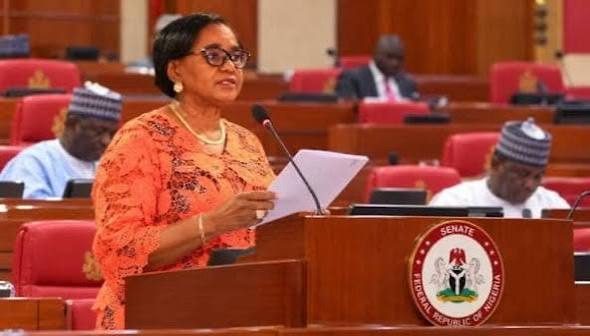
The Bill, titled “A Bill for an Act to Amend the Federal Universities of Agriculture Act, Cap. F22, Laws of the Federation of Nigeria, 2024” was sponsored by Senator Ipalibo Harry Banigo representing Rivers West Senatorial District.
The bill seeks to amend the existing Federal Universities of Agriculture Act to provide for the establishment of the proposed institution in Emughan community in Rivers State.
The passage of the bill by the Senate marks a significant legislative milestone towards the establishment of the proposed university.
When established, the institution is expected to expand access to higher education, promote agricultural research and innovation, develop skilled manpower, and contribute to the economic growth of Rivers State and Nigeria at large.
According to a statement made available to The Tide, the bill, having passed the Third Reading in the Senate, will now proceed to the House of Representatives for concurrence as part of the legislative process towards its enactment into law.
The bill underscores Senator Banigo’s commitment to advancing educational opportunities and strengthening agricultural development in Rivers State.
By: Kevin Nengia
-

 Sports3 days ago
Nigerian Trio Target Titles At PFL Africa Finals
-
 Education3 days ago
FCE Yola Graduates 3,555 Teachers , Seeks Upgrade to University
-
 Niger Delta3 days ago
Diri Restates Stance On Lagos-Calabar Coastal Highway
-

 Niger Delta3 days ago
C’River, NUJ Pay Tribute To Late Guardian Editor
-
 News3 days ago
NDLEA Recovers Tons Of Illicit Drug Consignments In Nine States
-
 Opinion3 days ago
Checking Voter Apathy In Nigeria’s Electoral Process
-
 Politics3 days ago
2027: DICKSON’S EX-ALLY VOWS TO WORK AGAINST NDC INTEREST IN BAYELSA
-
 Politics3 days ago
2027: GROUP PLEDGES 40,000 SUPPORTERS FOR COALITION CANDIDATES IN RIVERS