Connect with us

Opinion

Cursory Look At Nigeria’s Challenges

Published

on

Insecurity and bad economy in Nigeria have reached alarming proportions rearing their ugly heads in various facets of our national life. Lives are lost on daily basis, population depleted, businesses in comatose, investment are nose-diving, multinationals closing shop and vacating the country, unemployment soaring and the populace in fear.
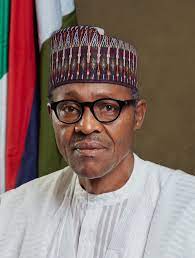
On May 29, 2015, General Muhammadu Buhari (rtd) was sworn in as President of Nigeria. The administration promised to urgently tackle several challenges that have hindered economic prosperity, sustainable security and overall national development in Nigeria. In terms of human resources, Nigeria is among the first 20 developed countries of the world. It is Africa’s largest oil-producing country. With a population of over 200 million, it is, no doubt, the largest market in Africa.
But the security and economic fortunes have been dwindling due to vagaries in the global price of crude oil. The country has been caught in-between affluence and affliction. Nigeria’s political leadership is a major factor why she has been reduced to a giant with clay feet. Buhari came to national limelight in 1983 when he became military Head of State after a successful coup d’état that overthrew civilian President Shehu Shagari on December 31, 1983. He ruled Nigeria from January 1984 until August 1985, before his regime was also toppled by another coup. His reign is ever remembered for a vigorous anti-corruption war, but tainted by human rights abuses.
Buhari contested in the presidential elections of 2003, 2007 and 2011, but lost to the Peoples Democratic Party (PDP) candidates. In the 2003, he was the presidential candidate of the All Nigeria Peoples Party (ANPP) and lost to incumbent President Olusegun Obasanjo. In 2007, he contested again on the ticket of the same party, but was beaten by PDP’s Umaru Yar’Adua who scored 26,638,063 against Buhari’s 6,605,299. In March 2010, the retired General left ANPP and formed the Congress for Progressive Change (CPC) contesting as its presidential candidate during the 2011 presidential poll, which he lost to President Goodluck Jonathan of PDP.
In that election, Buhari secured 12,214,853 votes against the President Goodluck Jonathan’s who secured 22,495,187. In 2014, the All Progressives Congress (APC) nominated Buhari to stand as its presidential candidate in the 2015 presidential election. The APC was merger of the All Progressives Grand Alliance (APGA), Action Congress of Nigeria (ACN), ANPP and CPC.
Buhari subsequently emerged victorious in the March 28, 2015 poll, defeating incumbent President Jonathan of PDP. He polled 15,416,221 votes against Jonathan’s 12,853,162 votes in an election that was keenly contested. On May 29, 2015, General Muhammadu Buhari was sworn in as president. Having ascended to the office he once occupied as a military officer, his administration was expected to urgently tackle several challenges that have bedeviled Nigeria over the last three decades. Insecurity, bad economy and corruption were the greatest challenges facing the new administrations since the return to democracy in 1999.
Traditional security threats such as violent conflicts, militancy, armed robbery and kidnapping have assumed worrisome dimensions in Nigeria. Evolving threats such as insurgency and terrorism have further complicated the situation. Outbreak of violent conflicts has become a major characteristic of insecurity in Nigeria. It is estimated that Nigeria has witnessed over 3,000 violent ethno-religious, communal and political conflicts of varying intensity and magnitude. Clashes between farmers and pastoralists have resulted in the death of about 4,732 persons between 1998 and 2014. The spate of violent crimes has become alarming.
In all of this the Presidency appears not to be doing enough, raising suspicions that Buhari is reluctant to take action since the herdsmen are mainly of his Fulani tribe. Even the swiftness with which Aso Rock Villa reacts to any condemnation of destructions caused by herders in the Middle Belt and southern parts of the country helps to fuel this suspicion.
Of course, the President’s insistence to recover gazetted grazing routes in the country lends further credence to the arguments of those who have maintained that he is deliberately keeping quiet and allowing his herder kinsmen to ride roughshod over every other section of the country. At best, all Buhari had ever ventured was that those who had complained about the destructions caused by open grazing should learn to tolerate the migrant herders and their cattle.
And on the economic front, the Buhari administration has a myriad of challenges to tackle which include but not limited to pervasive poverty, rising unemployment, epileptic power supply, fuel crisis and declining economy. Pervasive poverty and massive unemployment are serious economic challenges facing Nigeria. Both have maintained a rising trend over the years. Poverty rates remain high in Nigeria, particularly in rural areas. It is estimated that 101million out of Nigeria’s population of about 200 million live in extreme poverty.
And of the 99 million Nigerians suffering from extreme poverty, most are young people denied employment opportunities. However, as of 2015, the unemployment rate in Nigeria reached an all-time high of 20 percent with a youth unemployment rate as high as 50 per cent. These young Nigerians fell prey to recruitment by such groups as Boko Haram.
The problem of poverty and unemployment in Nigeria results from inconsistent policies, misappropriation of funds meant for empowerment schemes and increasing de-industrialisation and collapse of small businesses due to lack of venture capital and poor power supply.
Foreign industrial firms that once operated in this country have since relocated to other African countries like Ghana and South Africa which can boast of better operating environments. The oil multinationals that not only employed Nigerians and paid them very well have also relocated their key operations to offshore platforms in order to escape the increasingly restive Nigerian youth. This has led to staff downsizing across companies.
Achugo wrote from Eastern Polytechnic, Port Harcourt.

By: Godstime Achugo

Continue Reading

Opinion

One Attack Too Many 

Published

on

Quote: “Ogoniland does not need leaders competing over who can destroy another’s platform; it needs leaders competing over who can create more opportunities, empower youths and build a better future.”

The latest attack by Chief Gani Topba on the President of KAGOTE and Chief Executive Officer of Giolee Global Resources Ltd, Chief Lesi Maol, appears to have opened another troubling chapter in the politics of leadership and influence in Ogoniland. While disagreements are inevitable, the frequency and manner of attacks directed at individuals or organisations contributing to Ogoni development should concern every stakeholder. The concluded extraordinary meeting of Ogoni stakeholders in Bori was convened to deliberate on challenges confronting the people, including insecurity, farmers-herders clashes, youth disunity, education and development. It also considered harmonising the numerous youth organisations operating across Ogoniland under a strong and representative umbrella capable of giving Ogoni youths a more coordinated voice. One would have expected such an initiative to attract constructive contributions, especially from those with reservations about it.

Instead, the gathering and its organisers have come under criticism, raising a fundamental question: what exactly is wrong with Ogoni stakeholders coming together to discuss problems affecting their people? If there are legitimate concerns about the meeting, its organisers or resolutions, such concerns should be supported by facts and subjected to constructive engagement rather than personalised attacks. Leadership is demonstrated through service, sacrifice, participation and results. If Chief Gani Topba believes the stakeholders’ meeting was unnecessary or lacked legitimacy, nothing prevents him from convening another meeting and demonstrating that he can attract traditional rulers, professionals, academics, clergy and youths. Different approaches to development should therefore be allowed to compete on their merits.

The proposal for a unified youth platform should equally not be presented as an attempt to silence Ogoni youths. Rather, it should be examined against the reality of numerous organisations claiming to represent different segments of Ogoni youths. Too many competing organisations can create confusion, weaken collective bargaining power and make it difficult for genuine concerns affecting young people to receive coordinated attention. A credible umbrella body, if properly constituted and broadly accepted, could strengthen the voice of Ogoni youths and provide an organised platform for employment, education, skills acquisition, security and governance. Ogoniland has experienced enough institutional fragmentation. Its history contains painful lessons about divisions that allow personal interests, leadership struggles and competing platforms to overshadow collective objectives. The present generation should learn that destroying institutions one does not control damages society.

The question should be: who benefits when Ogoni youths remain divided and every attempt at unity is interpreted as rivalry? Against this background, KAGOTE deserves objective scrutiny rather than blanket condemnation. Any organisation with influence must be accountable, but accountability is different from a campaign aimed at delegitimising initiatives associated with its leadership. Chief Lesi Maol’s activities through KAGOTE and Giolee Global Resources Ltd have attracted attention in areas including skills development, education, youth empowerment and community support. Such interventions should be assessed on their impact and encouraged where they serve the public good. Those who believe Chief Maol is not doing enough should not stop at criticism. They should show Ogoni what they can do better. Where are the alternative skills programmes? Where are the educational interventions? Where are the youth empowerment schemes? Where are the community development initiatives?

It is easy to criticise someone who is building; it is harder to mobilise resources and sustain programmes that benefit ordinary people. This is not to suggest that Chief Maol or KAGOTE should be immune from criticism. No leader or institution should be beyond scrutiny, and legitimate questions about accountability must be welcomed. But responsible criticism should be based on facts, evidence and alternative ideas. Personal attacks and attempts to destroy initiatives simply because their leadership is not controlled by particular interests cannot provide the solutions Ogoniland needs. What is unfolding is bigger than one meeting, one statement or even two individuals. It reflects a broader contest over influence and leadership. If anyone believes KAGOTE is taking Ogoni in the wrong direction, the response is to present a better direction. If anyone believes Lesi Maol is not doing enough, the answer is to demonstrate what more can be done. Ogoni does not need leaders competing over who can destroy another’s platform; it needs leaders competing over who can create opportunities, improve education, promote security, empower youths and contribute to development.

The people are looking beyond rhetoric. They are examining records, observing programmes and measuring results. No individual owns the permanent right to speak for Ogoni or determine which organisation must survive or collapse. Ogoni must replace the politics of personal control with a culture of ideas, service, accountability and measurable achievement. Differences should produce better alternatives, not destruction. Every Ogoni leader and stakeholder should ask whether his actions are strengthening the region or deepening divisions. Ogoni needs people who can build bridges, institutions, opportunities and hope. Those who genuinely love Ogoni should support what is good, correct what is wrong and offer better alternatives. The future of Ogoni will not be secured by destroying its builders, but by encouraging more people to build.

onest people can reach different conclusions based on different experiences and information. Public debate should therefore remain respectful, evidence-based and open to correction. Truth is strengthened by honest examination, not insults, suspicion or personal attacks. The phrase “Truth has no agenda” carries a powerful message. Truth does not belong to any political party, ethnic group, religion or ideology. It cannot be permanently owned or manipulated by those in power. Governments change, institutions rise and fall, and public opinion shifts, but truth remains indifferent to popularity.The real test of character comes when speaking honestly threatens influence, privilege or personal advantage. It is easy to defend justice when there is nothing to lose. It is far more difficult when the truth may cost us something. That is when conscience must rise above convenience.

Society must therefore cultivate a culture where integrity is valued more than comfort and accountability is welcomed rather than feared. Leaders should learn to accept criticism without hostility, while citizens should express disagreement responsibly. Progress becomes difficult when honest questions are treated as acts of disloyalty. Ultimately, every society must choose the future it desires. A nation built on silence cannot sustain justice, while a community where comfort consistently outweighs conscience risks making injustice ordinary. But people committed to truth, even when inconvenient, lay the foundation for stronger institutions, trustworthy leadership and lasting progress. The call is not to condemn those who succeed or to glorify perpetual criticism. It is to remember that privilege should never silence principle, influence should never replace integrity, and personal gain should never outweigh the public good. Truth has no hidden agenda. It seeks neither applause nor favour. It simply asks to be spoken, defended and lived. When truth is silenced by comfort, everyone eventually pays the price.

By:  King Onunwor
Continue Reading

Opinion

When Comfort Silences The Truth  

Published

on

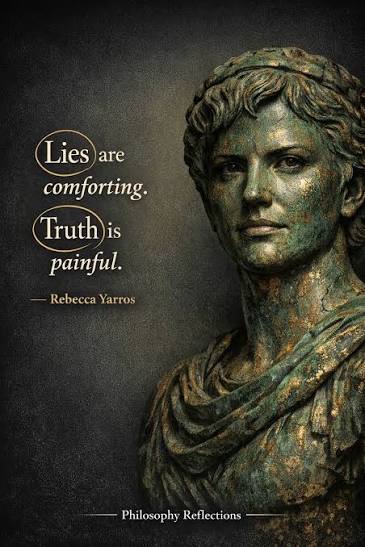
Quote: “Privilege should never silence principle, influence should never replace integrity, and personal gain should never outweigh the public good.”

There is an old saying that truth does not fear investigation. Genuine truth neither depends on applause nor seeks permission to exist. It remains constant whether celebrated or rejected, defended or ignored. Yet, in today’s society, truth often competes with comfort, convenience, loyalty and personal interest. This raises an important question: Can a person remain objective after beginning to benefit from the very system he once criticised? Throughout history, reform movements have been driven by courageous individuals willing to challenge injustice despite personal risks. Their commitment to truth sometimes cost them popularity, comfort, freedom and even their lives. History has also recorded instances where influential voices became quieter after receiving appointments, promotions, contracts, political favours or other advantages.

While motivations cannot always be known, such patterns remind us that personal benefit can sometimes influence public conviction. Human beings naturally seek security, stability and opportunities for themselves and their families. There is nothing wrong with success or advancement. The concern arises when personal comfort replaces public responsibility, or privilege becomes a reason to ignore problems affecting others. One of the greatest dangers facing society is not only corruption or poor governance but the normalisation of silence. Systems rarely collapse overnight. They deteriorate gradually when people who know better decide that speaking the truth is no longer worth the personal cost. Every society therefore depends on citizens willing to ask difficult questions, demand accountability and defend justice, regardless of who benefits or feels uncomfortable.

A person who benefits from a broken system may become less inclined to challenge it. This is not true of everyone, and individuals should not be judged without evidence. Many principled people continue to advocate reform while working within imperfect institutions. Nevertheless, personal interests can sometimes soften criticism, dilute conviction or redirect attention from uncomfortable realities.Perhaps the greatest threat to truth is not open opposition but quiet compromise. Censorship is easy to recognise; silence purchased through convenience is harder to detect. When people gradually stop asking questions, demanding transparency or defending principles they once considered important, society should ask whether something has changed. Perspectives may genuinely evolve with new information, but incentives can also influence what people say—or choose not to say.

This is why citizens should not place blind trust in personalities. Ideas, principles and actions should be examined independently. Loyalty to individuals must never exceed loyalty to truth. Political affiliation, professional status, financial success or social influence should not exempt anyone from accountability. A healthy democracy depends on independent thinking, not unquestioning allegiance.The responsibility to speak truth does not belong only to journalists, activists, judges, religious leaders or opposition politicians. It belongs to every citizen. The teacher who refuses to manipulate facts, the public servant who rejects corruption, the business owner who acts with integrity, the parent who teaches honesty and the young person who chooses principle over popularity all contribute to a more just society. However, defending truth also requires humility.

We must not assume that everyone who disagrees with us has been compromised.

By: Michael  Abraham

Continue Reading

Opinion

Poor Federal Roads: The Oshiomhole’s  Outburst

Published

on

Quote:”Although the Federal Ministry of Works is responsible for road construction and rehabilitation while the Federal Roads Maintenance Agency (FERMA) oversees maintenance, road maintenance has consistently taken a back seat”

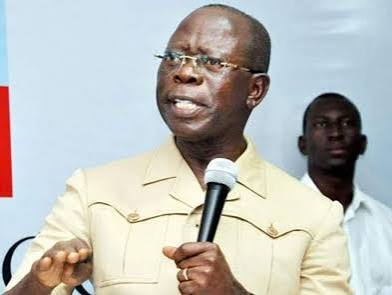
The recent outburst by the lawmaker representing Edo North Senatorial District, Senator Adams Oshiomhole, over the deplorable condition of federal roads in Edo and Delta states has once again drawn national attention to one of Nigeria’s most persistent infrastructure challenges. During Senate plenary last Wednesday, Oshiomhole criticized the Minister of Works, David Umahi, accusing the Federal Ministry of Works of neglecting major federal highways in Edo and Delta while prioritizing new road projects. According to him, the government should focus on rehabilitating existing roads that have become impassable before embarking on new construction. He identified the Benin-Warri, Benin-Asaba, Benin-Auchi and Auchi-Okene highways as strategic economic corridors that have deteriorated to alarming levels, making travel difficult for commuters and motorists while increasing the cost of transporting goods and services.

The senator also alleged that road projects affecting Edo and Delta states were repeatedly omitted from budgetary provisions and that some interventions were only undertaken following directives from President Bola Tinubu. Ironically, the Federal Government has consistently reiterated its commitment to reconstructing and rehabilitating federal roads across the country. The Minister of Works has repeatedly assured Nigerians that the government is deploying reinforced concrete technology to build more durable highways capable of withstanding the country’s climatic conditions. Despite these assurances, vast sections of federal road across the country remain in deplorable condition. The consequences are enormous. Federal highways serve as the backbone of the nation’s economy, carrying more than 90 per cent of passengers and freight.

They connect ports, airports, industrial centres, state capitals and agricultural belts, facilitating the movement of food, fuel, cement and manufactured goods. When these roads fail, the entire economy suffers. Although the Federal Ministry of Works is responsible for road construction and rehabilitation while the Federal Roads Maintenance Agency (FERMA) oversees maintenance, road maintenance has consistently taken a back seat. The result is a recurring cycle in which newly completed roads quickly deteriorate while existing ones are left to collapse. The economic consequences are severe. Bad roads increase transportation costs, contribute to food inflation, delay the movement of goods from ports to markets, increase vehicle maintenance expenses and lead to avoidable road crashes that claim countless lives every year.

To address these challenges, the Federal Government has introduced initiatives such as the Highway Development and Management Initiative (HDMI), which seeks to attract private investment into road maintenance through concessions and tolling. While the initiative holds promise, public acceptance will depend largely on visible improvements in road quality and transparent management of toll revenues. Similarly, the Road Infrastructure Tax Credit Scheme is designed to encourage companies to finance the reconstruction of strategic highways in exchange for tax credits. While the scheme has shown promise, its ability to address road infrastructure challenges equitably across the country remains to be seen. Other countries facing similar infrastructure challenges have demonstrated that sustainable road management requires a different approach.

Rwanda and Morocco, for instance, have prioritized dedicated road maintenance funds, performance-based contracts that reward quality rather than kilometers constructed, and policies that allocate a significant proportion of road budgets to maintenance instead of new construction. Nigeria can draw useful lessons from these experiences. Maintenance funding should be increased and protected because preventive maintenance is far cheaper than complete reconstruction. Public-private partnerships should be expanded with adequate safeguards, transparent tolling policies and independent monitoring. Development finance institutions should support contractors with affordable financing to minimize disruptions caused by delayed government payments. Road designs should withstand heavier rainfall and flooding, while compensation and right-of-way issues must be resolved before projects begin to avoid unnecessary delays.

FERMA should also prioritize durable, high-quality road maintenance over the shoddy repairs that have become all too common. Ultimately, Nigerians are not asking for perfect roads; they simply want roads that are safe, durable and properly maintained. While new highways are desirable, a well-maintained five-kilometer stretch is often far more valuable to road users than a much longer road that quickly falls into disrepair. The media, civil society, the National Assembly and Nigerians must continue to hold the government accountable by monitoring road projects and demanding better results. Good roads are not a privilege but a right of every citizen. With tax credit schemes, concessions and other funding mechanisms already in place, what is now required is political will, transparency and consistent implementation. However, Senator Oshiomhole’s criticism also invites legitimate public reflection. 

Many Nigerians have asked what the condition of these same federal roads was during his eight-year tenure as Governor of Edo State. Several governors, including those of Rivers State at different times, undertook repairs on critical federal roads within their states and subsequently sought reimbursement from the Federal Government. It is therefore fair to ask whether similar interventions were pursued during Oshiomhole’s administration. Public officials, whether serving or former, should be judged by the same standard. Constructive criticism is essential in a democracy, but it carries greater weight when matched by a demonstrable record of action. Nigerians expect those entrusted with public office to address pressing challenges while they have the authority to do so, rather than becoming vocal critics only after leaving office

By:  Calista Ezeaku
Continue Reading

Trending