
Opinion
Task For Nigerian Economists

Page 6 of The Tide newspaper of Friday, June 18, 2021, had a news headline: “Economist Challenges W’Bank’s Prediction On Nigeria’s Inflation Rate.” The meat of that headline was that a professor of economics queried World Bank’s prediction that Nigeria’s inflation rate is expected to rise to fifth highest in sub-Saharan Africa by the end of 2021. By 3.35pm same Friday, June 18, there was a laughter at a conference hall because a speaker revealed that there were 137 professors in his university.
The embarrassing laughter came about because someone wanted to know the total member of academic staff in that institution. The meat of that laughter was that there was an after-conference gossip that Nigeria has an inflation rate, professor-wise. What is inflation? It is defined as “a continuing increase in prices or the rate at which prices increase”. Inflation can also mean filling something with air. There was a gossip that meat sellers can inflate meant to make it look fatter.
At the international level, there are gossips that Nigeria is noted for inflating values, ranging from contract value to national budgets. There is also the tendency to inflate personal dignity which is why there can be quarrels when someone is not addressed adequately according to his status. Nigerian dignitaries are known to be jittery over any slight on their status. So, we are showered with flatteries.
In the afore-mentioned news on Nigeria’s inflation rate, it was stated that “Nigeria was lagging the rest of sub-Saharan Africa with food inflation,” which means rising prices of food. Reasons given for the nation’s plight included heightened insecurity and stalled reforms, thus increasing poverty. It is interesting to know that there is a Foundation for Economic Research and Training, based in Lagos.
Research and training programmes would mean great opportunity to expand the frontiers of existing knowledge and also train experts to implement the benefits of research findings. Advancement in the academic world is largely determined by effective teaching, diligent research and publications in scholarly journals. For the institution that was said to have been blessed with 137 professors, excluding retired ones, the possibility is that there are great nation-builders quite active there.
From an economic point of view, the task of nation-building hinges on the productive capacity of the citizens of a nation. There is also a professional code which places priority on commitment to service delivery, whereby reward and praise stay behind service ethics. Therefore, for professional economists, more so, for professors of economics, there is a present task of commitment to service to save Nigeria from her current economic plight.
Apart from the inflation rate issue, there is a more serious issue of productivity. No matter how we may wish to hide the truth, it is known across the globe that the Nigerian elite are an unproductive class of people. There was almost a gang-fight in a foreign country not long ago, because a supervisor in a workplace described Nigerian employees as “malingerers and unproductive”. What annoyed the eight Nigerians more was the statement that “you can do that in your country, but not here”. Diplomacy doused the tension.
What factors have been responsible for the low capacity of productivity among Nigerians, particularly in the public sector? Answer to this question came quickly from a clergyman: “easy money; oil money”. The cleric went on to say: “What do you expect in a country where you can sell an allocation paper and become a millionaire without lifting a broom to serve the nation?” Late Professor Tam David-West once talked about oil barons who never knew what a barrel or drop of oil looked like!
There are Nigerians who talk glibly about corruption without having a clear perception of the mechanics and dynamics of that plight. Does influence peddling not undermine the productive capacity of those who watch some clever people make millions of naira without lifting a broom in service of the nation? Or, is it not true that there are godfathers and sponsors whose favoured candidates dislodge diligent applicants willing to serve the nation with their skills and patriotism? Is the nation’s reward system ideal, or capable of promoting productivity?
Economists would educate us on what they call “runaway” or hyper-inflation and say that: “It’s when you have what we call runaway or hyper-inflation that is when you get worried”. Such state of inflation means that prices are increasing every day or every month without control. Is it wrong to say that such is our current experience? But for those whose food, water, fuel and all other necessities of life are provided by tax payers, the issue of inflation would be a mere academic stuff.
In the academic circle, when an issue is described as “academic stuff” it is same as saying that you can speak from two sides of your mouth so long as you have enough “stomach infrastructure”. Therefore, one of the tasks before our economists is to be realistic, rather than speak from the position of a “high horse”. World Bank’s predictions included the warning that “inflation would push seven million more Nigerians into poverty due to falling purchasing power”.
Poor purchasing power also arises from the pathetic exchange rate of the naira which becomes a relevant concern of all patriotic economists. Why has the value of the naira fallen to the current pathetic state? A soldier, not an economist, provided the answer quickly: “We are not productive; naira exchange rate is a clear testimony to that”. There’s need for clergymen, soldiers and economists to talk together.
Dr Amirize is a retired lecturer from the Rivers State University, Port Harcourt.



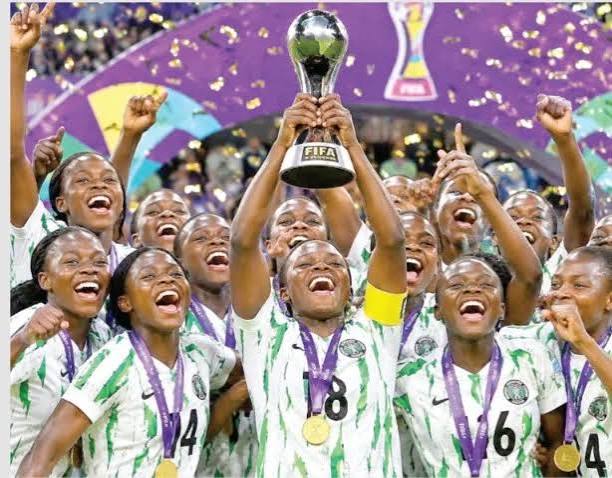
Quote: “The Flamingos have conquered the world; Nigeria must now rise to its responsibility of nurturing the next generation of champions.”
Sometimes, sporting victories
More significantly, they
Umejiaku deserves special
Umejiaku received the award
Nigeria has now broken into
For too long, young girls in
But beyond the reward, this
As Nigerians celebrate this
By; Calista Ezeaku
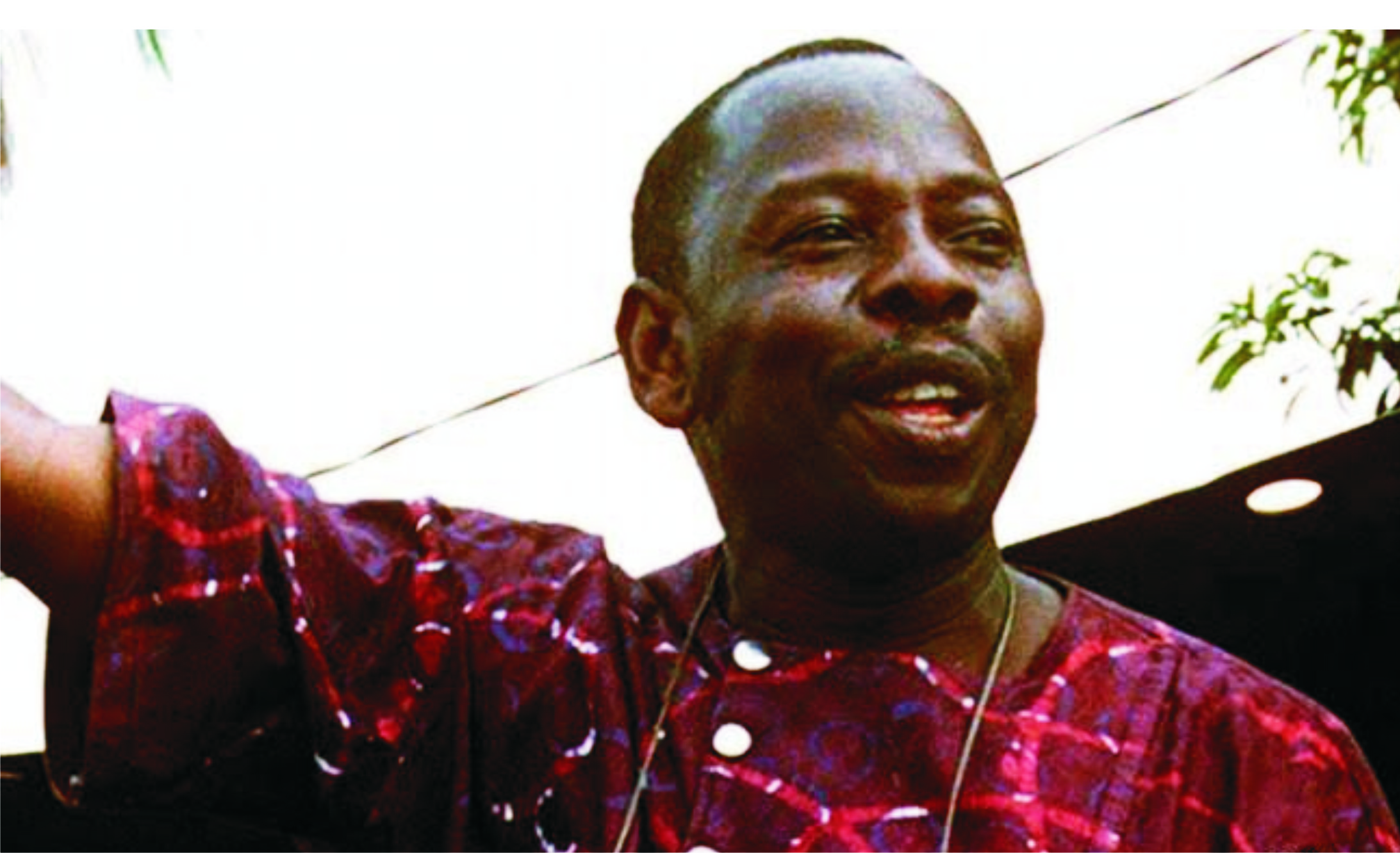
Nonetheless, he believed the suffering of the Ogoni people demanded a courageous response. While oil was extracted from their land, they were left with polluted rivers, damaged farmland, declining livelihoods and an environment hostile to human survival. Fishing grounds and sources of livelihood were threatened, while the people struggled to secure basic amenities. The wealth beneath their soil brought neither adequate development nor a fair share of national resources. For him, silence in the face of injustice would have amounted to complicity. Through the Movement for the Survival of the Ogoni People (MOSOP), he organised a peaceful campaign that took the Ogoni question to the international community. MOSOP gave ordinary people an organised platform through which to express their grievances and insist on recognition.
The Ogoni Bill of Rights, presented to the Federal Government in 1990, demanded political autonomy, economic justice, environmental protection and control over the people’s resources. The campaign exposed the human and ecological costs of oil operations, particularly those associated with Shell, and challenged the apparent alliance between corporate interests and an unresponsive State. The Ogoni struggle became a defining expression of minority rights and environmental justice in Nigeria and Africa. Saro-Wiwa’s writings and mobilisation drew attention to communities treated as expendable because of their limited population and political influence. He argued that numerical strength should never determine a people’s value or rights.
A minority community does not become less deserving of justice because it cannot command electoral numbers or political power. In Nigeria, every ethnic group deserves dignity, protection and a fair opportunity to benefit from the commonwealth. Rather than respond to peaceful agitation with dialogue, the Abacha regime resorted to repression. Ogoni leaders were harassed, detained and killed; others fled into exile. The crisis intensified after four Ogoni chiefs were killed in May 1994. Saro-Wiwa and other MOSOP leaders were arrested, tried by a special tribunal and executed despite international appeals for clemency and serious concerns about the trial’s fairness. The executions drew worldwide condemnation and intensified scrutiny of Nigeria’s human-rights record and oil companies in the Niger Delta.
They demonstrated the danger of using State institutions to suppress peaceful demands. The proceedings remain a reminder of the need for judicial independence and due process. Saro-Wiwa’s courage rested on the conviction that justice must be pursued despite the cost. His method combined non-violent resistance, public education and grassroots organisation. His struggle recalled the civil-rights campaign of Martin Luther King Jr. and the power of peaceful mobilisation against injustice. Saro-Wiwa linked environmental degradation to political exclusion, economic exploitation and the denial of democratic rights. Oil-producing communities, he insisted, should not remain zones from which wealth is removed to develop other parts of the country.
Their people must benefit through roads, schools, healthcare, jobs and clean water. Resource extraction carries a duty to protect host communities. His argument extended to the structure of the Nigerian federation. He challenged a revenue-allocation system that made oil-producing communities bear the environmental and social costs of extraction without commensurate benefits. Like advocates of fiscal federalism, he believed resources should be managed and shared equitably. He envisaged a society in which no community would be disadvantaged by its size, ethnicity, political affiliation, culture or religion. His vision was a country bound together by justice and equal citizenship. Saro-Wiwa was also a gifted writer, dramatist and public intellectual.
Through books, essays, plays and television, he documented Nigerian society’s contradictions and challenged abuses of power. His popular television series, Basi and Company, demonstrated his creative range, while his leadership of the Association of Nigerian Authors encouraged writers to engage national questions. He believed literature should not be detached from society’s struggles. His pen exposed environmental injustice, political repression and the dangers of silencing courageous voices. He used storytelling, satire and drama to shape public consciousness and expose social contradictions. His literary achievements gave his activism wider reach and made the Ogoni experience part of national conversation. His commitment to the Ogoni people extended beyond the oil question.
During the Civil War, he worked to protect his vulnerable community. He urged younger generations to reject subservience and complacency and pursue change through lawful, peaceful means. Citizens, he believed, must not surrender their responsibility to challenge wrong doing. An injury to one community threatens the rights and security of all. The return to democratic government in 1999 and the establishment of the Niger Delta Development Commission, the Ministry of Niger Delta Affairs and the Hydrocarbon Pollution Remediation Project (HYPREP) are among developments that have kept the region’s demands in public view. Saro-Wiwa did not create these institutions, but his movement helped expose the urgency of intervention and sustain pressure for redress.
His death made it harder to ignore the Niger Delta’s environmental and political grievances. Yet, interventionist institutions do not prove that the original demands have been met. Their effectiveness depends on competent leadership, transparent spending, measurable outcomes and community participation. Yet, thirty-one years after his execution, the central concerns of the Ogoni struggle remain unresolved. The HYPREP-led clean-up has offered hope, but many residents await meaningful improvements. Questions persist about the programme’s pace, quality and transparency, and whether its benefits reach ordinary people. A clean-up should be judged not by ceremonies or contracts, but by restored land and waterways, safe drinking water, improved livelihoods and better public health.
It must include long-term monitoring to ensure treated sites remain safe. Residents deserve information about contamination, remediation methods and completion timelines. Reports that water projects in Gwara and Ebubu Communities, in Khana and Eleme Local Government Areas respectively, failed weeks after commissioning have raised further concerns. If confirmed, the failures would indicate weaknesses in supervision, procurement and quality control.
To be continued in our next edition.
Taneh Beemene
-
Business4 days ago
BSG Partiner American Coy To Invest $100m In Gas Processing
-

 Oil & Energy4 days ago
FG To Double Oil, Gas Reserves, Moves To Intensified fresh Exploration
-
Business4 days ago
Seme Customs Intercepts Live Pacific Ridley Sea Turtle
-
Sports4 days ago
Fernandes Turns Down Man Utd Offer
-
Business4 days ago
159m small businesses registered on database in three years – SMEDAN boss
-
Sports3 days ago
Rivers To Host National Table Tennis Championship
-
Maritime4 days ago
Nimasa,China MSA Sign Bilateral Maritime Agreement
-

 Sports4 days ago
Kenyans Win PH International Marathon, Cart Home $10,000