
Editorial
Release Rivers’ $1.1bn Now

If the recent judgement of a Federal High Court in Abuja, ordering the Federal Government to pay both Rivers and Akwa Ibom States a total sum of $3.3 billion is anything to go by, Rivers State will soon be well-heeled and perhaps secure more funds for infrastructural development by a whopping $1.1 billion (N456,899,206,755.68 billion at an exchange rate of N409.94 per dollar).
The court, in a judgement delivered by Justice Taiwo Taiwo, specifically ordered that $1,114,551,610 be paid to Rivers State, while another sum of $2,258,411,586 be reimbursed Akwa Ibom State, being the amount they separately claimed against the Federal Government as share that ought to accrue to them from $62 billion recovered from oil companies. The court also awarded a post-judgement interest of 10 per cent in favour of the plaintiffs until the final liquidation of the judgement.
The money is entitlements of Rivers and Akwa Ibom States, based on the subsisting decision of the Supreme Court over production sharing contracts arising from the Deep Offshore and Inland Basin Production Sharing Contracts. Taiwo delivered the judgement in Suit No: FHC/ABJ/CS/174/2021 filed by the Attorneys-General of both states against the Attorney-General of the Federation.
Recall that in 2016, Rivers, Bayelsa and Akwa Ibom States, through their Attorneys -General, had sued the Federal Government at the Supreme Court, seeking a declaration that there is a statutory obligation imposed on the Defendant pursuant to Section 16(1) of the Deep Offshore Inland Basin Production Sharing Act, Cap.D3 Laws of the Federation of Nigeria 2004, to adjust the share of the Federation in the additional revenue accruing under the Production Sharing Contracts, if the price of crude oil at any time exceeds $20.00 per barrel.
Hence, the states had asked the court to declare that the failure of the Defendant to accordingly adjust the share of the Federal Government in the additional revenue in the Production Sharing Contracts, following the increase of the price of crude oil above 20.00 per barrel in real terms, constitutes a breach of the said Section 16 (1) of the Deep Offshore and Inland Basin Production Sharing Contracts Act, and has, therefore, affected the total revenue accruing to the Federation, and consequently, the total statutory allocation accruing to the Plaintiffs.
We feel ecstatically delighted at this historic judgement and commend the court for its courage in deciding the matter in the way it has gone. Specifically, we congratulate the Rivers State Governor, Chief Nyesom Wike, on this impressive victory and his audacity in instituting the suit with his Akwa Ibom counterpart, Mr Emmanuel Udom, first at the Supreme Court, and then the Federal High Court.
Beyond the legal victory, it is hoped that President Muhammadu Buhari will graciously accept the court’s decision and act as quickly as possible. Such a response will showcase him as the democrat he has always professed to be. Besides, it will promote the rule of law and encourage many other leaders who are consistently prone to disobeying court judgements to desist from the awkward practice.
Following the judgement of the Supreme Court and in compliance with the Attorney- General of the Federation’s advice, the Defendant constituted a body to determine the respective liabilities including the amount due to oil mineral producing states as derivation proceeds. The report of that body stated among others that Rivers and Akwa Ibom States were entitled to $1,114,551,610.00 and $2,258,411,586.00, respectively, as derivation proceeds.
However, the Attorney-General, without recourse to the governments of Rivers and Akwa Ibom States, unilaterally claimed to have settled with International Oil Companies (IOCs). We reject this move to manipulate the judgement of the court by the federal authorities. This is unacceptable. The court has already ruled on the matter and anything short of that cannot stand.
If the money is promptly released, Governor Wike, known to always intervene and fix many federal projects in the state, particularly roads and building of flyovers on federal roads, will certainly utilise the funds for that objective. From the Port Harcourt-Owerri Federal Road, Port Harcourt-Aba Road, Port Harcourt-Refinery-Onne Road to Federal roads within the City of Port Harcourt: Ikwerre, Azikiwe, among others, the evidence abound. These funds running into billions of naira could have been applied to other clutching needs and concerns of the state.
It is heartwarming that this good news has come when the state is in dire need of finance to satisfy her craving for more essential and developmental projects. Consequently, a better way to utilise the money is to set out a proper plan and procedures to effectively manage it. Indeed, the government and people of the state will be better off if there is a coherent blueprint detailing how the funds should be handled to procure tangible benefits to everyone.
Since there has always been a need to enhance the lives of Rivers people and alleviate poverty in the state, we are strong on the view that the money, when released, could be used for infrastructural projects. The state is in dire need of both hard and soft projects such as proper transport systems, power generation, security, agricultural development, education, workers’ welfare, pensions and gratuities, human capital development, health care, among others. Investing in these areas will create better and longer-term value.
Known for prudently managing the financial resources of the state, it is not in question that the governor has demonstrated that good governance is feasible where there is the political will to do so. There could not be a better way of satisfying the yearnings of the Rivers people and silencing political detractors than the governor’s landmark achievements in the state through key and economically viable projects. There is a need for Wike to lay a good foundation by completing all other viable and people-oriented inherited projects from his predecessors so that his successor would have a smooth sail in governance.



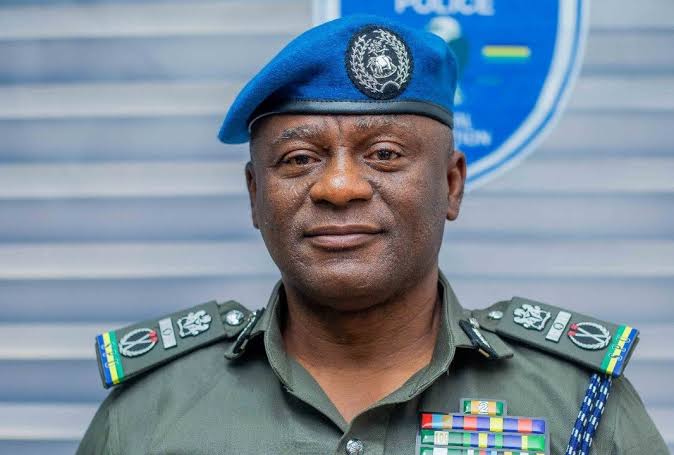
It was, therefore, welcome news when the Inspector-General of Police, Olatunji Disu, warned politicians, political thugs and others against destroying, defacing or removing campaign posters, banners and billboards. In a statement issued in Abuja by the Force Public Relations Officer, CSP Ani Iniedu, the police condemned such acts as political intolerance, directed Commissioners of Police in all 36 States and the Federal Capital Territory to take preventive measures, and warned that sponsors would also face prosecution. The police rightly described such vandalism as a criminal act that undermines parties’ and candidates’ freedom to canvass for votes.
But billboards are replaceable; human lives are not. While applauding the IGP’s stance, we urge him to extend the same stern warning and enforcement zeal to thugs who assault opposition members during campaigns. A police force that punishes the tearing of a poster but ignores the breaking of a skull will have its priorities questioned. Allowing such attacks to continue could erode the foundations of our democracy.
Consider the African Democratic Congress (ADC) presidential campaign flag-off in Sokoto State on November 4, 2026. The party alleged that the State Government denied it access to public facilities, sealed its campaign venue and pressured hotels to reject its delegates, forcing it to hold the rally at its secretariat. The Sokoto authorities, however, denied instructing hotels to turn guests away. More seriously, two suspected ADC supporters were reportedly shot along the Sokoto–Wurno Road while travelling to the venue, allegedly by operatives of the Sokoto State Community Guards.
Whatever the truth of these competing accounts, a shooting demands more than press statements. It requires a transparent, independent investigation and prosecution where warranted. Sokoto was not an isolated incident. The following day in Birnin Kebbi, the ADC presidential campaign convoy was reportedly attacked by armed gangs. Amnesty International said vehicles were vandalised, people assaulted with cutlasses and roads blocked, while the party’s Kebbi governorship candidate, Abubakar Malami, alleged that media equipment was destroyed and tear gas deployed. His convoy had suffered a similar attack in the city in September 2025.
The Nigeria Democratic Congress (NDC) has suffered similar attacks. On November 4, hoodlums stoned the motorcade of its presidential candidate, Peter Obi, and running mate, Rabiu Musa Kwankwaso, at Watt Market roundabout in Calabar, Cross River State. Police reported arresting a 27-year-old suspect, Victor Edet, although it remains unclear whether he has been arraigned. The State Government has denied suggestions that ruling-party supporters were responsible. Worse, in Asaba, Delta State, one person was killed and five injured when suspected thugs attacked an NDC rally. A death at a political rally is no longer a warning; it is a damning indictment of the prevailing political climate.
Even critics of the establishment who are not frontrunners have not been spared. Omoyele Sowore, presidential candidate of the African Action Congress (AAC), was attacked by suspected thugs at a restaurant in Ado-Ekiti on October 30. He alleged that the assailants were linked to the Ekiti State Government House and that the Department of State Services leaked his location. Both the State Government and the security service denied involvement, while the police reported a minor injury and a discreet investigation. These conflicting accounts make an independent, publicly reported inquiry indispensable.
What deepens the concern is the Federal Government’s apparent silence. We are unaware of any specific, forceful condemnation of these assaults, even as All Progressives Congress (APC) rallies appear to proceed nationwide without incident. Such silence can easily be misconstrued as complicity, regardless of intent.
According to the Centre for Democracy and Development, 109 election-related deaths were recorded in the build-up to the 2023 polls. The Kimpact Development Initiative separately documented 238 incidents and 24 deaths during the general elections. Beyond Nigeria, Kenya’s 2007–08 post-election violence claimed more than 1,000 lives, according to the Waki Commission. Ghana, by contrast, enacted the Vigilantism and Related Offences Act in 2019 to curb party vigilante groups, a model worth studying.
The remedies are neither exotic nor expensive. The IGP should extend his directive to cover assaults on individuals and disruptions of rallies, while establishing a dedicated investigative unit to probe the Sokoto shooting and the attacks in Kebbi, Calabar, Asaba and Ado-Ekiti. It should publish the status of each case within a fixed period. Suspects must be prosecuted and their sponsors, regardless of party or position, brought to justice. State-backed security outfits, including the Community Guards, should be audited and barred from partisan duties.
The Federal Government must speak and act unequivocally. President Tinubu should specifically condemn attacks on opposition candidates and direct all security agencies to guarantee equal protection for every party. Governors must ensure equal access to public facilities for registered parties. The Independent National Electoral Commission (INEC), which has warned of fines and imprisonment under the Electoral Act 2026 for inflammatory campaign conduct, should enforce the Code of Conduct for Political Parties. Working with the Inter-Agency Consultative Committee on Election Security, it should publish a joint security plan covering campaigns, polling, and collation. Parties must discipline their supporters, courts expedite electoral-violence trials, and civil society and the media maintain a public record of incidents and their outcomes.
The credibility of the 2027 elections is at stake. An election is credible only when every contender can campaign, travel, assemble and speak freely, without fear. Without a free opposition, there can be no meaningful democracy. Nigeria is not a one-party State, and law enforcement agencies must demonstrate their neutrality through action, not communiqués. The campaign atmosphere is too tense to be left to chance. Billboards deserve protection, certainly, but citizens deserve it far more.
-
News1 day ago
RSG Reaffirms Commitment To STEM Education, Technological Advancement
-
Business2 days ago
‘NUJ, NPA’s Partnership Would Boost Port Producrivity, Economic Growth’
-

 News1 day ago
IGP Warns Police Officers Against Partisanship …Directs Regular Engagement With Journalists
-
Business2 days ago
Fire Threat Interrupts Asaba Air Peace Flight
-
 News1 day ago
Customs To Deploy AI, Scanners Against Snuggling
-
Business2 days ago
Fish Production Deficit, A Major Investment Opportunity – Minister
-
Business2 days ago
NCDMB, NLNG Unveil $9m For Professorial Endowment Research Chairs In Six Varsities
-
 Politics1 day ago
2027: INEC Begins Deployment Of Non-Sensitive Materials