
Opinion
Season Of Escapes From Police Custody


A person escapes from lawful custody if he breaks free of the control of police or other officials after he had already been effectively placed under arrest. The law is quite clear in its position regarding perpetrators as well as those who aid perpetration in one way or the other. While it declares any perpetrator guilty of misdemeanour and liable to imprisonment for two years, Section 135-138 of the Criminal Code Act makes it an offence to aid an inmate in escaping or attempting to escape from lawful custody or to convey something to a correctional centre or to an inmate to facilitate the escape of an inmate.
This offence carries a maximum penalty of imprisonment for seven years. Very seriously, “ any person who, being an officer of a prison, or a member of a police force, wilfully permits any other person within his lawful custody to escape (a) charged with an offence punishable by death, or penal servitude or imprisonment for life, guilty of a felony and is liable to imprisonment for seven years; and (b) is, in any other case, guilty of a felony and is liable to imprisonment for three years.
Be that as it may, while many Nigerians consider police custody as the safest place to keep suspects in Nigeria, unfolding events tend to prove them wrong as suspected criminals escape almost daily from the police net, without any cogent punitive action taken on those culpable among men and officers of the affected commands.
The arrest of a suspect all over the globe, as well as being kept in police custody is the principal gateway to the criminal justice system. Detention by the police is generally authorised for two main criminal justice purposes: to allow the prompt and effective investigation of an offence, or of the conduct of the person in question; and or to prevent any prosecution for an offence being hindered by the disappearance of the person in question.Custody also serves a safety purpose, in that detention may be authorised to prevent someone from causing physical injury to themselves or another person, or to protect a child or other vulnerable person.
However, A guiding principle in all cases is that a person should be held for the minimum time necessary while every process for justice is duly fast tracked. The whole essence becomes lost when police begin to lose grip of suspects they ought to account for, on frivolous grounds. Across the states of the federation, days hardly pass without the news of one escape attempt by detained suspected criminals.The regularity of the trend, as well as its uniformity across states tend to arouse insinuations that top politicians in the states must be behind the trend even though it is unfounded. Few days ago, Nigerians were disturbed with the news of the escape of Sunday Shodipe, a 19-year-old, who was arrested in Oyo State for his alleged involvement in the rape and murder of some female residents.
This development which has attracted several condemnations from many citizens of the state, was made known by the state’s police spokesperson, Olugbenga Fadeyi, on Sunday. Mr Fadeyi said the suspect, who allegedly committed his dastardly acts in Akinyele Local Government Area of Ibadan, the Oyo State capital, was arrested and paraded along with two others at the Oyo State Police Command on July 17. He escaped from police custody on August 11.
However, the Commissioner of Police in Oyo State, Nwachukwu Enwonwu, has disclosed that two policemen, an inspector and one other officer – have been arrested over the escape of Sunday Shodipe, the prime suspect in the killings of innocent persons in Akinyele area of Ibadan. But like a sore on the palm that is always refreshed with every contact with the palm, the news of Shodipe’s escape from police custody, has only caused a reminiscence of a panorama of all such issues in the country over time.
Eight years ago, 2012, to be precise, the man thought to have masterminded an attack on a Nigerian church that killed 37 people on Christmas Day in 2011, escaped from police custody, still wearing handcuffs, less than a day after his arrest. Kabir Sokoto, as he was called, was an influential businessman and an alleged gun-runner. His detention was a huge catch for authorities investigating the church bombing just outside the capital, Abuja. Unfortunately, just a day after the news of his arrest and detention, Sokoto reportedly fled while being escorted by five armed policemen to search his nearby flat. The regional police commissioner was, however, suspended for “serious negligence” over the escape.
August 21st, 2017, witnessed confusion in Port Harcourt, the Rivers State capital, when members of the public learnt that Ifeanyi Dike, the man who allegedly raped, killed and removed vital organs of an eight-year-old girl, Victory Chikamso, had escaped from the police custody. The father of the victim, Dr. Ernest Nmezuwuba, who was at the State Criminal Investigation Department when the suspected murderer and ritual killer escaped from police custody, expressed disappointment in the police, accusing them of playing game with a heinous crime against humanity, even as he vowed that he would never allow it to be swept under the carpet.
In January 18, 2018, the local media recorded yet another escape of a suspected criminal allegedly involved in a murder case in Bakassi Local Government Area of Cross River State from police custody in Bakassi Police Divisional headquarters. The suspect, Essien Ita, was alleged to have been involved in the murder of Chief Eyo Eyo Bassey who was assassinated sometime in 2017. The victim, 52 year old Chief, Eyo Eyo Bassey, was until his assassination, Village Head of Ikot Obot and a staff of Audit Department, Cross River State Ministry of Finance.
Ebonyi State took its share of the trend on the night of October 22, 2019, as four kidnap suspects reportedly escaped from the custody of the Ebonyi State police command.
On March 23rd, this year, a rape suspect by name Kelechi Ezeanni, who was said to have been arrested by policemen attached to Ajiwe Police Station, Ajah Lagos State police command was reported to have escaped from custody. The suspect, arrested for allegedly raping an eleven-year-old girl, escaped two days after his arrest.
The height of this trend was recorded on July 20, 2020, as twenty-nine suspected criminals escaped from the custody of the Central Police Station (CPS) in Umuahia North Local Government Area, the Abia State capital. Sources said the suspects pretended to have been pressed, asking to use the restrooms.They were said to have briefed the cell guard to assist them, not knowing they had sinister motive. According to information, as the guard opened the cell door, the suspects overpowered him and fled.
While it is quite difficult for anyone to imagine how soon this trend would quit the Nigerian stage, the writer suggests that officers and men of the Nigeria Police should be made to perform their duties in line with the laid down rules and regulations. They should be orientated on the implication of complicity in escaping from custody while the full weight of the law should descend on the personnel who are instrumental to this trending phenomenon. We can go a little beyond the orderly room trial.
Sylvia ThankGod-Amadi




Quote: “The Flamingos have conquered the world; Nigeria must now rise to its responsibility of nurturing the next generation of champions.”
Sometimes, sporting victories
More significantly, they
Umejiaku deserves special
Umejiaku received the award
Nigeria has now broken into
For too long, young girls in
But beyond the reward, this
As Nigerians celebrate this
By; Calista Ezeaku
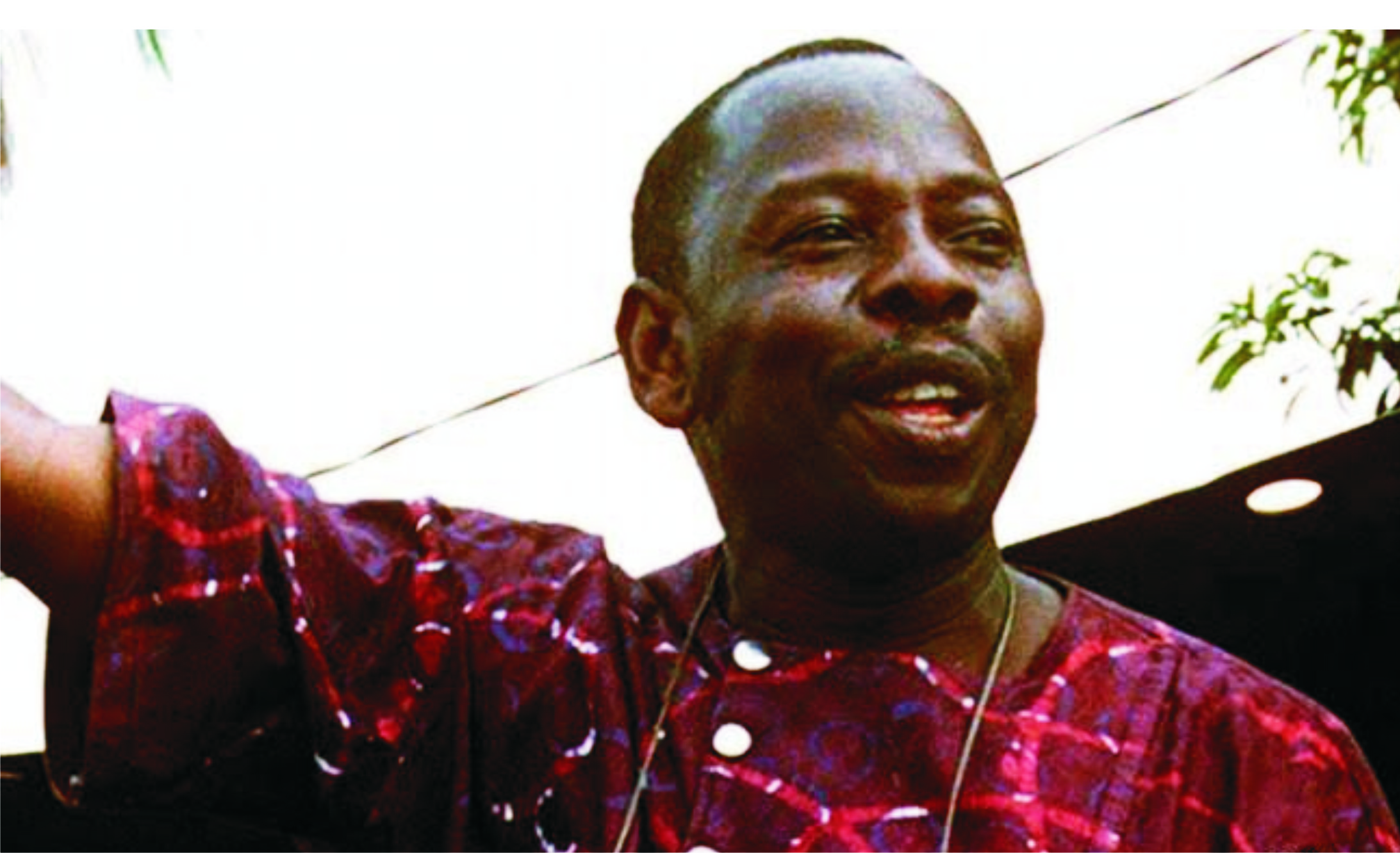
On November 10, 1995, the Nigerian military government of General Sani Abacha executed Ken Saro-Wiwa and eight other Ogoni leaders after a deeply controversial trial. Their deaths marked one of the darkest chapters in Nigeria’s history. At a time when fear silenced citizens and sycophancy flourished around military power, Saro-Wiwa chose to confront tyranny. Many Nigerians retreated into silence, while others praised the regime to secure favour. He knew the risks, yet refused to abandon a people whose land had been devastated by oil exploration and whose lives remained trapped in poverty. His courage arose from the conviction that public responsibility sometimes demands resistance to authority. Saro-Wiwa understood that speaking against a military government could lead to imprisonment or death.
Nonetheless, he believed the suffering of the Ogoni people demanded a courageous response. While oil was extracted from their land, they were left with polluted rivers, damaged farmland, declining livelihoods and an environment hostile to human survival. Fishing grounds and sources of livelihood were threatened, while the people struggled to secure basic amenities. The wealth beneath their soil brought neither adequate development nor a fair share of national resources. For him, silence in the face of injustice would have amounted to complicity. Through the Movement for the Survival of the Ogoni People (MOSOP), he organised a peaceful campaign that took the Ogoni question to the international community. MOSOP gave ordinary people an organised platform through which to express their grievances and insist on recognition.
The Ogoni Bill of Rights, presented to the Federal Government in 1990, demanded political autonomy, economic justice, environmental protection and control over the people’s resources. The campaign exposed the human and ecological costs of oil operations, particularly those associated with Shell, and challenged the apparent alliance between corporate interests and an unresponsive State. The Ogoni struggle became a defining expression of minority rights and environmental justice in Nigeria and Africa. Saro-Wiwa’s writings and mobilisation drew attention to communities treated as expendable because of their limited population and political influence. He argued that numerical strength should never determine a people’s value or rights.
A minority community does not become less deserving of justice because it cannot command electoral numbers or political power. In Nigeria, every ethnic group deserves dignity, protection and a fair opportunity to benefit from the commonwealth. Rather than respond to peaceful agitation with dialogue, the Abacha regime resorted to repression. Ogoni leaders were harassed, detained and killed; others fled into exile. The crisis intensified after four Ogoni chiefs were killed in May 1994. Saro-Wiwa and other MOSOP leaders were arrested, tried by a special tribunal and executed despite international appeals for clemency and serious concerns about the trial’s fairness. The executions drew worldwide condemnation and intensified scrutiny of Nigeria’s human-rights record and oil companies in the Niger Delta.
They demonstrated the danger of using State institutions to suppress peaceful demands. The proceedings remain a reminder of the need for judicial independence and due process. Saro-Wiwa’s courage rested on the conviction that justice must be pursued despite the cost. His method combined non-violent resistance, public education and grassroots organisation. His struggle recalled the civil-rights campaign of Martin Luther King Jr. and the power of peaceful mobilisation against injustice. Saro-Wiwa linked environmental degradation to political exclusion, economic exploitation and the denial of democratic rights. Oil-producing communities, he insisted, should not remain zones from which wealth is removed to develop other parts of the country.
Their people must benefit through roads, schools, healthcare, jobs and clean water. Resource extraction carries a duty to protect host communities. His argument extended to the structure of the Nigerian federation. He challenged a revenue-allocation system that made oil-producing communities bear the environmental and social costs of extraction without commensurate benefits. Like advocates of fiscal federalism, he believed resources should be managed and shared equitably. He envisaged a society in which no community would be disadvantaged by its size, ethnicity, political affiliation, culture or religion. His vision was a country bound together by justice and equal citizenship. Saro-Wiwa was also a gifted writer, dramatist and public intellectual.
Through books, essays, plays and television, he documented Nigerian society’s contradictions and challenged abuses of power. His popular television series, Basi and Company, demonstrated his creative range, while his leadership of the Association of Nigerian Authors encouraged writers to engage national questions. He believed literature should not be detached from society’s struggles. His pen exposed environmental injustice, political repression and the dangers of silencing courageous voices. He used storytelling, satire and drama to shape public consciousness and expose social contradictions. His literary achievements gave his activism wider reach and made the Ogoni experience part of national conversation. His commitment to the Ogoni people extended beyond the oil question.
During the Civil War, he worked to protect his vulnerable community. He urged younger generations to reject subservience and complacency and pursue change through lawful, peaceful means. Citizens, he believed, must not surrender their responsibility to challenge wrong doing. An injury to one community threatens the rights and security of all. The return to democratic government in 1999 and the establishment of the Niger Delta Development Commission, the Ministry of Niger Delta Affairs and the Hydrocarbon Pollution Remediation Project (HYPREP) are among developments that have kept the region’s demands in public view. Saro-Wiwa did not create these institutions, but his movement helped expose the urgency of intervention and sustain pressure for redress.
His death made it harder to ignore the Niger Delta’s environmental and political grievances. Yet, interventionist institutions do not prove that the original demands have been met. Their effectiveness depends on competent leadership, transparent spending, measurable outcomes and community participation. Yet, thirty-one years after his execution, the central concerns of the Ogoni struggle remain unresolved. The HYPREP-led clean-up has offered hope, but many residents await meaningful improvements. Questions persist about the programme’s pace, quality and transparency, and whether its benefits reach ordinary people. A clean-up should be judged not by ceremonies or contracts, but by restored land and waterways, safe drinking water, improved livelihoods and better public health.
It must include long-term monitoring to ensure treated sites remain safe. Residents deserve information about contamination, remediation methods and completion timelines. Reports that water projects in Gwara and Ebubu Communities, in Khana and Eleme Local Government Areas respectively, failed weeks after commissioning have raised further concerns. If confirmed, the failures would indicate weaknesses in supervision, procurement and quality control.
To be continued in our next edition.
Taneh Beemene
-
News4 days ago
RSG Reaffirms Commitment To STEM Education, Technological Advancement
-
Business4 days ago
‘NUJ, NPA’s Partnership Would Boost Port Producrivity, Economic Growth’
-

 News4 days ago
IGP Warns Police Officers Against Partisanship …Directs Regular Engagement With Journalists
-

 Oil & Energy1 day ago
FG To Double Oil, Gas Reserves, Moves To Intensified fresh Exploration
-
Business4 days ago
Fire Threat Interrupts Asaba Air Peace Flight
-
 News4 days ago
Customs To Deploy AI, Scanners Against Snuggling
-
Business4 days ago
Fish Production Deficit, A Major Investment Opportunity – Minister
-
Sports4 days ago
CAF Awards 2026 Gets A New Date