Connect with us

Oil & Energy

COVID-19: Total Donates Medical Items To Army, RSG

Published

on

Oil and gas giant, Total E&P has donated various medical items to the 6 Division, Nigerian Army, Port Harcourt and the Rivers State Government as part of measures to combat coronavirus (COVID-19.
Executive Director, PH District, Total E&P Nigeria Limited. Victor Bandele while presenting the items at the 6 Division, Nigerian Army in Port Harcourt, last Saturday said the gesture was a show of appreciation for the Division’s level of involvement in protecting the lives of people around.
Bandele also said the items were aimed at enhancing the 6 Division capacity to support the initiative and measures that the government had already put in place, noting that Total sincerely hopes that the Coronavirus pandemic would not go beyond what it is currently.
“Total as a company, our lives are built around people and this is what we are demonstrating. Please continue to do the maximum that you can do and if there is any other thing that you need, we are always there to give what is required,” Bandele said.
He thanked the division for the continued support given to the company, saying Total looks forward to receiving more support from the Division.
Some of the items donated to the Army and the Rivers State Government included medical beds/mattresses, surgical masks/hoods, hand sanitizers, medical goggles, sprayers, medical gowns, bouffant, (hair cover, among others.
In his response, the General Officer Commanding (GOC), 6 Division, Nigeria Army, Major-Gen, Felix Oguguoh, expressed happiness and thanked Total E&P for the gesture.
Oguguoh said the Army is proactive and doesn’t wait until something happens before they start preparing for it, saying, “Before the Covid-19 started, the Army has already started preparing a place that they can use as their own way of putting up a fight against the spread of the disease, particularly the whole idea of panic that comes with the issues of the disease.”
Major-General Oguguoh said the items donated by the oil multinational would go a long way in supporting the intervention the army give from time to time through medial outreach to communities.
Total also presented medical items to the Rivers State Ministry of Health.
The medical items which were received by the state Commissioner for Health, Prof. Princewill Chike was presented by Total E&P’s Deputy Managing Director (DMD), Port Harcourt District, Engr. Guillaume Doulout.
Engr. Doulout said it was the firm’s desire to support the state government’s laudable efforts in combating the COVID-19.


By: Dennis Naku

Continue Reading

Oil & Energy

S&P Global Warns Hormuz Energy Shock Could Become A Global Food Crisis

Published

on

The world’s ongoing energy crisis is quickly turning into a global food security crisis. Ongoing conflict between some of the world’s most prominent economies on two major fronts – Russia’s war in Ukraine and the United States’ and Israel’s war in Iran – is creating geopolitical shockwaves through critical global trade routes and threatening some of humanity’s most essential commodities, from oil and gas to grain and fertilizer.
A “multidirectional squeeze on world agriculture” is taking form, according to a new ‘thought leadership report’ by the S&P Global Institute, published on Monday. “Global food prices are impacted in two ways: diesel is an important input cost for farmers, and farmers may direct acreage away from food production to feedstock for biofuels,” the report explains.
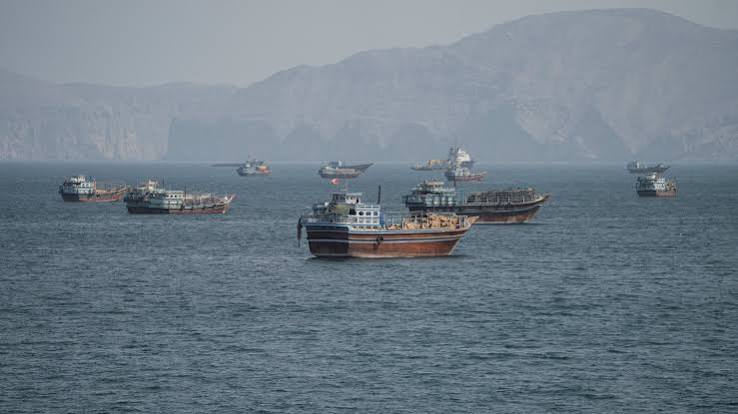
Before the United States and Israel began their military offensive in Iran in February of this year, one half of all the world’s fertilizer feedstock exports passed through the Strait of Hormuz. Chemicals including urea, ammonia, sulfur, hydrogen, natural gas, and nitrogen are critical components in nitrogen-based fertilizer, which serves as a foundational input for sustaining global food security in today’s agrifood systems.
In particular, the cultivation of staple crops like corn, wheat, and rice, which are almost entirely grown in industrialized monocropping systems, is severely dependent on chemical fertilizers to meet production needs. This means that, if global fertilizer supply chains are compromised, half of the world’s calories are at risk. After the Strait of Hormuz closed to nearly all shipping traffic on February 28, fertilizer prices surged enormously, rapidly doubling their previous levels.
“The disruption of the Strait of Hormuz can push 45 million more people into hunger and starvation,” the United Nations’ Jorge Moreira da Silva said back in April. “So, clearly, we need to do something.” But now, six months later, the threat of hunger still looms large.
While the Strait is no longer at a standstill, the control of the waterway is still contentious and highly precarious, with violence and disruption quickly setting in as the ‘new normal’ in the vital trade artery. And even if the United States and Iran maintain their extremely fragile agreements, fertilizer production won’t bounce back overnight. “Fertilizer companies will still have to wait for natural gas production in the Gulf to ramp up to regain their feedstock supply, which will take months or even years,” reports Semafor, a nonpartisan news outlet.
The International Monetary Fund’s World Economic Outlook projects an overall 10 percent increase in fertilizer prices by the end of this year, contributing a 5 percent hike in food costs in 2026 and another 2.4 percent in 2027, with variation by region. As usual, it is the poorest countries that will be hit the hardest.
“The compounding effect of higher energy and fertilizer costs, resilient biofuel-linked demand and El Niño-related weather risk puts pressure on food prices and, ultimately, food security,” the S&P Global report concludes. “The risk is increasing, especially for low-income countries, where food costs amount to about half of household spending.”
While a global food crisis is not a certainty, pressure on cash-strapped consumers is – with grave consequences for the global poor. If enough of the global population cannot afford to eat, this could, in turn, result in more conflict. Historically, food price shocks and inflation of prices for food staples is a key driver of conflict. Many experts believe that the Arab Spring, for example, was a direct result of rising food costs across the region. Adding food inflation and rising hunger rates to an already tumultuous geopolitical climate could fan the flames of conflict and civil unrest in the coming months.
By Haley Zaremba
Continue Reading

Oil & Energy

Gas Reserves Hit 215 Trillion Cubic Feet

Published

on

Nigeria’s proven gas reserves have risen from 208.83 trillion cubic feet (tcf) in 2023 to 215.19 tcf as of January 2026, while average daily production has increased to about 7.5 billion cubic feet.
The Decade of Gas Secretariat disclosed this during a media engagement programme organised in collaboration with the Presidential Initiative on Compressed Natural Gas and Electric Vehicles (PI-CNG & EV), in Kano, at the weekend.
The engagement, being the first formal with journalists in Kano, following similar sessions held in Lagos, Abuja and Port Harcourt, brought together 27 journalists from television, radio, print and digital platforms, and targeted at deepening understanding of Nigeria’s gas development agenda and promoting informed reporting of the sector.
Speaking on milestones recorded under the administration of President Bola Ahmed Tinubu and the Minister of State for Petroleum Resources (Gas), Ekperikpe Ekpo, the Workstream Lead for Infrastructure and Demand at the Decade of Gas Secretariat, Taofeek Balogun, said domestic gas supply had now exceeded two billion cubic feet per day.
“Significant achievements have been recorded under the administration of President Bola Ahmed Tinubu, with proven gas reserves increasing and production rising steadily,” Balogun said.
He disclosed that $3.5 billion in committed investments had been secured across four major gas projects, with 100 per cent completion of the OB3 Gas Pipeline and about 95 per cent completion of the AKK Gas Pipeline.
According to him, N671 billion in public infrastructure funding had attracted approximately N1.6 trillion in private investment into the sector.
On clean cooking, Balogun said the LPG Programme targeting five million households by 2030 had commenced, with launches in Bayelsa and Akwa Ibom states and the distribution of 27,000 LPG cylinders, alongside ongoing regional sensitisation programmes.
He added that Nigeria was targeting September 24, 2028, for transition to a Willing Buyer, Willing Seller gas market framework to strengthen competitiveness, transparency and commercial sustainability.
Continue Reading

Oil & Energy

NCDMB, Manufacturers Commit To Scale Up Local Oil And Gas Production Components

Published

on

The Nigerian Content  Development and Monitoring Board (NCDMB) has restated its commitment to scale up production of local oil and gas components, in direct partnership with in- country manufacturers.
Recall that on July 7, 2022, the NCDMB commissioned a diverse oil industry team to develop a strategy for in-country manufacturing of pumps, valves, flanges, gaskets, bolts and nuts, metering solutions, and instrument fittings, and the team submitted its report on July 12, 2023.

The study was initiated after local manufacturing of these components was identified as essential to advancing Nigerian content, given their significant role in sustaining oil and gas production uptime and their substantial share of both operating and capital expenditures.

In a  stakeholders’ meeting held in Port Harcourt, the Rivers State capital, to define practical strategies for implementing the report, aimed at expanding local manufacturing capacity, empowering indigenous enterprises, and reducing reliance on imported component, the Executive Secretary, NCDMB, Engr. Felix Omatsola Ogbe, underscored the Board’s drive to deepen local capacity, promote industrialisation, and maximise value retention in the Nigerian oil and gas industry.

Represented by the General Manager, Institutional Development, Capacity Building Directorate, Olugbenga Sheba,
Ogbe emphasised that developing the capacity to manufacture critical industry components within the country would not only strengthen indigenous enterprises and improve technical competence, but position Nigerian companies to participate more effectively in the supply chains of major oil and gas projects.

He cited the Nigerian Oil and Gas Industry Content Development (NOGICD) Act, 2010, which provides for first consideration of Nigerian goods and services, reinforcing the statutory basis for promoting indigenous participation and local production.

According to him, the Board remains committed to ensuring that the implementation of the study report’s recommendations is guided by the provisions of the Act and creates greater opportunities for qualified Nigerian companies to thrive.

“Today’s rollout is not an isolated initiative; it is an integral pillar of our NCDMB 10-Year Strategic Roadmap, which targets achieving 70% Nigerian Content by 2027,” he stated.

Ogbe explained that the implementation of the study report would directly advance the technical capability development pillar of the Board’s 10-Year Strategic Roadmap by addressing identified skills gaps, technological deficiencies, and limitations in local manufacturing capacity.

He outlined key areas of focus for the implementation process to include infrastructure expansion, structured capacity-building initiatives, improved access to capital and strategic partnerships, as well as effective monitoring, compliance, and enforcement.

The NCDMB boss urged stakeholders to demonstrate strong commitment to the implementation process, insisting that collaboration among the Board, indigenous manufacturers, operators, service companies, financial institutions, and other industry players remained critical to achieving sustainable results.

In his presentation, Assistant Manager, Institutional Strengthening of the Capacity Building Directorate, Nander Salmwang, disclosed that approximately 60 indigenous companies had been identified in the assessment, with only 18 meeting the required criteria.

Salmwang also highlighted challenges affecting the development and expansion of in-country manufacturing capacity, underscoring the need for targeted interventions to bridge existing gaps.

On his part, the Manager, Nigerian Content Development Fund (NCDF),  Emmanuel Yusuf, presented funding opportunities available through the NCDF, explaining the relevance of financial support to indigenous companies and community contractors seeking to strengthen their operations and participate more actively in the industry’s supply chain.

The meeting also highlighted the relevance of the Nigerian Oil and Gas Park Scheme (NOGaPS) in supporting the development of local manufacturing infrastructure and capabilities.

Other presentations and discussions provided a platform for stakeholders to examine existing opportunities, identify implementation challenges, and explore practical approaches to improving indigenous participation in the manufacturing of critical oil and gas equipment and components.

By: Lady Godknows Ogbulu

Continue Reading

Trending