
Opinion
The School Dropout Syndrome

As education is becoming more essential and the level of illiteracy reduces globally due to technology and high demands in the job market, Nigeria’s education system is faced with increasing challenges.
There is one major challenge that is in most higher institutions. It is the fact that most students don’t complete their education and thus drop out before even graduating from school. ‘Dropout’ as the name implies, is a term that is commonly used to refer to students who for one reason or another terminate their studies before graduating.
Several reasons and causes have emerged that are believed to contribute towards students dropout of school. As we all know there is no action without consequences. There are several observable effects that do not only affect dropout, but the society at large. That is why we are looking at why many students drop out of school and how this decision affects their lives and the society at large.
Some of the reasons include poor parenting. This has been considered to be the greatest challenge that causes students to drop out. For instance, students that come from divorced and abusive parents are more likely to leave school before graduating than those that come from specially secure families.
Divorced abusive and lower class families face a high chance of failing to pay school fees and meet up the necessary requirements that are demanded and that may have a psychological effect on students. Abusive parents, on the other hand, affect their children’s performance in school by not giving them the love, trust and encouragement they need. Such children, therefore, become depressed and most of them end up running away from home to escape their parents’ bad conduct.
Peer pressure is a another factor that causes students to drop out of school. Most students in the same age bracket tend to have several things in common and will try as much as they can to share ideas both good and bad. One of the bad ideas from peers include the use of drugs. Young people who take drugs perform poorly at school as it is believed to be one of the strong factors that pull students out of school. Even though drug use is prohibited in most schools, the evil continues to thrive.
Another factor is lifestyle. As lifestyle changes with time, most students have the mentality that they are better accepted in the society when they drive expensive cars, dressed in superior clothes and display some ostentatious lives. Thus those students whose parents are incapable of meeting such standards feel misplaced and cannot stand this agony, particularly when they study with well-off students. In the long run they drop out of school.
Parental misguidance is also becoming a contributory factor towards the increasing rate of school dropouts. There are families that have lived good lives without relying on education. Such families do not accentuate the need for education for their children. When this happens, students are left to choose whether to complete or drop out of school.
Finance also causes many university students to drop out of school. Education today involves money and when the student doesn’t meet up the necessary requirement in school in terms of payment of school fees, textbooks, accommodation etc, the student may decide to work to earn more money to further their education instead of concentrating on studies. Dropouts who are concerned about their immediate, short-term financial situation may see a full time job as the best way to maintain the lifestyle they desire. Early pregnancy is also a factor that aids the school dropout syndrome.
The aforementioned reasons for students’ drop out are problems for the society and the government as well. For instance, when we have so many people living in poverty due to low income, it increases the rate of school dropouts.
It is very clear that education moulds the character of individuals and society. Where it is lacking, the results are unpalatable. They say knowledge is power. A country where students’ dropout rate is high, it indicates that all is not well with the education sector. Consequently, all manner of deviant behaviours will be noticed and no one can live in peace. Education, therefore, is the only guarantee for a better life.
Nwankwo wrote from Port Harcourt.
Anita Nwankwo




Quote “Professor Kamene Okonjo
Some women leave behind more t
Yet, to remember Professor Kam
Professor Okonjo was the belov
one of the most dramatic chapt
On December 14, 2012, the then
She leaves behind children, gr
Professor Kamene Okonjo deserv
By: Sylvia ThankGod-Amadi

Quote: An African who invokes
This is the concluding part
… Given the fact that I was
At the end of the visit by the
Back to my apartment, at abo
Under normal circumstances, yo
That all she asks is that Chie
For some reason that I do not
I believe that everyone in hu
Our ancestors have not gone fa
By: Jason Osai
The Federal Government’s approval of a N70,000 monthly transport intervention for public service workers for six months, beginning in November 2026, offers hope to employees struggling with the rising cost of living. The agreement with the Nigeria Labour Congress (NLC), reached at a conciliation meeting in Abuja on October 27, is intended to cushion transport costs and ease pressure on workers’ incomes. But for public servants in Rivers State, it raises a familiar question: will the State Government key into the intervention and ensure that its workers benefit? The agreement provides for N70,000 monthly across all levels, for six months. The Federal Government also approved peculiar allowance arrears effective from May 1, 2026, to be paid in three equal instalments beginning in November.
The parties agreed to reconvene after one month to assess implementation. Ultimately, the value of these resolutions will be measured not by announcements but by whether eligible workers receive the money. Transport costs consume a substantial share of many civil servants’ earnings before they can meet household needs. Support for commuting is therefore not a luxury or political favour; it is temporary assistance to help workers remain at their jobs without sinking further into hardship. For lower-paid employees, transport costs can turn modest salaries into a daily exercise in difficult choices and sacrifice.
The agreement also urges State and Local Governments to participate and unions to press for implementation. The federal agreement does not automatically guarantee that every State and Local Government employee will receive the support. State authorities must clarify how it will apply to their workforce, make the necessary arrangements and publish a payment timetable. Rivers State must approach the arrangement with urgency and transparency. The Government should State whether it will implement the intervention and when payments will begin. Any administrative or financial question should be addressed promptly with organised labour, not allowed to become excuses for delay.
The concern is sharpened by the earlier N35,000 monthly wage award introduced by the Federal Government in 2023 after petrol subsidy removal. It was intended as temporary relief pending a new national minimum wage. While several States negotiated and paid wage awards or related sums, implementation nationwide was uneven. Reports in 2024 indicated that many States had failed to pay the federal award, while others provided different amounts. In Rivers, labour and media reports raised concerns about implementation of the N35,000 award for State workers, amid separate announcements and arrangements concerning Local Government employees.
The wage award was meant to ease the immediate effects of subsidy removal, yet workers faced uncertainty over whether the promised relief would reach them. In February 2024, the Rivers State Government announced approval of the N35,000 award for local government workers, but subsequent reports showed that implementation across worker categories remained a concern. The lesson is clear: approval and implementation are not the same. A declaration at a meeting offers little comfort to a worker whose account does not reflect the promised payment. For workers who travel to their offices daily, the implications of delayed support are significant. Transportation expenses compete with food, rent, school fees, healthcare and other essential household needs.
As fares rise, employees may be forced to reduce spending on necessities or borrow to sustain their families. A timely transport intervention would therefore provide practical relief and demonstrate that government understands the economic pressures confronting its workforce. Its temporary nature makes prompt implementation even more important. It is fair to acknowledge that this transport intervention is a new agreement and that its administrative details may require clarification. Rivers State should not be condemned in advance for a failure that has not occurred. Nevertheless, the earlier experience gives workers legitimate grounds to seek assurances before the November commencement date. The State should avoid allowing uncertainty to persist until workers begin asking why the promised assistance has not arrived.
The NLC and unions in Rivers State should engage the State Government immediately and seek a written commitment, an implementation plan and a process for reporting missed payments. If clarification from the Federal Government is needed, the State should seek it without abandoning the goal of providing relief. Labour leaders must also keep members informed about progress and insist that any agreed arrangements are applied fairly and transparently. The Rivers State Government should treat this intervention as an opportunity to rebuild confidence. Timely support would show that workers’ welfare is more than a talking point and that the State recognises the economic realities confronting its employees.
Silence, delay or selective implementation, by contrast, would revive frustration over earlier relief measures and weaken trust between government and labour. Every month lost to administrative delay leaves workers facing the same transport burden without the intended assistance. The State should consult labour, publish arrangements and pay eligible workers on time. Rivers workers should not have to wonder whether federal relief will reach them. The Federal Government has announced the support; now the State must make its position clear. We hope the N70,000 monthly transport intervention will not follow the troubling path of the earlier wage award. Rivers State should learn from that experience and ensure that this time, relief is not merely promised but delivered.
Sylvia ThankGod-Amadi
-
Rivers2 days ago
NUJ Set To Attend UNIPORT’s 217th Inaugural Lecture
-
 News2 days ago
NJC Suspends Three Judges, Sanctions Eight Others
-
Politics2 days ago
Atiku Kicks-Off 2027 Campaign, Promises To Tackle Nigeria’s Challenges
-

 Featured2 days ago
APC Presidential Campaign Storms PH, ‘Morrow
-
News2 days ago
FG Explains Supply Disruption As Power Generation Drops To 3,659MW
-
Metro2 days ago
Port Harcourt Prepares For 10,000 Runners As International Marathon Returns
-
 News2 days ago
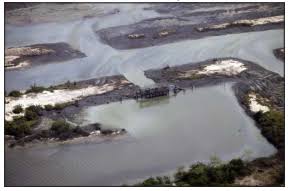
Bille Gas Leak: Coalition Tasks FG On Proactive Measures
-

 News2 days ago
IGP Orders Arrest, Prosecution Of Campaign Billboard Vandals