
Opinion
Lessons From Japan

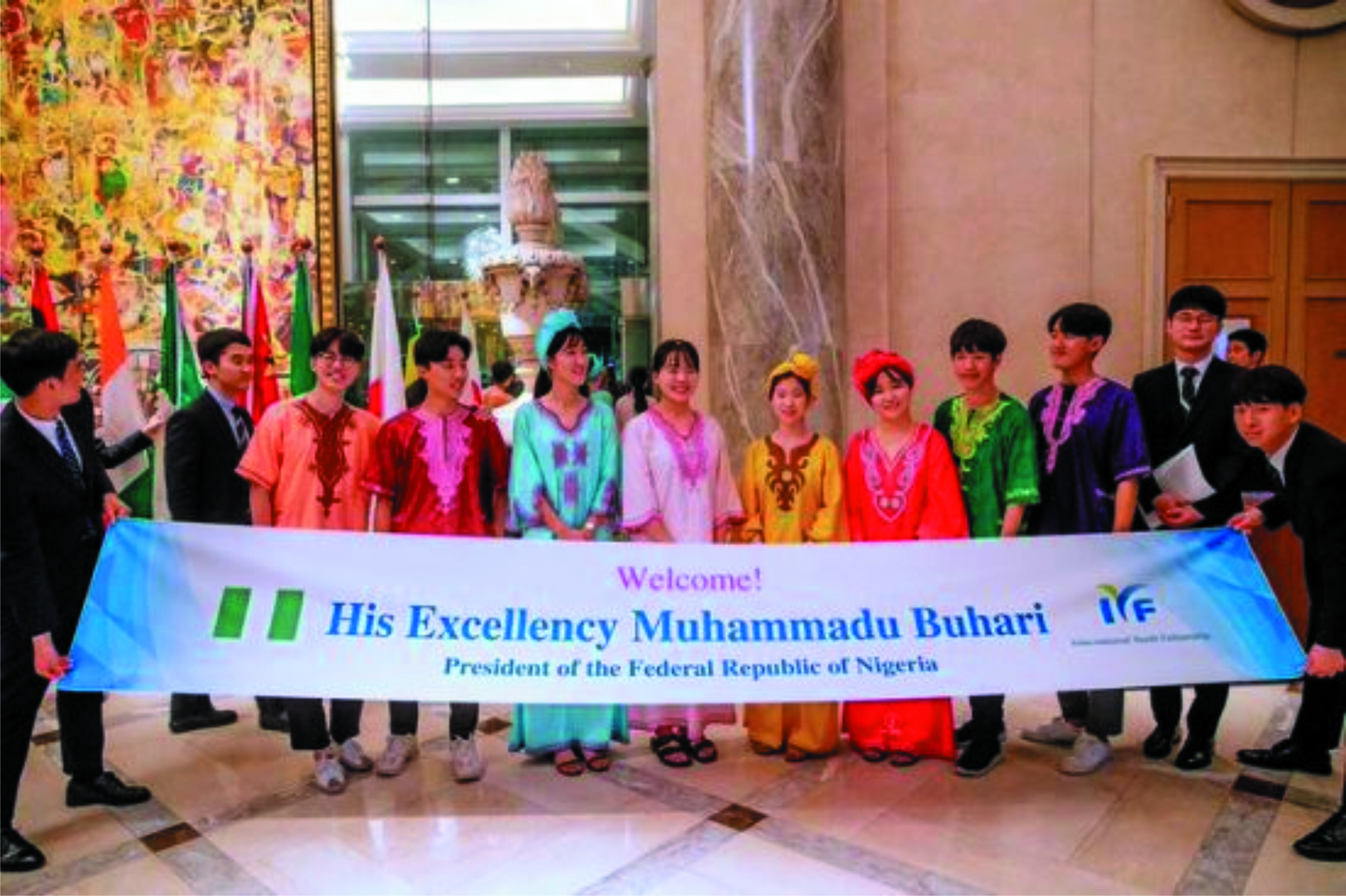
Amidst bogus titles ranging from “The Giant of Africa, Economic Hub of Africa, etc, attributed to our nation Nigeria, many of her citizens are locked up in poverty. There’s also a conspicuous low human development despite the abundant human and natural resources the country is endowed with.
Worried by this development, a semantic scholar, Richard Eke Imade, took time to explore key initiatives taken by Japan in its quest for development. In his research article on Japan’s development experience, published in 2016, Imade had wondered why a replication of similar transformative initiatives in Nigeria remains elusive.
Like every other concerned Nigerian, Imade has refused to come to terms with what he considers an inability of Nigeria’s successive post-independence leaders to leverage on numerous learning opportunities inherent in Nigeria’s history.
Definitely, the resercher isn’t alone in his world of thought, as his work literally portrayed the worries of many who may not have had the opportunity to pen down their thought for a wider readership.
Come to think of it, the country’s access to mainstream and alternative development paradigms through decades of development cooperation, obviously had gotten the potential to build a strong, cohesive and prosperous nation.
No doubt, the extractive political and economic institutions foisted on the country by its post-independence leaders, colonial legacy and political instability, coupled with mono-economy, policy inconsistency, widespread corruption, among other factors, as outlined by the scholar, may have accounted for its inability to learn from the development milestones of other developed nations.
No need too to argue that the placement of selfish interest above the public’s by the country’s past leadership may have imensely relagated it to the supposed dark corner it has remained, howbeit, we will remain a people most miserable should we continue to dwell in our past without using it to chart a pathway for our future.
Haven realized that poor leadership, persistent instability, over-dependence on crude oil, among other factors were responsible for the current abysmal performance of Nigeria in key development indicators, translating this knowledge into a capacity for meaningful development outcomes, becomes imperative.
After all, the economic expansion of the developed world in the last two centuries has been based on an explosion of knowledge about what can be made, and how. Goods and services are made by stringing together productive capabilities – inputs, technologies, and tasks – just as words are made by putting letters together.
Suffice it to say that countries with greater variety of capabilities can make more diverse and complex goods, just as a scrabble player who has more letters can generate more and longer words.
The writer thus posits that the current Nigerian leadership must negotiate the country’s development within the currents of contemporary realities, eschewing those conducts that undermined inclusive prosperity.
Today, the entire world talks about Japan. This is so because the Japanese government played a vital role by creating an enabling economic environment which was evident in complementing the development of superior production and enterprise systems by Japanese industry.
Japan’s great and unbelievable fast technological and industrial breakthrough started when it banned the importation of articles into the country.This means that Nigeria’s resolve to ban certain import goods may well pay off someday.
Even though some econmic analysts consider the import ban strategy a good initiative by the CBN, positing that it will inspire local production and automatically impact on the nation’s Gross Domestic Product (GDP), we still may not rule out governmental attitude towards its implementation as a major determinant of the level of result to be expected.
All the same, what Japan’s experience demonstrates with great clarity is that problems arising from efforts geared at fixing cracked or dilapidated system should propel the masses to greatness instead of deterring them.
While it is hoped that President Buhari’s administration’s strategies to revive the country’s ailing economy in this dispensation, on the other hand, the role of the state has become more profound. Such roles must include charting a strategic direction for the country.
States are also expected to aggregate and align national development aspirations with private interests, removing socio-cultural impediments such as those associated with gender, ethnicity etc while strengthening others such as occupation or community-based cooperatives and other grassroots initiatives through appropriate legal and social interventions.
Sylvia ThankGod-Amadi




Quote “Professor Kamene Okonjo
Some women leave behind more t
Yet, to remember Professor Kam
Professor Okonjo was the belov
one of the most dramatic chapt
On December 14, 2012, the then
She leaves behind children, gr
Professor Kamene Okonjo deserv
By: Sylvia ThankGod-Amadi

Quote: An African who invokes
This is the concluding part
… Given the fact that I was
At the end of the visit by the
Back to my apartment, at abo
Under normal circumstances, yo
That all she asks is that Chie
For some reason that I do not
I believe that everyone in hu
Our ancestors have not gone fa
By: Jason Osai
The Federal Government’s approval of a N70,000 monthly transport intervention for public service workers for six months, beginning in November 2026, offers hope to employees struggling with the rising cost of living. The agreement with the Nigeria Labour Congress (NLC), reached at a conciliation meeting in Abuja on October 27, is intended to cushion transport costs and ease pressure on workers’ incomes. But for public servants in Rivers State, it raises a familiar question: will the State Government key into the intervention and ensure that its workers benefit? The agreement provides for N70,000 monthly across all levels, for six months. The Federal Government also approved peculiar allowance arrears effective from May 1, 2026, to be paid in three equal instalments beginning in November.
The parties agreed to reconvene after one month to assess implementation. Ultimately, the value of these resolutions will be measured not by announcements but by whether eligible workers receive the money. Transport costs consume a substantial share of many civil servants’ earnings before they can meet household needs. Support for commuting is therefore not a luxury or political favour; it is temporary assistance to help workers remain at their jobs without sinking further into hardship. For lower-paid employees, transport costs can turn modest salaries into a daily exercise in difficult choices and sacrifice.
The agreement also urges State and Local Governments to participate and unions to press for implementation. The federal agreement does not automatically guarantee that every State and Local Government employee will receive the support. State authorities must clarify how it will apply to their workforce, make the necessary arrangements and publish a payment timetable. Rivers State must approach the arrangement with urgency and transparency. The Government should State whether it will implement the intervention and when payments will begin. Any administrative or financial question should be addressed promptly with organised labour, not allowed to become excuses for delay.
The concern is sharpened by the earlier N35,000 monthly wage award introduced by the Federal Government in 2023 after petrol subsidy removal. It was intended as temporary relief pending a new national minimum wage. While several States negotiated and paid wage awards or related sums, implementation nationwide was uneven. Reports in 2024 indicated that many States had failed to pay the federal award, while others provided different amounts. In Rivers, labour and media reports raised concerns about implementation of the N35,000 award for State workers, amid separate announcements and arrangements concerning Local Government employees.
The wage award was meant to ease the immediate effects of subsidy removal, yet workers faced uncertainty over whether the promised relief would reach them. In February 2024, the Rivers State Government announced approval of the N35,000 award for local government workers, but subsequent reports showed that implementation across worker categories remained a concern. The lesson is clear: approval and implementation are not the same. A declaration at a meeting offers little comfort to a worker whose account does not reflect the promised payment. For workers who travel to their offices daily, the implications of delayed support are significant. Transportation expenses compete with food, rent, school fees, healthcare and other essential household needs.
As fares rise, employees may be forced to reduce spending on necessities or borrow to sustain their families. A timely transport intervention would therefore provide practical relief and demonstrate that government understands the economic pressures confronting its workforce. Its temporary nature makes prompt implementation even more important. It is fair to acknowledge that this transport intervention is a new agreement and that its administrative details may require clarification. Rivers State should not be condemned in advance for a failure that has not occurred. Nevertheless, the earlier experience gives workers legitimate grounds to seek assurances before the November commencement date. The State should avoid allowing uncertainty to persist until workers begin asking why the promised assistance has not arrived.
The NLC and unions in Rivers State should engage the State Government immediately and seek a written commitment, an implementation plan and a process for reporting missed payments. If clarification from the Federal Government is needed, the State should seek it without abandoning the goal of providing relief. Labour leaders must also keep members informed about progress and insist that any agreed arrangements are applied fairly and transparently. The Rivers State Government should treat this intervention as an opportunity to rebuild confidence. Timely support would show that workers’ welfare is more than a talking point and that the State recognises the economic realities confronting its employees.
Silence, delay or selective implementation, by contrast, would revive frustration over earlier relief measures and weaken trust between government and labour. Every month lost to administrative delay leaves workers facing the same transport burden without the intended assistance. The State should consult labour, publish arrangements and pay eligible workers on time. Rivers workers should not have to wonder whether federal relief will reach them. The Federal Government has announced the support; now the State must make its position clear. We hope the N70,000 monthly transport intervention will not follow the troubling path of the earlier wage award. Rivers State should learn from that experience and ensure that this time, relief is not merely promised but delivered.
Sylvia ThankGod-Amadi
-
Rivers2 days ago
NUJ Set To Attend UNIPORT’s 217th Inaugural Lecture
-
 News2 days ago
NJC Suspends Three Judges, Sanctions Eight Others
-
Politics2 days ago
Atiku Kicks-Off 2027 Campaign, Promises To Tackle Nigeria’s Challenges
-
 Featured2 days ago
APC Presidential Campaign Storms PH, ‘Morrow
-
News2 days ago
FG Explains Supply Disruption As Power Generation Drops To 3,659MW
-
Metro2 days ago
Port Harcourt Prepares For 10,000 Runners As International Marathon Returns
-
 News2 days ago
Bille Gas Leak: Coalition Tasks FG On Proactive Measures
-

 News2 days ago
IGP Orders Arrest, Prosecution Of Campaign Billboard Vandals