
Nation
THE STATES

Bauchi
The Emir of Bauchi, Alhaji Rilwanu Sulemanu Adamu, has cautioned politicians against violence and thuggery before, during and after the April general elections.
Adamu gave the warning when the First Lady, Dame Patience Jonathan, paid him a courtesy visit in his palace in Bauchi recently.
The emir said that politicians should play the game according to the rules, adding that no meaningful development could be achieved in an atmosphere of chaos.
He thanked President Goodluck Jonathan for approving the execution of the Mambilla hydroelectricity project in Taraba.
He said the project would engender socio-economic development of the North-East zone in particular and the nation in general.
Earlier, the First Lady solicited the support of the emir for the PDP to succeed.
She told the emir that the Federal Government had initiated many projects for the North-East zone and called on the emir to assist in ensuring that they were completed.
Ekiti
The Management of the University Teaching Hospital, Ado-Ekiti has fixed March 2, for the mass burial of unclaimed corpses in the hospital’s mortuary.
Mr Anthony Awolusi, the hospital’s Public Relations Officers, stated this in a statement in Ado-Ekiti last Thursday.
Awolusi said that the measure became necessary in order to decongest the mortuary.
He said that there were many unclaimed corpses in the mortuary, and that some had stayed for more than four years without any form of identifications.
“The management of the University Teaching Hospital, Ado-Ekiti once again appeals to the public to collect the corpses of their relations in the hospital’s mortuary within a week.
“These bodies have been lying in the mortuary without any form of identification for years and are now causing congestion and health hazards in the hospital.
“The hospital mortuary is going to be decongested and the management will proceed on mass burial of the corpses any time from March 2,” Awolusi said.
FCT
The Abuja Environmental Protection Board (AEPB) says it will prosecute anyone who uses residential areas for rearing animals or pets.
Mr Ahmed Abubakar, the Head, Environmental Health Department at the board, said this while speaking with newsmen in Abuja.
He said that with the structure of residential houses in the territory, the activity of a resident might affect neighbours negatively.
He also warned that residents who use residential premises as business centres and those who pollute the environment with excessive noise would face the law.
“Conversion of premises into commercial use is not allowed; some people even renovate and change wardrobes to toilets; the sippage goes into the next person’s wardrobe.
Gombe
The All Farmers Association of Nigeria (AFAN), Gombe State Chapter, has appealed to the state government to distribute fertilisers on time to enable farmers to plan ahead.
Alhaji Gambo Sarkinnoma, the Secretary of the association, made the appeal last Thursday in Gombe in an interview with newsmen.
“We are appealing to the state government to distribute fertilisers on time at least during the first or second week of March,” he pleaded.
He said that early distribution of the commodity would enable farmers to estimate their yield during harvest.
“If a farmer gets his allocation on time, he will be able to know the size of the land to cultivate.
Kaduna
Governor Patrick Yakowa of Kaduna State on Wednesday unveiled his development plans if elected in the April gubernatorial election.
Yakowa made the disclosure while fielding questions at an interactive forum organised by the state council of the NUJ in Kaduna.
He said that agriculture would form the cornerstone of his administration to achieve food security, gainful employment and self reliance.
He added that security would be given priority attention along with the peaceful co-existence among the diverse people of the state.
The governor pledged to eradicate poverty and improve transportation, education, health, water supply, infrastructure, housing and electricity.
Yakowa said he would adopt a “deliberate and pragmatic strategy’’ to implement the programmes if given the mandate.
Meanwhile, Kaduna State Government plans to introduce improved firewood stoves to reduce the quantity of firewood used for domestic cooking.
The Commissioner for Environment and Natural Resources, Alhaji Zakariya Shamaki, disclosed this last Thursday in an interview with newsmen in Kaduna.
Lagos
An Ebute Meta Magistrates Court, Lagos on Wednesday granted a N200,000 bail to a septuagenarian landlord, Adesomoju Odoro who was docked for alleged defilement of a nine-year-old girl.
Odoro, 79, is standing trial before Mrs Folashade Kayode on the charge of defiling a primary two pupil (names withheld).
The Prosecutor, Sgt. Paul Inedu told the court that the landlord unlawfully had carnal knowledge of the minor, whose parents’ were tenants in his house at No 3, Aiyetoro St., Ebute Meta, Lagos.
Inedu said that the offence was allegedly committed on February 12.
According to the prosecutor, the minor came to meet the septuagenarian in the communal kitchen where he was preparing lunch and told him she wanted to defecate.
“After taking the girl to the toilet, the accused took her into his bedroom and forcefully had carnal knowledge of her,’’ he said.
The prosecutor said that the accused had been previously arrested over similar allegations of having carnal knowledge of three other minors but was let go by the police.
Niger
President Goodluck Jonathan in Minna commended former Head of State retired Gen . Abdulsalami Abubakar for entrenching democracy in the country.
Jonathan made the commendation in Minna at a presidential campaign.
He held that the former head of state had the opportunity of perpetuating himself in office without any opposition but decided to hand over to democratic government.
“If he had wanted to stay in power for four years, he could have done so without any opposition, but he said one year was more than enough to transit from military to democratic rule.
He, therefore, said politicians must show gratitude to the man for allowing democratic tenets to flourish in the country “We are grateful to him for giving us democracy.’’, adding that the country must learn to show gratitude to those who meant very well for the country.
Ondo
The police in Irele town, Ondo State, have arrested seven suspects in connection with a recent robbery incident in the area.A reliable police source told newsmen on Thursday that the suspects were arrested following a tip-off.He said the police were still on the trail of other key actors in the robbery in which a victim was killed at Legbogbo Village in Irele Local Government Area.The source said an undisclosed amount of money and some dangerous weapons, including a pistol, ammunition and charms were recovered from the suspects.The Divisional Police Officer (DPO) at Irele, CSP Lasisi Titilola, told newsmen that the case had been transferred to the state CID, Akure for further investigation.The Chairman of Irele Local Government Area, Mr Shedrack Olowojuni, said the suspects should be made to face the full wrath of the law.
Sokoto
Former President Olusegun Obasanjo has stressed the need for Nigerians to be united in spite of their cultural , religious and ethnic differences.
Obasanjo, who spoke last Tuesday in Sokoto at the flag off of the second term re-election bid of Governor Aliyu Wamakko, said the nation must manage its diversity well.
The former president urged Nigerians to elect a leader who would be able to provide stability and visionary leadership.
“We should not vote on the basis of religion or sectionalism but on the basis of the present need of the country,’’ he said.
Obasanjo expressed delight that the country had continued to remain united , adding: “I thank God that we still have a country we can call Nigeria undiminished .’’
Yobe
Governor Ibrahim Gaidam last Yobe State has assured the people of the state of equal opportunities, irrespectiove of their political leanings.
He gave the assurance on Thursday at a political rally in Tarmuwa, Tarmuwa Local Government Area of the state.
Gaidam said his administration was determined to provide equal opportunities to every part of the state to bring development to the grassroots.
He said government had since 2007 invested heavily in the construction of urban and rural roads, education and manpower development in most parts of the state.
“We are committed to providing more roads, health care delivery and improving the quality of education in all parts of the state in the next dispensation,” he added.
Gaidam promised that his administration would continue to promote religious harmony and peaceful coexistence among the various communities in the state.



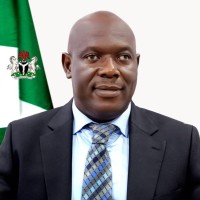
The Hydrocarbon Pollution Remediation Project (HYPREP) has commemorated the 15th anniversary of the release of the United Nations Environment Programme (UNEP) Environmental Assessment Report on Ogoniland, reaffirming its commitment to restoring the environment and improving the livelihoods of affected communities.
In a statement signed by the Project Coordinator, Prof Nenibarini Zabbey, to commemorate the anniversary, HYPREP described the anniversary as a significant milestone in Nigeria’s environmental restoration efforts, noting that the project has made remarkable progress in implementing the recommendations of the landmark UNEP report released on August 4, 2011.
The UNEP report had revealed extensive oil pollution across Ogoniland, severe environmental degradation, and serious public health risks resulting from decades of petroleum operations. It also recommended an initial $1 billion fund to commence the cleanup of the affected communities.
According to HYPREP, the Federal Government formally launched the Ogoni clean-up in 2016, while the Project Coordination Office was established in 2017 to drive the implementation of UNEP’s recommendations.
Zabbey said the current administration has continued to prioritise the project under the Renewed Hope Agenda.
Providing an update on the cleanup, the Project Coordinator disclosed that 30 of the 65 contaminated sites identified by UNEP have been fully remediated, while work is ongoing at several medium- and high-risk locations. It also stated that more than 1.5 million mangrove seedlings have been planted as part of what it described as the world’s largest restoration of oil-degraded mangroves, with over 1,000 hectares of shoreline already rehabilitated.
Zabbey further revealed that 49 Ogoni communities have been connected to potable water schemes through multiple water projects and booster stations aimed at providing safe drinking water across the region.
In the health sector, he said the 100-bed Ogoni Specialist Hospital in Kpite and the 43-bed Cottage Hospital in Buan are nearing completion, adding that several existing health facilities have been upgraded with modern medical equipment, while five ambulances have been donated to improve emergency healthcare services. The Project Coordinator also disclosed that a three-year human health biomonitoring study is being conducted in collaboration with the World Health Organization’s International Agency for Research on Cancer (IARC).
On economic empowerment, Zabbey stated that the Project has created more than 8,000 direct jobs and trained thousands of Ogoni youths and women in various vocational and technical skills, including software development, cybersecurity, aviation, commercial diving, seafaring, mechatronics, and creative arts. The project also reported awarding scholarships to more than 1,000 students, providing grants to small businesses, and supporting persons living with special needs through skills acquisition programmes.
The statement further highlighted ongoing legacy projects, including the Ogoni Power Project and the Centre of Excellence for Environmental Restoration, which it said is about 96 per cent complete. HYPREP also welcomed the recent designation of the Ogoni Wetland as a Ramsar Site of International Importance and pledged to continue promoting biodiversity conservation and sustainable management of the ecosystem.
Marking the anniversary, Zabbey said the progress achieved over the past 15 years demonstrates the collective commitment of government, development partners, stakeholders, and local communities to restoring Ogoniland. He called for renewed collaboration to sustain the cleanup effort, promote environmental sustainability, and support the long-term development of the region. 3
-

 News2 days ago
RSG Targets Nine Million Residents in Mosquito Net Distribution Campaign
-

 Oil & Energy2 days ago
Aiyedatiwa Signs New Electricity Bill
-

 Oil & Energy2 days ago
NLNG Commissions Research And Innovation Centre In RSU
-

 Maritime2 days ago
Marine Minister Commends President Tinubu On NPERA Bill Assent
-

 News2 days ago
KenPoly Holds Eight Convocations, August 29
-

 News2 days ago
RSG Begins Another Phase of Projects Commissioning Today
-

 News2 days ago
RMAFC Completes Revenue Sharing Review, Proposes New Pay
-

 Maritime2 days ago
NAGAFF Petitions IGP Over Alleged Maritime Police Harassment