
Opinion
Sanitary Conditions In Barracks


There was a news item in The Tide newspaper, Monday August 12, 2019 (P.16), titled “Police Barracks, Rat Holes, Slums with Stinking Gutters” – CACOL. The theme was that the Centre for Anti-Corruption and Open Leadership (CACOL) had taken the National Assembly and the Executive arm of government in charge of the Police Trust Fund (PTF) to task on the present state of police barracks across the country. To lament the fact that the resilience of police officers could pass for rat holes and slums, as CACOL did, is a serious indictment not only on the Nigeria Police as an institution, but also on the collective sense of decency of all Nigerians.
Executive Chairman of CACOL, Debo Adeniran, who decried the deplorable condition of police barracks nation wide, also added that the Nigeria Police is rated among the top five worst police organizations in the world. Such sad verdict was passed by World Internal Security and Police Index; and so, this is not a matter of personal or local prejudice, but an assessment of a responsible global agency in 2016/7.
To add that “police barracks across the country are gradually trudging towards danger” and that in 2017 “our force was rated one of the top five worst police organizations in the world” portrays a sad situation. It would not require the passage of a Police Trust Fund (PTF) law before an improvement in the sanitary conditions of police barracks can be brought about.
Perhaps the sad conditions of the barracks may not be confined to the police alone; because, other members of the Nigerian armed forces that live in barracks, share similar experiences. Perhaps the current economic conditions which Nigerians are passing through may account for why poultry and other animal farms have become common features of barracks life. Cattle also graze in some barracks whose owners are men of power that lesser mortals dare not complain against, even when the cattle destroy the means of livelihood of neighbouring mortals.
Presence of various categories and sizes of livestock in barracks constitutes a part of the sad conditions of barracks life, especially with the smell of cow dungs adding to the plight. In that case, who would complain against who, since everybody else is a nuisance in one way or another to his neighbour. The result of this sad situation in the country is that personal animosities brew in the barracks, in spite of the old culture of “esprit de corps”.
With reference to the police specifically, there are factors which would be of interest to the public. The merger of local authority police (in Western and Northern Nigeria with regular Nigeria Police, which the Nigeria Civil War facilitated or necessitated, definitely diluted the quality and standard of the police. Added to this was the disengagement of highly trained professional personnel of Eastern Nigeria origin from the police, ostensibly because they were in the Biafra enclave during the civil war.
No matter the shenanigans and whatever that may be said to the contrary, the sad treatment given to police officers of Eastern Nigeria origin after the civil war, contributed greatly towards the current unenviable image of the Nigeria police. Another factor which accounts for the current plight of the police is the fact that politics and political postings have destroyed the old level of discipline in the police. There are junior officers attached to politicians, as well as senior officers whose promotions were merely political, whose status are beyond their salary structure. How would such political officers inspire or expect discipline from others?
A situation where some non-commissioned officers are richer than their superior officers, and can, through their connections, wield more power than such officers, then who is in a position to instruct or command the other? That is the current situation in the police across the country, making it difficult for discipline to thrive in the force. Add to this situation the fact that there are several graduates in the police, some of who have not been properly placed according to their academic qualifications. One of such officers had to quit the job and is currently a vice-chancellor of a federal university. Others are having a last laugh!
Therefore, the issue of sanitary conditions in the barracks goes far beyond physical sanitation. Morale and motivation are also quite low among the personnel, arising from the distortions and lapses which have been hinted lightly above. There are constables who cannot take orders from their superior officers; neither would such superior officers place an earring constable on orderly room. People who know their mutual secrets and merely play some hide-and-seek games, rarely have the moral courage to call their colleagues to order, even when serious issues are at stake. Living in a glass house indeed!
In the past, barracks inspection used to be a regular and serious activity whose purposes included ensuring good personal hygiene and sanitation in all living quarters. But in a situation where the wife of a divisional police officer or the station officer, runs a livestock farm or a canteen/beer parlour in the barracks, then can there be an effective barracks inspection? In a situation where some fantastically rich junior officers can operate a soft-loans business, patronized by their superior officers who can go “broke” before the month ends, can discipline be enforced without fear or favour?
The situations in all public-sector organizations and institutions, barracks and campuses included, are such that demand comprehensive but gradual remedy including public inquiry. Not only issues of poor and inequitable remunerations and reward system are involved, but unhealthy outward situations depict fundamental inward conditions that must be addressed. Let’s thank the Centre for Anti-Corruption and Open Leadership (CACOL) for raising the issue of rot in the barracks. Not only police barracks are involved. You can find ostrich in some barracks!
Dr. Amirize is a retired lecturer from the Rivers State University, PH.
Bright Amirize



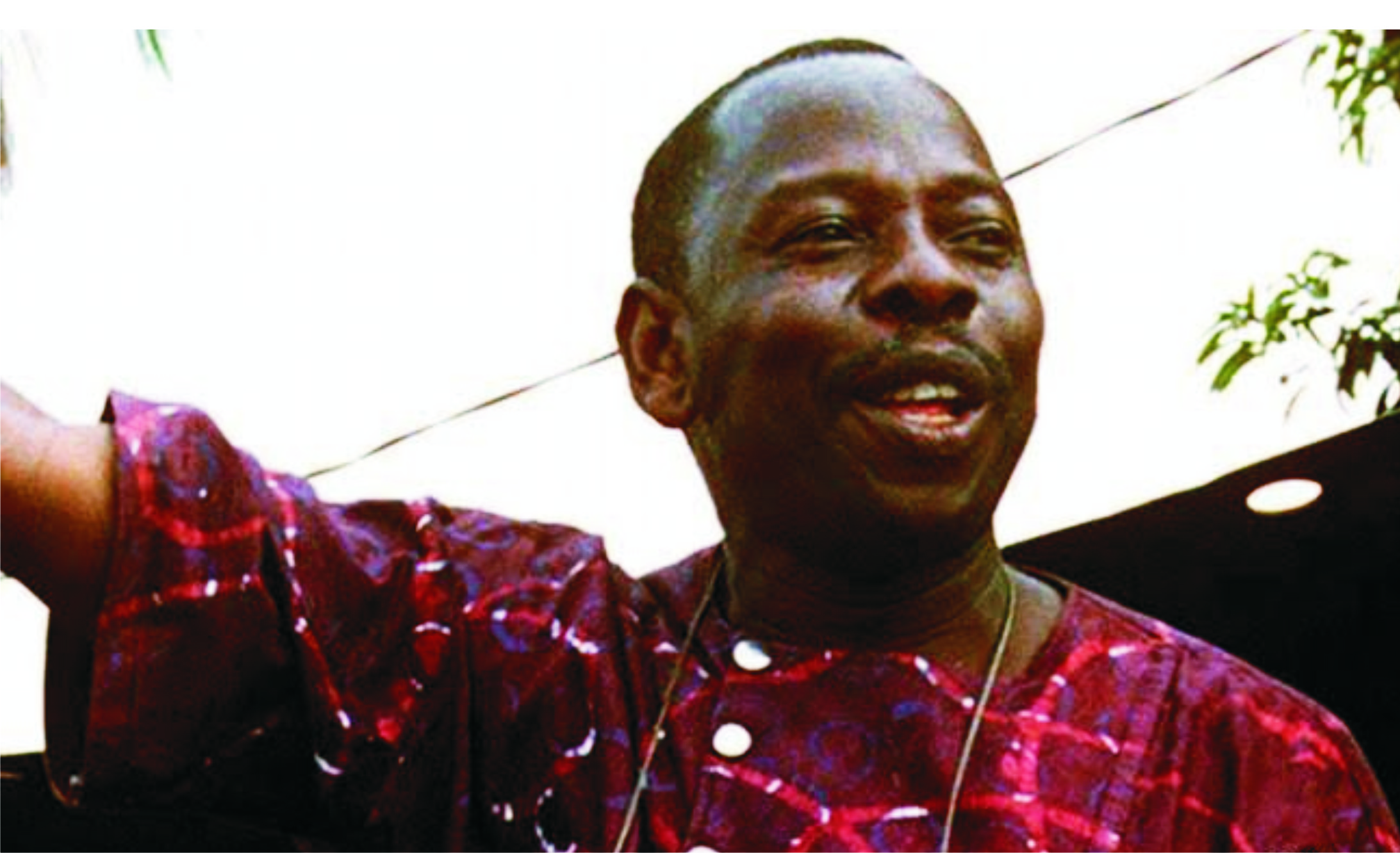
On November 10, 1995, the Nigerian military government of General Sani Abacha executed Ken Saro-Wiwa and eight other Ogoni leaders after a deeply controversial trial. Their deaths marked one of the darkest chapters in Nigeria’s history. At a time when fear silenced citizens and sycophancy flourished around military power, Saro-Wiwa chose to confront tyranny. Many Nigerians retreated into silence, while others praised the regime to secure favour. He knew the risks, yet refused to abandon a people whose land had been devastated by oil exploration and whose lives remained trapped in poverty. His courage arose from the conviction that public responsibility sometimes demands resistance to authority. Saro-Wiwa understood that speaking against a military government could lead to imprisonment or death.
Nonetheless, he believed the suffering of the Ogoni people demanded a courageous response. While oil was extracted from their land, they were left with polluted rivers, damaged farmland, declining livelihoods and an environment hostile to human survival. Fishing grounds and sources of livelihood were threatened, while the people struggled to secure basic amenities. The wealth beneath their soil brought neither adequate development nor a fair share of national resources. For him, silence in the face of injustice would have amounted to complicity. Through the Movement for the Survival of the Ogoni People (MOSOP), he organised a peaceful campaign that took the Ogoni question to the international community. MOSOP gave ordinary people an organised platform through which to express their grievances and insist on recognition.
The Ogoni Bill of Rights, presented to the Federal Government in 1990, demanded political autonomy, economic justice, environmental protection and control over the people’s resources. The campaign exposed the human and ecological costs of oil operations, particularly those associated with Shell, and challenged the apparent alliance between corporate interests and an unresponsive State. The Ogoni struggle became a defining expression of minority rights and environmental justice in Nigeria and Africa. Saro-Wiwa’s writings and mobilisation drew attention to communities treated as expendable because of their limited population and political influence. He argued that numerical strength should never determine a people’s value or rights.
A minority community does not become less deserving of justice because it cannot command electoral numbers or political power. In Nigeria, every ethnic group deserves dignity, protection and a fair opportunity to benefit from the commonwealth. Rather than respond to peaceful agitation with dialogue, the Abacha regime resorted to repression. Ogoni leaders were harassed, detained and killed; others fled into exile. The crisis intensified after four Ogoni chiefs were killed in May 1994. Saro-Wiwa and other MOSOP leaders were arrested, tried by a special tribunal and executed despite international appeals for clemency and serious concerns about the trial’s fairness. The executions drew worldwide condemnation and intensified scrutiny of Nigeria’s human-rights record and oil companies in the Niger Delta.
They demonstrated the danger of using State institutions to suppress peaceful demands. The proceedings remain a reminder of the need for judicial independence and due process. Saro-Wiwa’s courage rested on the conviction that justice must be pursued despite the cost. His method combined non-violent resistance, public education and grassroots organisation. His struggle recalled the civil-rights campaign of Martin Luther King Jr. and the power of peaceful mobilisation against injustice. Saro-Wiwa linked environmental degradation to political exclusion, economic exploitation and the denial of democratic rights. Oil-producing communities, he insisted, should not remain zones from which wealth is removed to develop other parts of the country.
Their people must benefit through roads, schools, healthcare, jobs and clean water. Resource extraction carries a duty to protect host communities. His argument extended to the structure of the Nigerian federation. He challenged a revenue-allocation system that made oil-producing communities bear the environmental and social costs of extraction without commensurate benefits. Like advocates of fiscal federalism, he believed resources should be managed and shared equitably. He envisaged a society in which no community would be disadvantaged by its size, ethnicity, political affiliation, culture or religion. His vision was a country bound together by justice and equal citizenship. Saro-Wiwa was also a gifted writer, dramatist and public intellectual.
Through books, essays, plays and television, he documented Nigerian society’s contradictions and challenged abuses of power. His popular television series, Basi and Company, demonstrated his creative range, while his leadership of the Association of Nigerian Authors encouraged writers to engage national questions. He believed literature should not be detached from society’s struggles. His pen exposed environmental injustice, political repression and the dangers of silencing courageous voices. He used storytelling, satire and drama to shape public consciousness and expose social contradictions. His literary achievements gave his activism wider reach and made the Ogoni experience part of national conversation. His commitment to the Ogoni people extended beyond the oil question.
During the Civil War, he worked to protect his vulnerable community. He urged younger generations to reject subservience and complacency and pursue change through lawful, peaceful means. Citizens, he believed, must not surrender their responsibility to challenge wrong doing. An injury to one community threatens the rights and security of all. The return to democratic government in 1999 and the establishment of the Niger Delta Development Commission, the Ministry of Niger Delta Affairs and the Hydrocarbon Pollution Remediation Project (HYPREP) are among developments that have kept the region’s demands in public view. Saro-Wiwa did not create these institutions, but his movement helped expose the urgency of intervention and sustain pressure for redress.
His death made it harder to ignore the Niger Delta’s environmental and political grievances. Yet, interventionist institutions do not prove that the original demands have been met. Their effectiveness depends on competent leadership, transparent spending, measurable outcomes and community participation. Yet, thirty-one years after his execution, the central concerns of the Ogoni struggle remain unresolved. The HYPREP-led clean-up has offered hope, but many residents await meaningful improvements. Questions persist about the programme’s pace, quality and transparency, and whether its benefits reach ordinary people. A clean-up should be judged not by ceremonies or contracts, but by restored land and waterways, safe drinking water, improved livelihoods and better public health.
It must include long-term monitoring to ensure treated sites remain safe. Residents deserve information about contamination, remediation methods and completion timelines. Reports that water projects in Gwara and Ebubu Communities, in Khana and Eleme Local Government Areas respectively, failed weeks after commissioning have raised further concerns. If confirmed, the failures would indicate weaknesses in supervision, procurement and quality control.
To be continued in our next edition.
Taneh Beemene

The National Youth Service Corps (NYSC) was established in 1973, after the Nigerian Civil War, to promote national unity, reconciliation and integration. By deploying graduates beyond their States of origin, its founders hoped to encourage understanding among Nigeria’s diverse peoples and help rebuild a divided country. However, the difficulties confronting corps members and their families now demand a comprehensive review. For many graduates, national service has become a period of uncertainty, financial pressure and exposure to risks. Parents who have spent years financing their children’s education must still find money for transportation, camp necessities, accommodation, feeding and other expenses. The monthly allowance may provide some relief, but often cannot meet the cost of living, especially where the place of primary assignment offers no accommodation or support.
Security is another serious concern. Corps members may be posted to communities affected by kidnapping, communal violence, insurgency or other threats. Government cannot eliminate every danger, but it must assess locations, provide reliable security information and avoid deployments where safety cannot reasonably be assured. National service should promote patriotism, not expose graduates to preventable harm. There is also the problem of securing meaningful places of primary assignment. A graduate trained in engineering may perform duties unrelated to engineering; a journalist may spend the year in an office with no opportunity to practise journalism. Graduates in agriculture, health, education and other specialised fields may likewise be assigned routine tasks that contribute little or nothing to their professional growth. Some depend on personal contacts or incur expenses to obtain suitable placements.
A year is significant for a young graduate entering a competitive labour market. National service should not be merely a compulsory waiting period before the search for employment begins. It should help bridge the gap between academic learning and practical work. The time has therefore come to review the structure of NYSC, not necessarily abolish it. I propose that the one-year programme should become vocational and professionally oriented. Graduates should, as far as practicable, be posted to institutions where they can gain supervised experience in their fields of study. Teachers should serve in schools; health graduates in suitable health facilities; engineers in technical organisations and public works departments; agricultural graduates in farms and extension services; and communication graduates in media and public information establishments.
NYSC should partner with ministries, state and local governments, private companies, professional bodies, universities, hospitals, schools and credible organisations to identify genuine training opportunities. Each member should have defined duties, a supervisor and clear learning objectives. At the end of the year, each should receive a record of duties performed and competencies acquired. The reform must also address remuneration and welfare. Corps members should receive fair pay that reflects the demands of their placements, while host organisations should provide reasonable support where possible. Government must establish transparent funding arrangements so that the new system does not become another burden imposed on employers or parents. Transport or accommodation assistance should be considered for difficult postings.
Graduates seeking jobs after service would have more than a discharge certificate: they would possess practical experience, workplace discipline and demonstrable skills. Employers would gain access to young people who have received supervised preparation. However, professional relevance should not erase the scheme’s founding objective of national integration. Inter-State deployment can remain, provided it is balanced with security, suitable placements and the availability of basic facilities. Where a safe and meaningful placement cannot be guaranteed outside a graduate’s State, an alternative should be considered. Orientation and community development activities can continue to promote cultural exchange, citizenship and service.
The Federal Government and NYSC management should convene consultations involving corps members, parents, universities, employers, security agencies and State Governments. Decisions should be based on evidence and the experiences of serving and former corps members. NYSC was created to help rebuild a nation divided by war. Its ideals remain important, but institutions must adapt to changing realities. Success should not be measured only by the number of graduates mobilised or certificates issued. It should also be measured by the skills acquired, the contribution made and whether young Nigerians complete their service safely and with dignity. It can better preserve the scheme’s founding ideals while meeting today’s economic and professional needs. A vocationally driven; adequately remunerated NYSC would turn national service from a costly obligation into a bridge between education, employment and national development. The purpose should not simply be to occupy graduates for twelve months, but to prepare them to work, serve and contribute meaningfully to Nigeria’s future.
Sylvia ThankGod-Amadi
Quote: “Democracy is not
As the 2027 general elections
Organisers said they had
Police intervention
In Kaduna, the ADC accused
These claims require prompt
These rights apply equally to
No ambition, party or
By: Sylvia ThankGod-Amadi
-

 Politics4 days ago
LG CITY BOY COORDINATOR HAILS WIKE’S SUPPORT FOR ONYESOH, TINUBU
-
Politics4 days ago
DIRI INAUGURATES APC CAMPAIGN COUNCIL, SETS MILLION VOTES TARGET FOR TINUBU
-

 Politics4 days ago
NDC Candidate Urges Oborevwori To Probe Asaba Political Violence
-

 News5 days ago
Army Recovers X Account After Hack Attempt
-
Business13 hours ago
‘NUJ, NPA’s Partnership Would Boost Port Producrivity, Economic Growth’
-
News10 hours ago
RSG Reaffirms Commitment To STEM Education, Technological Advancement
-

 News10 hours ago
IGP Warns Police Officers Against Partisanship …Directs Regular Engagement With Journalists
-
Politics4 days ago
2027: Oborevwori Tasks Media On Fair, Accurate Reporting