
Opinion
Privatising Nigeria’s Petroleum Industry (11)

From Nigeria’s
perspectives, so many questions can be asked concerning government’s control of the oil sector.
First, can the government ensure the availability, reliability, and sustainability of crude oil and petroleum products supply in Nigeria if it does not regulate the industry by fixing the prices of petroleum products for marketers?
Secondly, given the international nature of crude oil sector, how can Nigeria address some of the international issues surrounding the energy industry, such as meeting its external and domestic social needs, if the government does not intervene by fixlng prices of products?
Thirdly, given the monolithic nature of the Nigeria’s economy and the lack of diversification to other sectors such as agriculture, solid minerals, renewable energy sources and the manufacturing sector, can the government afford to lose grip of the petroleum industry?
Fourthly, drawing from the previous failed attempts to reform and to privatise partially or wholly the petroleum industry by the government, is there further assurance that privatisation or commercialisation of the NNPC would be the magic needed to reposition the industry?
Finally, what are the pros and cons of government’s regulation of petroleum products prices in Nigeria?
Space and time would not permit me to adequately address these germane questions which are equally bogging the minds of many Nigerians. However, in attempting an answer, it is important to note that the government is the first party in the search for energy security in Nigeria. This is because under the provision of the Petroleum Act 1969, it is the owner of petroleum resources that sets the policy and regulatory frameworks for the exploitation of the resources.
According to Dow, it is the fundamental duty of government to formulate appropriate energy policy and strategy that could embody different levels of energy mix. This author argues that it is also the primary responsibility of the government to guarantee the provision of adequate petroleum resources for domestic consumption as a public service obligation.
In order to discharge this role, the government is expected to create an enabling regulatory environment that would reduce geopolitical conflicts and promote both local and foreign investments in the industry. A stable operating environment is desired for security of supply to be attained while adequate enforcement of the existing laws would reduce acts of criminality such as hording and racketeering that affected industry and consumers of products.
However, the bane of the petroleum industry in Nigena is the lack of adequate enforcement of the regulatory machineries and lack of political will. It could be argued that where there is no stable legal and political environment, as has been quite evident in the past few years before the government granted amnesty to the Niger Delta militants, no proper exploratory and productive activity could take place. Likewise, in the absence of functional developmental projects in the oil-producing region, no sufficient crude oil and gas could be produced. Therefore, it is one of the basic duties of the government to develop these areas, improve existing infrastructure, which are vital in promoting security of supply.
One way to achieve security of supply is for the government to think outside the box. This envisions the need to harness local technological prowess in the existing local refineries found in the creeks and waters of the Niger Delta; recognising these talents by licensing them and obtaining taxes from their owners, while enforcing good behaviour among them through law which would punish any criminal tendency.
The solid mineral sector recognises small scale miners under the Nigeria Mineral and Mining Act 2007, hence it would not be out of place to argue for the recognition of any leitimate small scale refineries in the Niger Delta. Furthermore, there might be a need on the part of the government to nip in the bud corruption and bottlenecks in the industry through the instrumentality of government’s machineries. This is because corruption and lack of transparency are inimical to the effective administration of NNPC; hence negatively affecting its delivery of services such as the provision of adequate petroleum products.
Government and the International Oil Corporations (IOCs) have leading roles to jointly develop and fund the various energy security infrastructures that will promote security of supply for domestic consumption. These include pipelines jetties, landing ports, etc. If government does not adequately intervene, it would be difficult to ensure sustainable supply of petroleum products.
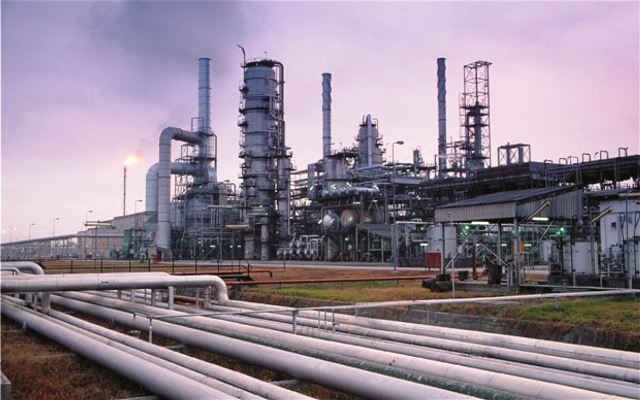
The nations refineries of 445,000 barrel per day production capacity have no reasons for not functioning on the average up to 50 % capacity. With this capacity production the level of importation of petroleum products would be reduced. And the current challenge posed by inadequate foreign exchange to import the volume of fuel required by Nigeria would not have arisen.
Dr Dike is a senior lecturer, RSUST, Port Harcourt.
Samuel C. Dike




Quote: “Ogoniland does not
The latest attack by Chief
Instead, the gathering and
The proposal for a unified
The question should be: who
It is easy to criticise
The people are looking beyond
onest people can reach
Society must therefore

Quote: “Privilege should
There is an old saying that
While motivations cannot
A person who benefits from a
This is why citizens should
We must not assume that
By: Michael Abraham

Quote:”Although the Federal
The recent outburst by the
The senator also alleged
They connect ports, airports,
To address these challenges,
Rwanda and Morocco, for
FERMA should also prioritize
Many Nigerians have asked
-

 News5 days ago
RSG Targets Nine Million Residents in Mosquito Net Distribution Campaign
-

 Oil & Energy5 days ago
Aiyedatiwa Signs New Electricity Bill
-

 Oil & Energy5 days ago
NLNG Commissions Research And Innovation Centre In RSU
-

 Maritime5 days ago
Marine Minister Commends President Tinubu On NPERA Bill Assent
-

 News5 days ago
KenPoly Holds Eight Convocations, August 29
-

 News5 days ago
RMAFC Completes Revenue Sharing Review, Proposes New Pay
-

 News5 days ago
RSG Begins Another Phase of Projects Commissioning Today
-

 Maritime5 days ago
NAGAFF Petitions IGP Over Alleged Maritime Police Harassment