
Opinion
Too Old, Who Says?


Quote:…”rather than discouraging people who want to return to school because of their age, families should provide encouragement and support wherever possible.”
The story of a 68-year-old Nigerian grandfather, Chris Osagbaekhoe, who recently bagged a first-class degree from Goldsmiths, University of London, United Kingdom, deserves more than a passing mention. It is a story of determination, courage and discipline and, above all, a powerful reminder that age should never be allowed to place a limit on one’s dreams. Osagbaekhoe, a person living with disability, reportedly enrolled as a mature student at the age of 64 and completed the four-year Social Work programme, graduating with first-class honours. At a time when many people are discouraged from pursuing their educational ambitions because of age, family responsibilities, financial difficulties or what society may say about them, the achievement of this grandfather offers a refreshing lesson: it is never too late to pursue knowledge and fulfil a dream.
A friend recently told a story of how her colleagues at her workplace, friends and even some family members made fun of her when she returned to the university to pursue another degree at the age of 52. Some boldly told her that she was too old and should stop “embarrassing herself.” She was, however, not deterred. Today, she has a second degree to her name. For some people, education is considered a race that must be completed at a particular age. There is an unspoken expectation that one should graduate from secondary school, proceed immediately to university, obtain a degree, secure employment and move on with life. But life does not always follow a straight line. Financial difficulties, marriage, child-rearing, illness, career demands, migration, family responsibilities and other unforeseen circumstances can force people to suspend their educational pursuits.
Unfortunately, when this happens, some people begin to believe that the opportunity has passed.It has not. The story of the 68-year-old grandfather proves that dreams may be delayed, but they do not necessarily have to be abandoned. At 68, when many people may be thinking primarily about retirement and spending more time with their children and grandchildren, Osagbaekhoe chose to return to the classroom and pursue academic excellence. Rather than allowing his age and disability to define what he could achieve, he demonstrated that determination can overcome many of the barriers that people often regard as insurmountable. His first-class degree is therefore more than an academic qualification. It is a message to anyone who has ever been told that they are too old, too late, too poor, too busy or not capable enough to pursue their educational dreams.
There will always be people who discourage others from pursuing their ambitions. Sometimes, such discouragement may come from people who genuinely believe they are offering practical advice. At other times, it may come from people who simply cannot imagine themselves doing what another person is attempting. A person who decides to return to school at 40 may be told, “What is the point?”Someone who wants to obtain a master’s degree at 50 may hear, “You are already too old.” Another person contemplating a doctorate at 60 may be asked, “When will you finish?” These questions can be painful, particularly when they come from family members, friends or people whose opinions matter to us. But those who have dreams must learn to distinguish between constructive advice and discouragement. Nobody should determine the limits of your potential.
Academic pursuits can be challenging, especially for mature students balancing family, work and other responsibilities. There may be self-doubt and discouragement, but age should never be a barrier. Instead of asking, “What will people say?”, ask, “What do I want to achieve?” If the goal is worthwhile, obstacles should not automatically become reasons to abandon it. There is also an important lesson here for parents and families. Rather than discouraging people who want to return to school because of their age, families should provide encouragement and support wherever possible. Families should encourage, rather than discourage, those who wish to return to school, regardless of age. A mother, father or grandparent pursuing education should never be made to feel that the opportunity has passed. Learning is a lifelong process that broadens the mind, builds confidence and creates opportunities.
Osagbaekhoe’s achievement should inspire people across generations. For young Nigerians, his story is a reminder that academic success requires commitment. Intelligence alone is not enough. There must be discipline, perseverance and the willingness to continue even when the journey becomes difficult. For older people, it is evidence that an unfinished educational dream does not have to remain unfinished forever. For those who have been discouraged by failure, it is a reminder that failure is not the end of the journey. And for those who have been told repeatedly that their dreams are unrealistic, it offers a simple but powerful response: let your results speak for you. We live in a society where people sometimes place unnecessary emphasis on age and social expectations. We often ask people why they have not achieved certain things by a particular age.
But people do not all travel through life at the same speed. One person may graduate at 21. Another may graduate at 35. Someone else may obtain a first degree at 50 or 60. The timing may be different, but the achievement remains meaningful. We should therefore stop measuring people’s lives solely by the timetable we have created for them. The important thing is not always how early one starts. Sometimes, what matters most is having the courage to start. This is why Osagbaekhoe’s achievement should resonate particularly strongly with mature students, persons living with disabilities and anyone who has been made to believe that their time has passed. His message, delivered as he walked across the stage during his graduation, captures the essence of his remarkable journey: “Your dreams do not expire because of your age.”
Sometimes, the most inspiring chapter of a person’s life begins when others think the story should already be over.
By: Calista Ezeaku


Continue Reading
Quote: “Rivers State must move beyond merely producing gas to building a gas-utilising economy that delivers cleaner transportation, new jobs and a healthier environment for its people.”
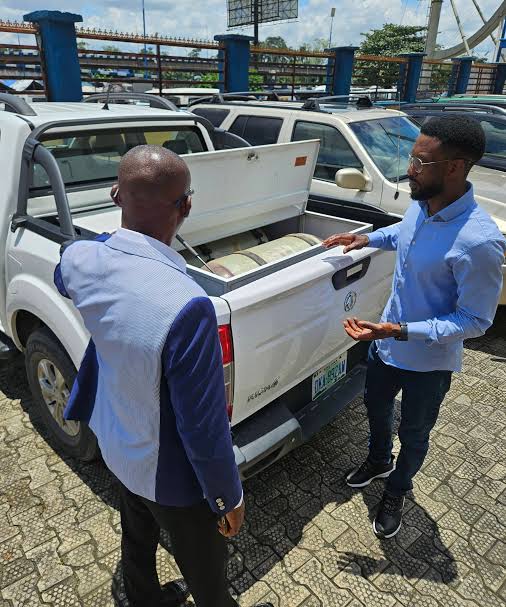
As a Rivers woman, an engineer and an environmental professional, I have often reflected on the contradiction we live with. Rivers State is richly blessed with oil and gas, yet our people continue to bear environmental and health consequences associated with conventional fuels and poor environmental practices. We do not need anyone to explain what pollution feels like; we live with it. For years, our communities have endured black soot, industrial emissions, gas flaring, vehicle exhaust and other forms of air pollution. Anyone who has stood beside a smoking commercial bus or Keke in Port Harcourt traffic knows how unpleasant it is to breathe in those fumes. Across busy junctions, motor parks and markets, ageing petrol and diesel vehicles release exhaust fumes directly into the air. This is why the conversation about Compressed Natural Gas, commonly known as CNG, goes beyond energy. It is also about our health, environment, economy and how Rivers State can put its abundant natural gas resources to better use.
CNG is primarily methane stored under high pressure and used as fuel, particularly for vehicles. A petrol-powered vehicle can be professionally converted to run on CNG while retaining the option of using petrol, known as a bi-fuel system. Compared with petrol and diesel, CNG generally burns more cleanly and produces less particulate matter and fewer harmful exhaust pollutants. This can mean less visible smoke and cleaner combustion. Imagine replacing the smoky exhaust from some buses, taxis and Keke with properly converted and maintained vehicles running on a cleaner fuel. For a state that has suffered serious air-quality problems, this is a benefit we should take seriously. CNG matters to Rivers State because it is one of Nigeria’s leading oil and gas-producing states. We should not be interested only in producing gas; we should also ask how that gas can improve the daily lives of our people.
Transportation is one area where CNG can make a real difference. The cost of transportation affects almost everything. When it becomes more expensive to move people and goods, the additional cost eventually shows up in food prices, services and other necessities. Wider adoption of CNG can provide motorists and transport operators with an alternative fuel while reducing dependence on petrol and diesel. It can also support vehicle conversion, refuelling, equipment supply, maintenance and technical training. For Rivers State, therefore, CNG offers both an energy and economic opportunity. Another advantage is its potential effect on engine performance and maintenance. As a natural gas, CNG produces fewer carbon deposits and combustion residues than conventional liquid fuels, potentially reducing some maintenance burdens.
When a vehicle is properly converted and maintained, cleaner combustion can reduce engine-oil contamination and deposits on certain engine components. Over time, this may help reduce engine wear and some maintenance requirements. However, these benefits depend on the quality of the conversion, the vehicle’s condition and adherence to recommended maintenance schedules. The words “properly converted” are important. CNG is stored under high pressure, so cylinders, valves, pipes, regulators and other components must meet approved safety and technical standards. Conversion must be carried out by trained professionals at authorised centres. Improvised conversion is dangerous and must never be encouraged. Affordability must not come at the expense of safety.
The benefits of CNG should not end with motorists. A well-developed CNG economy can create opportunities for young engineers, technicians, mechanics, entrepreneurs and investors. Rivers State will need trained conversion technicians, authorised conversion centres, properly located refuelling facilities, equipment suppliers, maintenance personnel, safety inspectors and emergency-response teams. People must be trained to install, operate, inspect and maintain these systems safely. This can create skills, businesses and employment opportunities while helping the state make better use of a resource it already possesses in abundance. Properly developed, the CNG value chain can give young people access to technical careers while enabling local businesses to participate in a growing domestic gas economy.
In this spirit of energy transition, environmental governance remains key. Moving towards a cleaner fuel does not mean setting aside our environmental responsibilities. CNG facilities must be properly located, with environmental and social safeguards duly followed. Required safety distances and applicable technical standards must be respected. Operators must be trained, and facilities inspected regularly. We cannot afford to solve one problem only to create another environmental or safety crisis. Environmental governance means ensuring that development takes place within rules and systems that protect people, property and the environment. This principle is at the heart of the argument I made in my book, The Blue-Green Continuum: An Integrated Framework for Sustainable Development.
Economic development and environmental protection are not enemies. We can develop our natural resources while protecting our environment. Sustainable development requires us to do both. The time is ripe for Rivers State to move from merely being a gas-producing state to becoming a gas-utilising state. For decades, Rivers State has played a major role in Nigeria’s petroleum industry. The next stage should focus on how our natural gas resources can support better living conditions, cleaner transportation, new businesses and meaningful economic opportunities. CNG will not solve every energy or environmental problem; it is still a fossil fuel and must be managed responsibly. However, it offers a practical transition option as we work towards a cleaner and more diversified energy system.
As a Rivers-born professional who has witnessed the environmental challenges confronting our people, this writer looks forward to a time when the sight and smell of heavy exhaust fumes from poorly maintained vehicles become increasingly uncommon on our roads; a future where Rivers’ abundant gas resources do more than leave her shores, and where her young people are equipped with valuable technical skills and supported businesses built around a cleaner domestic gas economy. It should be a future in which energy development and environmental protection move forward together. For Rivers State, energy transition should mean turning the resources we already possess into cleaner energy, lower operating costs, new economic opportunities and a healthier environment. We have been a gas-producing state for decades. The next step is to ensure that our people experience the benefits of a gas-utilising economy. It is time to move from being merely resource-rich to becoming resource-smart.
Engr. Owhonda, Juliet Nkeiruka, PhD, is a petroleum engineer, environmental safeguard specialist and gas policy strategist. She is the author of The Blue-Green Continuum: An Integrated Framework for Sustainable Development. She writes from Port Harcourt.
Quote: “The greatest inheritance we can give our children is not the wealth we accumulate for them, but the wisdom, discipline and courage to create wealth when the inheritance is gone.”
In many Nigerian families, a parent’s greatest dream is simple: “My children must not suffer the way I suffered.” So, a father works for decades to build a house. A mother saves painstakingly to educate her children. Parents acquire plots of land, establish businesses, invest in farms, build shops and make sacrifices so their children can begin life from a better position. There is nothing wrong with that dream. In fact, it is one of the most beautiful expressions of parental love. But there is a danger we must confront: when parents succeed in removing hardship from their children’s lives without replacing it with responsibility, they may unknowingly raise beneficiaries who lack the capacity to preserve what they inherit. This is where the old saying, “Shirtsleeves to shirtsleeves in three generations,” becomes relevant. It describes a familiar cycle in which one generation struggles to build wealth, the next inherits and enjoys it, while a later generation, increasingly disconnected from the sacrifices that created the fortune, gradually loses it.
The saying should not be regarded as a curse or an inevitable law. It is a warning. It reminds us that wealth can be inherited, but the wisdom to manage wealth must be deliberately taught. The first generation is usually the builder. This is the Nigerian parent who may have started with very little but worked tirelessly to create something meaningful. Perhaps it was a civil servant who built a family house gradually from his salary, a trader who expanded a small business, a farmer who acquired land, or a professional who invested carefully over the years. Such people understand the value of money because they remember when there was very little of it. They know what it means to postpone gratification, save instead of spend and reinvest profit rather than consume everything earned. Their wealth is built not merely with money, but with discipline, sacrifice, perseverance and experience. Then comes the second generation—the children who inherit the fruits of those sacrifices. They may inherit houses, land, businesses, vehicles, investments or educational opportunities. They have not necessarily experienced the hardship of their parents, but they can still be taught to appreciate the journey.
The real danger begins when inheritance becomes entitlement. A young Nigerian who grows up in a comfortable home may have access to good education, transportation, technology, family connections and financial support. These are privileges, but privileges should never become substitutes for competence, character and hard work.
Parents sometimes make the mistake of giving their children everything except responsibility. They pay their school fees, provide accommodation, buy cars, finance businesses and solve every problem. Yet they may never teach them how the family wealth was created, how to manage money, how to withstand failure or how to rebuild after a setback. That is a dangerous inheritance. A child can inherit a house without knowing how to build one. A business can be inherited without understanding how to run it. Land can be inherited without knowing how to invest wisely. Money can be inherited without understanding how to make it grow.
This is why succession is much more than transferring assets. It is the transfer of knowledge, values, responsibility and vision. Parents who have built something meaningful should involve their children gradually. Let them understand the family business. Teach them budgeting, saving and investment. Let them see both profit and loss. Give them responsibilities appropriate to their age. Above all, encourage them to develop independent careers, skills and enterprises. The objective is not to make children suffer unnecessarily. Rather, it is to ensure that comfort does not make them helpless. This lesson applies even to families that do not consider themselves wealthy. A family house, farm, shop, professional practice, piece of land or small business can constitute generational capital. The question is not only, “What will I leave my children?” but also, “What will I leave in my children?”
Nigeria urgently needs families that understand this distinction. We should not measure parental success only by the size of the inheritance we leave behind. We should also measure it by the quality of people we raise to manage that inheritance. Indeed, money can preserve a family’s comfort for a while, but character preserves its future. Education creates capacity. Discipline protects resources. Unity prevents needless disputes. Financial literacy encourages wise decisions. Hard work ensures that each generation can contribute rather than merely consume. Every generation should therefore add something to what it receives. The first generation may build the foundation. The second should strengthen it. The third should innovate and expand it. Those who come after should inherit with gratitude while accepting the responsibility to create something new.
This is how Nigerian families can break the shirtsleeves cycle. The goal should not be to raise children who never experience difficulty. It should be to raise children who possess the competence and character to confront difficulty successfully. A fortune can disappear in a generation. A house can be sold. A business can collapse. Land can be squandered. But wisdom, discipline, education and a strong work ethic can continue producing value long after the original inheritance is gone. The greatest legacy, therefore, is not simply what parents leave for their children, but what they leave in them. When privilege is matched with responsibility, inheritance becomes more than consumption. It becomes a foundation for greater achievement. And when every generation accepts the responsibility to preserve, improve and create, family prosperity can become a legacy rather than a temporary advantage.We should not merely raise heirs. We should raise builders.
By: Sylvia ThankGod-Amadi
Quote:”For those whose parents have passed away, honour can still be expressed by preserving the values they taught, caring for the family they left behind and becoming the kind of parent, grandparent or community member whose life blesses others”
Longevity is one of humanity’s oldest desires. Across generations, people have searched for the secret of living long, healthy and meaningful lives. Some have looked to medicine, others to healthy diets, exercise, wealth and modern technology. While these are important ingredients for a healthy life, Scripture presents another powerful principle that is sometimes overlooked: honour your parents.The Bible does not present honouring parents merely as a social obligation. It connects this virtue directly with the blessing of longevity. In Exodus 20:12, God commands, “Honour thy father and thy mother,” and immediately attaches a promise: “that thy days may be long upon the land which the Lord thy God giveth thee.” The same principle is repeated in Ephesians 6:2-3, where Apostle Paul describes it as “the first commandment with promise.”
This raises an important question: What does it mean to honour our parents, and why would God connect it with long life? Honour begins with respect. Parents may not be perfect, and children may sometimes disagree with their decisions, but their position in the family deserves recognition. To honour parents is to treat them with dignity, speak to them respectfully and acknowledge the sacrifices they made in raising their children. In a society where the elderly can sometimes be regarded as burdens, this biblical command is particularly relevant. Modern life can make people so preoccupied with careers, financial responsibilities and personal ambitions that they forget those who nurtured them when they had nothing to offer in return. Honour is not merely expressed through words. It is demonstrated through actions. A child who checks on an ageing parent, provides food and medicine when necessary, listens patiently and offers companionship is demonstrating honour.
Sometimes, the greatest gift an ageing parent needs is not money but the assurance that he or she has not been forgotten.Honouring parents also involves gratitude. Nobody chooses the circumstances into which he or she is born, and not every family story is perfect. Yet, where parents have genuinely sacrificed, protected, taught and provided for their children, those efforts should not be taken for granted. There is also a lesson here for parents. While children are commanded to honour their parents, parents are equally instructed to raise their children responsibly. Ephesians 6:4 warns fathers not to provoke their children to wrath but to bring them up “in the nurture and admonition of the Lord.” Honour is therefore best sustained in an atmosphere of love, discipline, understanding and mutual respect. The promise of long life, however, should not be interpreted as a guarantee that everyone who honours his parents will never experience illness, hardship or an early death.
Scripture contains many righteous people who experienced suffering and difficult circumstances. Rather, the command reveals a divine principle: a life characterised by respect, obedience, gratitude and responsible relationships is generally a healthier and more orderly way to live. Indeed, honouring parents can protect people from many destructive behaviours. Children who grow up learning respect for authority, gratitude and responsibility may be less inclined to embrace recklessness, violence, substance abuse and other behaviours that can shorten life. In this sense, the biblical command has both spiritual and practical wisdom. Longevity is also about the quality of the years we live, not merely the number of years we accumulate. A person may live to an advanced age but leave behind a legacy of bitterness and broken relationships.
Another may live fewer years but touch countless lives through love, service and kindness. The real blessing is to live long enough—and well enough—to make our years meaningful. Honouring parents can therefore become part of a broader recipe for longevity: faith in God, respect for parents, moderation in lifestyle, healthy relationships, purposeful work, compassion and responsible living. Medical science can help us understand how to protect our bodies, but Scripture reminds us that the wellbeing of the whole person involves more than physical health. For those whose parents are still alive, there is no better time to demonstrate honour than now. Call them. Visit them. Listen to their stories. Assist them when they are weak. Forgive where forgiveness is needed. Do not wait until a funeral before expressing appreciation that should have been spoken while they were alive.
For those whose parents have passed away, honour can still be expressed by preserving the values they taught, caring for the family they left behind and becoming the kind of parent, grandparent or community member whose life blesses others.The recipe for longevity, therefore, may contain more than good food, exercise and medical care. It also contains a quality of heart that God values deeply. Honour your father and your mother. It is not merely an ancient command. It is a timeless principle of gratitude, family responsibility and godly living—and Scripture attaches to it a remarkable promise: “that thy days may be long.
Sylvia ThankGod-Amadi
-
Sports4 days ago
Veteran Sportsman Calls For Civic Center Reconstruction
-
Business4 days ago
Navy Uncovers Stolen Crude Oil In Rivers
-
 News4 days ago
Rivers NLC Blames Delay In Pension Payment On Political Crisis …Urges Retirees To Be Patient
-
Business4 days ago
NPCC Demands Faster Trade Processes
-
Rivers4 days ago
FG Halts Push For Oil Prospecting In Ogoni …To Review MOUs In Oil Mining Resumption
-
Politics4 days ago
Delta APC, NDC Clash: Group Demands Perpetrators’ Arrest, Prosecution
-
City Crime4 days ago
Renaissance Energy Pledges Stronger Partnership With RIVCHPP
-
 Politics4 days ago
Gombe, Kano, Bauchi, Delta Bye-Elections Provide Lessons For 2027 – Amupitan