
Politics
NASS Suspends Legislative Engagements With S’Africa Over Xenophobic Attacks

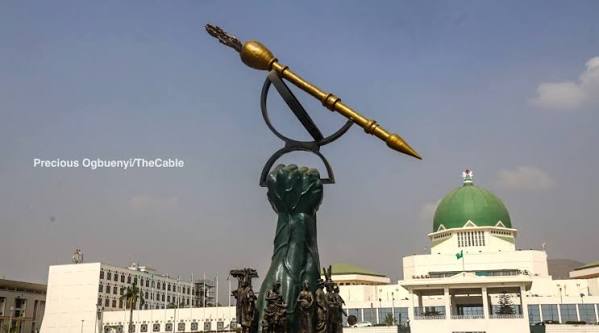
The decision followed consultations between the leadership of the Senate and the House of Representatives over reports of Nigerians being killed, injured, displaced and forced to abandon businesses, investments, homes and other properties amid recurring violence.
In a statement signed by the Clerk of the National Assembly, Mr Kamoru Ogunlana, the leadership said it was seriously concerned about the situation and noted that repeated appeals by the Federal Government of Nigeria and other stakeholders for South African authorities to protect Nigerians and other foreign nationals and bring perpetrators to justice had not stopped reports of further incidents.
Under the resolution, official visits to South Africa by the National Assembly, its committees, lawmakers, officials and staff are suspended.
The boycott also covers conferences, seminars, workshops, parliamentary meetings, legislative exchanges and other activities organised or hosted by South African legislative authorities.
Physical participation in South African-hosted legislative programmes, as well as participation through virtual or online platforms, is also covered.
The leadership has directed the Clerk to issue the necessary communication to senators, members of the House of Representatives, committees, departments, directorates, officials and staff to ensure strict compliance.
The suspension, it said, would remain in force until further notice and would be subject to review by the leadership as circumstances warrant.
The National Assembly’s action comes after months of renewed hostility towards African migrants in South Africa and a series of measures by the Nigerian government.
In June, Nigeria began evacuating citizens from South Africa following renewed xenophobic attacks.
The first batch of 258 Nigerians arrived in Lagos on June 11, while subsequent evacuation flights brought back several more.
In July, the Federal Government urged South African authorities to address recurring xenophobic attacks against Nigerians, while Nigeria’s Acting High Commissioner to South Africa said the government had begun documenting businesses and properties abandoned by returning Nigerians with a view to seeking possible compensation.
President Bola Tinubu subsequently raised the issue at the African Union, calling for collective action and urging the AU to place xenophobic and Afrophobic attacks in South Africa on the agenda of its 40th Ordinary Session scheduled for January 2027.
Vice President Kashim Shettima also reiterated Nigeria’s opposition to the mistreatment of Nigerians and other African nationals, while stressing that Nigeria remained committed to dialogue and peaceful engagement with South Africa.
However, the National Assembly said its latest decision is not intended to undermine the longstanding historical, diplomatic and people-to-people relations between Nigeria and South Africa.
Rather, it described the suspension as a strong expression of concern over the safety, dignity and welfare of Nigerians living and conducting legitimate businesses there.
It called on the South African government to take urgent and concrete measures to protect Nigerians and other African nationals, prevent further xenophobic attacks, investigate reported incidents, arrest suspected perpetrators and prosecute those found culpable in accordance with the law.
The leadership also urged state Houses of Assembly to take note of the decision and said they may consider taking similar action, reaffirming its commitment to protecting Nigerian citizens abroad and saying it would continue to monitor developments concerning the safety and welfare of Nigerians in South Africa.


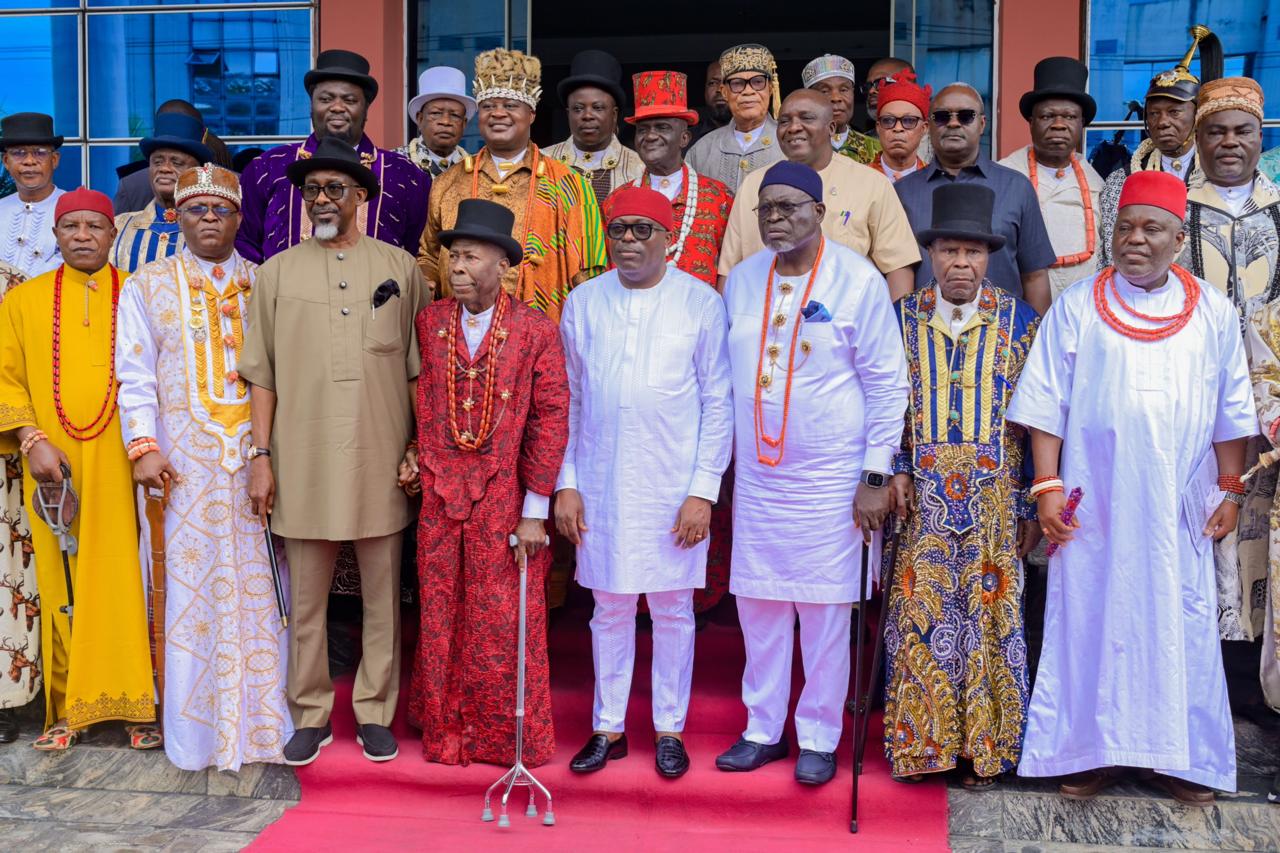
Rivers State Governor, Sir Siminalayi Fubara, has charged traditional rulers in the State to maintain neutrality, ensure fairness and uphold peace in their domains as the country prepares for the 2027 general elections.
Fubara gave the charge on Wednesday while declaring open the 126th, 127th and 128th Combined Quarterly Meeting of the Rivers State Traditional Rulers Council, in Port Harcourt.
The governor said the primary function of traditional rulers is to administer justice and ensure fairness, saying their conduct must not lead to division and unmanageable crises.
“Let me therefore, request, if that is the right word to use, that please, as we are entering into this political season actively, everyone should ensure that your conduct promoted peace in your place. Your actions should not be what would lead to the division and multiple crisis that we cannot manage as a government.
“I think with that, we can all live as one and we can also continue to make this progress that we are trying with all our mind, our body and our soul, to ensure that we deliver to our dear State,” he said.
Fubara urged the royal fathers to abide by the oath and constitution they swore to before ascending their respective stools, in the interest of stability and progress of the State.
He also enjoined them to set aside individual sentiments and place the interest of Rivers State above personal considerations, noting that this principle has guided his own day-to-day governance of the State.
“I want to enjoin everyone to keep aside issues of individual sentiments and ensure that the interest of our state supersedes whatever thing that we have in our mind. This is not just what I’m saying here, it is what I’ve also practiced and displayed in my day-to-day life in the governance of our dear State,” he said.
On the appeal for improved welfare for traditional rulers, the governor clarified that the delay in actualising some of the requests they made in the past was not from the government but from the inability of the Council to put its house in order.
Fubara explained that the issue of stipends paid to the traditional rulers by the local government councils, was a statutory benefit provided for in the constitution and not what a state governor can change by mere verbal pronouncements.
He assured that he remains a man of his word and will fulfill his promises to the traditional rulers before leaving office, next year.
He reaffirmed his respect for the traditional institution as custodians of culture and the closest link to the people, thanking them for their prayers and support.
The governor urged the royal fathers to ensure that the combined quarterly meeting featured fruitful deliberations that will strengthen peace and development in the State.
Earlier, the Chairman of the Rivers State Council of Traditional Rulers and Paramount Ruler of Apara Kingdom, His Royal Majesty, Eze Chike Amadi Worlu Wodo, expressed profound gratitude to the State Government for its efforts in maintaining a cordial relationship with the traditional institution.
Wodo highlighted the importance of traditional rulers in conflict resolution, noting that their closeness to the people places them in a strategic position to mediate in disputes involving chieftaincy matters, family disputes and land ownership in their respective communities.
The royal father drew the attention of the State Government to some challenges affecting the performance of the traditional institution, particularly the lack of official utility vehicles and logistical support needed to discharge its responsibilities effectively.
He also appealed for improved monthly stipends and better welfare provisions to reflect prevailing economic realities.
News
FG Must Address Nigerians’ Concerns On Reforms -Shettima …Warns Against Misuse of AI, Social Media
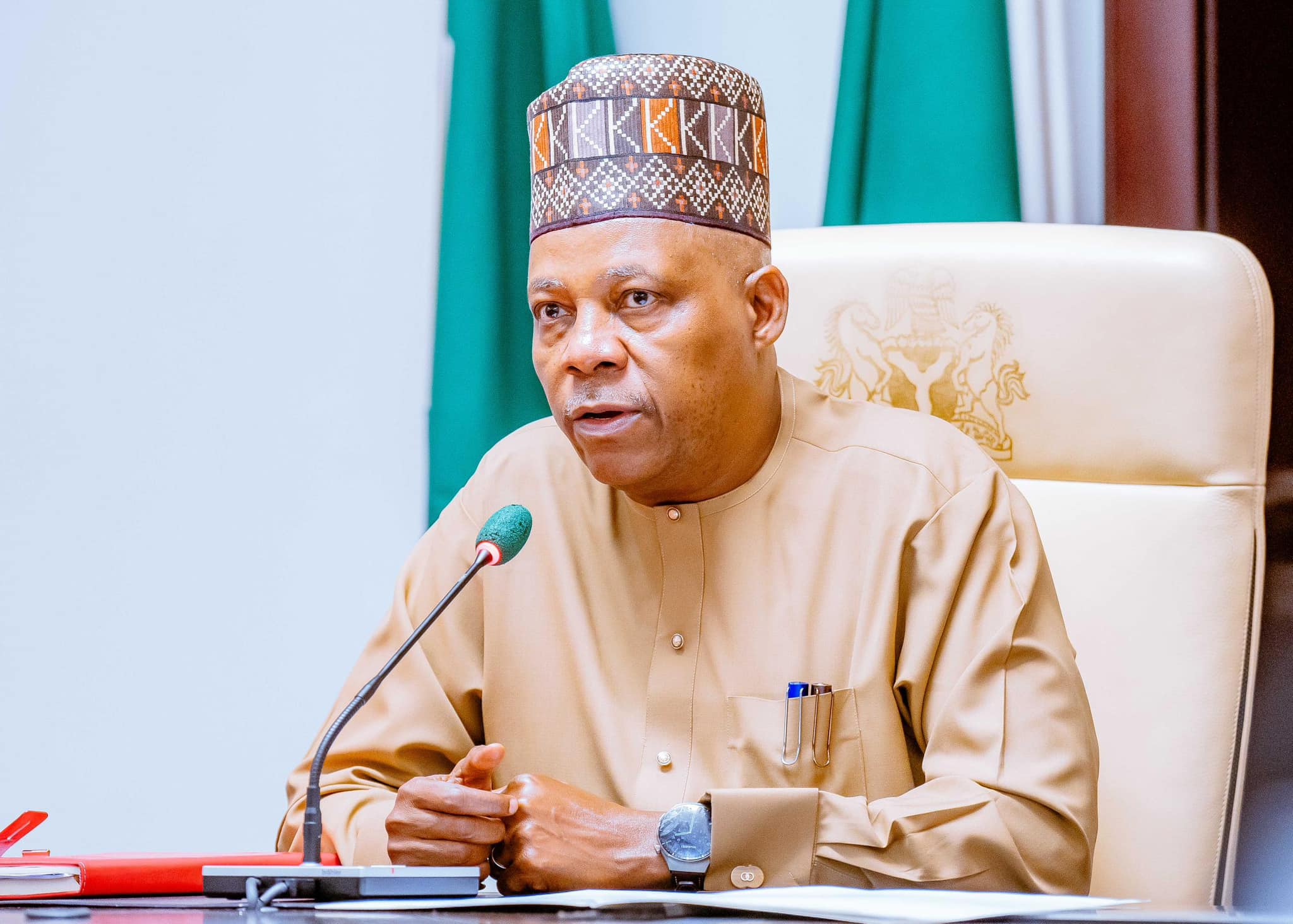
Vice President Kashim Shettima has urged the Federal Government to pay greater attention to Nigerians’ concerns about ongoing economic reforms, insisting that public confidence must be built through transparent communication, credible evidence of progress and responsiveness to citizens’ experiences.
Shettima made the call yesterday at The Duke’s Masterclass 2026, held at Transcorp Hilton, Abuja, where he was represented by his Special Adviser on Economic Affairs, Dr Tope Fasua.
The Vice President said the success of the administration’s economic policies would depend not only on their implementation but also on the government’s ability to demonstrate tangible results and address the challenges confronting citizens.
“Government must continue to communicate, however, its policies clearly, demonstrate progress with credible evidence, and listen attentively to the experiences of citizens,” he said.
Shettima defended the economic reforms introduced by President Bola Tinubu, including petrol subsidy removal, foreign exchange market liberalisation, fiscal restructuring and revenue mobilisation, describing them as measures intended to correct longstanding economic distortions and strengthen Nigeria’s productive capacity.
He explained that the policies were designed to attract investment, improve business confidence, enhance the deployment of public resources and establish conditions for sustainable economic growth.
However, he maintained that announcing policies was insufficient without building public understanding and confidence in their implementation.
The Vice President particularly challenged Nigeria’s elite, professionals and middle class to acknowledge the difficulties facing ordinary citizens while explaining the objectives of the reforms.
“Your role is not to defend every government action uncritically, nor to dismiss the concerns of citizens. It is to help create a more informed and constructive national conversation,” he stated.
He urged professionals engaging traders to recognise the pressures confronting businesses and advised those interacting with young graduates to acknowledge employment challenges while encouraging entrepreneurship and innovation.
According to him, constructive criticism and informed public participation are essential to effective governance and the sustainability of economic policies.
“Constructive scrutiny strengthens governance. Informed public participation strengthens democracy,” Shettima said.
He further stressed that leadership required the flexibility to adjust policy implementation in response to evidence and changing economic circumstances without abandoning established objectives.
Turning to the challenges of artificial intelligence and social media, the Vice President warned that technological advances were increasing the speed and sophistication of misinformation, posing risks to public confidence and institutional reputations.
“A photograph can be manipulated, a voice can be cloned, and a video can be fabricated just with a simple prompt on social media to make an individual appear to have said or done something that never happened,” he warned.
Shettima urged public institutions to strengthen information verification, correct false claims transparently and communicate through trusted channels, adding that speed should never take precedence over accuracy.
He also called for improved digital literacy and responsible use of artificial intelligence.
On economic opportunities, Shettima identified banking, financial technology, oil and gas, agriculture, real estate, construction, commodity exports and the creative industry as sectors capable of supporting investment and employment.
He nevertheless acknowledged the need to address unreliable electricity, inefficient transportation, insecurity, limited access to finance and weaknesses in education and public institutions.
He called for stronger domestic production, export expansion and support for small businesses, while urging that economic opportunities be extended to women, young people and rural communities.
In his opening address, the Chairman of Odu’a Investment Company Limited, Bimbo Ashiru, warned that poor leadership decisions and inadequate crisis preparedness could destroy institutional credibility.
“Reputation cannot be manufactured at the point of crisis. It is built over time through our decisions, our conduct, our values and the consistency between what we say and what we do,” he said.
Ashiru noted that geopolitical tensions, technological changes and economic disruptions were making leadership increasingly difficult, requiring organisations to strengthen accountability, transparency and crisis management.
He disclosed plans to extend the masterclass to London in March 2027.
Also speaking, former Commonwealth Secretary-General, Emeka Anyaoku, recounted his involvement in international conflict resolution, particularly negotiations surrounding South Africa’s transition from apartheid and political tensions in Bangladesh.
He stressed that successful mediation required a thorough understanding of the issues dividing opposing parties, the interests of their leaders and the appropriate timing of public communication.
“Because if you communicate the progress prematurely, you might sabotage the whole process,” Anyaoku said.
The Chairman of AXA Mansard and Group Managing Director of Sahara Power Group, Kola Adesina, criticised Nigeria’s persistent electricity challenges, arguing that public institutions and businesses should be judged by service delivery rather than explanations for poor performance.
“Rather than giving people megawatts of electricity, we are giving them excuses,” he said.
Adesina also condemned corruption, inflated public contracts and failures of accountability, warning that such practices weakened infrastructure, damaged public trust and endangered lives.
Meanwhile, the Chairman of the Duke of Shomolu Foundation, Joseph Edgar, explained that the masterclass was designed to equip organisations and individuals with practical strategies for anticipating crises, managing their consequences and protecting institutional reputations.
He said the initiative complemented the foundation’s use of theatre to promote social cohesion and strengthen public engagement.
Governorship candidate of the All Progressive Congress (APC) in Rivers State in the forthcoming 2027 election, Hon. Kingsley Chinda, has vowed to run an all inclusive administration that would ensure political harmony in the state, if elected into power.
Hon. Chinda, who is also the preferred governorship candidate of the Rainbow Coalition, said this shortly after he was unveiled along side other candidates of the political arrangement at a grand rally in Port Harcourt.
He said the coalition was committed to ending political divisions and promoting unity among the various political parties in the state.
Hon. Chinda also promised to make Rivers State experience peace, progress and development during his tenure as governor of the state.
“We are no longer divided on party lines.We are no longer playing the politics of the winner takes it all’’, he said.
Hon. Chinda, who spoke on behalf of the other candidates of the Rainbow Coalition, said the coalition’s vision extends beyond electoral victory, adding that its proposed government would accommodate people, irrespective of political affiliations, gender and religious belief.
“We are going to run a government for the people, with the best interests of Rivers people first,” he said.
Hon. Chinda also commended the Minister of the Federal Capital Territory (FCT), Chief Nyesom Wike, for bringing political stakeholders together under the umbrella of the Rainbow Coalition, while lauding Governor Siminalayi Fubara for presenting flags to the candidates.
He expressed optimism that the alliance would promote peaceful elections, a smooth transition of power and development projects capable of improving the lives of Rivers residents.
While presenting flags to chosen candidates of the Rainbow Coalition, Governor Fubara called on members of the Coalition and his supporters to put past disagreements behind them and work together under a common leadership ahead of the 2027 general elections.
He acknowledged Chief Wike’s role in his political journey and described the Minister of the FCT as the leader of the Rainbow Coalition.
Governor Fubara said the political groups had come together as one family and should no longer maintain separate camps.
He also pledged to support the coalition’s candidates and President Tinubu’s re-election bid, expressing optimism that cooperation among political stakeholders would strengthen the alliance.
Also speaking, Chief Wike urged members of the Peoples Democratic Party (PDP) and other political parties across the country to support President Tinubu’s re-election.
He called on politicians to set aside party differences and work together towards the coalition’s political objectives.
Chief Wike said the Rainbow Coalition represents a common political platform for stakeholders from different parties who had agreed to support the President and candidates seeking elective offices in Rivers State.
He also urged PDP members in Rivers, Kwara, Ogun and other states to support President Tinubu, while calling for support for the coalition’s candidates contesting the governorship, National Assembly and Rivers State House of Assembly elections.
The former Rivers State governor also addressed divisions within the PDP, rejecting attempts to portray him as merely a factional leader of the party.
He further criticised some opposition figures over their political ambitions and records in public office, particularly former Rivers State Governor Rotimi Amaechi and former Vice-President Atiku Abubakar.
Meanwhile, former Senator Magnus Abe has also called on Mr Amaechi to withdraw from the African Democratic Congress (ADC) vice-presidential arrangement with Alhaji Abubakar and support President Tinubu.
Senator Abe argued that the presidency should remain in Southern Nigeria, insisting that political leaders should respect the principle of power rotation between the North and South.
He recalled the controversy surrounding former President Goodluck Jonathan’s re-election bid, arguing that Mr Amaechi had previously opposed Dr Jonathan’s ambition on the grounds of power rotation.
“Today, the same man who led us to go against our son and our brother is now trying to lead us to go and support somebody from the North when it is the turn of the South.
“On behalf of all of us here gathered in Rivers State, we want to call on Amaechi to immediately respect his own position and resign as the vice-presidential candidate to Atiku Abubakar, because it is the turn of the South, and Rivers State will stand by the agreement between the North and the South,” he said.
Senator Abe also reaffirmed the coalition’s support for President Tinubu, declaring: “We are not just with Tinubu, We are with Tinubu. We are for Tinubu. We are by Tinubu. We are in Tinubu. We are Tinubu here in this coalition”, Senator Abe declared.
The event featured the presentation of candidates for various elective positions under the Rainbow Coalition.
John Bibor, Ephraim Godslove, Lazarus Ada, Chidibem Juliet & Okugbere Oghenetijiri
-
Opinion3 days ago
Ancestorial Worship: My Take (1)
-

 News2 days ago
FG Must Address Nigerians’ Concerns On Reforms -Shettima …Warns Against Misuse of AI, Social Media
-

 Featured2 days ago
Tinubu Jets To S’Arabia For Lesser Hajj …Unveils Free Healthcare For Pensioners
-
Niger Delta3 days ago
Police Rescue Woman, 24, From Online Dating Kidnappers … Arrest Five Suspects
-
News3 days ago
Lawmaker Sets Sights On Assembly Return …As Mammoth Crowd Grace Flag Handover Rally
-
News2 days ago
FG Approves King Amachree Airport In Rivers, Sets Conditions For Construction
-
 Featured2 days ago
2027: Be Politically Neutral, Fubara Tasks Traditional Rulers
-
Politics3 days ago
My Administration’ll End Political Acrimony In Rivers – Chinda