Connect with us

Oil & Energy

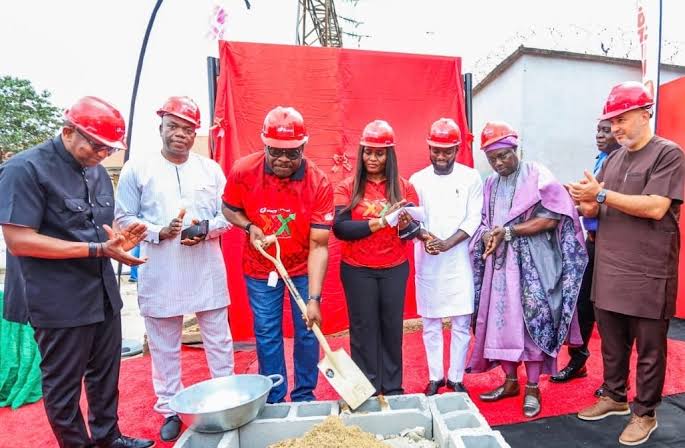
Sahara Begins Construction Of 12MW Lagos Plant

Published

on

Sahara Power Enterprise Group is investing $12m for the construction of a 12-megawatt gas-fired Independent Power Plant at the Ogba Undertaking of Ikeja Electric Plc in Lagos.

The project, which is being developed as a 2MW by six-unit gas-fired power plant, begun Thursday and is expected to be completed in the first quarter of 2027.

The plant is designed to improve electricity supply to businesses and communities across Ogba, Acme Road, Wemco Road and surrounding areas.

Speaking at the groundbreaking ceremony, the Group Managing Director, Sahara Power Enterprise Group, Kola Adesina, said the project was part of the company’s efforts to address challenges in Nigeria’s power sector.

Adesina said “This initiative is about much more than breaking ground for a new power plant. It represents a bold commitment to Nigeria’s energy future and our determination to deliver dependable, efficient, and sustainable electricity to businesses and communities. Improving the availability and reliability of power will enhance productivity, growth, and value creation”.

Adesina stated that the project reflected Sahara Power’s continued investment in infrastructure aimed at improving electricity reliability and supporting economic growth.

According to him, the plant would deploy modern gas-powered generation technology designed to meet environmental, operational, and safety standards.

He added that the six-unit configuration included standby capacity to support continuity of supply during maintenance periods.

Adesina commended the Federal Government, Lagos State Government, Lagos State Electricity Regulatory Commission, Ikeja Electric, Cummins and other stakeholders for their support in advancing the project.

The Acting Chief Executive Officer, Ikeja Electric Plc, Ogochukwu Onyelucheya, said the project represented an important step in the company’s efforts to improve the quality, reliability and sustainability of electricity supply to its customers.

She said the plant would provide a more dependable and cost-effective source of electricity for businesses and communities within the designated areas while supporting economic activity and job creation.

Onyelucheya commended Sahara Power Enterprise Group for spearheading the development of the project, describing it as a strategic investment that would strengthen the reliability and sustainability of electricity supply to customers across the Ogba Undertaking.

“At Ikeja Electric, our priority is to partner with forward-looking investors and developers such as SPEG to deliver innovative solutions that improve customer experience and reliable electricity supply across our network. SPEG’s investment in this IPP demonstrates the value of strategic collaboration in creating sustainable energy solutions for our customers.”

Construction of the plant will be undertaken by Cummins, leveraging its global expertise in power generation and energy infrastructure delivery.

The Managing Director, Cummins West Africa Limited, Mark Oni-Okeke, said the company was delighted to work with Sahara Power to “accelerate sustainable socio-economic development reliably and sustainably.”

The project is expected to serve industrial clusters, commercial centres, residential communities and public institutions within the Ogba axis, while supporting economic activity and job creation.


Continue Reading

Oil & Energy

DoE Begins Tests for Fracked Geothermal

Published

on

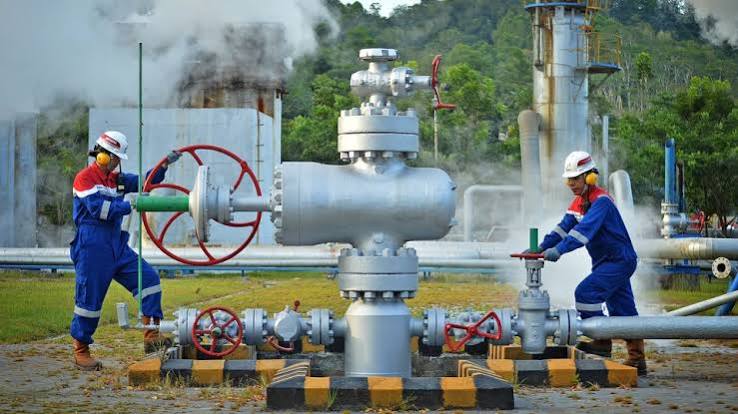
The Trump administration is no friend of wind and solar. Axed subsidies and project suspensions have been the attitude towards those alternative forms of energy. Geothermal, however, is something else. The current Department of Energy is very much for it. In fact, it is so much for it that it funded an experiment that would show whether fracking technology could be used to generate geothermal anywhere in the world.
Geothermal energy is, simply put, heat. It is heat that is generated from the decay of radioactive elements in the planet’s mantle. The amount of energy this heat translates into is quite impressive. According to the Union of Concerned Scientists, just 33,000 feet below the Earth’s surface, there is 50,000 times more energy than the energy all the oil and gas in the world can produce. This energy can be harnessed and used for heating and power generation.
However, there is a tricky aspect to it. First of all, 33,000 feet is quite deep, and getting to this depth to tap the planet’s sub-crust heat is both technologically challenging and expensive. This has made geothermal an energy source with limited practical applications in locations where the heat is closer to the surface, notably Iceland. Yet some believe fracking can help make it easier to tap that heat, and the Department of Energy’s FORGE laboratory is putting this belief to the test.
The purpose of the test is to literally create a water reservoir in a rock formation by injecting water deep into the rock, using hydraulic fracturing to open up space for the water, and then, once it heats up there, draw it out and use it for heating or power generation. The big question is whether the water heated up in the rock would stay hot enough for power generation or cool too quickly to use it for these purposes.
“There’s potential,” Annick Adjei, a senior research analyst at Wood Mackenzie, told Bloomberg. “But the risk is really in repeatability. We need a bit more in the way of milestones to see how things will go.”
According to the Department of Energy, there have been some positive results from earlier tests that encourage optimism. In its news release about the current test, the DoE said that two years ago FORGE had successfully stimulated the injection and production wells, meaning they managed to replicate a fracking process that traps water in the rock for an extended period. It then started injecting water at a rate of 10 barrels per minute. The water heated to temperatures of 370 F. That test lasted 30 days. The one currently taking place in Utah will last up to four months in order to generate more reliable data.
“The positive results achieved by the [FORGE] project over the past few years have been very beneficial to the industry…this extended circulation will provide answers to the pressing questions about thermal decline and water loss, allowing geothermal companies to continue growing and to flourish,” the head of FORGE, principal investigator Dr. Kristie McLin, said.
Promising results are one part of the flourishing equation. Costs, unfortunately, are another. For all its potential, geothermal remains a rather expensive way to generate energy when compared with gas or coal, for instance. The closed-loop system that FORGE is testing in Utah could expand the areas where we could utilize the Earth’s heat, so to speak, but the costs would need to come down first in order to make the technology truly commercial.
The possibly ironic part is that the oil and gas industry has been indispensable for the geothermal industry because it is the industry that knows how to drill deep and (relatively) cheaply. If there is one industry that can make the commercial viability case for geothermal, it would be oil and gas.
By Irina Slav for Oilprice.com
Continue Reading

Oil & Energy

NERC Issues 194 Electricity Licences, Permits …….. As Mini-grids, Metering Surge

Published

on

The Nigerian Electricity Regulatory Commission (NERC) has issued 194 licences, permits and certifications across Nigeria’s electricity market in 2025, representing a 15.5% increase from the 168 approvals recorded in 2024.
The increase reflects continued regulatory activity across both conventional and decentralised electricity segments, particularly in mini-grid development and electricity metering.
NERC disclosed this in its 2025 Annual Report, with the approvals covering electricity generation, distribution, trading, mini-grids and metering activities.
The regulator revealed that mini-grid permits accounted for the largest number of approvals in 2025, with NERC issuing 64 permits.
The report further shows that Meter Service Providers received 43 approvals, while Meter Asset Providers accounted for 30. Captive power projects received 31 licences.
NERC also issued seven licences for electricity distribution networks (IEDN), six off-grid generation licences, five embedded generation licences and six trading licences.
According to NERC, two on-grid generation licences were issued during the year.
The regulator’s 2025 approvals were therefore heavily concentrated in distributed generation and metering, with mini-grids, captive power and metering-related permits accounting for 168 of the 194 approvals.
In 2024, NERC issued 168 licences, permits and registrations across the sector, the report stated.
The approvals included 22 off-grid generation licences, 39 Meter Asset Provider (MAP) permits, 36 Meter Service Provider permits, 27 mini-grid permits and 24 captive power licences.
NERC also issued nine trading licences, seven mini-grid registrations, three on-grid generation licences and one System Operator licence.
The composition of approvals changed significantly in 2025, with the regulator issuing substantially more mini-grid permits while approvals for Meter Asset Providers and Meter Service Providers also remained significant.
In April, NERC issued the Mini-Grid Regulations 2026 aimed at improving electricity access across Nigeria, particularly in underserved and unserved communities.
Recall that the NERC had issued a new directive introducing stricter monitoring and transparency requirements for Nigeria’s power transmission system.
Continue Reading

Oil & Energy

Oil & Gas Conference: Firm Plans $3b Petrochemical, Fertiliser Africa Investment

Published

on

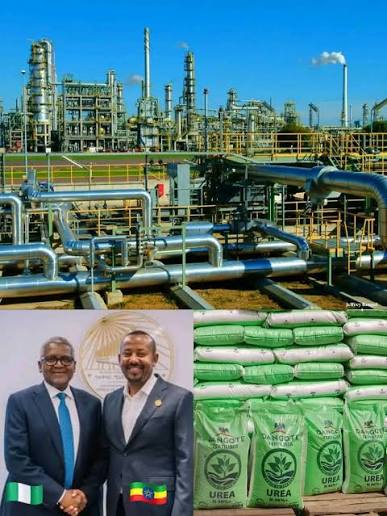
The Indorama Eleme Petrochemicals Limited (IEPL) has revealed plans to expand its petrochemical and fertiliser plants with a $3 billion investment to become Africa’s largest petrochemical and fertiliser hub.
The plan, according to the company, is to be executed within the next five years.
Managing Director of IEPL, Manish Mundra, disclosed this while delivering a keynote address at the 7th Mid/Downstream Oil and Gas Conference, in PortHarcourt.
The conference was organised by the Centre for Gas, Refining and Petrochemical Engineering (CGPRE)  University of Port Harcourt, in conjunction with the Nigerian Society of Chemical Engineers.
Represented by the Head, Fertiliser Manufacture, Indorama Eleme Fertiliser and Chemicals Limited, Upendra Singh, Mundra noted that Nigeria holds Africa’s largest gas reserve and second-largest oil reserve.
Mundra said while the country’s refining capacity is expanding rapidly, yet the country still imports the bulk of its plastic, fertilisers, specialty chemicals, among others
The Indorama boss noted that repositioning the sector means converting hydrocarbon endowments into diversified high-value industrial output.
He urged the government and stakeholders in the sector to look into the issues of thin downstream base, innovation gap, and sustainability imperative to harness the huge benefits of the oil and gas sectors.
“Nigeria again has the resource, large resource base for oil and gas, which is exported as Liquefied Natural Gas or converted into polymers, fertilisers, and downstream products. The past five years have changed the arithmetic of the choice.
“For this, we need to have the policy reform, like PIA 2021 and subsidy deregulation, which are resetting the investment signals across the value chain as new downstream landscape, large-scale refining and petrochemical capacities are coming up, pushing Nigeria from import dependence toward the next export state status,” he said.
Mundra stated that increasing population growth, agriculture, construction, and packaging keep lifting African demand for polymers and fertilisers.
“We need to capitalise on the Middle East crisis and solve logistic challenges to make Africa more attractive for the West.
“We have the highest massive gas stock in Africa, more than 206 TCF, which can be converted into orifins: polyolifins, ammonia, urea, and intermediate integrated—integrated complexes. It can further be converted into resins and packaging pipes, textiles, for domestic consumption or exported to West and Central Africa,” he added.
Earlier in his welcome address, the Chairman, Governing Board, CGRPE, Anthony Ogbuigwe, said the conference was targeted at sensitising policy makers in the country on the need to add value to the oil and gas sector by utilising by-products of the sector to create more wealth for the country.
Continue Reading

Trending