
Oil & Energy
‘Redirect $2b REA Fund To Industrial Power’


The Nigerian Electricity Regulatory Commission (NERC) has called on the Federal Government to have a rethink on it’s policy on the utilisation of the $2b available to the Rural Electrification Agency (REA), urging that a significant portion of the fund be redirected toward addressing the persistent power supply challenges facing Nigeria’s industrial hubs.
NERC Vice Chairman, Dr. Musiliu Oseni, gave the urge while speaking at the NERC 20th Anniversary Celebration held in Abuja, with the theme ‘Strengthening Power Sector Governance for a Sustainable Future’.
Oseni who noted that the REA’s mini-grid projects have improved energy access in rural communities stated however that they are not sufficient to drive industrialisation or economic prosperity.
He said the government must adopt a more deliberate policy framework that supports industrial power development if the country hopes to achieve sustainable economic growth.
“There must be a deliberate policy by the FGN to power our industry for economic prosperity. You can power access through Mini-Grids, but you can’t power your economy to prosperity”, he said.
He stresssed the need for the government to channel part of the $2 billion REA fund toward end-to-end solutions that can strengthen electricity supply to Nigeria’s industrial clusters, stimulate productivity, and create jobs.
Reflecting on NERC’s journey over the past two decades, Oseni noted that the Commission had successfully overseen the privatisation and unbundling of the formerly state-owned monopoly, while developing key regulatory instruments to improve reliability, market governance, and consumer protection.
According to him, relative to 20 years ago, not less than 30 per cent of the electricity consumers have experienced significant improvement in their electricity services adding that through effective regulation, the Commission has saved the Federal Government several trillion of naira in subsidies, thereby contributing to the improved fiscal position of the Federal Government.
Oseni pointed out that Nigeria’s transmission infrastructure still requires substantial investment, noting that current fiscal realities make it impossible for the government alone to meet this funding need.
He therefore called for a robust regulatory framework to attract private capital into the sector, stressing that such measures would ensure long-term stability, efficiency, and sustainability of the Nigerian Electricity Supply Industry (NESI).
The 20th Anniversary Celebration, which brought together key stakeholders from across the nation’s energy landscape to review the sector’s evolution over two decades of reform and regulation, gathered past and present Ministers of Power, Senators, former NERC Chairmen and Commissioners, industry stakeholders, development partners, and staff of the Commission to commemorate two decades of NERC’s contributions to Nigeria’s power sector transformation.


Continue Reading
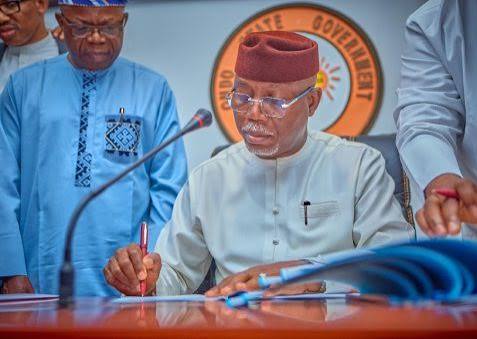
Ondo State Governor, Lucky Aiyedatiwa has signed the State Electric Power Sector (Amendment) Law, 2026, aimed at strengthening regulation and attracting investment into electricity generation, transmission and distribution across the state.
The new legislation, passed by the State House of Assembly, amends Ondo State Electric Power Sector Law, 2020, and aligns the state’s electricity framework with recent constitutional and statutory developments, particularly the Electricity Act, 2023.
A statement issued by the Chief Press Secretary to the Governor, Prince Ebenezer Adeniyan, said a major provision of the law was the establishment of State Electricity Regulatory Commission (SERC), an independent body responsible for regulating electricity activities and standards in Ondo State.
It added that the commission would oversee tariffs, open access, franchises, third-party investments, mini-grids and renewable energy development, while also issuing licences and permits for electricity generation, transmission and distribution facilities.
“The law also provides for the establishment of the State Independent System Operator (SISO) and State Market Operator (SMO) to facilitate the effective operation and development of the state’s electricity market.
“Under the amended law, compulsory metering is required for both grid-connected and off-grid electricity consumers. Electricity sellers are mandated to provide appropriate meters, while consumers will maintain direct service and payment relationships with their respective electricity providers.
“The legislation also provides legal protection for electricity infrastructure financed by communities, associations and private individuals. Transformers, distribution lines and other facilities connected to the public distribution network are protected against arbitrary interference,” the statement said.
It stated further that the law creates the offence of “Electricity Infrastructure Expansion Sabotage” for anyone who deliberately prevents certified electricity infrastructure from being connected to the grid.
According to the statement, first conviction attracts a N2 million fine, as well as an additional N25,000 for every day the refusal continues after written notice from the regulatory authority.
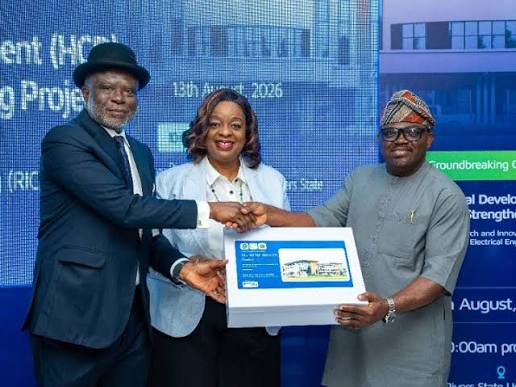
The Nigeria Liquified Natural Gas (NLNG) has launched the Research and Innovation Centre for Computer and Electrical Engineering (RICCEE), in the Rivers State University, a major research and development initiative jointly promoted by Nigeria LNG Limited (NLNG) and the Nigerian Content Development and Monitoring Board (NCDMB).
The project, valued at US$6.2 million, is being implemented under NLNG’s Human Capacity Development (HCD) Plan and forms part of the NCDMB Human Capital Development Institutional Strengthening Programme.
The centre is designed to strengthen the university’s capacity for advanced, industry-relevant research, specialised training, technology development and practical problem-solving in computer, electrical and electronics engineering.
The initiative is expected to promote industry-focused research and develop innovative solutions to operational challenges confronting Nigeria’s energy and industrial sectors.
The facility would be developed on approximately 9,336 square metres of land within Rivers State University and will comprise a three-storey building of more than 9,000 square metres, containing 18 specialised laboratories.
The laboratories would include facilities for Electronics and Signal Processing, Robotics and Embedded Systems, Software Engineering and Digital Forensics and Cybersecurity as well as provide offices, storage areas and technical administration spaces to support research, teaching and equipment management.
The building would incorporate sustainability features, including solar energy provisions, energy-efficient lighting and environmentally responsible systems designed to reduce operating costs and support reliable research activities.
A US$1.2 million Professorial Chair would also be established as part of the initiative to support advanced research, academic leadership, and industry collaboration.
Speaking at the groundbreaking ceremony, last Thursday, the Managing Director and Chief Executive Officer of NLNG, Adeleye Falade, who was represented by Dr Sophia Horsfall, General Manager, External Relations and Sustainable Development of NLNG, described the new engineering facility as more than infrastructure, noting that it would serve as a hub for equipping students, lecturers and researchers with the tools required for practical learning, applied research and innovation in computer, electrical and electronics engineering.
Represented by the General Manager, External Relations and Sustainable Development, NLNG, Sophia Horsfall, Falade stated that the centre would strengthen collaboration between academia and industry and ensure that research outcomes from Rivers State University directly address operational and societal challenges facing Nigeria.
He explained that the project is aimed at improving the capacity of institutions of learning through upgraded infrastructure, modern research facilities, technical equipment and industry-aligned training programmes that extend human capital development beyond the classroom.
According to him, the centre would help bridge the gap between academic knowledge and practical industry requirements by enabling researchers and professionals to collaborate on innovations with commercial and developmental relevance.
Falade emphasised that while infrastructure is important, people remain the greatest investment, noting that education delivers the highest return by building confidence, competence and capacity for national development.
He further announced that NLNG’s Research and Development Implementation Consultancy would be based at the centre upon completion adding that the consultancy would support the development of a robust research and development framework in line with the Nigerian Oil and Gas Industry Content Development Act, 2010 and facilitate commercially viable, industry-relevant research in partnership with selected tertiary institutions.
Falade commended the Nigerian Content Development and Monitoring Board (NCDMB) for its leadership in bringing industry and academia together and reaffirmed NLNG’s commitment to sustainable human capital development and indigenous technological advancement.
On his part, the Executive Secretary of NCDMB, Engr. Felix Omatsola Ogbe, who was represented by the Director, Capacity Building Directorate, Engr. Abayomi Bamidele, described the groundbreaking ceremony as a significant milestone in the implementation of the Board’s Human Capital Development objectives.
Ogbe confirmed that NCDMB is fully aligned with NLNG in the implementation of the RICCEE project and would work closely with all stakeholders to ensure its successful execution and completion, commending the NLNG for its commitment to the project.
He explained that the project forms part of NCDMB’s Institutional Strengthening Programme, which seeks to establish enduring partnerships with institutions of higher learning by providing infrastructure that enhances teaching, research, innovation and practical skills development.
He challenged the centre to become a vibrant hub of discovery, creativity, enterprise and technological advancement, where students would be inspired to innovate, researchers would develop solutions to real-world challenges and industry would find reliable partners for research and development.
He also commended NLNG for its commitment to the project and praised the Governing Council, Vice-Chancellor and management of Rivers State University for their dedication to academic ex.
In his address, the Vice-Chancellor of Rivers State University, Prof. Isaac Zeb-Obipi, described the occasion as a historic milestone for the institution and reaffirmed the university’s vision of becoming a leading institution focused on solving practical societal problems through research, innovation and human capacity development.
Prof. Zeb-Obipi stated that the RICCEE project aligns with the university’s 2026–2030 Strategic Development Plan, which prioritises the improvement of academic programmes and the strengthening of research collaboration, innovation and entrepreneurship.
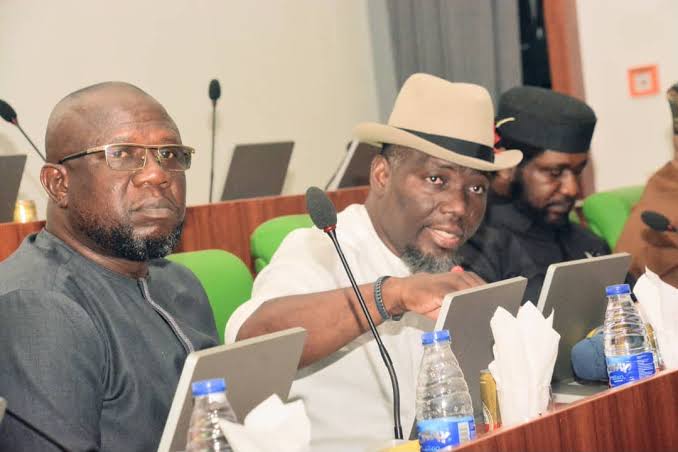
The House of Representatives Committee on South-South Development Commission has demanded urgent and concrete measures to resolve the prolonged gas seepage in Bille Community, Rivers State, and the oil spill affecting Odidi Federated Community in Delta State.
Chairman of the Committee, Hon. Julius Gbabojor Pondi, made the demand during an urgent Stakeholders’ Engagement on the Bille gas seepage and a Legislative Hearing on the Odidi oil spill, in Abuja, last week.
Pondi said the two incidents had exposed host communities in the oil-producing region to prolonged environmental hazards while responses from relevant authorities had yet to produce satisfactory and timely resolutions.
The Committee’s intervention comes amid growing concerns over environmental degradation in the Niger Delta, where communities dependent largely on fishing, farming and other natural-resource-based livelihoods continue to contend with the consequences of oil and gas activities.
Pondi said the Committee’s concern over the Bille incident was heightened following its engagement with the Nigerian Upstream Petroleum Regulatory Commission (NUPRC) and the National Oil Spill Detection and Response Agency (NOSDRA) on July 30, 2026.
He said the Committee was deeply concerned that the gas seepage had persisted for approximately nine months without a clear end in sight.
“The implications are serious. Beyond the potential risks to health, safety and the environment, the incident has imposed severe economic hardship on the people of Bille,” Pondi said.
He noted that Bille, a predominantly fishing community, had suffered consequences affecting livelihoods, food security, household income, education and the general well-being of families.
“It is unacceptable for an incident of this magnitude to persist for so long without a clear, time-bound and effective resolution strategy,” he stated.
According to Pondi, the engagement was intended to establish the facts surrounding the incident, assess the response so far, identify obstacles and agree on practical, measurable and time-bound actions.
He said the Committee expected comprehensive briefings from the operating company, NUPRC, NOSDRA and other relevant agencies on the cause, extent and current status of the seepage, while representatives of Bille Community would be given an opportunity to present their concerns and the relief and interventions required.
“Most importantly, we want to move from prolonged discussion to concrete action and lasting resolution,” he said.
Giving an account of the agency’s technical findings, a Director of NOSDRA, Dr Yusuf Rigasa, said investigations had established what he described as “multi-point subsurface gas bubbling” at several locations in Bille.
He stated that gas bubbling had been detected around the premises of the Government Primary and Secondary School, as well as in waterways and certain mangrove areas.
According to him, NOSDRA conducted an air-quality assessment on December 6, 2025, across 19 stations and recorded elevated levels of hydrogen sulphide, methane, volatile organic compounds and carbon dioxide.
Rigasa explained that hydrogen sulphide has a characteristic rotten-egg smell, while methane is highly flammable and potentially explosive.
The concentrations recorded, he said, exceeded applicable regulatory thresholds.
Rigasa stated that the agency’s reference laboratory also analysed samples collected on December 16, 2025, and found elevated levels of total petroleum hydrocarbons in groundwater, surface water and sediment samples adding that
findings indicated that soil, surface water and groundwater in parts of Bille had been affected by pollution.
What we can confirm for the House is that the air, the groundwater, the surface water and the sediment in the swampy areas in that village, they are all polluted,” he said.
The NOSDRA official, however, said the agency had not established that the gas was from a hydrocarbon source.
-

 News5 days ago
RSG Targets Nine Million Residents in Mosquito Net Distribution Campaign
-

 Oil & Energy5 days ago
Aiyedatiwa Signs New Electricity Bill
-

 Oil & Energy5 days ago
NLNG Commissions Research And Innovation Centre In RSU
-

 Maritime5 days ago
Marine Minister Commends President Tinubu On NPERA Bill Assent
-

 News5 days ago
KenPoly Holds Eight Convocations, August 29
-

 News5 days ago
RMAFC Completes Revenue Sharing Review, Proposes New Pay
-

 News5 days ago
RSG Begins Another Phase of Projects Commissioning Today
-

 Maritime5 days ago
NAGAFF Petitions IGP Over Alleged Maritime Police Harassment