Connect with us

Education

‘Grant-Funded Success Stories In Girls’ Education Inspiring’

Published

on

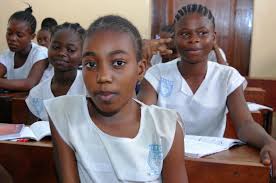
Sources have not only provided essential support for educational initiatives but have also catalysed a movement towards gender equality in education. The stories of success that emerge from these grant-funded programmes are not just statistics; they are narratives of resilience, ambition, and the profound impact that education can have on young girls and their communities.
By examining these success stories, we can better understand the multifaceted benefits of investing in girls’ education and the critical role that grants play in this endeavor. The importance of girls’ education cannot be overstated. Educated girls are more likely to become empowered women who contribute positively to their families and societies.
They tend to marry later, have fewer children, and invest more in their children’s education. However, despite these benefits, millions of girls around the world still face significant barriers to accessing quality education. Grant-funded programmes have emerged as a vital tool in addressing these challenges, providing resources that enable innovative solutions tailored to the unique needs of girls.
This article will explore various aspects of grant-funded success stories in girls’ education, highlighting how these initiatives are transforming lives and communities.
Organizations like the Global Partnership for Education (GPE) have implemented programs that directly target impoverished communities, ensuring that girls receive the support they need to attend school.
By removing financial obstacles, these grants empower families to invest in their daughters’ futures, fostering a culture where girls’ education is valued and prioritized. However, cultural norms and societal expectations often hinder girls from pursuing education.
Organizations like the Global Partnership for Education (GPE) have implemented programmes that directly target impoverished communities, ensuring that girls receive the support they need to attend school.
By removing financial obstacles, these grants empower families to invest in their daughters’ futures, fostering a culture where girls’ education is valued and prioritised. However, cultural norms and societal expectations often hinder girls from pursuing education.
Education grants can help challenge these stereotypes by funding awareness campaigns and community engagement initiatives that promote the importance of girls’ education. For example, the Malala Fund has supported grassroots organisations that work to change perceptions about girls’ roles in society.


Continue Reading

Education

UNIPort Senate Grants Two-Year Amnesty to U2010–U2018 Students

Published

on

The Senate of the University of Port Harcourt Rivers state has approved a special two-year amnesty for students admitted between the 2010/2011 and 2018/2019 academic sessions who were unable to complete their programmes within the stipulated period.
This was contained in a statement by the university public relations officer,Dr Sammy Kpenu and made available to the tide over the weekend in port Harcourt.
The statement stated that eligible students are expected to submit formal applications addressed to the Vice Chancellor through their respective Heads of Department for review and necessary consideration.
The statement further stated that the approval provides a renewed opportunity for affected students to return, regularize their academic status, and successfully complete their studies.
According to the statement  the amnesty also offers a fresh opportunity to students who had issues related to overstaying or other challenges that forced them to discontinue their programmes, to return and complete their academic pursuits.
The statement however said that the deadline for submission of applications end on 31st May, 2026 and therefore urge the affected students to take full advantage of the window the amnesty provided to realise their academic dreams.
Continue Reading

Education

Education Commissioner Seeks media collaboration in Rivers

Published

on

The River State Commissioner for Education, Dr Peters Nwagor has called on media practitioners in Rivers State to deploy their various communication platforms toward promoting government programmes and policies aimed at achieving sustainable development in the education sector. Dr. Nwagor made the appeal when members of the Etche Ethnic Practicing Journalists (EEPJ) paid him a courtesy visit in Office in Port Harcourt. The Commissioner emphasized the strategic role of the media in shaping public perception, promoting government initiatives, and supporting policies capable of improving the quality of education and human capital development in the state. According to him, constructive media engagement remains essential in creating public awareness on educational reforms, students’ welfare, infrastructural improvements, and other interventions being implemented by the state government. Speaking on the recent appro

Continue Reading

Education

IAUE  holds 44th convocation May 8–9 

Published

on

Ignatius Ajuru University of Education will hold its 44th Convocation Ceremony on May 8 and 9, 2026, the University Senate has announced.
Executive Governor of Rivers State and Visitor to the University, Siminalayi Fubara, approved the dates.
The award of First Degrees and presentation of prizes will hold on Friday, May 8, while Postgraduate Degrees will be conferred on Saturday, May 9.
Chairman of Senate, Okechuku Onuchuku, announced the schedule during an emergency Senate meeting on Wednesday, April 15, 2026, at the University’s Postgraduate Hall, Rumuolumeni.
Onuchuku also said the University Council had ratified the promotion of 35 academic staff to the rank of Professor and 41 others to the rank of Reader.
*The newly promoted professors are:*
*Administration and Management Sciences*: Ikechi Prince Obinna, Consumer Behaviour and Sustainability Marketing; Chukwu Godswill Chinedu, Consumer Behaviour and Sustainability Marketing; Joy A. Mekuri-Ndimele, Consumer Behaviour and Sustainability Marketing; Dumo Nkesi Opara, Human Resource Management and Organisational Behaviour; Lawrence Amadi, Entrepreneurship and Strategic Marketing.
*Agriculture*: Eunice Ngozi Ajie, Agricultural Economics; Godswill Ibom Wilcox, Production Economics.
*Education*: Emmanuel Okwu, Library and Information Science; Love Nwamadi, Counselling Psychology; Ali Beatrice Onyebuchi Amadi, Early Childhood and Primary Education; Jerome Ibejika Wosu, History and Policy of Education.
*Humanities*: Grace Hart Lawrence, African Religion and Cultural Heritage.
*Natural and Applied Sciences*: Worokwu China Roland, Science Education (Chemistry); Constance Izuchukwu Amanah, Algorithms and Software Engineering; Comfort Emma-Elechi, Community Health Education and Promotion; Wokocha Gideon Azubuike, Science Education; Glory Godspower-Echie, Science Education; Nwala Longinus, Science Education (ITS); Daso P. Ojimba, Mathematics Education; Nchelem Rosemary George, Mathematics Education; Dagogo Franklin Ibim, Applied Geophysics.
*Social Sciences*: Leelee Nwiibari Deekor, Development Economics; Nzidee Williams, Development Economics; Iwarimie B. Uranta, Political Theory and Methodology; Dennis Reuben T. Ukpere, Rural Development and Resource Management; Poroma Lekia Celestine, Industrial Relations and Human Resource Management; Ngeh David Baride, Sociology of Development; Ebenezer Levi Odike, Sociology of Development and Social Work; Goodnews Wabah, Medical Sociology; Nwikpugi Bright Poronakie, Regional Development Planning; Ikechi Omenihu Okwakpam, Environmental Management.
*Vocational and Technical Education*: Paulinus Emennu, Industrial Technical Education (Mathematical Option); Joseph Onwuakalaegbule.
*Print style notes:*
1. *Lead first*: Who, what, when upfront — dates in para 1
2. *Dateline*: PORT HARCOURT in caps
3. *Numbers*: Figures above nine written as numerals, per AP style
4. *Attribution*: “said” used, titles before names on first reference
5. *Tight lists*: Semicolons separate full entries to save space
6. *No fluff*: Cut “executive”, “dedicated to”, “featured” — verbs carry weight
By: Akujobi Amadi
Continue Reading

Trending