
News
South-South contributes N34trn to Nigeria’s economy in 2024 – Institute

Prof. Pius Olanrewaju, President of the Chartered Institute of Bankers of Nigeria (CIBN), has stated that the South-South region contributes N34 trillion to country’s economy in 2024.
He made the remark at the South-South Zonal Banking and Finance Conference in Calabar, yesterday.
He spoke on the theme, ‘’Building An Inclusive South-South: Economic Diversification as a Catalyst For Development.’’
Olanrewaju, who quoted the data from the Cable Data Index, said the feat was more than 21 per cent of Nigeria’s real Gross Domestic Product (GDP).
The president described the growth as ‘’ impressive,’’ saying that it was not driven by oil alone but significant expansions in trade, services, and the creative industries.
According to him, to fully harness this potential, coordinated financial, technological, and policy support is essential.
“As we work to reposition the South-South for broad-based prosperity, the financial system must play a central role, not merely as a source of capital, but as a catalyst for innovation, ideas incubation, and inclusive economic growth.
“This conference, therefore, provides a strategic opportunity for stakeholders to reimagine the South-South economy, not merely as a resource belt, but as a region of diverse capabilities and resilient enterprises.”
Olanrewaju added that Nigeria must move beyond old models and chart a new course for the development of the South-South region, where financial institutions and stakeholder collaborate to diversify the economy for shared prosperity.
He, however, commended Gov. Bassey Otu for his pledge of land for CIBN Secretariat in Cross River and being the first sitting governor to willingly undergo and complete the Chartered Bankers Programme.
On his part, Gov. Otu said that the conference discussion on the economic diversification in South-South region was timely against the backdrop of global trade and economic volatility that was affecting the nation’s economy.
Represented by his deputy, Mr Peter Odey, Otu said the South-South region must now act with urgency to diversify its economy while leveraging its shared natural endowment in agriculture and extractive resources.
“This conference must help develop tailored financial solutions that reflect the unique strengths and realities of states like Cross River in the south-south.
“Diversification should be evidence-based and must be backed not just by financial advice but project focused financing and real investment support,” he noted.
He said that Cross River had taken the bold step to invest in its agricultural sector by launching an Agro processing hub.
Otu further said that the state had invested in aviation by acquiring more aircrafts for Cally Air, construction of the Bakassi Deep Seaport and injecting N18 billion in its tourism sector.
Similarly, Mr Tolefe Jibunoh, Cross River Branch Controller of the Central Bank of Nigeria (CBN) said that the region was blessed with natural resources, cultural diversities and immense human potentials.
Jibunoh, who was represented by Mr Segun Shittu, Head, Currency Control Office, CBN, Calabar, noted that strategic diversification could unlock unprecedented opportunities for growth in the region.
He added that the CBN remained steadfast to maintain monetary possibilities and promote a sound financial system as a catalyst for sustainable economic development for the benefit of all.


News
FG Must Address Nigerians’ Concerns On Reforms -Shettima …Warns Against Misuse of AI, Social Media

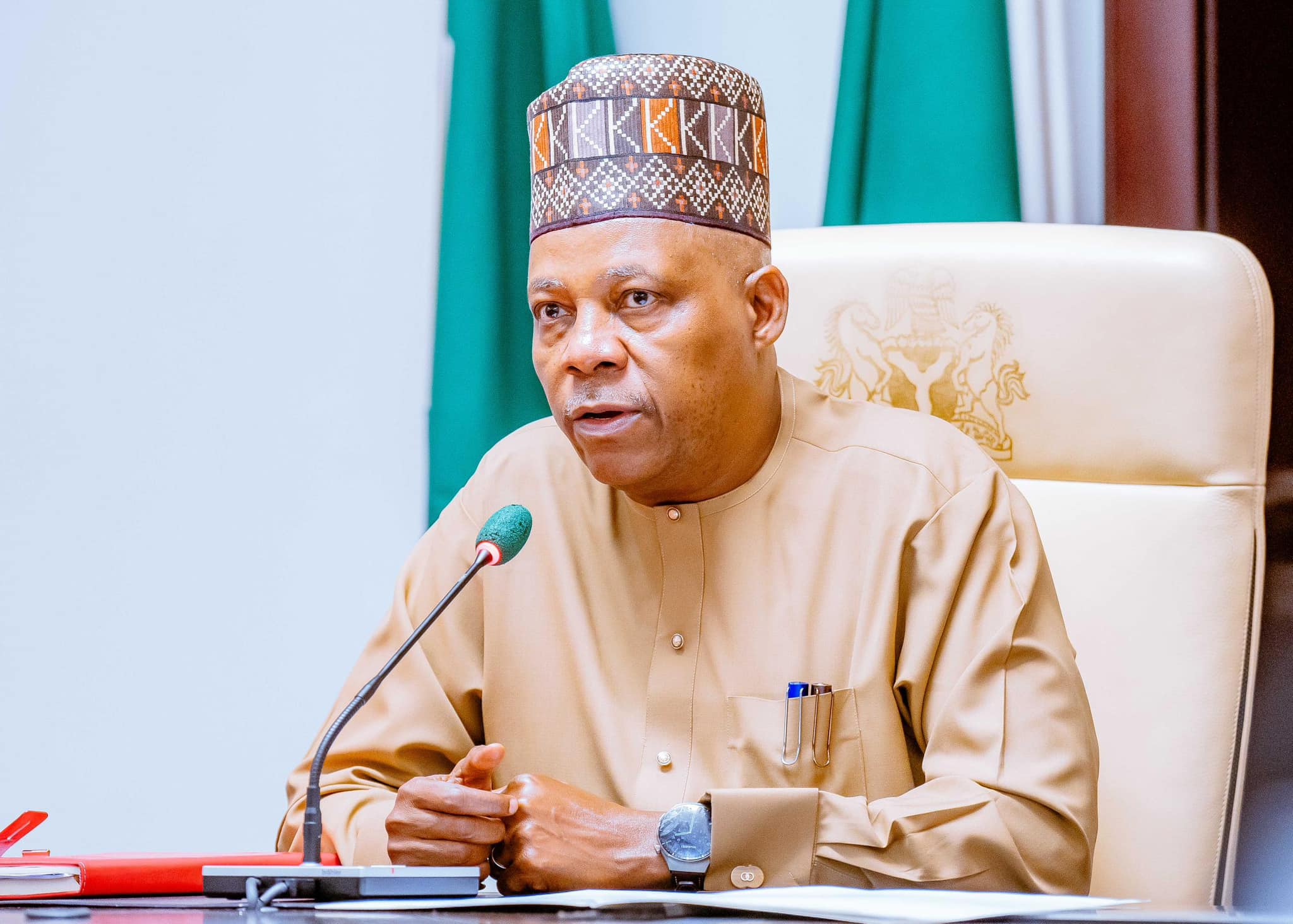
Vice President Kashim Shettima has urged the Federal Government to pay greater attention to Nigerians’ concerns about ongoing economic reforms, insisting that public confidence must be built through transparent communication, credible evidence of progress and responsiveness to citizens’ experiences.
Shettima made the call yesterday at The Duke’s Masterclass 2026, held at Transcorp Hilton, Abuja, where he was represented by his Special Adviser on Economic Affairs, Dr Tope Fasua.
The Vice President said the success of the administration’s economic policies would depend not only on their implementation but also on the government’s ability to demonstrate tangible results and address the challenges confronting citizens.
“Government must continue to communicate, however, its policies clearly, demonstrate progress with credible evidence, and listen attentively to the experiences of citizens,” he said.
Shettima defended the economic reforms introduced by President Bola Tinubu, including petrol subsidy removal, foreign exchange market liberalisation, fiscal restructuring and revenue mobilisation, describing them as measures intended to correct longstanding economic distortions and strengthen Nigeria’s productive capacity.
He explained that the policies were designed to attract investment, improve business confidence, enhance the deployment of public resources and establish conditions for sustainable economic growth.
However, he maintained that announcing policies was insufficient without building public understanding and confidence in their implementation.
The Vice President particularly challenged Nigeria’s elite, professionals and middle class to acknowledge the difficulties facing ordinary citizens while explaining the objectives of the reforms.
“Your role is not to defend every government action uncritically, nor to dismiss the concerns of citizens. It is to help create a more informed and constructive national conversation,” he stated.
He urged professionals engaging traders to recognise the pressures confronting businesses and advised those interacting with young graduates to acknowledge employment challenges while encouraging entrepreneurship and innovation.
According to him, constructive criticism and informed public participation are essential to effective governance and the sustainability of economic policies.
“Constructive scrutiny strengthens governance. Informed public participation strengthens democracy,” Shettima said.
He further stressed that leadership required the flexibility to adjust policy implementation in response to evidence and changing economic circumstances without abandoning established objectives.
Turning to the challenges of artificial intelligence and social media, the Vice President warned that technological advances were increasing the speed and sophistication of misinformation, posing risks to public confidence and institutional reputations.
“A photograph can be manipulated, a voice can be cloned, and a video can be fabricated just with a simple prompt on social media to make an individual appear to have said or done something that never happened,” he warned.
Shettima urged public institutions to strengthen information verification, correct false claims transparently and communicate through trusted channels, adding that speed should never take precedence over accuracy.
He also called for improved digital literacy and responsible use of artificial intelligence.
On economic opportunities, Shettima identified banking, financial technology, oil and gas, agriculture, real estate, construction, commodity exports and the creative industry as sectors capable of supporting investment and employment.
He nevertheless acknowledged the need to address unreliable electricity, inefficient transportation, insecurity, limited access to finance and weaknesses in education and public institutions.
He called for stronger domestic production, export expansion and support for small businesses, while urging that economic opportunities be extended to women, young people and rural communities.
In his opening address, the Chairman of Odu’a Investment Company Limited, Bimbo Ashiru, warned that poor leadership decisions and inadequate crisis preparedness could destroy institutional credibility.
“Reputation cannot be manufactured at the point of crisis. It is built over time through our decisions, our conduct, our values and the consistency between what we say and what we do,” he said.
Ashiru noted that geopolitical tensions, technological changes and economic disruptions were making leadership increasingly difficult, requiring organisations to strengthen accountability, transparency and crisis management.
He disclosed plans to extend the masterclass to London in March 2027.
Also speaking, former Commonwealth Secretary-General, Emeka Anyaoku, recounted his involvement in international conflict resolution, particularly negotiations surrounding South Africa’s transition from apartheid and political tensions in Bangladesh.
He stressed that successful mediation required a thorough understanding of the issues dividing opposing parties, the interests of their leaders and the appropriate timing of public communication.
“Because if you communicate the progress prematurely, you might sabotage the whole process,” Anyaoku said.
The Chairman of AXA Mansard and Group Managing Director of Sahara Power Group, Kola Adesina, criticised Nigeria’s persistent electricity challenges, arguing that public institutions and businesses should be judged by service delivery rather than explanations for poor performance.
“Rather than giving people megawatts of electricity, we are giving them excuses,” he said.
Adesina also condemned corruption, inflated public contracts and failures of accountability, warning that such practices weakened infrastructure, damaged public trust and endangered lives.
Meanwhile, the Chairman of the Duke of Shomolu Foundation, Joseph Edgar, explained that the masterclass was designed to equip organisations and individuals with practical strategies for anticipating crises, managing their consequences and protecting institutional reputations.
He said the initiative complemented the foundation’s use of theatre to promote social cohesion and strengthen public engagement.
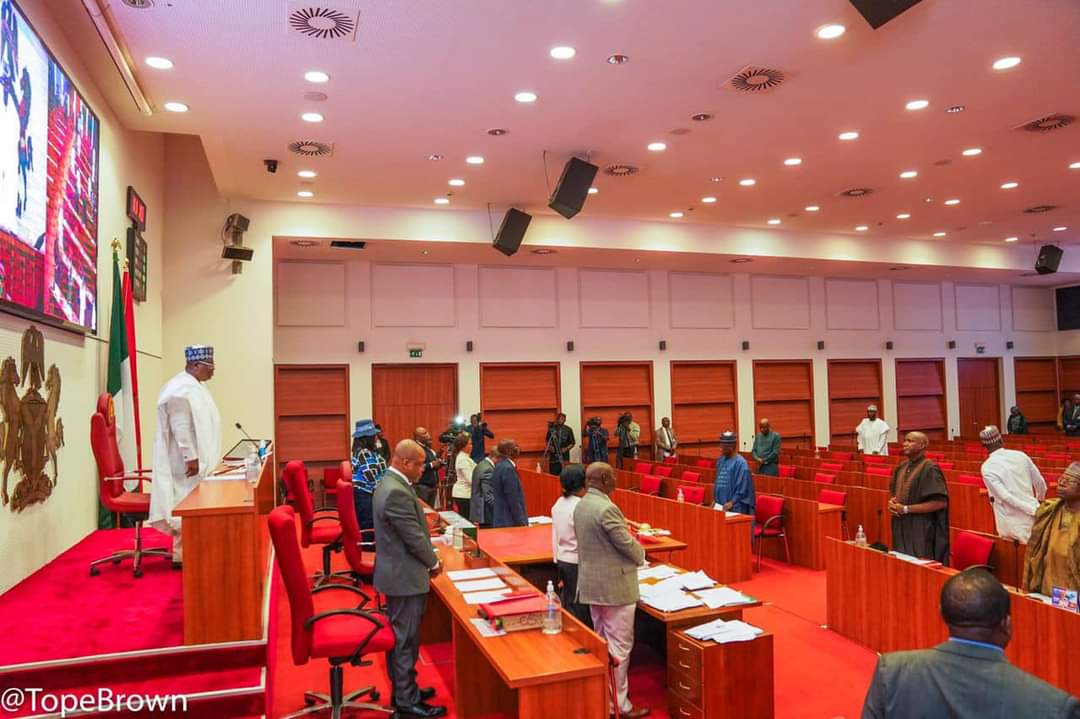
The House of Representatives has concurred with a Senate bill seeking to establish a Federal Medical Centre (FMC) in Bonny Local Government Area of Rivers State, paving the way for the proposed healthcare facility to proceed through the remaining legislative and constitutional processes.
The bill, sponsored by Senator Ipalibo Harry Banigo, who represents Rivers West Senatorial District, is titled Federal Medical Centre, Bonny, Rivers State and for Related Matters (SB 659).
It seeks to amend relevant provisions of the Federal Medical Centres Act to provide a legal framework for the establishment of the institution.
The concurrence by the House marks a significant legislative step towards improving access to specialised healthcare services for residents of Bonny and neighbouring communities.
The proposed medical centre is expected to strengthen healthcare delivery in the area, reduce pressure on existing medical facilities and improve access to timely treatment, particularly for patients requiring emergency and specialist care.
Its establishment is also expected to reduce the difficulties and additional costs associated with travelling outside the area to access advanced medical services.
Beyond patient care, the facility could provide opportunities for medical training, professional development and capacity building for healthcare workers, while strengthening the overall healthcare system in Rivers State.
Following the concurrence, the bill is expected to proceed through the remaining legislative and constitutional requirements, including presentation to the President for assent, before it can become law.
Banigo’s sponsorship of the bill reflects efforts to expand healthcare infrastructure and promote equitable access to quality medical services in Rivers State.
When established, the Federal Medical Centre, Bonny, is expected to bring specialist healthcare services closer to residents of the island community and surrounding areas, potentially reducing delays in treatment and improving patient outcomes.
The proposed facility would also add to the state’s healthcare infrastructure at a time when access to affordable and specialised medical services remains a major concern for many communities.
The Federal Government has approved the development and construction of the proposed King Amachree Airport at Elem Ifoko in Degema Local Government Area of Rivers State, subject to compliance with regulatory, environmental and engineering requirements.
The approval was conveyed in a letter dated October 26, 2026, with reference number FMA/ADD/402/S.101/C.1/1/88, addressed to the Executive Director of Royal Fouche Services Limited, Prince Tonye Princewill.
The letter, signed by the Director of the Aerodrome Development Department on behalf of the Minister of Aviation and Aerospace Development, outlined conditions the project proponents must fulfil before proceeding with the proposed airport development.
Among the requirements is the preparation and submission of a comprehensive airport master plan detailing the proposed facilities, construction phases and associated infrastructure.
The proponents are also required to comply with all applicable regulations of the Nigerian Civil Aviation Authority (NCAA), alongside relevant environmental laws and standards.
These include conducting an Environmental Impact Assessment (EIA) and other necessary environmental studies, as well as paying all applicable statutory fees.
The government further stipulated that the project developers must submit a detailed topographical and obstacle survey referenced to the World Geodetic System 1984 (WGS-84).
A comprehensive geotechnical investigation is also required to establish the site’s subsurface conditions, soil-bearing capacity, groundwater characteristics and suitability for the proposed airport infrastructure.
In addition, the proponents must undertake detailed hydrological, hydraulic and drainage studies to evaluate potential flooding, tidal influences, seasonal water movements and stormwater management challenges at the proposed site.
The letter specifically addressed the canal traversing the proposed airport location, directing the developers to submit an engineering assessment to determine the most appropriate solution.
The assessment is expected to establish whether the canal should be diverted or realigned, or whether a suitable bridge or other crossing structure should be constructed to accommodate the proposed development.
The Federal Government also made the provision of reliable, all-weather road access to the airport a condition for the project. Such access, it said, would be necessary to facilitate construction, airport operations, emergency response and passenger movement.
Furthermore, the Ministry of Aviation and Aerospace Development and its relevant agencies are to be involved throughout all stages of the airport’s development.
Their involvement is intended to provide technical oversight and ensure compliance with the Standards and Recommended Practices of the International Civil Aviation Organization (ICAO), the Nigerian Civil Aviation Regulations (Nig.CARs) and other applicable statutory and regulatory requirements.
The approval marks a significant step towards the proposed establishment of the King Amachree Airport in Degema, although the project remains subject to the fulfilment of the conditions specified by the Federal Government.
-

 Sports4 days ago
Nigerian Trio Target Titles At PFL Africa Finals
-
 Education4 days ago
FCE Yola Graduates 3,555 Teachers , Seeks Upgrade to University
-

 Niger Delta4 days ago
Diri Restates Stance On Lagos-Calabar Coastal Highway
-

 Niger Delta4 days ago
C’River, NUJ Pay Tribute To Late Guardian Editor
-

 News4 days ago
NDLEA Recovers Tons Of Illicit Drug Consignments In Nine States
-

 Opinion4 days ago
Checking Voter Apathy In Nigeria’s Electoral Process
-
 Politics4 days ago
2027: DICKSON’S EX-ALLY VOWS TO WORK AGAINST NDC INTEREST IN BAYELSA
-

 Politics4 days ago
2027: GROUP PLEDGES 40,000 SUPPORTERS FOR COALITION CANDIDATES IN RIVERS