Connect with us

Opinion

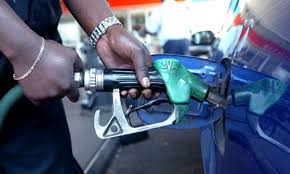
Subsidy Is Dead, Long Live Subsidy

Published

on

Before the 2023 presidential elections, acres of print space and hours of airtime were expended by armies of well-paid publicists and media influencers to sell home the fact that candidate Bola Ahmed Tinubu was the real deal among the three presidential candidates running in the election. The narrative ran that Tinubu had in his ken, the ability to turn Nigeria’s flagging economy and transform it like he did as Governor of Lagos State when he oversaw an unprecedented level of development at the centre of excellence.
Last week, a major dent to that well packaged façade of President Tinubu was inadvertently revealed when it emerged that the cardinal economic measure of the administration, removal of subsidies on petroleum products, have all along been an elaborate deception. Before nervous and embarrassed Tinubu administration officials disclaimed it, the story that subsidy payments totalling N5trillion had been making the rounds.
To the utter consternation of Nigerians, the question was howbeit that a government that said it had ended subsidy payments is now having to pay more than two times the Buhari government which was paying over N2trillion on subsidies?
The case of petroleum subsidy payments has been mired in a crisis of clarity and truth. When some petroleum economists questioned the claim that subsidy had been removed with empirical facts, mum was the word from the President who announced the measure in the first place and who doubles as substantive Petroleum Minister. The minister of State in the same Ministry, Heineken Lokpobiri without providing contravening facts pointedly denied that subsidy was being paid. The Group Managing Director of the Nigeria National Petroleum Company Limited (NNPCL) Mele Kyari also said what amounted to the same thing as the minister of state. His explanation was that in the past subsidies arose out of the necessity to license contractors to import and distribute petroleum products in the country as a result of non-functioning of the refineries. In the current dispensation however as the NNNCL had been given the sole responsibility of that task, there was no need for subsidies as he said ‘’NNPCL (through its ways, I presume) had the mechanism to cover the costs’’ of the task of importing and distributing the commodity without subsidy.
But the International Monetary Fund (IMF) and World Bank were not convinced. Let us not forget that the twin institutions are the authors and supervisors of the Tinubu administration’s economic policies. And what they say in their assessment of the economic policies of the administration cannot be far from the truth. Whereas the GMD’s explanation was more on the side of contrived sophistry intended to deflect embarrassing enquiry, the statements from the IMF and World Bank on subsidies were decidedly factual. The World Bank’s Country Director in Nigeria connected the variables of the oil importation and distribution monopoly of the NNPCL to arrive at the conclusion that subsidy was indeed being paid. These include; the rate at which the NNPCL procures the dollar for the transaction; the cost of the commodity at point of procurement; cost of freight and insurance; landing and distribution costs in Nigeria. Where there is a difference in the actual cost of one or all of the variables, this then establishes the fact of subsidy. The World Bank knew that NNPCL was getting foreign exchange preferentially at the official rate which is below the market rate. And from that stage right up to the landing stage and distribution in Nigeria, the subsidy graduates at every point leading inevitably and factually to the conclusion that subsidy was being paid.
The IMF on its part pointedly said that taking all the points together, the fact that the pump price of the petroleum products all things being equal should be somewhere between 700 and 800 naira per litre and not the 680 naira per litre that it is being sold presently. The fact that it is not being sold at those rates is the clearest indicator that the difference in pricing is the subsidy. Kyari’s explanation that the NNPCL is covering the cost is a vague indication that the conglomerate is paying the cost differentials to the local oil marketers to distribute the cost locally after it had imported the commodity to the country.
Let us not pussy foot about it; subsidy is indeed being paid by the Tinubu administration. The only difference here is that unlike in the past where the subsidy payment was a bazaar for all comers, in this particular dispensation, it is the NNPCL that exclusively warehouses the subsidy. And it is by connecting and calculating all the dots on the entire chain of NNPCL’s oil importation monopoly that the World Bank concluded that there was indeed subsidy in the process. So in reality, Mele Kyari’s explanation that NNPCL had the means to cover the cost of oil importation task was merely half the story and it does not convincingly disprove that oil subsidy was not being paid.
If walks and quacks like a duck, it is a duck. Much as it strenuously tries to deny that there is no subsidy, discerning Nigerians know for a fact that subsidy is indeed being paid by the administration. The truth however is that because the payment goes to a single source, the NNPCL which buries the payments in its labyrinthine maze of creative accounting it is not readily discernible as it was in the past subsidy dispensation.
That perhaps explains why from the President who is the substantive Minister of Petroleum to Lokpobiri the State Minister and the GMD of NNPCL, they all can put up a face and say that there are no subsidies. They are able to say so because they are secure in the knowledge that the NNPCL which is at the nexus and custody of the entire process of oil importation into the country can obfuscate the truth about it all with a wink and a nod as it is now doing.
Gadu, is a prolific writer and online communicator.

By: Iliyasu Gadu

Continue Reading

Opinion

Should The Internet Go Bust

Published

on

Quote:”. Whereas it sounds apocalyptic, yet experts have long warned that a total internet collapse, whether from cyberwarfare, global technical failure, or coordinated attacks on undersea cables, could paralyze the world far beyond imagination”
We now live in a world that so much relies on technology, especially on digital communication networks and data services. Virtually every aspect of our life depends on the efficient functioning of machines. In view of this reliance, imagine waking up to a world where the internet simply goes dark. For advanced countries where the functionality, monitoring and data storage of surveillance, security and nuclear installations, all rely on electronics and networks, the disruption could be catastrophic. On the other hand, for developing nations like Nigeria where government’s  response is usually slow, the implications would be socially and economically disastrous. It would imply the sudden evaporation of all the modern conveniences we have taken for granted. No online banking. No emails. No mobile transfers. No WhatsApp messages, Twitter feeds or digital government portals.
The collapse would expose a dangerous dependency, the centralization of personal data. In Nigeria’s multi-biometric systems, the Bank Verification Number (BVN), the National Identification Number (NIN), and SIM registration for mobile networks, are all cloud-based. With no internet, access to these databases would be lost. Banks could not verify customers; telecom operators could not authenticate SIMs; and government agencies would be unable to issue new IDs or validate old ones.In Nigeria, over 80% of financial transactions now occur digitally, thanks to the rapid adoption of fintech platforms such as Opay, PalmPay, Paga, and the Central Bank Nigeria’s eNaira initiative. Assets of companies worth trillions of naira are also stored digitally and transacted on the Nigerians Stock Exchange. Like other transactions, these have no certified paper backings other than electronic storages.
It means that the wealth and wellbeing of millions now lie at the mercy of machines. According to the Nigeria Inter-Bank Settlement System (NIBSS), in 2024 alone, the value of electronic payments in Nigeria reached ?600 trillion. Whereas it sounds apocalyptic, yet experts have long warned that a total internet collapse, whether from cyberwarfare, global technical failure, or coordinated attacks on undersea cables, could paralyze the world far beyond imagination. A total internet blackout would instantly freeze the banking system as banks lose interconnectivity, making transfers, withdrawals, and payments impossible. Fintech companies would go offline, cutting off millions from access to their digital wallets, while Point-of-Sale (PoS) operators, who depend on network connections for every transaction, would be stranded.The economy would revert overnight to cash dependence.
But cash, already scarce due to the CBN’s currency redesign and digital push, would not circulate fast enough to meet demands. Markets would collapse into panic, and trust in banks could erode within hours. Modern governance in Nigeria has increasingly depended on digital infrastructure, using e-government portals to handle licensing, pension records, procurements, revenue collection and budget management. An internet collapse would send governance back to the analogue age. Ministries would lose coordination, digital files would be inaccessible and online recordkeeping systems would fail.For ordinary Nigerians, the consequences would be deeply personal. Salaries paid through electronic transfers would go into limbo. Traders on Jumia, Konga, and social media marketplaces would lose their livelihoods overnight. Health and other insurance policies that currently dependent on cloud records and telemedicine would be truncated.
Even more troubling, a prolonged blackout could corrupt or erase data stored in unsecured local servers. Without connectivity to global backups, entire records, financial histories, health data, and school records, could be lost. For millions around the globe, digital amnesia would mean loss of identity, wealth and social status. Without communication, rumours would fill the void, potentially triggering civil unrests, misinformation, or even national security crises that may lead to uprisings in many countries.In a world where WhatsApp has replaced the post office and Zoom serves as boardrooms, digital communication collapse would feel like the death of modern society. Businesses would halt meetings, journalists would lose sources, students would be cut off from online learning, and diaspora remittances and family ties would suffer. Even voice calls that depend on internet routing would be impossible.
 The silence would be deafening, not just socially but economically, because communication fuels productivity. Without it, markets stall.The collapse of the internet would expose how deeply our daily survival has come to depend on invisible digital threads. If the web were to go dark tomorrow, it would not just dim our screens, it would extinguish commerce, governance, and connection itself. Already, fallouts from increasing cyber-attacks on undersea cables or satellite networks show the fragility of the situation.To preempt these eventualities, developing countries must therefore,  plan to build digital resilience. Critical data should have offline backups within national borders. Banks and fintechs must maintain local intranets or satellite-based alternatives to the public web. Radios, SMS-based, and offline mesh communication networks should be installed as alternative fallback channels.
Proactive protection of key infrastructure must become a national priority, and not reactive fire-fighting. As the internet becomes the nerve centre of modern civilization, developing economies like Nigeria, which strives for inclusion and growth, should avoid being ensnared into a blind spot by rapidly digitalizing into over-dependence. And the question is not whether the internet could collapse, but whether we can survive it when it does. A society that entrusts everything to the cloud must first learn how to breathe without it.
By; Joseph Nwankwor


Continue Reading

Opinion

Transgenderism: Reshaping Modern Society 

Published

on

Quote:”While some hail transgenderism as a triumph of individual freedom and self-expression, others harbour deep concerns about the implications of this phenomenon.”
Often times, people tend to be about the concept of   cross-dressing and transgenderism While cross-dressing refers to the act of wearing clothing and accessories typically associated with the opposite sex, often for entertainment, self-expression, or personal satisfaction and cross-dressers may identify with their birth sex and may not necessarily experience distress or discomfort with their gender, transgenderism, on the other hand, refers to having gender identity differ from the sex a person is naturally assigned at birth. Transgender individuals may identify as male, female, non-binary, or another gender identity that aligns with their internal sense of self. Transgenderism is often accompanied by a desire to transition, which may involve hormone therapy, surgery, or other medical interventions. However, while some cross-dressers may also identify as transgender, not all cross-dressers are transgender, and not all transgender individuals cross-dress.
 We have heard of a few Nigerian individuals who have identified as transgender or non-binary, even though they may not have publicly denounced their original gender. The case  of Okuneye Idris Olanrewaju, popularly known as Bobrisky, is  one no longer hidden. A Nigerian social media personality and crossdresser, Bobrisky  has gained a large following online. While not openly identifying as transgender, Bobrisky has been known to challenge traditional gender norms. Another known personality in this regard, is Denrele Edun. The later is a  Nigerian television host, actor, and model who has been known for his androgynous appearance and style. Denrele has also  not publicly identified as transgender but has been open about his non-conformity to traditional gender norms. Onyx Uzo, a  Nigerian non-binary artist and writer,  has been open about their gender identity.
 The transgender movement has really gained unprecedented momentum in  recent years, sparking intense debates and discussions across various spheres of society. While some hail transgenderism as a triumph of individual freedom and self-expression, others harbour deep concerns about the implications of this phenomenon. As the world grapples with the complexities of transgenderism, it is essential to engage in a nuanced and multifaceted examination of the issues at stake. To begin with, it is crucial to acknowledge that transgenderism is a deeply personal and complex issue, affecting individuals and families in profound ways. While some people may identify as transgender due to a genuine sense of discomfort with their biological sex, others may be driven by factors such as mental health issues, trauma, or social pressure.
It is essential to approach each individual experience with empathy and understanding, recognizing that there is no one-size-fits-all explanation for transgenderism. However, as we strive to be compassionate and inclusive, we must also consider the broader implications of transgenderism on society. One of the most pressing concerns is the erosion of traditional sex distinctions and the redefinition of gender. Proponents of transgenderism argue that gender is a social construct, and that individuals should be free to identify as they choose. However, this perspective neglects the biological and anthropological realities of sex and gender. The consequences of blurring the lines between male and female are far-reaching and profound. Women’s rights and spaces are being compromised by the inclusion of biological males who identify as females.
Women’s sports, bathrooms, and shelters are being redefined to accommodate transgender individuals, often at the expense of women’s safety and dignity. Furthermore, the transgender movement has been linked to a range of mental health concerns, including depression, anxiety, and suicidal ideation. Rather than encouraging individuals to embrace a transgender identity, we should be providing them with compassionate and evidence-based care that addresses the underlying issues driving their desire to transition. In addition, the push to normalize transgenderism has significant implications for children and adolescents. The increasing trend of diagnosing children with gender dysphoria and administering hormone blockers and cross-sex hormones raises serious concerns about the long-term effects on their physical and emotional health.
It is also essential to examine the role of ideology and politics in shaping the transgender movement. The promotion of transgenderism as a social justice issue has led to the suppression of dissenting voices and the marginalization of those who hold differing views. This climate of intolerance and censorship is antithetical to the principles of free speech and open inquiry. Moreover, the transgender movement has been criticized for its lack of scientific rigor and its reliance on anecdotal evidence. Many experts argue that the current diagnostic criteria for gender dysphoria are flawed and that the treatment options available are often inadequate. The lack of longitudinal studies and the dearth of data on the long-term effects of hormone therapy and surgery are particularly concerning. The implications of transgenderism on the family and society are also significant.
 The redefinition of gender and marriage has led to a reevaluation of traditional family structures and relationships. While some argue that this shift is necessary and liberating, others worry about the potential consequences for children and society as a whole. Howbeit, the transgender conundrum is a complex and multifaceted issue that requires careful consideration and nuanced analysis. While we must approach each individual’s experience with empathy and understanding, we must also examine the broader implications of transgenderism on society. By engaging in a thoughtful and informed discussion, we can work towards creating a more compassionate and inclusive society that respects the dignity and humanity of all individuals.As we move forward, it is essential that we prioritize critical thinking, intellectual honesty, and open inquiry.
We must be willing to ask difficult questions, challenge prevailing narratives, and engage in respectful dialogue with those who hold differing views. Only through this process can we hope to arrive at a deeper understanding of the complex issues surrounding transgenderism.
By: Sylvia ThankGod-Amadi
Continue Reading

Opinion

A Renewing Optimism For Naira

Published

on

Quote:”……in 2024 alone, Nigeria imported N14.14 trillion worth of goods from China, compared to China’s N3 trillion imports from Nigeria.”
Nigeria’s national currency, the Naira, is creating a new buzz as it sets on rising trends following years of astronomical slides in the recent past. Just within a few months ago, naira’s trajectory charted almost a straight course, strengthening from N1,636.71/$ on April 10, 2025, to N1,465.68/$ on October 2, 2025. But financial analysts appear divided over the future fate of the local legal tender.While analysts like the Forbes and Renaissance Capital Africa (RENCAP) deride naira’s current trends as being unsustainable, Bloomberg sees a sunnier side. However, evolving economic landscapes strongly suggest that the naira might be charting a sustainable path of resilience. For more than four decades, the naira had never experienced favourable Foreign Exchange (FX) tussles.
Suffering under skewed supply and demand tensions against foreign currencies, the value of the naira had procedurally depreciated. It got worse when, at the height of subsidized petroleum products import-dependence, subsidies got suddenly withdrawn in May 2023 as the present government took over office. Barring local production of the products, coupled with poor export earnings, demands for scarce foreign currencies surged at all FX windows as product importers competed to make overseas payments. The result was cataclysmic. The naira depreciated rapidly against the dollar, falling from N460.7/$ in May 2023 to N1,706/$ in 2024. Hardships propagated across the entire Nigerian economy in ripples of hyper-inflation as is still being felt. The initial response from the Central Bank of Nigeria (CBN) was knee-jerk and unsustainable, as the regulator kept throwing its store of foreign reserve into FX markets to quench the ensuing inferno.
 Though the naira showed buoyancy at the expense of depleting reserves, the CBN was criticized against the hopelessness and unsustainability of such artificial floats. Thankfully for the local currency, after months of fire-fighting, the CBN, aided by other lucky developments, may have stumbled unto some formulae to weather the storms. Emerging econometrics now suggest that the economy may be in recovery, and the naira appears to be charting a more optimistic course, even as the apex bank still prods it. The lower oil production data of around one million barrels per day as at May 2023, has improved to around 1.51 million barrels per day at the moment. Surely, the fight against oil thefts is rewarding the economy with surpluses unencumbered by Nigeria’s debt-mortgaged oil futures.bSecondly, a changed petroleum products sourcing landscape, berthed by new-found local refining capacity at Dangote Refinery, if not strengthening the naira, must be tipping the balance of FX pressures in its favour.
While asserting its ability to fully satisfy local demands, the Dangote Refinery also hit a remarkable milestone when it shipped its first cargo of gasoline to the United States of America last month, drawing-in huge FX. Earlier, the refiners had shipped to Asia and West Africa, in a significant shift that has transited Nigeria from being a net-importer of petroleum product, to a net-exporter. Also, improvements in the non-oil exports are increasing the inflow of foreign currencies to Nigeria. Nigerian cocoa and other agro-products especially, got higher demands as crop diseases resulted in poor crop yields in neighboring West African countries. It should be noteworthy that CBN’s experiments with Naira-Yuan trade swaps with China may not have been of much favour. Though on-going trade swap arrangements between Nigerian and China which enable some settlement in naira and yuan, may ease dollar pressures, the huge trade imbalance between Nigeria and China may replace any gains with new yuan pressures.
 According to the National Bureau of Statistics, in 2024 alone, Nigeria imported N14.14 trillion worth of goods from China, compared to China’s N3 trillion imports from Nigeria.
However, the CBN could be given credits for its bold reforms at the Foreign Exchange market that created a single Nigerian Foreign Exchange Market (NFEM) in October 2023, which replaced the former Investors’ and Exporters’ window, and later adopting the Electronic Foreign Exchange Matching System (EFEMS) in December 2024. These steps successfully narrowed the gap between official FX rates and the black market. Even as the measures may not directly detect the balance of currency demands and supplies, improved transparency and liquidity raised confidence that is boosting foreign remittances via official channels. Added to improved exports, it is evident that the extra liquidity gives spontaneous buoyancy to the naira, in ways CBN’s panicked throwing-in of dollar into FX markets could not have.
This is why, when the CBN Governor, Olayemi Cardoso, announced during the 302nd monetary policy committee meeting that, “The second quarter 2025 current account balance recorded a significant surplus of $5.28 billion compared with $2.85 billion in first quarter of 2025,” there is need for him to identify significant drivers. The CBN deserves commendation also, for incrementally growing Nigeria’s Foreign Reserve savings from $34.39 billion as at May, 2023 to $42.40 as at October 2, 2025. The strength of a nation’s reserves reflects its ability to meet international payment obligations without straining the stability of its legal tender, and also serves as part of risk assessment criteria that determines its borrowing costs. Increasing reserves is projecting greater external resilience for Nigeria, which reflects in Moody’s upgrading, this year, of Nigeria’s rating from ‘Caa1’ to ‘B3.’
With renewed investor confidence, foreign investments may be heading towards Nigeria as ripples from the Nigerian Stock Exchange (NGX) suggest. Following recent interest rate cuts in the US, foreign investors appear to be shifting appetites towards Nigerian portfolios. Improved reserve is also helping Nigeria at the Eurobond market, where the yield rates Nigeria pays on its loans, have fallen from above 8 percent in early 2024 to just over 5 percent by mid-2025. However, even as the N1,706/$ exchange rate of last year, compared to the current N1,465.68/$, may seem cheery, it is still a far cry from the N460.7/$ of May 2023, when this administration took over. Government and the CBN need to push further to shore-up greater reserves, and to build local and international assurances that attract job-creating investments for local production. Comparatively among its pairs, South Africa’s reserve is $70.42 billion, Algeria’s, $64.574 billion and Egypt’s, $49.04 billion.
Nigeria, which is being projected for a $1 trillion economy by 2050, should be focusing on $100 billion external reserves. Apart from reserves, Dangote local refining shows that local production is pivotal to the value of local currencies. Nigeria needs to improve security and infrastructure to reassure subsisting industries, and improve ease of doing business, in order to attract industries. Though Naira’s path of recovery this time is sustainable, the factors that aid it need to be sustained.
By: Joseph Nwankwor
Continue Reading

Trending