
News
Relief In Sight As Trucks Begin Petrol Lifting At Dangote Refinery


There are indications that Nigerians may heave a sigh of relief from the scarcity of petroleum in the country as a fleet of trucks began petroleum loading at the Dangote Refinery, yesterday.
A fleet of trucks was seen lifting the Premium Motor Spirit otherwise known as petrol at the 650,000 barrels-per-day refinery, located in the Ibeju-Lekki area of Lagos State, yesterday.
No fewer than 300 trucks from the Nigerian National Petroleum Corporation Limited (NNPCL) arrived at the refinery to lift the first batch of petrol.
The trucks, belonging to the NNPCL, were seen in videos posted on the X handle of the Dangote Group.
The tweet read, “First set of trucks set for loading of PMS at the Dangote Petroleum Refinery.”
Another tweet read, “NNPC begins PMS lifting at the Dangote Petroleum Refinery.”
The $20bn Lekki-based facility is equipped with 86 gantries making it possible to load 86 trucks simultaneously.
At the start of the process, 10 trucks drove into gantries while their compartments were filled with petrol from a computerised gadget, the Nigerian Television Authority reports.
The loading of the Dangote petrol signifies an end to the month-long debate over the quality and sale of the product.
Many Nigerians have also expressed optimism that the lifting of petrol at the Dangote Refinery may likely end the current fuel scarcity in the country.
The Tide reports that many filling stations across the country have shut down due to the inability of trucks to load petrol at the various depots, while a few stations that have the product sell between N900 and N1,500.
However, one major issue that remains unresolved is the price at which the 650,000 barrel-per-day refinery would sell the product to oil marketers and subsequently, the public.
Meanwhile, the NNPCL, in a tweet on Saturday, noted that hundreds of trucks would be deployed to the refinery yesterday (Sunday) for PMS loading.
The national oil firm stated, “In preparation for the Dangote Refinery’s scheduled petrol loading on Sunday, September 15, 2024, NNPC Ltd has been mobilising trucks to the refinery’s fuel loading gantry in Ibeju-Lekki. As of Saturday afternoon, NNPC Ltd had deployed over 100 trucks, with hundreds more en route.”
The Federal Government, through the Minister of Finance and the Coordinating Minister of the Economy, Wale Edun, announced last Friday in Abuja that the NNPCL would be the sole buyer of petrol from the refinery, adding that the refinery would commence the distribution of petrol to marketers yesterday with an initial 25 million litres per day.
This followed the national oil firm’s statement that it was not the exclusive off-taker of products from the Dangote refinery and that the refinery was free to sell its petrol to any marketer.
The minister said, “I am glad to announce that all agreements have been put in place, and the loading of the first batch of PMS, as already announced by NNPC, will commence on Sunday, September 15, 2024. And from October 1, NNPC will commence the supply of crude oil to the Dangote refinery to be paid in naira.
“In return, Dangote refinery will supply PMS and diesel of equivalent value to the domestic market to be paid in naira. But for now, PMS will only be sold to NNPC. NNPC will then sell to various marketers.”
The National Publicity Secretary, Independent Petroleum Marketers Association of Nigeria (IPMAN), Chinedu Ukadike, said the market should be open for all in line with the willing-buyer and willing-seller commitment earlier made by the corporation.
“It should be open for all in line with the willing-buyer and willing-seller comments made by the NNPC. We are also looking at how to build our logistics and come up with our price,” he stated.
Also, the National President, Petroleum Products Retail Outlets Association of Nigeria, Billy Gillis-Harry, raised concerns over the risks of creating a new domestic monopoly in the oil and gas sector.
Gillis-Harry said, “Right now, even on Saturday, that business (petrol) is going to start rolling out tomorrow (Sunday), we don’t know what the price might be. Nobody has informed us about anything; we are not aware of what the government is doing.
“We don’t know any of the pricing templates yet or the matrix that will bring about the pricing template. We have been asking Dangote or anybody that is in charge of this transaction to be transparent, but somehow, we have not got any of that information.
“We are about to leave NNPC monopoly from importation and now we are also going to have that in a domestic environment, that portends danger for the industry.”


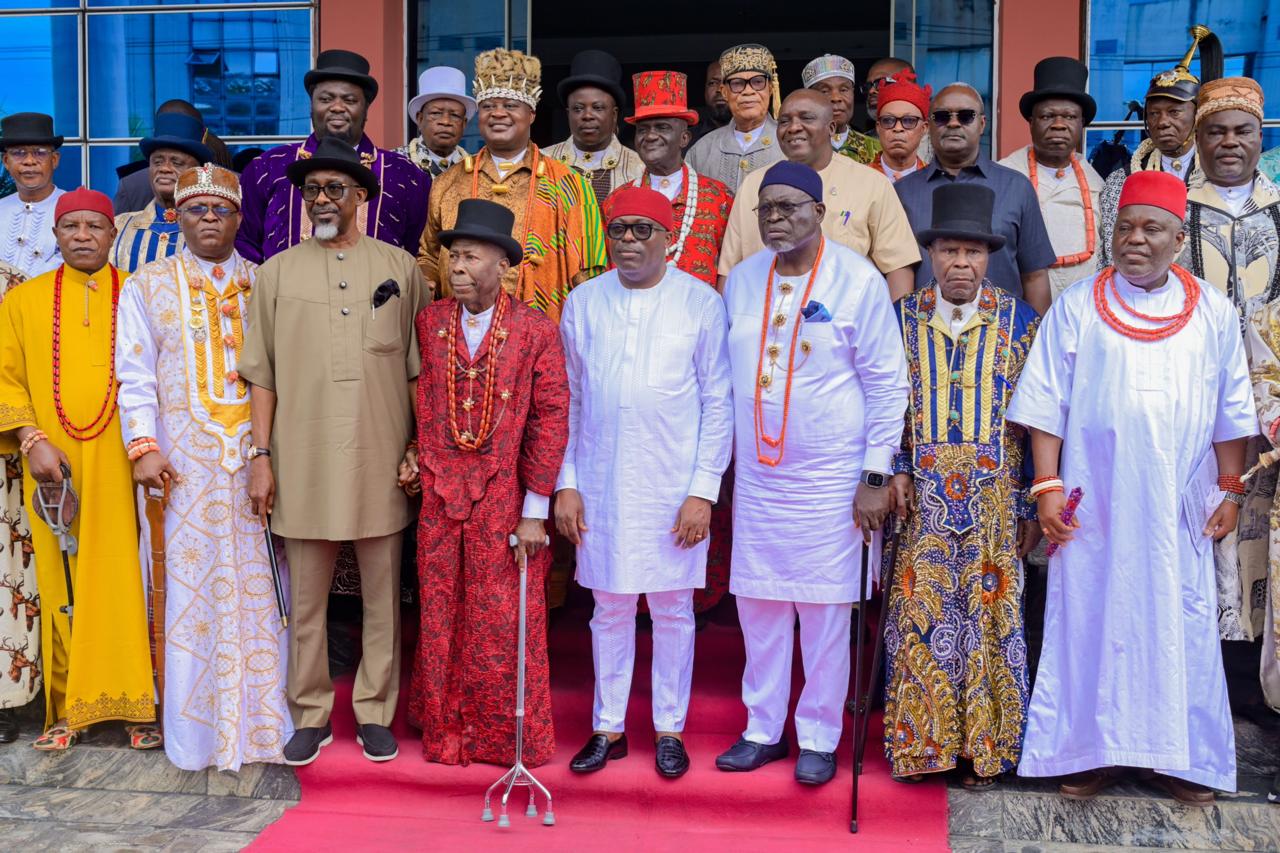
Rivers State Governor, Sir Siminalayi Fubara, has charged traditional rulers in the State to maintain neutrality, ensure fairness and uphold peace in their domains as the country prepares for the 2027 general elections.
Fubara gave the charge on Wednesday while declaring open the 126th, 127th and 128th Combined Quarterly Meeting of the Rivers State Traditional Rulers Council, in Port Harcourt.
The governor said the primary function of traditional rulers is to administer justice and ensure fairness, saying their conduct must not lead to division and unmanageable crises.
“Let me therefore, request, if that is the right word to use, that please, as we are entering into this political season actively, everyone should ensure that your conduct promoted peace in your place. Your actions should not be what would lead to the division and multiple crisis that we cannot manage as a government.
“I think with that, we can all live as one and we can also continue to make this progress that we are trying with all our mind, our body and our soul, to ensure that we deliver to our dear State,” he said.
Fubara urged the royal fathers to abide by the oath and constitution they swore to before ascending their respective stools, in the interest of stability and progress of the State.
He also enjoined them to set aside individual sentiments and place the interest of Rivers State above personal considerations, noting that this principle has guided his own day-to-day governance of the State.
“I want to enjoin everyone to keep aside issues of individual sentiments and ensure that the interest of our state supersedes whatever thing that we have in our mind. This is not just what I’m saying here, it is what I’ve also practiced and displayed in my day-to-day life in the governance of our dear State,” he said.
On the appeal for improved welfare for traditional rulers, the governor clarified that the delay in actualising some of the requests they made in the past was not from the government but from the inability of the Council to put its house in order.
Fubara explained that the issue of stipends paid to the traditional rulers by the local government councils, was a statutory benefit provided for in the constitution and not what a state governor can change by mere verbal pronouncements.
He assured that he remains a man of his word and will fulfill his promises to the traditional rulers before leaving office, next year.
He reaffirmed his respect for the traditional institution as custodians of culture and the closest link to the people, thanking them for their prayers and support.
The governor urged the royal fathers to ensure that the combined quarterly meeting featured fruitful deliberations that will strengthen peace and development in the State.
Earlier, the Chairman of the Rivers State Council of Traditional Rulers and Paramount Ruler of Apara Kingdom, His Royal Majesty, Eze Chike Amadi Worlu Wodo, expressed profound gratitude to the State Government for its efforts in maintaining a cordial relationship with the traditional institution.
Wodo highlighted the importance of traditional rulers in conflict resolution, noting that their closeness to the people places them in a strategic position to mediate in disputes involving chieftaincy matters, family disputes and land ownership in their respective communities.
The royal father drew the attention of the State Government to some challenges affecting the performance of the traditional institution, particularly the lack of official utility vehicles and logistical support needed to discharge its responsibilities effectively.
He also appealed for improved monthly stipends and better welfare provisions to reflect prevailing economic realities.

President Bola Tinubu yesterday departed Abuja for Makkah in Saudi Arabia, to perform Umrah (lesser Hajj), an Islamic spiritual exercise involving a pilgrimage to the holy city.
The Airbus A330-200 carrying the president took off at 2:20 pm local time, yesterday.
Tinubu was seen off at the airport by the Governors of Kwara, AbdulRahman AbdulRazaq; Borno, Babagana Zulum; Kaduna, Uba Sani; Sokoto, Ahmad Aliyu; Jigawa, Umar Namadi; and Yobe, Mai Mala Buni.
Also present were the Secretary to the Government of the Federation, George Akume; the Attorney-General of the Federation and Minister of Justice, Lateef Fagbemi; and Nigeria’s Ambassador to Mexico, Reno Omokri, alongside other government officials.
Special Adviser to the President on Information and Strategy, Bayo Onanuga, had revealed this in a statement signed Wednesday titled ‘President Tinubu departs Abuja for Makkah to pray for the nation.’
According to the statement, the visit will afford the President an opportunity for spiritual reflection, devotion, and prayers for Nigeria’s peace, unity, stability, and continued progress.
“While in Makkah, President Tinubu will perform the religious rites associated with Umrah, seeking Allah’s guidance and blessings for Nigeria and its people,” the statement said.
Before departing Abuja, Tinubu commissioned some equipment acquired by the Nigerian Air Force for its operations at the Presidential Wing of the Nnamdi Azikiwe International Airport.
The President is expected to return to the country next week after completing the spiritual exercise.
Thursday’s visit to Makkah marks the second time Tinubu is performing Umrah since assuming office.
The President had previously visited the holy city in November 2023, shortly after the Saudi-African Summit held in Riyadh, where he also prayed for divine guidance in leading Nigeria.
The trip to Saudi Arabia is the latest in a series of foreign engagements by the President since he was sworn in on May 29, 2023.
Tinubu has visited more than 30 countries in over 50 unique and recurrent trips.
They include countries across Africa, Europe, Asia, the Americas, and the Middle East, including France, the United Kingdom, the United States, China, India, Germany, the United Arab Emirates, Qatar, South Africa, Kenya, Ghana, Ethiopia, Tanzania, Senegal, and several others, on a combination of bilateral, multilateral, and diplomatic assignments.
Meanwhile, Tinubu has unveiled PenCare, a national healthcare initiative designed to provide free medical services to pensioners, beginning with low-income retirees.
Tinubu, who was represented by the Secretary to the Government of the Federation, Senator George Akume, at the opening of the National Pension Week in Abuja, yesterday, said the initiative formed part of his administration’s welfare package for senior citizens.
PenCare is designed as a national retiree well-being programme aimed at improving access to essential healthcare, particularly for pensioners with limited financial resources.
In his address, themed “Pensions for All: Building a Secure Future Together,” the President said a strong pension system was both a social protection necessity and a pillar of economic transformation under the Renewed Hope Agenda.
He said the pension system could also mobilise long-term domestic savings, deepen financial markets and support productive investments.
Tinubu described pensions as an obligation to workers who had served the country, rather than a favour from the government.
“A pension is not a favour granted by Government. It is a wage earned, deferred and held in trust. It is a promise. And this Administration has resolved that the promise will be kept,” he said.
He added that the success of the pension system should be measured by the security and dignity it provided retirees, rather than the volume of funds accumulated.
“Above all, no Nigerian who has served this nation will be forgotten in retirement. Nigeria will keep faith with those who kept faith with Nigeria,” he said.
The President said his administration had taken steps to restore dignity, security and value to the Contributory Pension Scheme.
He also said he had approved a N758 billion Federal Government Pension Bond to settle accrued pension rights and strengthen the Pension Protection Fund.
“That was not an accounting exercise. It was an act of restitution to Nigerians who served their country and were made to wait for what they had earned,” Tinubu said.
Meanwhile, the Director-General of the National Pension Commission (PenCom), Omolola Oloworaran, has insisted that the June 30, 2027 deadline for pension fund administrators and custodians to complete their recapitalisation remains unchanged.
Oloworaran said the exercise was necessary to strengthen institutions responsible for safeguarding the retirement savings of millions of Nigerian workers.
“We are not changing our minds. The industry must move beyond the growth in pension assets to building institutions strong enough to safeguard the savings of millions of Nigerian workers.
“Size is what we have achieved. Strength is what we now demand,” she said.
News
FG Must Address Nigerians’ Concerns On Reforms -Shettima …Warns Against Misuse of AI, Social Media

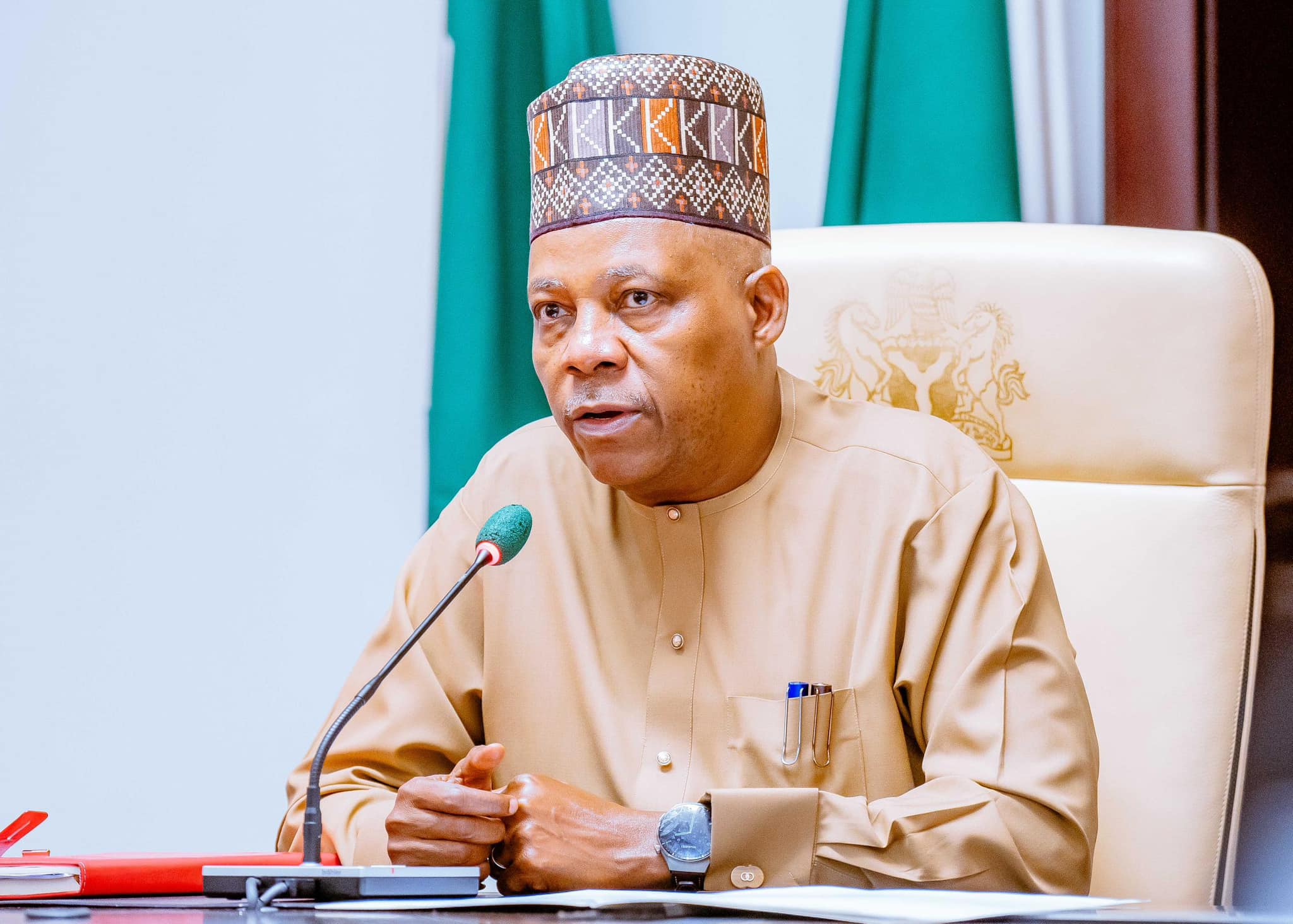
Vice President Kashim Shettima has urged the Federal Government to pay greater attention to Nigerians’ concerns about ongoing economic reforms, insisting that public confidence must be built through transparent communication, credible evidence of progress and responsiveness to citizens’ experiences.
Shettima made the call yesterday at The Duke’s Masterclass 2026, held at Transcorp Hilton, Abuja, where he was represented by his Special Adviser on Economic Affairs, Dr Tope Fasua.
The Vice President said the success of the administration’s economic policies would depend not only on their implementation but also on the government’s ability to demonstrate tangible results and address the challenges confronting citizens.
“Government must continue to communicate, however, its policies clearly, demonstrate progress with credible evidence, and listen attentively to the experiences of citizens,” he said.
Shettima defended the economic reforms introduced by President Bola Tinubu, including petrol subsidy removal, foreign exchange market liberalisation, fiscal restructuring and revenue mobilisation, describing them as measures intended to correct longstanding economic distortions and strengthen Nigeria’s productive capacity.
He explained that the policies were designed to attract investment, improve business confidence, enhance the deployment of public resources and establish conditions for sustainable economic growth.
However, he maintained that announcing policies was insufficient without building public understanding and confidence in their implementation.
The Vice President particularly challenged Nigeria’s elite, professionals and middle class to acknowledge the difficulties facing ordinary citizens while explaining the objectives of the reforms.
“Your role is not to defend every government action uncritically, nor to dismiss the concerns of citizens. It is to help create a more informed and constructive national conversation,” he stated.
He urged professionals engaging traders to recognise the pressures confronting businesses and advised those interacting with young graduates to acknowledge employment challenges while encouraging entrepreneurship and innovation.
According to him, constructive criticism and informed public participation are essential to effective governance and the sustainability of economic policies.
“Constructive scrutiny strengthens governance. Informed public participation strengthens democracy,” Shettima said.
He further stressed that leadership required the flexibility to adjust policy implementation in response to evidence and changing economic circumstances without abandoning established objectives.
Turning to the challenges of artificial intelligence and social media, the Vice President warned that technological advances were increasing the speed and sophistication of misinformation, posing risks to public confidence and institutional reputations.
“A photograph can be manipulated, a voice can be cloned, and a video can be fabricated just with a simple prompt on social media to make an individual appear to have said or done something that never happened,” he warned.
Shettima urged public institutions to strengthen information verification, correct false claims transparently and communicate through trusted channels, adding that speed should never take precedence over accuracy.
He also called for improved digital literacy and responsible use of artificial intelligence.
On economic opportunities, Shettima identified banking, financial technology, oil and gas, agriculture, real estate, construction, commodity exports and the creative industry as sectors capable of supporting investment and employment.
He nevertheless acknowledged the need to address unreliable electricity, inefficient transportation, insecurity, limited access to finance and weaknesses in education and public institutions.
He called for stronger domestic production, export expansion and support for small businesses, while urging that economic opportunities be extended to women, young people and rural communities.
In his opening address, the Chairman of Odu’a Investment Company Limited, Bimbo Ashiru, warned that poor leadership decisions and inadequate crisis preparedness could destroy institutional credibility.
“Reputation cannot be manufactured at the point of crisis. It is built over time through our decisions, our conduct, our values and the consistency between what we say and what we do,” he said.
Ashiru noted that geopolitical tensions, technological changes and economic disruptions were making leadership increasingly difficult, requiring organisations to strengthen accountability, transparency and crisis management.
He disclosed plans to extend the masterclass to London in March 2027.
Also speaking, former Commonwealth Secretary-General, Emeka Anyaoku, recounted his involvement in international conflict resolution, particularly negotiations surrounding South Africa’s transition from apartheid and political tensions in Bangladesh.
He stressed that successful mediation required a thorough understanding of the issues dividing opposing parties, the interests of their leaders and the appropriate timing of public communication.
“Because if you communicate the progress prematurely, you might sabotage the whole process,” Anyaoku said.
The Chairman of AXA Mansard and Group Managing Director of Sahara Power Group, Kola Adesina, criticised Nigeria’s persistent electricity challenges, arguing that public institutions and businesses should be judged by service delivery rather than explanations for poor performance.
“Rather than giving people megawatts of electricity, we are giving them excuses,” he said.
Adesina also condemned corruption, inflated public contracts and failures of accountability, warning that such practices weakened infrastructure, damaged public trust and endangered lives.
Meanwhile, the Chairman of the Duke of Shomolu Foundation, Joseph Edgar, explained that the masterclass was designed to equip organisations and individuals with practical strategies for anticipating crises, managing their consequences and protecting institutional reputations.
He said the initiative complemented the foundation’s use of theatre to promote social cohesion and strengthen public engagement.
-

 Sports5 days ago
Nigerian Trio Target Titles At PFL Africa Finals
-
 Education5 days ago
FCE Yola Graduates 3,555 Teachers , Seeks Upgrade to University
-
 Niger Delta5 days ago
Diri Restates Stance On Lagos-Calabar Coastal Highway
-

 Niger Delta5 days ago
C’River, NUJ Pay Tribute To Late Guardian Editor
-
 News5 days ago
NDLEA Recovers Tons Of Illicit Drug Consignments In Nine States
-
Opinion23 hours ago
Ancestorial Worship: My Take (1)
-
 Opinion5 days ago
Checking Voter Apathy In Nigeria’s Electoral Process
-
 Politics5 days ago
2027: DICKSON’S EX-ALLY VOWS TO WORK AGAINST NDC INTEREST IN BAYELSA