
Opinion
Dark Side Of Digital Distractions

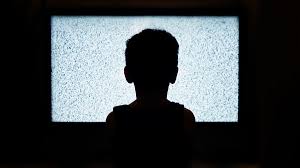
Accident happens in an instant, but its impact can last lifelong. When the sounds of screeching tires and crunching metal fill the air, it is human nature to turn and look. But what drives us to gaze upon the wreckage, to slow down and stare at the scene of an accident? Is it morbid curiosity, a desire for a thrill, or something more complex? In the moments following a crash, a strange and fascinating dynamic unfolds – one that reveals as much about us as it does about the accident itself. In this story I am about to tell, we explore the intriguing and often uncomfortable world of accident scenes and the people drawn to them, where the lines between tragedy and attraction blur.
The story goes thus: As the flames from the remains of the vehicle filled the air, a crowd began to form on the sidewalk. Some people gathered out of concern, others out of curiosity. A few stood frozen, their eyes fixed on the wrecked vehicle on fire.
On the floor lied my dad who looked physically fine by the onlookers whose attention was only on the vehicle burning and the people inside of it screaming for help. Maria, a nurse on her way home from work, rushed towards the scene to offer assistance. “I saw the whole thing happen,” she said, her voice shaking. “I had to help.” Meanwhile, a group of teenagers snapped photos and videos with their phones. “It’s gonna be all over social media,” one of them exclaimed. An elderly woman, her eyes welling up with tears, muttered a prayer under her breath. “It’s just so tragic,” she said, shaking her head. “Those poor people.” A young professional, sipping on a coffee, gazed at the scene with a mix of fascination and disgust. “I don’t know why I’m staring,” he admitted. “It’s like I can’t look away.” There was no emergency team around but onlookers continued to gather. Some were drawn in by a desire to help, others by a morbid fascination.
Some were moved to prayer, others to social media posts. But all were united in their shared gaze, a reminder of our shared humanity. All attention was brought back to the only survivor when he was about to take his last breath and was rushed to a nearby hospital and offered medical attention where they discovered he had been bleeding internally and lost so much blood. That single thought of taking him down to a hospital saved a soul, the soul of my father! That help rendered has provided a chance for me to still have a father today. Accidents are a rare moment when our private lives intersect with public space. Usually, our personal struggles and tragedies play out behind closed doors, invisible to the outside world. But when an accident occurs, the private becomes public, and we are drawn to the spectacle like moths to a flame.
We are drawn to them because they represent a primal fear, a reminder of our own mortality. But we are also repelled by them, because they confront us with the harsh realities of life. In the end, our fascination with accidents is a reflection of our own humanity – our fears, our vulnerabilities, and our deep-seated desire to connect with others. So, the next time you find yourself at the scene of an accident, remember that you have the power to make a difference. Instead of just rubbernecking, take a moment to do the following: Offer assistance if you are able; call emergency services if no one else has; provide support and comfort to those affected; and share your own experience and insights to help others. Together, we can create a culture of care and compassion, where accidents are not just spectacles to be gawked at, but opportunities to connect with others and make a positive impact.
The next time you find yourself at the scene of an accident, remember that there are real people involved, with real stories and real struggles. And there is a real opportunity for you to make a difference. By offering assistance, support and compassion, you can help turn a moment of tragedy into a moment of connection and community. You can help break down the barriers that separate us and build bridges of understanding and empathy. So let us make a pact to approach accident scenes with kindness, compassion and care. Let us make a pact to see the humanity in each other, even in the midst of chaos and destruction. Together, we can create a world that’s more compassionate, more empathetic, and more connected.
Olorunfemi is a Mass Communication student of Prince Abubakar Audu University, Kogi State.
By: Favour O. Olorunfemi




Quote: “Ogoniland does not
The latest attack by Chief
Instead, the gathering and
The proposal for a unified
The question should be: who
It is easy to criticise
The people are looking beyond
onest people can reach
Society must therefore

Quote: “Privilege should
There is an old saying that
While motivations cannot
A person who benefits from a
This is why citizens should
We must not assume that
By: Michael Abraham

Quote:”Although the Federal
The recent outburst by the
The senator also alleged
They connect ports, airports,
To address these challenges,
Rwanda and Morocco, for
FERMA should also prioritize
Many Nigerians have asked
-

 News2 days ago
RSG Targets Nine Million Residents in Mosquito Net Distribution Campaign
-

 Oil & Energy1 day ago
Aiyedatiwa Signs New Electricity Bill
-

 Oil & Energy1 day ago
NLNG Commissions Research And Innovation Centre In RSU
-

 Maritime1 day ago
Marine Minister Commends President Tinubu On NPERA Bill Assent
-

 News2 days ago
KenPoly Holds Eight Convocations, August 29
-

 News2 days ago
RSG Begins Another Phase of Projects Commissioning Today
-

 News2 days ago
RMAFC Completes Revenue Sharing Review, Proposes New Pay
-

 Maritime1 day ago
NAGAFF Petitions IGP Over Alleged Maritime Police Harassment