
Health
WHO Raises Alarm Over Increased Incidence Of TB, Others

The World Health Organisation(WHO) has raised alarm over increased incidence of tuberculosis, HIV and malaria as it charged member countries to make health an urgent matter of policy focus.
Dr. Tedros Adhanom Ghebreyesus, WHO Director-General made the charge at the 78th session of the United Nations General Assembly (UNGA 78) in New York stressing need to put health for all on the highest political agenda.
WHO’s DG appeal comes as the world faces multiple humanitarian and climate-related crises which are threatening lives and livelihoods around the world.
The world health apex body observed that progress in reducing infant and maternal mortality has stagnated (in some regions, while progress in tackling infectious diseases like HIV/AIDS, tuberculosis (TB) and malaria has also declined.
It noted that many parts of the world are also witnessing rollbacks in sexual and reproductive health and rights, as
access to life-saving tools is becoming uneven across the world, with millions unable to afford or obtain needed care.
In addition it said no communicable diseases and mental disorders, which account for over 70% of deaths globally, threaten social and economic development across the world.
“Ill health robs individuals, families, communities and entire nations of opportunities to grow and flourish,” Dr Tedros said.
The body decried that billions of people cannot access or afford essential health services and as such are exposed to poverty, abd other preventable and treatable diseases like TB.
WHO’s call to accelerate the achievement of health targets comes ahead of the Sustainable Development Goals Summit (SDG Summit) and an unprecedented number of health-focused high-level meetings at UNGA, aimed at strengthening pandemic prevention, preparedness, and response, delivering universal health coverage (UHC) and ending TB.
As government leaders gather to make commitments around three major health issues, they have a chance to demonstrate that health is an investment, not a cost, and is fundamental to thriving, resilient families, societies and economies.
“If COVID-19 taught us nothing else, it’s that when health is at risk, everything is at risk,” WHO DG said .
Recalling the effect of the Covid19 pandemic, he lamented the enormous economic, social and political upheaval, and effect on progress towards the health-related targets in the Sustainable Development Goals.


The Federal Government has begun a scheme to battle malnutrition in children.
Tagged, “Nutrition 774 Initiative”, the programme was unveiled by Vice President Kashim Shettima as it falls within a framework for the Federal Government’s comprehensive vision for a nationwide nutrition programme to address malnutrition and food insecurity in Nigeria.
The proposed programme, “Nutrition 774 Initiative,” aims to improve nutritional outcomes across all 774 local government areas (LGAs) in the country.
Speaking yesterday during a roundtable with development partners at the Presidential Villa, Abuja, VP Shettima said the initiative aligns with President Bola Ahmed Tinubu’s broader focus on food security and availability across Nigeria.”The priority with which His Excellency, President Bola Ahmed Tinubu, has pursued food availability has gone hand-in-hand with our commitment to eradicating malnutrition.
“Our aspiration as a nation goes beyond the mere abundance of food in our barns and warehouses. We cannot claim victory unless there is certainty that each household across Nigeria has access to the preferred and prescribed diets essential for a healthy life,” the vice president stated.
It would be recalled that the 144th meeting of the National Economic Council (NEC) had in September endorsed the Nutrition 774 programme as a primary platform for combating malnutrition within Nigerian communities.
The council encouraged development partners to provide financial and technical assistance to support this initiative.
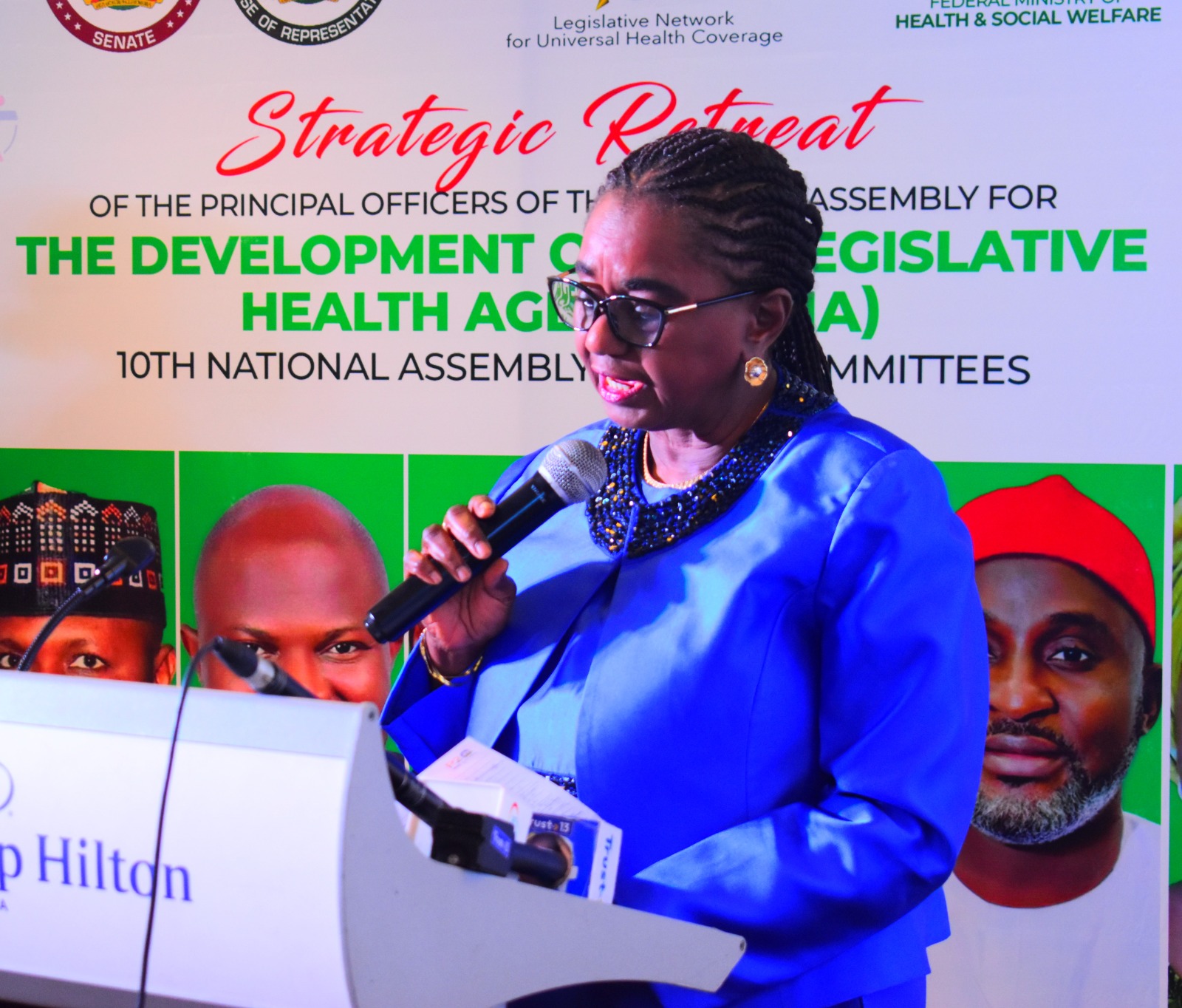
The importance of e-Health devices and digital health solutions in improving Nigeria’s healthcare system has been emphasised by Senator Ipalibo Harry Banigo, Chairman of the Senate Committee on Health, Secondary and Tertiary.
She also stressed that health is a multilayered activity and a multisectoral collaboration that requires legislators to work together to provide legislation, implement policies, and track funds effectively.
Banigo, who represents Rivers West Senatorial District in the National Assembly, made these remarks at the 5th Annual Legislative Summit on Health in Abuja, themed “Improving Legislative Stewardship and Accountability for Universal Health Coverage.”
She highlighted the potential of eHealth devices, especially given Nigeria’s large population and limited healthcare professionals.
“We can develop platforms that can be accessed through simple phones, even in remote villages, to provide health education and interventions,” she said.
“We are not talking about highfalutin things; we are talking about what will impact communities at the grassroots level, particularly pro-poor initiatives that will benefit vulnerable populations.”
Banigo also emphasized the importance of accountability and effective care, encouraging legislators to share knowledge, engage in peer reviews, and exchange information to achieve better health outcomes.
She recalled the cholera outbreak, where basic health education and interventions could have been delivered via mobile phones, preventing preventable deaths.
The 5th Annual Legislative Summit on Health brought together federal and state legislators, the Coordinating Minister of Health and Social Welfare, Prof. Muhammad Pate, the World Health Organisation’s representative in Nigeria, Dr. Walter Mulombo, and other dignitaries.
-

 Niger Delta2 days ago
Warri Airport Manager Disputes Air Peace Bird Strike Claim
-

 News2 days ago
Nigeria Won’t Surrender Any Territory To Criminals -Tinubu
-

 News2 days ago
FG Begins Trial Of Over 600 Terrorism Suspects
-

 Rivers2 days ago
79th IAUE Inaugural Lecture: Prof Anero Advoctes Tuition-Free Education For Children
-

 Politics2 days ago
Parties’ Deregistration: How Justice Lifu Overruled Appeal Court Justices
-

 News2 days ago
Rivers Judges Commence Annual Vacation, July 20
-

 Politics2 days ago
ADC: Okonkwo Rejects Amaechi As Presidential Running Mate, Withdraws Support
-

 Politics2 days ago
2027: Tinubu’s Projects Give APC Edge In South East – Yilwatda