Business
We Are Yet To Get Fuel At Official Price -IPMAN

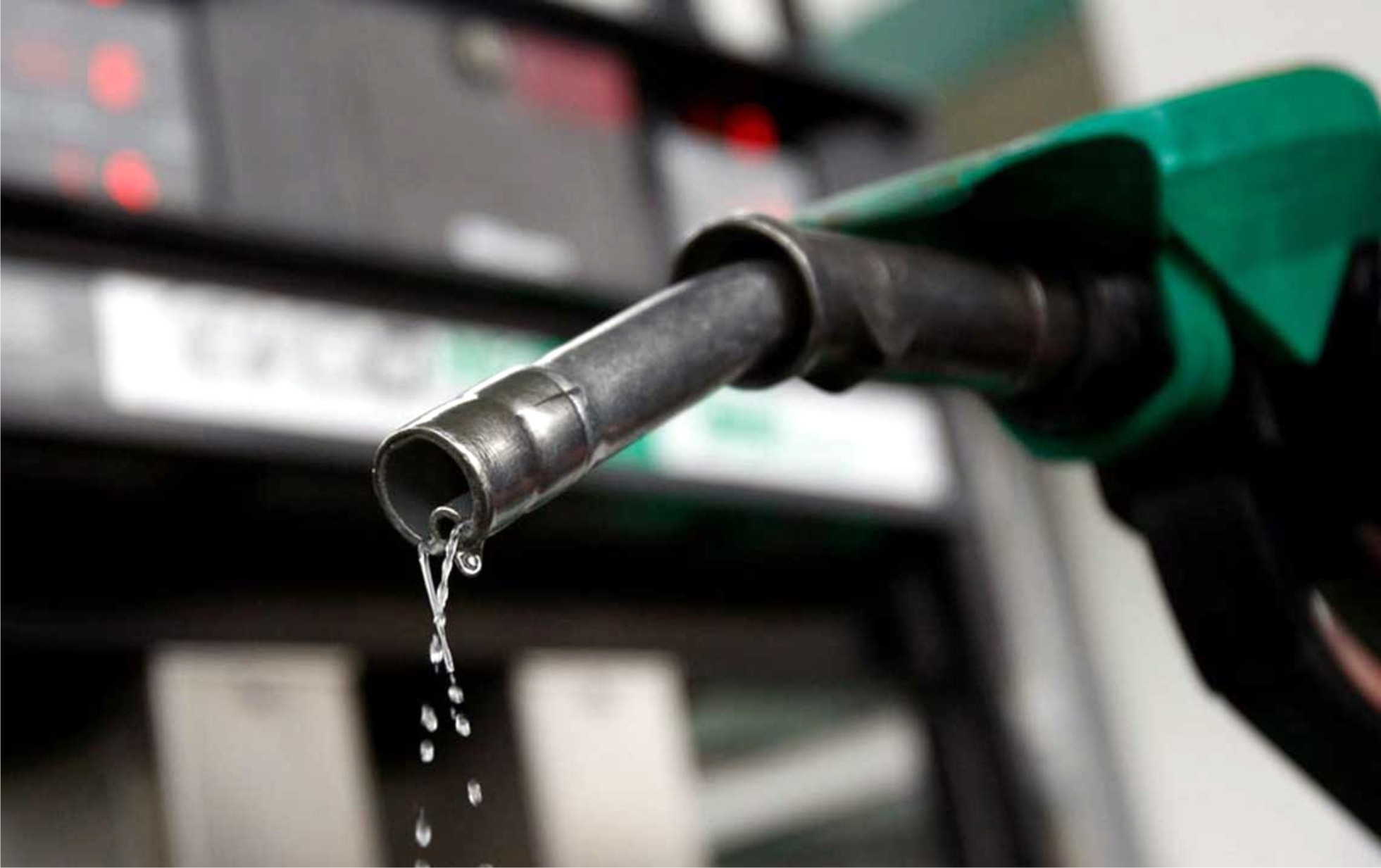
The Independent Petroleum Marketers Association of Nigeria (IPMAN) has said its members are yet to get direct supply of Premium Motor Spirit (PMS), otherwise known as petrol from the Nigeria National Petroleum Company Limited (NNPCL).
The implication is that scarcity of PMS will linger for awhile, and filling stations in Nigeria are likely to have long queues as long as the scarcity lasts.
Recall that at the peak of negotiations involving the NNPCL, IPMAN, Major Marketers Association of Nigeria (MOMAN), Depots and Petroleum Products Marketers Association of Nigeria (DAPPMAN), Department of State Services (DSS) and other stakeholders in the industry last month, the NNPCL, the sole importer of petrol, had assured the independent marketers of direct supply to their members.
IPMAN’s National Operations Controller, Mike Osatuyi, diclosed to The Tide’s source that his members were still waiting for the NNPCL to fulfill its part of the agreement reached at the meeting by supplying them fuel directly instead of the present arrangement where they have had to buy from a “third party”.
He expressed regret that despite the change of leadership at the NNPCL Retail arm, the situation had not changed.
“We reached an agreement with NNPCL for direct fuel supply since last month to give us direct supply of petrol, but till now, we are yet to get the supply.
“We are still buying from private depots who sell the product to us at N230 per litre and by the time it reaches our stations it is at N250 per litre. So we cannot sell at government regulated price because we don’t even get it at regulated price,” he explained.
According to him, supply issues were yet to be resolved and that was why the major marketers were not selling regularly.
Osatuyi also revealed that some of the filling stations that sell at the regulated price of N180 per litre are only putting up an appearance in the public, whereas behind the scene, from their depots, they sell the commodity to private marketers at N220 per liter.
“That is why some of them don’t have fuel to sell in their stations as they would have made more money sell to the independents at a higher price,” he revealed.
He further expressed regret that the situation IPMAN has found itself has become unpalatable because its members are not also comfortable selling fuel at N250 or more a litre, but that their hands are tied as they cannot run at a loss.
“Even some of our members are wondering if we have compromised on this issue because they cannot believe that by now, NNPCL would not have started selling fuel to us at the official price as agreed in that meeting,” he said.
Osatuyi assured that the group will confirm to Nigerians when NNPCL begins to dispense fuel to them at the official price and Nigerians should expect reduced price of PMS if NNPCL fulfills its promise of giving direct supply of the product to his members.
“This is what we have been clamouring for because IPMAN have been buying petrol for N220 from private depots in this period, whereas NNPCL supplies the product to depots at N113 per litre, while depots sell at N148.17 per litre and filling stations sell at the regulated price of N170 to N180 per litre.
“Instead of selling to IPMAN at the approved N148.17 per litre, as they used to do before, private depots were selling to us at N220 per litre, so how could we have sold to the public at N170 per litre?,” Osatuyi asked rhetorically.
Checks across the Lagos metropolis showed that while the long queues are still persistent at the few major marketers’ stations and NNPCL outlets that dispense fuel, however, the few IPMAN-member stations do not have any queue because of the price they sell fuel.



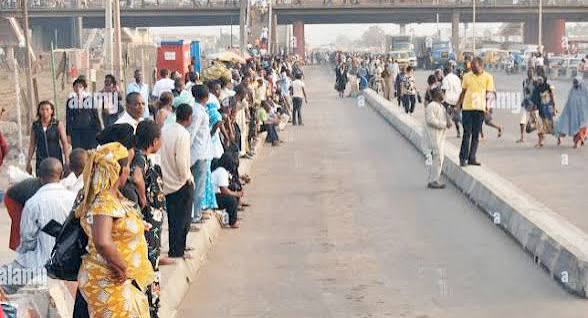
Some Commercial drivers in Port Harcourt have said that the Federal Government’s N1,350 fuel discount is yet to reduce their daily operating cost.
A cross session of commercial drivers who spoke to The Tide correspondents in Port Harcourt said they are yet to feel the impact of the government discount, adding that most filling stations in the city are even selling above the pump price
A driver Jude Ogbo who operates the mile 1 Rumuokoro axis of Port Harcourt said plies the discount has not reflected in his daily fuel expenses.
“Since the discount was announced, many filling stations still sell at the old price. When you go there, you discover they sell you two litres at the price of one. For now, we have not seen any reduction,”_ he said.
Another commercial driver, Comrade Ishmael Uzeho who operates within the Port Harcourt metropolis, said the discount is not being implemented across the country.
“How has the discount affected us? I will say it has not. Many stations are not working. Only NNPC is working and that is just one person in the whole country. If government really wants to help, let the fuel price go down properly,”_ he said.
Uzeho added that if the price of fuel goes down, transport fares will also go down. He noted that his route fare has remained at N500.
On his part, Mr. Moses Dapa, Supervisor at Sam Jaja Foundation Transport Company, said the company has not increased its fares despite the high cost of fuel.
“We are still running normal price. We charge N2,000 and N5,000 depending on the destination. We will not increase our price. I don’t know about other parks, but for Sam Jaja, we are maintaining normal price,”_ Dapa said.
He appealed to passengers to understand that drivers are not using high fuel price as an excuse to charge excessive fares.
Other drivers who spoke said the federal government should monitor the NNPCL retail stations to ensure that the directive is implemented.
Recalled that The Federal Government in abid to reduce transportation cost in the country had announced a 30-day margin discount at NNPC Retail stations across the country from October 1 to 31,
However investigation revealed that the policy is yet to affect transportation cost in the country.
By; Stephens Sopakriba and Saint Davies
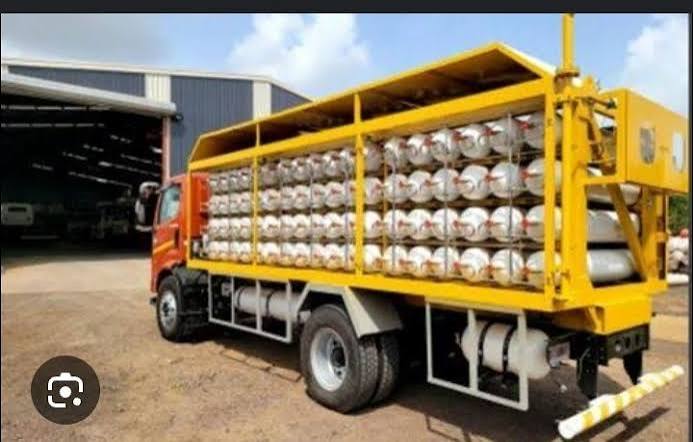
In a press statement released to The Tide’s source on Friday in Abuja, the group said Nigeria had a significant resource advantage due to its vast natural gas reserves.
“At a time when global energy markets face unprecedented volatility and rising operational costs, Nigeria stands on a massive resource advantage with its vast natural gas reserves,” the group said.
Highlighting this potential, Alfa Designs urged the nation to move past complaints over energy costs and aggressively embrace Compressed Natural Gas (CNG) as a sustainable engine for economic growth.
While federal policy adjustments have sought to cushion the impact of global energy shocks, industry experts emphasised that long-term relief hinges on a rapid, nationwide transition to gas.
“Transitioning away from expensive traditional petroleum products promises to ease the financial burden on ordinary citizens.
“It will also reposition Nigeria as an attractive industrial hub capable of drawing foreign direct investment and driving job creation,” it said.
To demonstrate the practical feasibility of this transition, the group said it recently partnered with a global Original Equipment Manufacturer (OEM) to lower the entry barriers for commercial drivers.
“By negotiating directly with the manufacturer, we reduced the total cost of acquiring and installing a CNG conversion kit for commercial tricycles (commonly known as Keke NAPEP) from up to N700,000 down to under N450,000.”
The group said this shift offers dramatic immediate financial benefits for local operators, with petrol currently selling at roughly N1,390 per liter.
It said that, in comparison, at a CNG equivalent price of about N98 per liter, a daily commercial driver using 10 liters of fuel reduces its daily energy expenditure from N13,900 to N3,980.
“This represents a daily net savings of N9,920, or more than 71 per cent.
“Over a standard 26-day working month, drivers save over N257,000, allowing them to fully recover the cost of the CNG conversion in less than 46 operational days.”
The company further stated that when scaled nationally, the economic implications are monumental.
“Nigeria consumes approximately 50 million liters of gasoline daily, costing roughly N69.5 billion per day.
“A nationwide 71 per cent reduction in fuel expenditure would generate daily national energy savings of N49.6 billion.
“On an annualised basis, this shift equates to approximately N18.1 trillion, or $13.5 billion, kept within the domestic economy.”
The group added that those recurring national savings would offer a vital mechanism to help address Nigeria’s estimated $2.3 trillion infrastructure deficit.
It said reinvesting those funds into the economy helps eliminate the 30 to 40 per cent operational overhead currently consumed by imported fossil fuels.
“The resulting boost to corporate margins expands the national tax base, generates reliable user-fee revenues to make major transit projects bankable, and creates a self-sustaining financial cycle,” it said.