
Opinion
Tackling Food Insecurity In Nigeria

The global problem of food insecurity is one of the most important issues of humanity. Hunger as the most severe consequence, as well as comprehensive social “disease” has always had an extraordinary influence on the lives of people in different times with different striking destructive force. Food insecurity is caused by various reasons. This problem is a gradual outcome of lack of food which leads to malnutrition and starvation among the poorest populations of the planet. Also, there is a distinction between chronic and temporary food insecurity. Chronic food “insecurity” is a condition where a country, its area, its population, a group or a family experience food “insecurity”, if there is no access to constant consumption of food due to the inability to buy it (lack of income) or to produce the required amount of food. Temporary food “insecurity” occurs periodically when there is no access to food due to rising prices of food, poor harvests, reduced income etc. Unfortunately, the problem of food insecurity is still relevant in Nigeria. One-sixth (1/6) of the Nigerian population suffers from chronic hunger, 3.8 million of them are children, who die every year as a result. The inability of Nigeria to provide the population with the required sustenance is mainly due to stagnation of agriculture. Another reason is low income of many families. Problems of agriculture development in the country can be as a result of adverse climatic conditions causing fluctuations in the volume and quality of the crop; low soil fertility caused by erosion and lack of moisture; irrational use of land, we use only half of the lands we have; the predominance of small farms, the preservation of communal land ownership, the existence of conflict in the northern part of the country; lack of mechani-zation of agriculture.: lack of funds needed to purchase the necessary fertilizers and protection of plants; significant loss of agricultural products during storage and processing; low level of procurement cost for agricultural products; the poor condition of transport and road network; the lack of effective state support.
A boost of agricultural, economic and social efficiency will contribute to the creation of a system of support to agricultural producers, especially small ones. An increase in funding, providing a target orientation that will stimulate the growth of production volumes of strategically important types of agricultural raw materials and food will help to reduce the country’s dependence on food imports (wheat, rice, fruits, frozen fish, etc.), the cost of which exceeds $ 3 billion annually. One of the necessary conditions for improving food security in Nigeria is the creation and development of infrastructure, comp-liance with storage requirements of products and the development of transport and logistics network. The government should encourage the creation of large farms which will contribute to the development of local markets and reduction in the rate of urbanisation. The important point is the development of mutually beneficial cooperation with other countries, so that the country can obtain the necessary technology, knowledge, and means of production. In order to gradually solve the problem of food insecurity in Nigeria, the key point should be the development and implementation of the national programme of food security. Solutions to food insecurity in Nigeria can be achieved by the development of sustainable food markets technical re-equipment of agricultural enterprises; improving the competitiveness of products; improvement of land relations. Achieving the goals of food security in Nigeria will help maintain employment and create new jobs, increase incomes, improve health and ultimately raise the level and quality of life of the population.
Thus, the task of the government is to develop long-term goals of food security on the basis of objective economic processes and to take appropriate measures of social and economic regulation.
By: Adrianna Simwa
Simwa wrote in from Abuja.



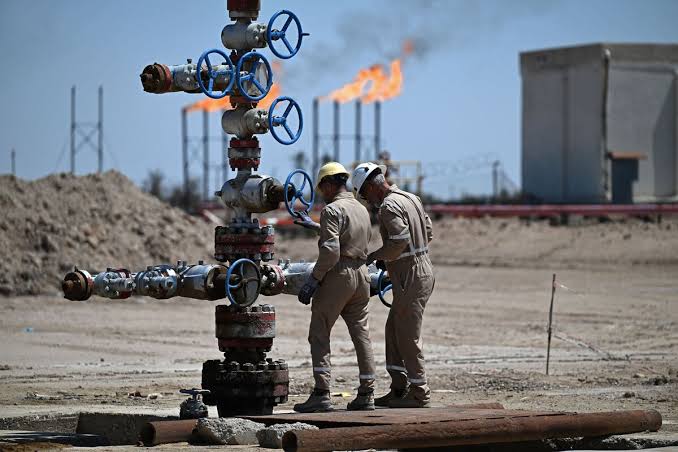
Quote: “No oil vessel, commercial contract or operational deadline is worth the loss of innocent lives; where environmental grievances are ignored and dialogue gives way to confrontation, the entire society pays a price that no compensation can adequately erase.”

Quote:”The value of wealth is
Will and gifts are subjects
A Will is an important legal
Where documentation is
This does not mean every
Properly completed lifetime
Property owners must also
My appeal is simple: let us
-

 Education18 hours ago
FCE Yola Graduates 3,555 Teachers , Seeks Upgrade to University
-

 Niger Delta20 hours ago
Diri Restates Stance On Lagos-Calabar Coastal Highway
-

 Sports17 hours ago
Nigerian Trio Target Titles At PFL Africa Finals
-

 Niger Delta20 hours ago
C’River, NUJ Pay Tribute To Late Guardian Editor
-

 News21 hours ago
NDLEA Recovers Tons Of Illicit Drug Consignments In Nine States
-

 Opinion20 hours ago
Checking Voter Apathy In Nigeria’s Electoral Process
-

 Politics17 hours ago
2027: DICKSON’S EX-ALLY VOWS TO WORK AGAINST NDC INTEREST IN BAYELSA
-

 Politics17 hours ago
2027: GROUP PLEDGES 40,000 SUPPORTERS FOR COALITION CANDIDATES IN RIVERS