
Opinion
The Abomination Of Desolation

In 167 BC, Antiochus IV, also known as Antiochus the mad, the Greek Seleucian King of Syria conquered Jerusalem. To cement his hold, to subdue, and Hellenize the Jews, he outlawed the daily sacrifice at the temple, and in its place, he sacrificed pigs on God’s altar to Zeus. According to most Bible scholars, the sacrilegious act of Antiochus IV in God’s temple at Jerusalem was a partial fulfillment of a prophecy in the book of Daniel, and a foreshadowing of what is to come at the end when the Anti-Christ is revealed. To a layman’s understanding, the abomination of desolation refers to the adulteration of the holy rite.
In one sense, it is a state when Satan and his demons have taken the place of God in the Church. It is a state where the alter of God is turned a bed of immorality, where rape, paedophilia, and even incest hold sway. Two weeks ago, the media trended with the story of a 12-year-old girl that was raped and impregnated by her pastor, Michael Abiodun. According to the story, the girl’s mother sent her to the pastor for prayers in the hope of casting out the demon that took the lives of her other children. But instead of casting out any demon, her pastor became the demon that touched the unclean thing and ate the forbidden fruit. This precious little girl is only the latest victim of so many others who had been violated by so-called pastors under the influence of the devil, or by the direction of the ‘holy spirit’’.
This evil is alive, and well in every denomination in the country. However, it has a higher prevalence rate in what most Nigerians refer to as a one-man church. It brings to life, the words of another prophet who once lamented that because of people like these pastors, the LORD’s name is blasphemed, brought to disrepute among the unbelievers. Cases like this abound. Last month, news had it that one pastor Enoch Sule in Kaduna State impregnated two sisters during a prayer session on the mountain. According to the story, the holy spirit had instructed that they should pray naked. In February, one pastor Michael Onoyume in Delta State was in the news for impregnating a married woman, whose wedding ceremony he conducted. In 2021, a pastor in Lagos, Cletus OIatunji defiled and impregnated a 14-year-old member of his church, and also procured abortion to terminate the pregnancy.
In August 2020, one pastor Ebenezer Ajigbotoluwa impregnated two sisters; he also duped their mother of about N2 million. His defence was that every man of God is hunted by the devil, except the one whose time has not yet come. Also in 2020, in far away UK, a Nigerian pastor, Michael Olurunbi, was convicted for sexually assaulting six girls and a boy; however, the sad part was that his wife, Juliana Olurunbi aided and abated it.
In an Ibadan court in 2019, a woman accused her husband, pastor Adeyemi Adekunle, of impregnating two church members; and she prayed the court to dissolve her 18- year old marriage.
The cases are uncountable, but what is most heart-wrenching are cases of incest committed by some of these pastors; like a case in 2020, of one pastor Oyefemi Oyebola, who was reported to the police for raping and impregnating his daughter, and procuring abortion for her on three occasions. He was even arranging for family planning before his bubble burst.
The abomination of desolation in our Churches today percolates through the whole spectrum, and it ranges from various kinds of financial exploitation, sexual crimes, and outright murder.
Unfortunately, it would not stop because evil seems to have turned our daily reality; and church men and women have outsourced their brains, making their pastors, daddy, and mummy GOs the fountain of all wisdom. It ought not to be so for any true Christian. In fact, God calls His people to worship Him in spirit and in truth; He calls them to worship Him with their entire minds. He says to his people, “you must be holy unto me, for I the LORD I am holy. It is very easy to miss the import of the term mind, as used in the scriptures unless it is clearly understood as the seat of the human intellect, reason, and will.
The implication is that Christians must know God for themselves;. Yes their pastors can preach and teach, but they must think for themselves. The onus is on them to go back and search the scriptures for themselves to ascertain if the teachings and doctrines espoused by them were in tandem with extant scriptures. They should follow the example of Berean Christians that Paul referred to as honourable because they did not take his teaching hook, line, and sinker.
They went back to search the scriptures to confirm if Paul’s teachings were in line with the scripture. Take for instance the case of Timothy Ngwu, a randy pastor who allegedly impregnated 20 women in his congregation in 2019 under the instruction of the holy spirit. How was it possible that all these women, including married ones and their husbands, believed Ngwu’s prophecy, that the holy spirit has instructed him to impregnate anyone chosen and revealed irrespective of whether she is married or not? During an interview, he was bold enough to say that he never slept with any married woman without the consent of the husband.
It is easy to ask why, or how come. Or, what passage of the Bible did Ngwu use to hoodwink his victims, and if the victims read the passages for themselves? Evidently, the women and their husbands are lazy-minded. Come to think of it, most Christians today are very educated, yet they indulge pastors, joining them to do very stupid things that our uneducated Christian grandparents would never imagine. You may recall some months ago, in a viral video where we saw young men and women bathing naked at a stream under the instruction of an acclaimed poster, Onye Eze Jesus. We were awestruck by the spectacle, but he preaches the Bible, under the instruction of the holy spirit. But if Paul were to be alive today, his words would have been, O foolish Nigerians, who have bewitched you.
In reporting most of these stories, most national dailies use the term, “acclaimed pastor” signposting the incongruity of such behaviour for men of the cloth. But are all pastors? No. Are all prophets? No. Do all have gifts of healing? No. Have all been called? No. But many have called themselves, and their God is their belly. They are the charlatans amongst us. Hunger and unemployment are the siamese twins that are diluting, and driving Christianity into extinction, while the Christian Association of Nigeria, (CAN) sleeps.
Should anyone be allowed to start a Church? Of course not. It might not sound nice, but is there a Biblical standard for who can be a pastor, and church governance as a whole? Yes. Has CAN or the Pentecostal Fellowship of Nigeria (PFN) used this criterion as set forth in the books of Timothy and Jude? No. Why? Because the world is influencing the Church instead of the other way around, and the immorality has festered like gangrene.
The weight of immorality has made it impossible for Church organisations to act; some even go as far as covering up such cases to protect their names, and that of the pastors. It is high time the government compels CAN, PFN, through the Corporate Affairs Commission (CAC), to add an extra layer of verification, that requires pastors and intending GOs to get a ‘Good Report Form’ filled out by at least 300 verifiable persons before they are registered, including church elders. Would it eradicate the abomination in the church? No. but it would weed out as many predatory pastors as possible.
Christians know that God will hold every pastor accountable, and those who have committed crimes would suffer the wrath of the law in the here and now, but most Christians must take responsibility, they must read the Bible for themselves. Even though God’s word is comprehended through revelation, according to the Bible, He still invites His people to approach His word with reason, just like any other literature. People should not go to church leaving common sense at home.
If for instance, the mother of this 12 year old, in the current case used her common sense, being fully aware of the world we live in, this evil may never have happened. But trusted blindly, and today her daughter is in the news. Her husband is also not without sin in this saga. If his wife did not clear with him before she allowed their daughter to attend a solo prayer session, then he is an absentee father. My mother has an Igbo parable that when translated, means that, after blaming the kite or hawk for taking the chicken, you also blame the chicken for being at the wrong place at the wrong time
The abomination of desolation is the operative doctrine of most of our Churches, and as a result, millions of hitherto good Christians are suffering for it. It ought not to be so. The solution to this madness is in every Christian home, even on mobile phones. That solution happens to be the same Bible that millions have been deceived with. It must be read with reasoning and common sense, verifying whatever daddy or mummy GO says.
By: Raphael Pepple



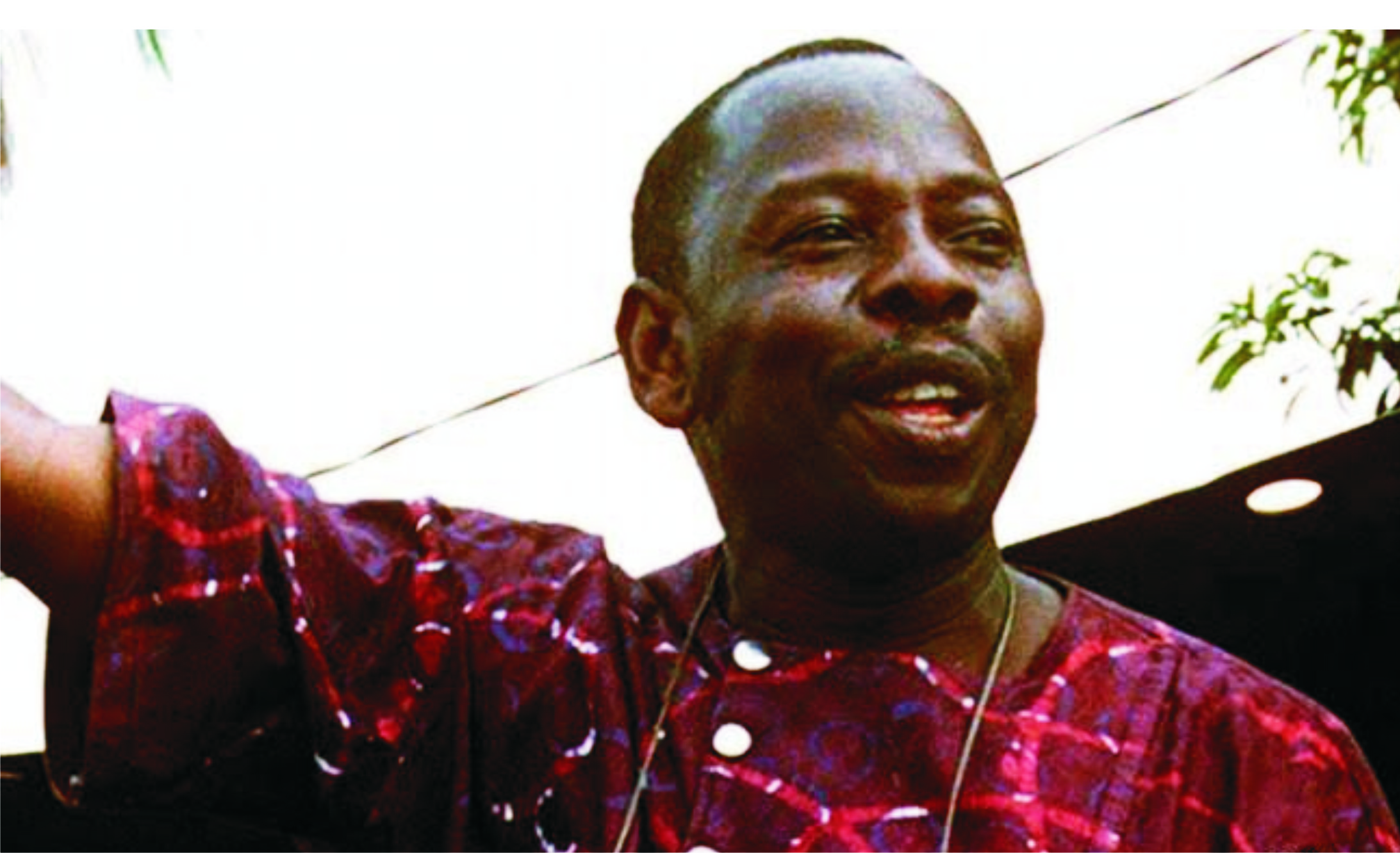
On November 10, 1995, the Nigerian military government of General Sani Abacha executed Ken Saro-Wiwa and eight other Ogoni leaders after a deeply controversial trial. Their deaths marked one of the darkest chapters in Nigeria’s history. At a time when fear silenced citizens and sycophancy flourished around military power, Saro-Wiwa chose to confront tyranny. Many Nigerians retreated into silence, while others praised the regime to secure favour. He knew the risks, yet refused to abandon a people whose land had been devastated by oil exploration and whose lives remained trapped in poverty. His courage arose from the conviction that public responsibility sometimes demands resistance to authority. Saro-Wiwa understood that speaking against a military government could lead to imprisonment or death.
Nonetheless, he believed the suffering of the Ogoni people demanded a courageous response. While oil was extracted from their land, they were left with polluted rivers, damaged farmland, declining livelihoods and an environment hostile to human survival. Fishing grounds and sources of livelihood were threatened, while the people struggled to secure basic amenities. The wealth beneath their soil brought neither adequate development nor a fair share of national resources. For him, silence in the face of injustice would have amounted to complicity. Through the Movement for the Survival of the Ogoni People (MOSOP), he organised a peaceful campaign that took the Ogoni question to the international community. MOSOP gave ordinary people an organised platform through which to express their grievances and insist on recognition.
The Ogoni Bill of Rights, presented to the Federal Government in 1990, demanded political autonomy, economic justice, environmental protection and control over the people’s resources. The campaign exposed the human and ecological costs of oil operations, particularly those associated with Shell, and challenged the apparent alliance between corporate interests and an unresponsive State. The Ogoni struggle became a defining expression of minority rights and environmental justice in Nigeria and Africa. Saro-Wiwa’s writings and mobilisation drew attention to communities treated as expendable because of their limited population and political influence. He argued that numerical strength should never determine a people’s value or rights.
A minority community does not become less deserving of justice because it cannot command electoral numbers or political power. In Nigeria, every ethnic group deserves dignity, protection and a fair opportunity to benefit from the commonwealth. Rather than respond to peaceful agitation with dialogue, the Abacha regime resorted to repression. Ogoni leaders were harassed, detained and killed; others fled into exile. The crisis intensified after four Ogoni chiefs were killed in May 1994. Saro-Wiwa and other MOSOP leaders were arrested, tried by a special tribunal and executed despite international appeals for clemency and serious concerns about the trial’s fairness. The executions drew worldwide condemnation and intensified scrutiny of Nigeria’s human-rights record and oil companies in the Niger Delta.
They demonstrated the danger of using State institutions to suppress peaceful demands. The proceedings remain a reminder of the need for judicial independence and due process. Saro-Wiwa’s courage rested on the conviction that justice must be pursued despite the cost. His method combined non-violent resistance, public education and grassroots organisation. His struggle recalled the civil-rights campaign of Martin Luther King Jr. and the power of peaceful mobilisation against injustice. Saro-Wiwa linked environmental degradation to political exclusion, economic exploitation and the denial of democratic rights. Oil-producing communities, he insisted, should not remain zones from which wealth is removed to develop other parts of the country.
Their people must benefit through roads, schools, healthcare, jobs and clean water. Resource extraction carries a duty to protect host communities. His argument extended to the structure of the Nigerian federation. He challenged a revenue-allocation system that made oil-producing communities bear the environmental and social costs of extraction without commensurate benefits. Like advocates of fiscal federalism, he believed resources should be managed and shared equitably. He envisaged a society in which no community would be disadvantaged by its size, ethnicity, political affiliation, culture or religion. His vision was a country bound together by justice and equal citizenship. Saro-Wiwa was also a gifted writer, dramatist and public intellectual.
Through books, essays, plays and television, he documented Nigerian society’s contradictions and challenged abuses of power. His popular television series, Basi and Company, demonstrated his creative range, while his leadership of the Association of Nigerian Authors encouraged writers to engage national questions. He believed literature should not be detached from society’s struggles. His pen exposed environmental injustice, political repression and the dangers of silencing courageous voices. He used storytelling, satire and drama to shape public consciousness and expose social contradictions. His literary achievements gave his activism wider reach and made the Ogoni experience part of national conversation. His commitment to the Ogoni people extended beyond the oil question.
During the Civil War, he worked to protect his vulnerable community. He urged younger generations to reject subservience and complacency and pursue change through lawful, peaceful means. Citizens, he believed, must not surrender their responsibility to challenge wrong doing. An injury to one community threatens the rights and security of all. The return to democratic government in 1999 and the establishment of the Niger Delta Development Commission, the Ministry of Niger Delta Affairs and the Hydrocarbon Pollution Remediation Project (HYPREP) are among developments that have kept the region’s demands in public view. Saro-Wiwa did not create these institutions, but his movement helped expose the urgency of intervention and sustain pressure for redress.
His death made it harder to ignore the Niger Delta’s environmental and political grievances. Yet, interventionist institutions do not prove that the original demands have been met. Their effectiveness depends on competent leadership, transparent spending, measurable outcomes and community participation. Yet, thirty-one years after his execution, the central concerns of the Ogoni struggle remain unresolved. The HYPREP-led clean-up has offered hope, but many residents await meaningful improvements. Questions persist about the programme’s pace, quality and transparency, and whether its benefits reach ordinary people. A clean-up should be judged not by ceremonies or contracts, but by restored land and waterways, safe drinking water, improved livelihoods and better public health.
It must include long-term monitoring to ensure treated sites remain safe. Residents deserve information about contamination, remediation methods and completion timelines. Reports that water projects in Gwara and Ebubu Communities, in Khana and Eleme Local Government Areas respectively, failed weeks after commissioning have raised further concerns. If confirmed, the failures would indicate weaknesses in supervision, procurement and quality control.
To be continued in our next edition.
Taneh Beemene

The National Youth Service Corps (NYSC) was established in 1973, after the Nigerian Civil War, to promote national unity, reconciliation and integration. By deploying graduates beyond their States of origin, its founders hoped to encourage understanding among Nigeria’s diverse peoples and help rebuild a divided country. However, the difficulties confronting corps members and their families now demand a comprehensive review. For many graduates, national service has become a period of uncertainty, financial pressure and exposure to risks. Parents who have spent years financing their children’s education must still find money for transportation, camp necessities, accommodation, feeding and other expenses. The monthly allowance may provide some relief, but often cannot meet the cost of living, especially where the place of primary assignment offers no accommodation or support.
Security is another serious concern. Corps members may be posted to communities affected by kidnapping, communal violence, insurgency or other threats. Government cannot eliminate every danger, but it must assess locations, provide reliable security information and avoid deployments where safety cannot reasonably be assured. National service should promote patriotism, not expose graduates to preventable harm. There is also the problem of securing meaningful places of primary assignment. A graduate trained in engineering may perform duties unrelated to engineering; a journalist may spend the year in an office with no opportunity to practise journalism. Graduates in agriculture, health, education and other specialised fields may likewise be assigned routine tasks that contribute little or nothing to their professional growth. Some depend on personal contacts or incur expenses to obtain suitable placements.
A year is significant for a young graduate entering a competitive labour market. National service should not be merely a compulsory waiting period before the search for employment begins. It should help bridge the gap between academic learning and practical work. The time has therefore come to review the structure of NYSC, not necessarily abolish it. I propose that the one-year programme should become vocational and professionally oriented. Graduates should, as far as practicable, be posted to institutions where they can gain supervised experience in their fields of study. Teachers should serve in schools; health graduates in suitable health facilities; engineers in technical organisations and public works departments; agricultural graduates in farms and extension services; and communication graduates in media and public information establishments.
NYSC should partner with ministries, state and local governments, private companies, professional bodies, universities, hospitals, schools and credible organisations to identify genuine training opportunities. Each member should have defined duties, a supervisor and clear learning objectives. At the end of the year, each should receive a record of duties performed and competencies acquired. The reform must also address remuneration and welfare. Corps members should receive fair pay that reflects the demands of their placements, while host organisations should provide reasonable support where possible. Government must establish transparent funding arrangements so that the new system does not become another burden imposed on employers or parents. Transport or accommodation assistance should be considered for difficult postings.
Graduates seeking jobs after service would have more than a discharge certificate: they would possess practical experience, workplace discipline and demonstrable skills. Employers would gain access to young people who have received supervised preparation. However, professional relevance should not erase the scheme’s founding objective of national integration. Inter-State deployment can remain, provided it is balanced with security, suitable placements and the availability of basic facilities. Where a safe and meaningful placement cannot be guaranteed outside a graduate’s State, an alternative should be considered. Orientation and community development activities can continue to promote cultural exchange, citizenship and service.
The Federal Government and NYSC management should convene consultations involving corps members, parents, universities, employers, security agencies and State Governments. Decisions should be based on evidence and the experiences of serving and former corps members. NYSC was created to help rebuild a nation divided by war. Its ideals remain important, but institutions must adapt to changing realities. Success should not be measured only by the number of graduates mobilised or certificates issued. It should also be measured by the skills acquired, the contribution made and whether young Nigerians complete their service safely and with dignity. It can better preserve the scheme’s founding ideals while meeting today’s economic and professional needs. A vocationally driven; adequately remunerated NYSC would turn national service from a costly obligation into a bridge between education, employment and national development. The purpose should not simply be to occupy graduates for twelve months, but to prepare them to work, serve and contribute meaningfully to Nigeria’s future.
Sylvia ThankGod-Amadi

Quote: “Democracy is not
As the 2027 general elections
Organisers said they had
Police intervention
In Kaduna, the ADC accused
These claims require prompt
These rights apply equally to
No ambition, party or
By: Sylvia ThankGod-Amadi
-
News1 day ago
RSG Reaffirms Commitment To STEM Education, Technological Advancement
-
Business2 days ago
‘NUJ, NPA’s Partnership Would Boost Port Producrivity, Economic Growth’
-

 News1 day ago
IGP Warns Police Officers Against Partisanship …Directs Regular Engagement With Journalists
-
Business2 days ago
Fire Threat Interrupts Asaba Air Peace Flight
-
 News1 day ago
Customs To Deploy AI, Scanners Against Snuggling
-
Business2 days ago
Fish Production Deficit, A Major Investment Opportunity – Minister
-
Business2 days ago
NCDMB, NLNG Unveil $9m For Professorial Endowment Research Chairs In Six Varsities
-
 Politics1 day ago
2027: INEC Begins Deployment Of Non-Sensitive Materials