
Opinion
Message For Myopic Leaders

Leaders are those who undertake the task of guiding others and showing them the way, by going before and directing the followers on most appropriate things to do and strive to build up in them a culture of initiative and self-help. Political leaders are only one spectrum in the wide sphere of leadership, except that the tasks and responsibilities of political leaders are enormous, involving a large and expansive population. Myopic leaders are those who undertake such task without an adequate and thorough understanding of the implications of such responsibility. Being myopic would imply having a short-sighted perception of what responsibilities that the task entails, not immediately but more importantly on a far-reaching dimension.
Taking up a leader’s position as a means of earning a living involves personal choices or decision, with attendant responsibility. The kind of enthusiasm and zeal expended in hustling for political leadership give the impression that it is a rat-race affair, whose motives are more of gains in terms of money and power, rather than service delivery. Obviously political leadership is an enormous task, whose success or failure would go beyond the leadership itself, but cuts into the life and affairs of a large number of people, immediately and in the distant future.
The concept of deferred gratification which demands making some personal sacrifices now for a better future, is a relevant principle in public leadership. Unfortunately, in Nigeria as a developing country, that concept or principle is usually wrongly applied, making the masses to make all the sacrifices while leaders live in obscene opulence and extravagance. From the enjoyment of immunity, to having everything necessary for maximum comfort and security, key political leaders have everything provided as perquisite, free.
It does not matter that over 80 percent of the citizens groan in hunger, agony and poverty, political leaders would not shift grounds with regards to official perquisites; rather, it sacrifices must be made then the masses must bear such brunts. This feature of Nigerian political leadership, put together by departing military regime, will not make for a sustainable political economy. Neither can it be said that political leaders themselves are not aware of the precariousness of the situation. Apart from there being no sincere political will to change the status quo, anything attempted in that direction would be mere window-dressing.
The vital message for political leaders arises from issues which can rarely be recognized immediately, neith er can the consequences be quantified in material terms. Any activity undertaken by anyone, whose results impinge on other human beings, carry enormous implications and responsibility for the one engaged in such activity. Such implications and responsibility become more serious in leadership positions undertaken by personal choice and decision. Thus the concept of social contract in politics makes it clear that contractual obligations cannot be breached without attendant penalties. Also the concept of accountability goes beyond mere lip services.
Political office holders and key political leaders are subject to the concepts of social contract and accountability. Apart from expectations which must be met in the social contract principle, accountability makes leaders answerable to the masses and some higher authority. With cunning and blusters political leaders can intimidate and cajole the masses and make false claims about their performances. But the mark of good leadership expresses in the level of happiness, satisfaction and productivity of the masses, arising from the stable and conducive state of the nation.
If Nigerian political leaders have a true knowledge of what the masses think and say about them, many of such leaders would dismiss their opinions and feelings as wrong. In social services theories there is what is known as Blaming the victim, involving placing all the responsibility, criticism and failures on the helpless and disadvantaged masses for the conditions that led to their plight. Thus real politics seeks to pass the buck on someone else when things go wrong, and then take maximum praises when the going is good. It is obvious that Nigerian masses are groaning currently.
Let it be said that leadership is a grave task whose immediate and long-term responsibility and accountability are rarely taken into consideration by politicians. It is not enough to make money, wield power and enjoy fame and honour by engaging in politics, there is also a need to look at wider implication of political leadership. Leaders in all spheres of activities can mislead followers, plunging their future and life-chances into jeopardy. We must also admit that there are blind but ambitious shepherds who lead their followers into desolate wilderness and perdition. Adolf Hitler, Rev. Jim Jones, among several others, did lead their followers astray.
Whether charismatic or tyrannical and obtuse, leaders and the position of leadership command mass influence which can have positive or negative effects. We cannot decry the fact that some leaders turn out to become locusts, oppressors or even scorpions, whereby the masses groan under their heavy burdens. Historically, some harsh and tyrannical leaders did play the role of compelling indolent, docile and myopic masses to make fast progress in development, by the use of whips and forced labour. The masses can also be myopic.
Specifically, myopic leaders are usually ambitious ones who see leadership not as giving services, raising the level of awareness and living standards of the masses, but a means of primitive accumulation of wealth and power. A Nigerian politician once told us many years ago that there were half a dozen Nigerians who had more money than the entire Nigerian nation. There may be nothing wrong with individuals having enormous wealth, but there is truth in the saying that behind every great wealth, there is usually a crime. Myopic money bags!
Influence of leadership goes beyond personal wealth, power and fame, but leaders usually set the tone and standard of orientation of the masses. Through unexemplary leadership, installation of a corrupt system in a society, abuse of power and gross mis-management of national resources, leaders incur such burdens of guilt whose atonement would take several incarnations, accompanied by pathetic suffering and sad experiences. Curses which groaning citizens lay upon bad leaders who are concerned only with their own personal welfare and those of their cronies, do not fail to affect such leaders in a way that they rarely imagine.
What such bad leaders often do is to give huge donations to religions bodies, with a wrong notion that such gifts, arising from ill-gotten money, can reduce their burdens of guilt. To put the lives of unsuspecting citizens in jeopardy through inability to provide security, and the future of the masses in uncertainties through faulty polices, often arise from myopic leadership. Far-seeing leaders make personal sacrifices for the sake of the masses as a means of advancing their own ascent to glorious realms of existence. Myopic leaders remain earth-bound for a very long time!
By: Bright Amirize
Dr Amirize is a retired lecturer, Rivers State University, Port Harcourt.



There is growing need for urgent and sustained attention to the severe economic hardship confronting millions of Nigerians. Across the country, the ordinary citizen is increasingly finding it difficult to cope with the demands of daily living. For many households, survival has become a struggle, as the rising cost of essential goods and services continues to erode incomes and diminish the purchasing power of families. What was once considered a manageable cost of living has become an overwhelming burden for workers, traders, artisans, students and other vulnerable members of society. One of the most visible manifestations of this hardship is the astronomical increase in food prices. Staple commodities such as rice, garri, beans, yam, cooking oil and other basic necessities have become increasingly unaffordable.
Families that once managed to provide three meals daily are now compelled to reduce their food consumption, compromise on nutritional quality or skip meals altogether. The situation is particularly troubling for low-income earners whose salaries have remained largely inadequate to meet the escalating cost of household needs. Food is not a luxury; it is a basic human necessity. Therefore, when a significant proportion of the population struggles to afford what should ordinarily be within reach, it raises serious questions about the effectiveness of economic policies and the government’s commitment to citizens’ welfare. Transportation has equally become a major source of financial pressure. Following the removal of fuel subsidy, petrol prices increased considerably, triggering corresponding increases in transport fares and the cost of moving goods and services.
Workers now spend a substantial portion of their monthly earnings commuting to and from their workplaces. Traders and small-scale entrepreneurs face higher operational costs as transporting merchandise from markets to their shops becomes increasingly expensive. The consequences extend to the education sector. Some school children are compelled to trek considerable distances because their parents cannot afford daily transportation fares. This situation not only exposes children to physical exhaustion and possible security risks but also threatens their punctuality, concentration and overall educational experience. No child should have to choose between attending school and the financial limitations of the family. Unemployment further compounds the economic crisis.
Thousands of graduates leave tertiary institutions every year with hopes of securing meaningful employment, only to encounter a labour market with limited opportunities. Many remain unemployed for years, while others accept jobs that offer little financial security. The situation is particularly discouraging for young people who have invested time, resources and energy in acquiring education but cannot translate their qualifications into productive livelihoods.Small businesses and artisans are also bearing the consequences of the harsh economic environment. The high cost of raw materials, electricity, transportation and other operational expenses has forced many entrepreneurs to reduce their activities or shut down completely. Businesses that should ordinarily provide employment and stimulate economic growth are instead struggling to remain afloat.
This development creates a damaging cycle in which business closures increase unemployment, reduce household incomes and further weaken consumer spending. The social implications of prolonged economic hardship cannot be ignored. When people are unable to meet basic needs despite working hard, frustration, desperation and hopelessness can take root. Young people who cannot find legitimate means of livelihood may become vulnerable to criminal activities, drug abuse, human trafficking and other social vices. Although poverty does not automatically lead to crime, widespread economic deprivation can create conditions that make social instability more difficult to contain. It is particularly painful that Nigeria, a country endowed with enormous natural resources, fertile agricultural land and an energetic, intellectually capable population, continues to experience such widespread economic distress.
The country’s potential for agricultural productivity, industrial development and employment generation remains enormous. What is required is the political will, institutional efficiency and consistent policy implementation to translate these advantages into improved living conditions. The Federal Government must therefore intensify efforts to address the situation through practical and sustainable interventions. Agriculture deserves particular attention. Farmers should have access to affordable fertilisers, improved seedlings, modern equipment, agricultural financing and adequate security on their farms. Strengthening local food production and distribution will help increase supply, reduce dependence on expensive imports and moderate food prices.
Equally important is the need to create an enabling environment for businesses to thrive. Small and medium-scale enterprises should receive accessible loans, tax relief where appropriate, reliable electricity and other forms of institutional support. Such interventions will encourage entrepreneurship, protect existing jobs and create new employment opportunities, particularly for young Nigerians. Government must also strengthen social protection programmes and ensure that palliatives reach their intended beneficiaries. Assistance should not exist merely in official announcements, policy documents or television broadcasts. It must be transparent, verifiable and accessible to genuinely vulnerable households in both rural communities and urban centres.
Ultimately, economic policies must be evaluated by their impact on the lives of ordinary citizens. Macroeconomic indicators may provide useful information about the direction of the economy, but they cannot replace the lived experiences of families struggling to afford food, pay transport fares and keep their businesses open. Nigerians are not asking for luxury or privileges. They are asking for an economy in which honest work can provide a decent living, businesses can survive, children can attend school without undue hardship and families can afford their basic necessities. The government must treat this expectation as a responsibility, not a favour. The time for urgent, people-centred action is now.
Favour Umunnakwe
Umunnakwe is an intern with The Tide Newspaper.
In a democracy, political power is never expected to operate without scrutiny. Those entrusted with public authority must be answerable to the people, while those outside government have a legitimate responsibility to question, challenge and offer alternatives to the policies and decisions of those in power. This is the essence of opposition. It is an indispensable feature of democratic governance, providing the counterweight that prevents political authority from becoming absolute. Opposition, therefore, is not simply the existence of political parties outside government. It is an institutional responsibility to provide checks and balances, promote accountability, protect democratic values and offer alternative approaches to governance. Its relevance lies not in the ability to discredit the ruling party but in its capacity to ensure that the government remains responsive to the needs and aspirations of the people.
Since Nigeria’s return to democratic rule in 1999, the country’s political landscape has witnessed changes in leadership, party dominance, defections and shifting political alliances. Through these developments, opposition parties have remained an important part of the democratic process. However, the quality of opposition is as important as its existence. A country may have several political parties, but where they lack clear ideologies, credible leadership and the capacity to interrogate government policies constructively, democratic competition becomes weak. What, then, should opposition do? First, it must hold government accountable. This involves scrutinising public expenditure, questioning questionable decisions, demanding transparency and drawing attention to policies that undermine public welfare. Where government fails to fulfil its promises, opposition parties should demand explanations and insist on corrective measures. This responsibility is particularly important in Nigeria, where citizens continue to contend with economic hardship, insecurity, unemployment and the rising cost of living.
Second, opposition must provide alternatives. Criticism without constructive proposals is insufficient. Political parties seeking to replace an incumbent government must demonstrate that they possess the ideas, competence and leadership capacity to govern differently and better. They must develop policies that address the country’s challenges and communicate practical solutions to the electorate. Opposition should not merely identify problems; it should demonstrate how those problems can be resolved. Third, opposition serves as a safeguard against authoritarian tendencies. Democracy thrives where dissent is tolerated, fundamental rights are protected and institutions operate independently. By questioning the exercise of executive power and defending constitutional provisions, opposition parties help preserve the democratic space. Their role becomes particularly significant when government actions threaten freedom of expression, political participation and the rule of law.
However, opposition is not synonymous with hostility, obstruction or political desperation. It does not mean rejecting every government policy simply because it originates from the ruling party. When government makes decisions that advance the public interest, responsible opposition should acknowledge and support them. Equally, disagreement must be expressed through lawful and democratic channels, not violence, intimidation, misinformation or attempts to destabilise legitimate institutions. The growing conversations around political alliances and opposition cooperation ahead of the 2027 general elections also provide an opportunity to examine the character of opposition in Nigeria. Collaboration among political parties can strengthen democratic competition, particularly where fragmented opposition forces struggle to challenge a dominant ruling party. Nevertheless, alliances must be built on shared principles, coherent programmes and a genuine commitment to national development.
A coalition formed solely to dislodge an incumbent or distribute political offices may offer little assurance of better governance. Opposition parties must also put their own houses in order. They cannot credibly demand transparency and internal democracy from the ruling party while practising imposition, exclusion and intolerance within their organisations. Their leaders must demonstrate integrity, discipline and respect for democratic procedures. Nigerians need alternatives that inspire confidence, not merely familiar politicians changing party platforms in pursuit of personal advantage. The ruling party, on its part, must understand that criticism is not an act of treason. Opposition leaders, civil society organisations, journalists and ordinary citizens must be allowed to express legitimate disagreements without intimidation or harassment. Government must recognise that the right to dissent is constitutionally protected and that the strength of democracy is demonstrated by its ability to accommodate competing opinions.
Ultimately, opposition is about responsibility, not bitterness; accountability, not antagonism; and national interest, not personal ambition. It is an essential democratic institution that keeps government on its toes, widens political choices and ensures that public power remains subject to scrutiny. Nigeria needs an opposition that is courageous enough to challenge wrongdoing, responsible enough to acknowledge good governance and visionary enough to offer credible alternatives. Equally, it needs a government secure enough to welcome scrutiny and humble enough to correct its mistakes. That is what opposition is, and that is what democratic governance requires.
Sylvia ThankGod-Amadi

Quote: “The Flamingos have conquered the world; Nigeria must now rise to its responsibility of nurturing the next generation of champions.”
Sometimes, sporting victories
More significantly, they
Umejiaku deserves special
Umejiaku received the award
Nigeria has now broken into
For too long, young girls in
But beyond the reward, this
As Nigerians celebrate this
By; Calista Ezeaku
-
News4 days ago
Parents Protest Scholarship Scheme Suspension At PAMO Varsity
-
 News4 days ago
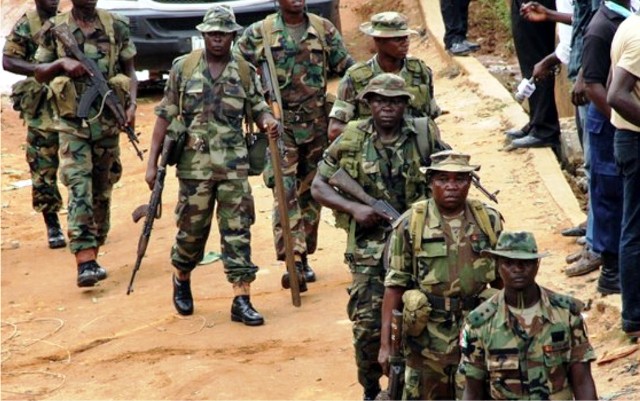
US Hails Nigerian Military For Rescuing 125 Kidnap Victims
-
News1 day ago
Bayelsa Boat Mishap: Tinubu Donates N250m As Death Toll Hits 29
-
News1 day ago
Odu Pays Tribute To Late Chinwah, Describes Him As Courageous, Selfless Academic
-
Business4 days ago
Reps Raise Alarm Over N2trn Agricultural Loan Diversion
-

 Featured4 days ago
Presidents Xi, Trump, Putin Commit To Global Stability, Denuclearisation
-
Politics4 days ago
ADC Faults INEC’s Alleged Limited Capacity To Upload Election Result On IREV
-
Politics4 days ago
Tinubu Expands 2027 Campaign Tour To 19 States