
Oil & Energy
From Coal To Gas: How Europe Is Easing Its Energy Crisis

Last year, in November, the UK, together with key partner, Italy, hosted the COP26 climate summit, an event many believed to be the world’s best last chance to get runaway climate change under control.
A key outcome of the summit was that dozens of nations pledged to end deforestation, curb CO2 and methane emissions and also stop public investment in coal power.
Specifically regarding coal, a total of 46 countries signed the Global Coal to Clean Power Transitionstatement, promising to “accelerate a transition away from unabated coal power generation” and “cease issuance of new permits for new unabated coal-fired power generation projects.”
But less than a year later, all those promises have gone to the dogs, with developed countries now scrambling to resume coal-based energy generation after the Ukraine crisis triggered a global energy meltdown.
According to a report by the Observer Research Foundation, energy supply disruptions triggered by Russia’s war on Ukraine took LNG prices even higher, leaving coal as the only option for dispatchable and affordable power in much of Europe, including the tough markets of Western Europe and North America that have explicit policies to phase out coal.
According to the Washington Post, coal mines and power plants that closed 10 years ago have begun to be repaired in Germany. In what industry observers have dubbed a “spring” for Germany’s coal-fired power plants, the country is expected to burn at least 100,000 tons of coal per month by winter.
That’s a big U-turn considering that Germany’s goal had been to phase out all coal-generated electricity by 2038.
Other European countries such as Austria, Poland, the Netherlands and Greece have also started restarting coal plants.
Meanwhile, China’s coal imports have been surging, increasing 24percent month-to-month in July as power generators increased purchases to provide for peak summer electricity demand. China has the largest number of operational coal power plants with 3,037 while Germany, the largest economy in the EU has 63.
The situation has led to soaring global coal consumption that could reach levels we have not seen in a decade, though there will be a limit to growth considering that investment in any new coal-powered plants has stalled. But that only makes the coal market tighter, pushing the energy source into an outperforming category.
Thermal coal, which is the variety used to generate power, has seen a 170 percent rise in price ince the end of 2021–most of those gains made following Russia’s invasion of Ukraine.
The German Dilemma
Germany is among the hardest hit by the growing energy crisis after effectively boxing itself into a corner with its energy policies. For decades, successive governments in Berlin have pursued a policy of maximising the country’s dependence on Russian oil and gas, and almost completely ditched nuclear energy with the final two functional reactors set to be turned off in 2022.
As a result, Germany has become heavily reliant on natural gas, with the fuel accounting for 25percent of the country’s total primary energy consumption.
Although Germany has substantial supplies of natural gas of its own that could be accessed by fracking, Berlin has banned the technology, meaning it has to import 97percent of its gas mainly from Russia, Netherlands and Norway.
In a worst-case scenario in which Russia stops all pipeline exports, Goldman Sachs’ Chief European Economist, Sven Jari Stehn and his team say, Euro area GDP growth is likely to fall by 2.2pp in 2022, with sizable impacts in Germany (-3.4pp) and Italy (-2.6pp).
Germany’s woes are partly excusable. The dramatic nuclear phase-out is as much part of the country’s Energiewende (energy transition) as the move towards a low-carbon economy.
Natural gas is cheap and reliable, produces only half as much emissions as coal, and is a critical input in many sectors. In Germany, 44percent of gas was used for heating buildings in 2020, while industrial processes consumed 28percent.
Gas is the best and cheapest feedstock for the manufacture of synthetic nitrogen fertilizer, of which Germany is a critical supplier. Gas is also used in refining, the production of chemicals, and many other types of manufacturing. All these are difficult, if not impossible, to completely replace with green energy anytime soon.
With a calamitous energy crisis unfolding, Germany will join the bandwagon of nations rolling back their climate goals by increasing its use of coal, which overtook wind to become the biggest input for electricity production globally in 2021.
Indeed, Germany is left with little choice than to burn lignite in its power plants—widely regarded as one of the dirtiest fossil fuels and extracted in vast open-pit mines that litter the German countryside.
The European Commission has already given its absolution to countries replacing Russian gas with coal and producing higher emissions as a result.
But coal is merely a stop-gap solution, and Germany must also be clear-eyed about its long-term energy future, a future without Russia’s gas.
Nuclear energy is out of the question considering that few, if any, European nations are as opposed to nuclear energy as Germany is. Back in February, German politicians vehemently denounced the EU’s attempt to label nuclear energy as sustainable.
By: Alex Kimani
Kimani reports for Oilprice.com



By Felicity Bradstock for Oilprice.com 16
The State Commissioner for Works (Rural Roads) and Public Information, Charles Aniagwu, disclosed this at a press conference in Asaba, weekend, noting that the initiative was part of wider reforms aimed at opening up the power sector to private investors.
Aniagwu, who was accompanied by the Executive Assistant to the Governor on New Media, Felix Ofou, said the state was exploring alternative sources of electricity to support businesses, households and communities while reducing pressure on the national grid.
He said the government was particularly interested in exploiting Delta’s abundant natural gas resources for power generation, pointing to the Kwale Free Trade Zone, which is part of the state’s special economic zone, as a major opportunity for investors.
According to him, prospective investors were taken to the zone during the state’s recent economic summit to enable them to assess the availability of gas as a key raw material for electricity generation. ComparePower Rates
The commissioner explained that generating more electricity locally would not only increase supply in Delta but also free up power on the national grid for use by other consumers.
Aniagwu cited the 8.5MW Independent Power Plant located behind the state secretariat in Asaba as an example of what could be achieved through alternative power sources.
He said the facility had enabled the secretariat complex to operate independently of the national grid, thereby making the electricity that would otherwise have been consumed there available to other users.
He added that the planned 120MW partnership with Supply Power would further strengthen the state’s electricity supply capacity and provide a more reliable power base for small and medium-sized enterprises.
Aniagwu said the state government was also intervening in areas traditionally regarded as the responsibility of electricity distribution companies because inadequate power supply could no longer be allowed to constrain economic development. LearnQuantum Physics
He identified the extension of the electricity grid from Abraka towards the Ndokwa axis as one of the interventions being undertaken to connect more communities to electricity.
The commissioner, however, raised concerns over the burden placed on communities that are often required to provide transformers and other electricity infrastructure, only for distribution companies to take over the facilities and subsequently collect electricity bills without adequately accounting for the investments made by the communities.
He said the state would continue to support efforts aimed at energising communities, noting that improved electricity supply would stimulate businesses, create jobs and help tackle social problems associated with unemployment and idleness.
On regulation, Aniagwu said the government was working with the Ministry of Energy and a committee set up to develop an appropriate regulatory framework for the state’s emerging power sector. SwitchEnergy Plans
He said the proposed energy commission would be responsible for regulating new electricity producers, determining appropriate tariffs and overseeing distribution networks.
The commissioner stressed that liberalising the sector required effective regulation to protect consumers and investors, adding that decisions on power distribution infrastructure, including the use of overhead or underground lines, must take into account the peculiarities and safety requirements of each location.
He warned that power expansion without adequate regulation could expose residents to electrocution and other hazards, stressing the need to protect electricity infrastructure while ensuring consumers were not subjected to unfair pricing.
Aniagwu said the state government’s broader objective was to build an efficient and sustainable electricity market driven by private investment and capable of powering businesses, households and communities across Delta State.
-

 Sports2 days ago
Nigerian Trio Target Titles At PFL Africa Finals
-
 Education2 days ago
FCE Yola Graduates 3,555 Teachers , Seeks Upgrade to University
-
 Niger Delta2 days ago
Diri Restates Stance On Lagos-Calabar Coastal Highway
-

 Niger Delta2 days ago
C’River, NUJ Pay Tribute To Late Guardian Editor
-
 News2 days ago
NDLEA Recovers Tons Of Illicit Drug Consignments In Nine States
-
 Opinion2 days ago
Checking Voter Apathy In Nigeria’s Electoral Process
-
 Politics2 days ago
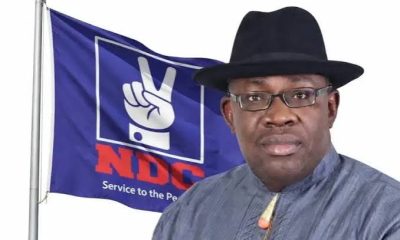
2027: DICKSON’S EX-ALLY VOWS TO WORK AGAINST NDC INTEREST IN BAYELSA
-

 Politics2 days ago
2027: GROUP PLEDGES 40,000 SUPPORTERS FOR COALITION CANDIDATES IN RIVERS