Connect with us

Environment

FG Promises To Complete Inherited, Abandoned Water Projects By 2023

Published

on

The Minister of Water Resources, Mr Suleiman Adamu, has pledged that the Federal Government will complete  many of the abandoned water projects before the tenure of the present administration ends in 2023.
Adamu, who disclosed this at a media parley in Abuja, noted that the government made a strategic decision to concentrate on completing many of the ongoing and abandoned projects it inherited.
The Tide source recalls that the ministry inherited more than 116 ongoing and abandoned water projects from previous administrations.
According to the Minister, the projects, categorised into high, medium and low priorities were awarded as far back as 1992 and the early 2000s.
The minster said the abandoned projects, which included irrigation, dam and sanitation projects, had suffered neglect.
He said achieving food security was critical to the administration of President Muhammadu Buhari, stressing that an overall mandate that would end hunger was being pursued.
“Our plan was to complete 25 out of the abandoned projects before 2023, but it is not looking likely because of the economic situation.
“Even at that we are going to do what we are doing, we are keeping our eyes on the ball to finish as many of those inherited projects as possible, whether they are dams, irrigation or water supply.
“We have also done the study and design of other projects, especially in the irrigation sector, because this issue of food security is paramount to this administration’’.
On hydropower, the minister said that the government was working directly with investors because they were bankable projects that could pay for themselves.
He said that the designs have been completed for some of the irrigation projects.
Adamu said the ministry was hopeful that with availability of funds, it would complete the 6,600 hectares Donga-Suntai irrigation projects and the 6,000 hectares Nasarawa integrated irrigation project.
He added that a lot of progress had been made with the implementation of the World Bank-sponsored irrigation management programme, as it had seen massive transformation of old systems.
He said it was expected that at the end of the project in 2024, Nigeria would have had an additional 40,000 hectares of irrigable land.
On water supply, Adamu said the ministry had revived and inaugurated the Zobe water supply project, restructured Ota water supply project and the Zungeru-Wushishi water project.
“Ota water project was started in early 2,000s. Zungeru-Wushishi was started in 1998 and we are putting it back on track. We are hopeful that this project will be completed this year or early 2023’’.
The minister added that the ministry was also supporting the completion of the Ilesha water supply project in Osun State, saying the Federal Government’s component was almost 90 per cent completed.


Continue Reading

Environment

FG Seeks Stronger Private Sector Role To End Open Defecation

Published

on

The Federal  Government has urged private sector organisations to support efforts to end open defecation in Nigeria through their Corporate Social Responsibility (CSR) programmes.
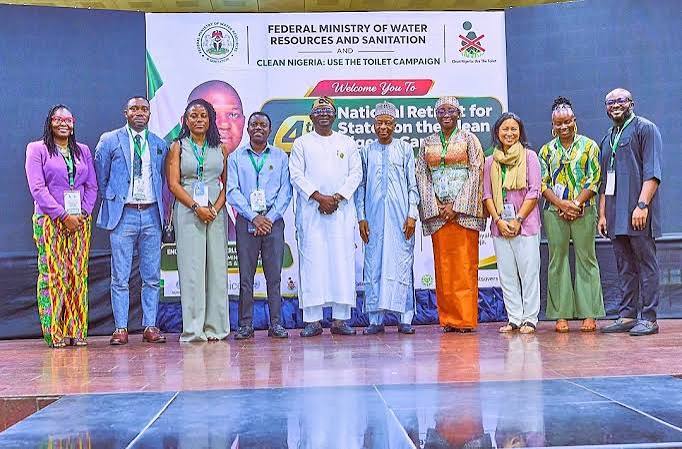
The Minister of Water Resources and Sanitation, Prof. Joseph Utsev, made the call at the 6th National Retreat for States on the Clean Nigeria Campaign (CNC) in Abuja on recently.
The retreat has the theme: ‘Accelerating and Sustaining Progress: Financing, Data and Systems for an ODF Nigeria’.
Utsev said sustainable sanitation required stronger collaboration among the Federal, State and Local  Governments, development partners, civil society organisations and the private sector.
He said  government resources alone were insufficient to address the country’s sanitation challenges, urging businesses to complement public funding through strategic partnerships and investments.
The minister also called on all tiers of government to make deliberate budgetary provisions for sanitation, emphasising that the sector should not depend solely on occasional interventions or development partner support.
He identified financing, reliable data and institutional strengthening as three critical priorities for accelerating progress and sustaining open defecation-free (ODF) achievements.
Utsev said 185 Local Government Areas (LGAs) had attained ODF status since the inauguration of the Clean Nigeria Campaign in November 2019.
He, however, said the achievement remained below expectations, adding that the government was working to accelerate progress and exceed 400 ODF LGAs by 2027.
The minister said President Bola Tinubu had signed the Executive Order on Open Defecation-Free Nigeria to strengthen the policy and institutional framework for achieving the target.
Utsev urged state governments, relevant institutions, development partners and civil society organisations to familiarise themselves with the provisions of the order and translate them into practical actions.
He also called for stronger monitoring and accountability, noting that the focus should not be limited to toilet construction but should include the proper use and maintenance of sanitation facilities.
Earlier, the National Coordinator of the Clean Nigeria Campaign, Mrs Chizoma Opara, also called for increased private sector participation, particularly through CSR initiatives and innovative financing arrangements.
Opara said inadequate and unpredictable financing, household poverty and affordability barriers remained major challenges to achieving the country’s ODF targets.
She said Nigeria had targeted 172 ODF LGAs by December 2025 but achieved 162, falling short of the target by 10.
According to her, the 2026 target is 234 LGAs, against which 185 have so far attained the status, while the 2027 target is at least 318 LGAs.
She said the figures showed that the country was not progressing at the pace required to achieve its sanitation targets.
Opara identified the campaign’s six strategic pillars as an enabling environment, public financing, service delivery, ministerial leadership and advocacy, monitoring and evaluation, and effective coordination.
She said the campaign was targeting at least 300 ODF LGAs by 2027 and at least three additional states achieving ODF status.
The coordinator listed Kano, Benue and Bauchi among the states being supported to accelerate progress, adding that Sokoto was also making progress.
The Country Director of Self Help Africa, Mrs Joy Aderele, commended the Federal Ministry of Water Resources and Sanitation and the Clean Nigeria Campaign Secretariat for their leadership and continued commitment to improving sanitation.
Aderele said the campaign had provided an important platform for coordinating government and non-state actors through advocacy, stakeholder engagement, environmental education and community mobilisation.
She, however, emphasised that achieving ODF status was not enough without measures to sustain the gains and prevent communities from returning to open defecation.
She called for stronger community monitoring and institutional accountability, urging stakeholders to use the retreat to share experiences, challenges and practical solutions.
Also, UNICEF’s WASH Manager, Ms Jolly Maulit, said Nigeria had made progress since inaugurating the Clean Nigeria Campaign in 2019, with Jigawa becoming the first state to achieve statewide ODF status in 2022 and Katsina following in 2025.
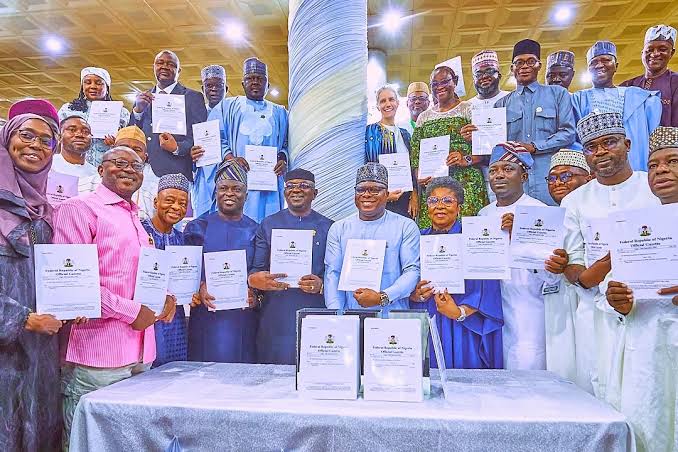
Maulit said the revised National ODF Roadmap, completed in 2025 and recently gazetted, provided further direction for improving sanitation and accelerating progress towards the 2030 target.
She called for reliable performance data to help identify areas requiring support and improve the tracking of progress across states and local governments.
The UNICEF official also urged governments to integrate sanitation into their policies, budgets and dedicated financing mechanisms rather than relying solely on development partner-supported projects.
She said sustainable sanitation financing should involve government budgets, development finance, private sector investment and financial sector partners.
Similarly, the World Health Organisation (WHO) Representative, Dr Edwin Isotu-Edeh, said a large proportion of Nigeria’s population still practised open defecation, leaving affected communities vulnerable to cholera and other diseases of public health concern.
Isotu-Edeh said sanitation should become a way of life through sustained behavioural change and a culture of cleanliness in homes, institutions and communities.
He identified the gap between awareness and actual behavioural change as a major challenge, noting that knowledge about hygiene did not always translate into consistent practices.
The WHO representative called for improved access to handwashing facilities and sustained hygiene promotion as part of the Clean Nigeria Campaign.
He also urged a coordinated, multi-sectoral approach involving the ministries responsible for water resources, health and environment, stressing that sanitation was not only a WASH and public health concern but also an economic issue.
Meanwhile, the General Manager of the FCT Rural Water Supply and Sanitation Agency (RUWASSA), Dr Joyce Echoke, said more than 300 communities in Kwali Area Council had been certified ODF and submitted for national-level validation.
She said the FCT was working towards achieving statewide ODF status by 2027, expressing optimism that the target could be attained through collective commitment and stakeholder support.
The RUWASSA general manager said the agency’s next priority was to intensify public education and advocacy to ensure that residents used available toilets properly.
She observed that some residents continued to practise open defecation even where toilet facilities were available, underscoring the need for sustained sensitisation and behavioural change.
Speaking on behalf of state commissioners responsible for water resources, environment and sanitation, Mr Samuel Akange, who represented Benue State Commissioner Mr Odo Ogwu, said states were central to implementing national sanitation policies.
Akange said states would strengthen their State Task Groups on Sanitation and provide the  political commitment and budgetary support required to drive the campaign.
He also called for stronger Community-Led Total Sanitation interventions to ensure that no community was left behind.
The Clean Nigeria Campaign was inaugurated in November 2019 to mobilise Nigerians towards ending open defecation and improving sanitation practices nationwide.
Continue Reading

Environment

Presidential Order To Stop Open Defecation By 2030….FG

Published

on

The Federal  Government has unveiled the Presidential  Executive Order on Open Defecation-Free (ODF) Nigeria by 2030 to strengthen the legal and institutional framework for ending open defecation.
The Vice-President, Sen. Kashim Shettima, represented by the Senior Special Assistant to the President on Delivery and Coordination, Office of the Vice-President, Mr Akubo Adegbe, performed the unveiling in Abuja on Thursday.
The event marked the 2026 World Toilet Day and the seventh anniversary of the Clean Nigeria: Use the Toilet Campaign.
In his address, Shettima said the  executive order, signed by President Bola Tinubu, reaffirmed the Federal Government’s commitment to ending open defecation.
He said the order would strengthen coordination and advance collective efforts by governments and other stakeholders to achieve an ODF Nigeria by 2030.
Shettima said Nigeria had recorded ODF status in 185 Local Government Areas (LGAs), while Jigawa and Katsina had attained statewide ODF status since the campaign began in 2019.
He, however, said the country still had significant work to do, with 774 LGAs, stressing the need to accelerate implementation, strengthen accountability and prevent communities from relapsing into open defecation.
He called for increased sanitation financing, reliable data, stronger institutions, effective service delivery and sustained behavioural change.
The Vice-President also urged state and local governments to take ownership of the campaign, provide adequate resources and strengthen institutions responsible for sanitation delivery.
He called on development partners, traditional rulers, community leaders, civil society organisations and the private sector to sustain their support, describing the fight against open defecation as a shared national responsibility.
Earlier, the Minister of Water Resources and Sanitation, Prof. Joseph Utsev, said the campaign had evolved over seven years into a platform for policy coordination, institutional engagement, community mobilisation and performance monitoring.
Utsev said the government had strengthened its implementation framework through the Revised Clean Nigeria Strategy 2025–2030, which focused on six strategic pillars.
He listed them as enabling environment; partnerships and coordination; public finance; service delivery; advocacy and communication; and monitoring, evaluation, learning and accountability.
The minister identified the Clean Nigeria Real-Time Monitoring and Information System (CNC-RTMIS) as another achievement, saying it would improve data management, performance tracking and accountability.
He said the revised Presidential Executive Order 009, signed by Tinubu following the extension of the national ODF target to 2030, would reinforce stakeholder participation, private sector engagement, monitoring and accountability.
Utsev identified adequate financing, community ownership, sustained behavioural change, multi-sectoral collaboration and reliable data as essential to achieving and sustaining ODF status.
Also speaking, Emily Rand, UNICEF Chief of WASH, called for accelerated efforts to end open defecation and urged governments and stakeholders to strengthen sanitation financing, planning and coordination.
Rand asked participants to indicate by a show of hands whether they lived in ODF LGAs and whether their institutions had dedicated sanitation budgets.
She also sought to know how many regularly coordinated with finance and planning departments, non-governmental organisations, the private sector and other stakeholders.
“We have a big goal before us. We cannot continue doing what we are doing; we really need to accelerate our efforts.
“Every single child deserves access to sanitation. This is not just a responsibility for today; it is a responsibility we have carried for generations,” she said.
Rand said floods and droughts made it necessary to ensure that sanitation facilities were durable and climate-resilient.
She also called for sustainable household sanitation facilities as Nigeria intensified efforts to achieve ODF status.
Goodwill messages were delivered by representatives of the Ministry of Youth Development, the Clean Nigeria Campaign WASH Ambassador, the Society for Water and Sanitation (NEWSAN), and Reckitt Benckiser, a global consumer health and hygiene company, among others.
Highlights of the event included the presentation of ODF certificates to qualifying LGAs and the decoration of First Ladies as Clean Nigeria Campaign Ambassadors to promote sanitation advocacy and mobilisation.
Continue Reading

Environment

Investment In Handwashing To Curb Outbreaks…WaterAid Urges FG

Published

on

WaterAid Nigeria has urged the Federal Government to sustain  investment in water supply and handwashing facilities to strengthen preparedness against infectious disease outbreaks.
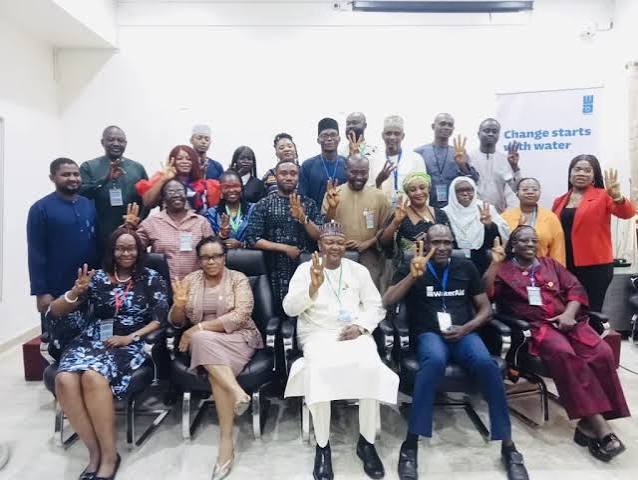
The Country Director of WaterAid Nigeria, Ms Evelyn Mere, made the call on Friday in Abuja at a roundtable on handwashing for effective infection prevention and control of Ebola, diphtheria and other communicable diseases.
Mere said handwashing with soap and running water remained a critical defence against infections, but awareness campaigns alone could not guarantee sustained hygiene practices.
Citing the 2019 WASH National Outcome Routine Mapping (WASHNORM), she said although 81 per cent of household heads knew at least two critical times for handwashing, only 10 per cent demonstrated proper handwashing with soap under running water.
She said only 16 per cent of households had access to basic hygiene services, while 14 per cent of schools had basic water and sanitation services.
According to her, only seven per cent of healthcare facilities and 14 per cent of markets and motor parks had access to basic water and sanitation services.
Mere said Nigeria’s experiences during the Ebola outbreak in 2014 and COVID-19 pandemic in 2020 exposed gaps in water and hygiene infrastructure, adding that handwashing facilities were often abandoned after outbreaks subsided.
She said Nigeria had recorded more than 10,000 confirmed diphtheria cases and over 65,000 suspected cholera cases across 35 states in 2026, while a confirmed Ebola case in Abuja in October had heightened public health concerns.
She regretted that the National Roadmap to Hand Hygiene for All (2021–2025), launched in 2022, was neither costed nor implemented before its target period elapsed.
Mere said the roundtable, organised in partnership with the World Health Organisation (WHO) and the Federal Ministry of Water Resources and Sanitation, aimed to mobilise stakeholders towards sustainable investment in hand hygiene.
Also speaking, Mr Habu Jamilu, Director, Water Quality Control and Sanitation, Federal Ministry of Water Resources and Sanitation, said sustained handwashing required reliable water supplies, functional facilities, adequate funding and regular maintenance.
He called for improved WASH infrastructure in schools, healthcare facilities, markets and motor parks, as well as stronger community participation and coordination among the three tiers of government.
Jamilu urged stakeholders to review the national hand hygiene roadmap and incorporate its priorities into the next planning cycle, stressing the need to consider women, girls, children and persons with disabilities in WASH interventions.
Similarly, Dr Muzzammil Gadanya, Infection Prevention and Control (IPC) Pillar Lead for Ebola Virus Disease at the Nigeria Centre for Disease Control and Prevention (NCDC), said average hand hygiene compliance among healthcare workers stood at 26 per cent.
Gadanya attributed the low compliance largely to inadequate WASH infrastructure and shortages of essential supplies, rather than workers’ negligence alone.
He said 33 per cent of healthcare facilities lacked basic drinking water, while 54 per cent lacked basic sanitation.
He urged government and development partners to prioritise infrastructure improvements alongside behavioural change, adding that healthcare workers should observe the five critical moments for hand hygiene to prevent infections.
Also, Mrs Kogbara Ayaba, Chief Scientific Officer and Deputy Director, Hygiene Promotion, Federal Ministry of Water Resources and Sanitation, called for an end to Nigeria’s reactive approach to disease outbreaks.
Ayaba said only seven per cent of healthcare facilities had complete basic water and sanitation services, while 40 per cent of Nigerians still practised open defecation.
She regretted that handwashing facilities installed during the COVID-19 pandemic were neglected after the immediate threat subsided.
“Knowing is not doing,” she said, calling for predictable funding, better coordination among government agencies and adequate provisions for routine maintenance of WASH facilities.
Ayaba also advocated climate-resilient infrastructure and greater community participation to ensure sustainable access to water and sanitation services.
“Nigeria must move from counting facilities to guaranteeing reliable, inclusive, climate-resilient facilities,” she said.
The roundtable was organised to promote handwashing as an integral part of Nigeria’s pandemic preparedness and public health strategy.
Continue Reading

Trending