
Oil & Energy
‘AKK Gas Pipeline’ll Boost Upstream, Downstream Activities’

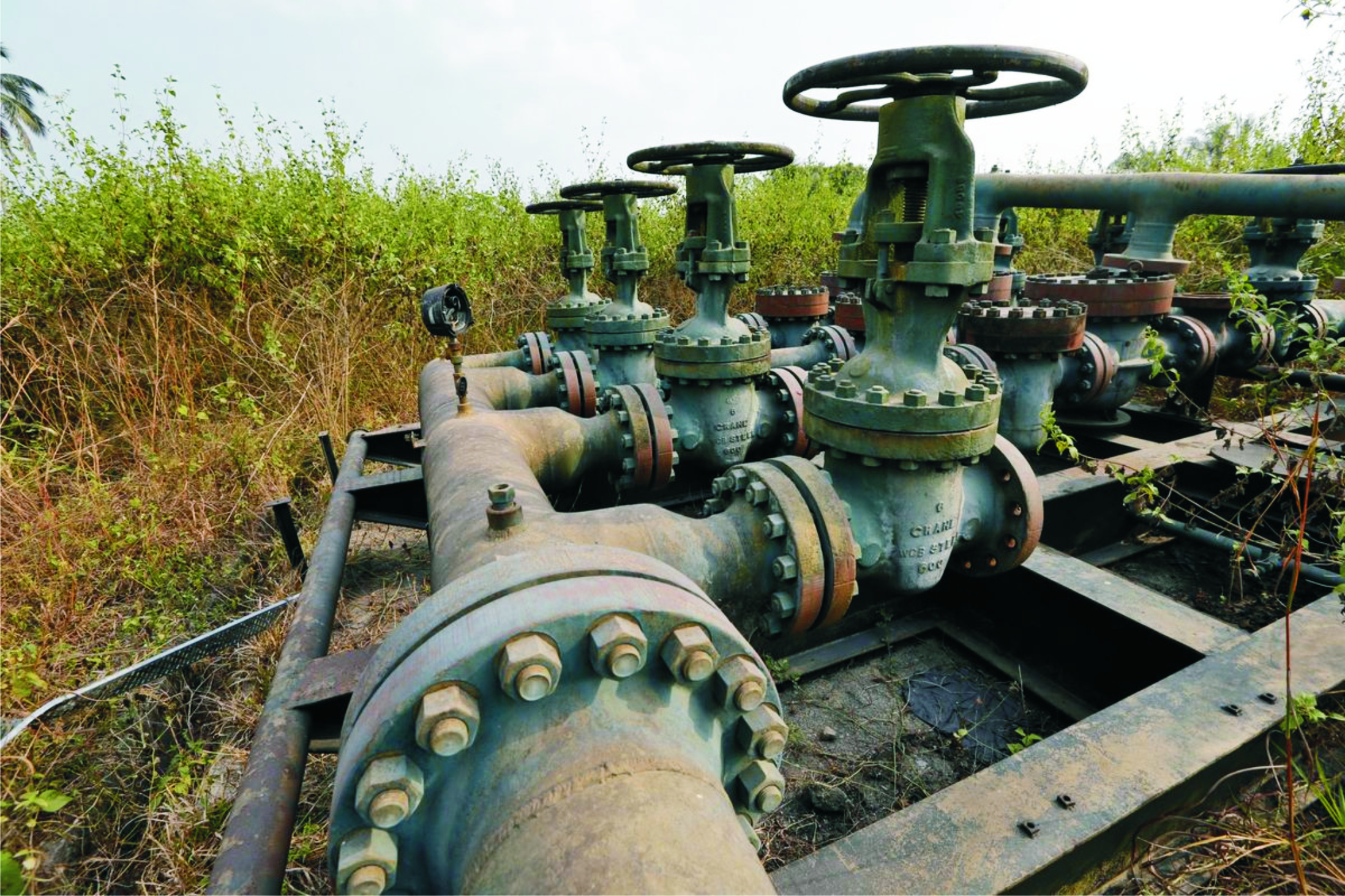
Oilserve Limited, the contractor handling the ongoing Ajaokuta-Kaduna-Kano (AKK) gas pipeline project says once completed, the gas pipeline will boost midstream and upstream activities in Nigeria.
The project, which spans a length of 614 kilometres is being developed by the Nigerian National Petroleum Company (NNPC) Limited to transport natural gas from Ajaokuta, Kogi State, through states and urban centres in Nigeria.
Chairman, Oilserve Ltd., Mr Emeka Okwuosa, the project contractor, said this on Thursday during an inspection of the project site in Abaji, FCT by Malam Mele Kyari, Group Managing Director, NNPC and other dignitaries.
The Tide’s source reports that Kyari was on inspection with the NNPC Board Chairman, Senator Margery Okadigbo, and other board members to assess the level of work done on the project which began in 2020.
Other officials on the inspection were Group Executive Director (GED), Finance and Accounts, Mr Umar Ajiya; GED, Upstream, Mr Adokiye Tombomieye; and Oilserv Limited officials.
The project is expected to be completed in the first quarter of 2023.
Okwuosa described gas as a key factor in the energy value chain in the country, adding that it would significantly make Nigeria to come up again industrially.
According to him, the AKK gas pipeline system is made up of the pipelines, Block Valve, Terminal Gas Station (TGS), Metering Station (MS), Block Valve Station (BVS), Intermediate Pigging Station (IPS), Kilometre Post (KP) and other stations.
He said the mainline construction was one-third completed, the engineering more than 80 per cent while procurement was more than 50 per cent done.
“We feel good as a company, and we know that what we are doing is historical and it’s very important to the country.
“So, it’s not just about the pipeline, it is about the facilities. So, we feel good that we are moving and we are sure that we will keep the schedule,” he said.
He said that pipeline activities involve a lot of planning, key and core engineering design, but most importantly putting the boots on the ground.
“Putting boots on the ground means bringing these pipes going through every meter of the 614 kilometres, of which we are building 303 kilometres,” he said.
He said that the challenges it was facing specifically ranged from security, tough terrain and weather.
“And project of this magnitude requires a lot of money but NNPC is up to the task. They have been able to mitigate some of the issues that arose originally.
“So challenges will be there. But the most difficult remains the security challenge,” he said.
AKK gas pipeline system, when completed will provide gas for improved power generation, develop new industries, increase revenue generation, reduce gas flaring, promote local content and deepen local gas market.



By Felicity Bradstock for Oilprice.com 16
The State Commissioner for Works (Rural Roads) and Public Information, Charles Aniagwu, disclosed this at a press conference in Asaba, weekend, noting that the initiative was part of wider reforms aimed at opening up the power sector to private investors.
Aniagwu, who was accompanied by the Executive Assistant to the Governor on New Media, Felix Ofou, said the state was exploring alternative sources of electricity to support businesses, households and communities while reducing pressure on the national grid.
He said the government was particularly interested in exploiting Delta’s abundant natural gas resources for power generation, pointing to the Kwale Free Trade Zone, which is part of the state’s special economic zone, as a major opportunity for investors.
According to him, prospective investors were taken to the zone during the state’s recent economic summit to enable them to assess the availability of gas as a key raw material for electricity generation. ComparePower Rates
The commissioner explained that generating more electricity locally would not only increase supply in Delta but also free up power on the national grid for use by other consumers.
Aniagwu cited the 8.5MW Independent Power Plant located behind the state secretariat in Asaba as an example of what could be achieved through alternative power sources.
He said the facility had enabled the secretariat complex to operate independently of the national grid, thereby making the electricity that would otherwise have been consumed there available to other users.
He added that the planned 120MW partnership with Supply Power would further strengthen the state’s electricity supply capacity and provide a more reliable power base for small and medium-sized enterprises.
Aniagwu said the state government was also intervening in areas traditionally regarded as the responsibility of electricity distribution companies because inadequate power supply could no longer be allowed to constrain economic development. LearnQuantum Physics
He identified the extension of the electricity grid from Abraka towards the Ndokwa axis as one of the interventions being undertaken to connect more communities to electricity.
The commissioner, however, raised concerns over the burden placed on communities that are often required to provide transformers and other electricity infrastructure, only for distribution companies to take over the facilities and subsequently collect electricity bills without adequately accounting for the investments made by the communities.
He said the state would continue to support efforts aimed at energising communities, noting that improved electricity supply would stimulate businesses, create jobs and help tackle social problems associated with unemployment and idleness.
On regulation, Aniagwu said the government was working with the Ministry of Energy and a committee set up to develop an appropriate regulatory framework for the state’s emerging power sector. SwitchEnergy Plans
He said the proposed energy commission would be responsible for regulating new electricity producers, determining appropriate tariffs and overseeing distribution networks.
The commissioner stressed that liberalising the sector required effective regulation to protect consumers and investors, adding that decisions on power distribution infrastructure, including the use of overhead or underground lines, must take into account the peculiarities and safety requirements of each location.
He warned that power expansion without adequate regulation could expose residents to electrocution and other hazards, stressing the need to protect electricity infrastructure while ensuring consumers were not subjected to unfair pricing.
Aniagwu said the state government’s broader objective was to build an efficient and sustainable electricity market driven by private investment and capable of powering businesses, households and communities across Delta State.