
Oil & Energy
NCDMB Partners Firm On Lubricants Plant

The Nigerian Content Development and Monitoring Board, NCDMB, has formed an alliance with an indigenous lubricant firm, Eraskon Nigeria Limited, to set up a 64,000 litres per day capacity lubricant and chemical blending plant in Gbarain, Yenegoa, the Bayelsa State capital.
The 64,000 litres of lubricants per day capacity plant is expected to produce engine oils, transmission fluids, specialised four-wheel-drive products, engine coolants and specialty products such as waxes and industrial chemicals such as drilling and production chemicals as well as transformer and turbine oils and household products such as detergents and aerosols at take off.
The Minister of State for Petroleum, Chief Timipre Sylva, who performed the groundbreaking ceremony, noted that the Federal Government was committed to promoting local content and reducing importation of products which could be locally produced.
Sylva, who was represented by the Executive Secretary of the NCDMB, Mr Simbi Wabote, stated that the Board was supporting Eraskon Nigeria Limited with equity capital for the establishment of the plant, which will created 200 direct jobs.
According to him, “Section 70(h) of the Nigerian Oil & Gas Industry Content Development (NOGICD) Act of 2010 mandates the Board to assist local contractors and Nigerian companies to develop their capabilities and capacities to further the attainment of the goal of developing Nigerian Content in the Nigerian oil and gas industry”.
He observed that Nigeria currently consumes about 250 million liters of engine oils per annum, saying that this consumption increases at more than 5percent every year following the addition of new vehicles and machineries on the scene.
He expressed regret that the country’s blending capacity has been 150million liters per annum, showing a shortage of about 100 million liters, noting that the deficit was met by importation of finished lube products, with the attendant loss of revenue and job opportunities.
Earlier, the Executive Vice Chairman of Eraskon Group, Mr. Maxwell Oko, explained that Nigeria accounts for about 20 percent of Africa’s total demand for lubricants, while commending NCDMB for the partnership.
He said, “The idea of building a lubricant blending plant follows our determination to contribute to Nigeria’s industrial development.
“Lubricants are the lifeline of every engine. Our confidence was further boosted by our partnership with the Nigerian Content Development and Monitoring Board, which demonstrated a clear commitment to our vision through investment.
”Specifically, this lubricants blending project aims at providing employment, developing local manufacturing capacity and increasing local content participation in the industry.
“We believe our people can grow better with proper transfer of know how and the best way to aid that process is to site companies where such know how can be put to use closer to them.”
By Tonye Nria-Dappa



By Felicity Bradstock for Oilprice.com 16
The State Commissioner for Works (Rural Roads) and Public Information, Charles Aniagwu, disclosed this at a press conference in Asaba, weekend, noting that the initiative was part of wider reforms aimed at opening up the power sector to private investors.
Aniagwu, who was accompanied by the Executive Assistant to the Governor on New Media, Felix Ofou, said the state was exploring alternative sources of electricity to support businesses, households and communities while reducing pressure on the national grid.
He said the government was particularly interested in exploiting Delta’s abundant natural gas resources for power generation, pointing to the Kwale Free Trade Zone, which is part of the state’s special economic zone, as a major opportunity for investors.
According to him, prospective investors were taken to the zone during the state’s recent economic summit to enable them to assess the availability of gas as a key raw material for electricity generation. ComparePower Rates
The commissioner explained that generating more electricity locally would not only increase supply in Delta but also free up power on the national grid for use by other consumers.
Aniagwu cited the 8.5MW Independent Power Plant located behind the state secretariat in Asaba as an example of what could be achieved through alternative power sources.
He said the facility had enabled the secretariat complex to operate independently of the national grid, thereby making the electricity that would otherwise have been consumed there available to other users.
He added that the planned 120MW partnership with Supply Power would further strengthen the state’s electricity supply capacity and provide a more reliable power base for small and medium-sized enterprises.
Aniagwu said the state government was also intervening in areas traditionally regarded as the responsibility of electricity distribution companies because inadequate power supply could no longer be allowed to constrain economic development. LearnQuantum Physics
He identified the extension of the electricity grid from Abraka towards the Ndokwa axis as one of the interventions being undertaken to connect more communities to electricity.
The commissioner, however, raised concerns over the burden placed on communities that are often required to provide transformers and other electricity infrastructure, only for distribution companies to take over the facilities and subsequently collect electricity bills without adequately accounting for the investments made by the communities.
He said the state would continue to support efforts aimed at energising communities, noting that improved electricity supply would stimulate businesses, create jobs and help tackle social problems associated with unemployment and idleness.
On regulation, Aniagwu said the government was working with the Ministry of Energy and a committee set up to develop an appropriate regulatory framework for the state’s emerging power sector. SwitchEnergy Plans
He said the proposed energy commission would be responsible for regulating new electricity producers, determining appropriate tariffs and overseeing distribution networks.
The commissioner stressed that liberalising the sector required effective regulation to protect consumers and investors, adding that decisions on power distribution infrastructure, including the use of overhead or underground lines, must take into account the peculiarities and safety requirements of each location.
He warned that power expansion without adequate regulation could expose residents to electrocution and other hazards, stressing the need to protect electricity infrastructure while ensuring consumers were not subjected to unfair pricing.
Aniagwu said the state government’s broader objective was to build an efficient and sustainable electricity market driven by private investment and capable of powering businesses, households and communities across Delta State.
-
 Education22 hours ago
FCE Yola Graduates 3,555 Teachers , Seeks Upgrade to University
-
 Niger Delta1 day ago
Diri Restates Stance On Lagos-Calabar Coastal Highway
-

 Sports22 hours ago
Nigerian Trio Target Titles At PFL Africa Finals
-

 Niger Delta1 day ago
C’River, NUJ Pay Tribute To Late Guardian Editor
-
 News1 day ago
NDLEA Recovers Tons Of Illicit Drug Consignments In Nine States
-
 Opinion1 day ago
Checking Voter Apathy In Nigeria’s Electoral Process
-
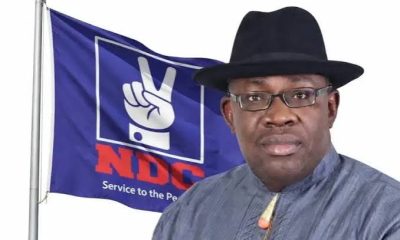
 Politics22 hours ago
2027: DICKSON’S EX-ALLY VOWS TO WORK AGAINST NDC INTEREST IN BAYELSA
-

 Politics22 hours ago
2027: GROUP PLEDGES 40,000 SUPPORTERS FOR COALITION CANDIDATES IN RIVERS