Connect with us

Opinion

 Electronic Accreditation And Transmission

Published

on

The year 2023 will be a twilight year for most politicians in Nigeria. It will indeed mark the beginning of the end for a lot of incompetent and rogue politicians who ascended power through the barrel of guns wielded by thugs. It will also end the idea of money for a vote. This would not have been possible without President Muhammadu Buhari’s signature on the Electoral Bill. Even though Buhari declined to sign the electoral bill five times in the past, his actions last week have given hope to every Nigerian who loves democracy and free-and-fair elections.
There were already theories why President Buhari may not sign the bill, but he eventually came, putting all the conspiracy theories to rest; even though he made a strong appeal that the provisions of Clause 84 are amended to allow public servants, political officeholders, and advisers to remain in position even if they are contesting electoral offices. By signing the bill, he has in a sense, saved the 2023 General Election and, by so doing, given hope to the electorate. The bill is not perfect, and no bill is, but it is a major effort in taking us closer to a place in our democratic journey.
The National Assembly in their wisdom inserted Clause 84 in the Electoral Act, I think, with the good intention of creating a level playing field for all. Even civil servants have to resign their appointments to vie for political offices, relinquishing any advantage their position might afford them. We must remember that what is good for the goose is sauce for the gander. What are these ministers, commissioners, and special advisers afraid of? They should resign and contest with others on an equal footing. So long as these new provisions in Clause 84 are in line with the constitution, the National Assembly must stand firm; but if otherwise, they should do the President’s bidding.
We should be thanking a coalition of 26 civil society organisations (CSOs) for mounting pressure on the President. One CSO, Enough is Enough, went as far as publishing an advertorial in a national daily, clarifying to the President that his assent does not preclude further amendment on the bill when signed into law. Aside from the CSOs, the voice of Nigerians across all political spectrum was resounded loudly. So far, this is one legacy of the Buhari administration after almost seven years. But, it is a legacy that can make all the difference, since it deals with the selection of those whose duty it is to make decisions on our behalf.
The most momentous provisions of the act are the electronic accreditation and electronic transmission of election results. Other items in the act are very important, but these two items alone make a great deal of difference. Clause 47 provides for the electronic accreditation of voters, meaning that every voter in every unit across the country can see real-time, how many people are in the polling units. It will become a major deterrent against ballot box snatching; and other forms of violence at polling units.
On the other hand, Clause 50 which deals with the electronic transmission of results has always been contentious, but would now form the fulcrum of a credible election, come 2023. The country now has a veritable tool to decide choose the feature. A tool that would reduce inaccuracies of results to the barest minimum. It would ensure that the votes of ordinary people count, and also reduce election violence perpetrated by desperate politicians. Also, one key benefit of electronic voting is the fact that results can be independently collated at the end of the election.
The effects of these two clauses are enough to change our politics in very many ways. It will create a level playing field for all parties, whether big or small; and as a result, the party in power would understand in clear terms that they have just been served an advance notice by the electorate, saying, perform or prepare to leave, come 2023. Incompetent politicians are already on their way out, and most of them who have turned the National Assembly chambers into a place to enjoy mid-morning and afternoon naps should now retire honourably or get ready to be sent packing in 2023.
By finally signing this bill into law, President Buhari has restored power to the people. People can now trust the electioneering process to work, knowing that in the next election cycle they would speak with their vote. It will also force Nigerians to ask politicians the hard question that bears on the position they seek to occupy. Politicians must now deliver on their promises with the mind that there is indeed a day of reckoning, and it’s no longer business as usual. Political parties would also be careful in making choices of their flag bearers at various levels.
This act also opens up the political space for those who hitherto were afraid of joining politics due to the premonition that the outcomes were already predetermined. This is a very good thing since the same set of people has ruled us since 1999. It will give the electorate options; thereby compelling candidates to compete in the market of ideas for a place in the hearts of would-be voters. Voters, on the other hand, will choose any candidate of their choice knowing that there is a chance for them in this era of electronic voting.
It is the period of the underdog. A time any party with the right candidate can win. Parties no longer have to be as big as APC or PDP to win elections. With electronic accreditation and transmission, parties can be lean and still win elections. It only boils down to credible candidates, the right message, good campaign structure, and hard work. Small parties do not chase big positions; they only need to build from small positions to gather the momentum necessary for building the critical mass required for contesting big positions. It might take time, but it is possible. Nigerians should begin to dust their permanent voter’s cards because come 2023 there must be a political paradigm shift in this country.

By: Raphael Pepple

Continue Reading

Opinion

Poor Federal Roads: The Oshiomhole’s  Outburst

Published

on

Quote:”Although the Federal Ministry of Works is responsible for road construction and rehabilitation while the Federal Roads Maintenance Agency (FERMA) oversees maintenance, road maintenance has consistently taken a back seat”

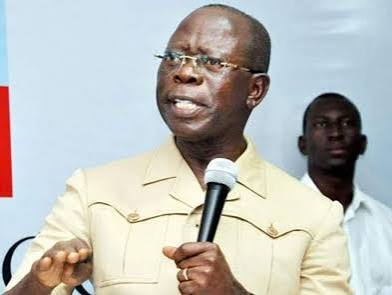
The recent outburst by the lawmaker representing Edo North Senatorial District, Senator Adams Oshiomhole, over the deplorable condition of federal roads in Edo and Delta states has once again drawn national attention to one of Nigeria’s most persistent infrastructure challenges. During Senate plenary last Wednesday, Oshiomhole criticized the Minister of Works, David Umahi, accusing the Federal Ministry of Works of neglecting major federal highways in Edo and Delta while prioritizing new road projects. According to him, the government should focus on rehabilitating existing roads that have become impassable before embarking on new construction. He identified the Benin-Warri, Benin-Asaba, Benin-Auchi and Auchi-Okene highways as strategic economic corridors that have deteriorated to alarming levels, making travel difficult for commuters and motorists while increasing the cost of transporting goods and services.

The senator also alleged that road projects affecting Edo and Delta states were repeatedly omitted from budgetary provisions and that some interventions were only undertaken following directives from President Bola Tinubu. Ironically, the Federal Government has consistently reiterated its commitment to reconstructing and rehabilitating federal roads across the country. The Minister of Works has repeatedly assured Nigerians that the government is deploying reinforced concrete technology to build more durable highways capable of withstanding the country’s climatic conditions. Despite these assurances, vast sections of federal road across the country remain in deplorable condition. The consequences are enormous. Federal highways serve as the backbone of the nation’s economy, carrying more than 90 per cent of passengers and freight.

They connect ports, airports, industrial centres, state capitals and agricultural belts, facilitating the movement of food, fuel, cement and manufactured goods. When these roads fail, the entire economy suffers. Although the Federal Ministry of Works is responsible for road construction and rehabilitation while the Federal Roads Maintenance Agency (FERMA) oversees maintenance, road maintenance has consistently taken a back seat. The result is a recurring cycle in which newly completed roads quickly deteriorate while existing ones are left to collapse. The economic consequences are severe. Bad roads increase transportation costs, contribute to food inflation, delay the movement of goods from ports to markets, increase vehicle maintenance expenses and lead to avoidable road crashes that claim countless lives every year.

To address these challenges, the Federal Government has introduced initiatives such as the Highway Development and Management Initiative (HDMI), which seeks to attract private investment into road maintenance through concessions and tolling. While the initiative holds promise, public acceptance will depend largely on visible improvements in road quality and transparent management of toll revenues. Similarly, the Road Infrastructure Tax Credit Scheme is designed to encourage companies to finance the reconstruction of strategic highways in exchange for tax credits. While the scheme has shown promise, its ability to address road infrastructure challenges equitably across the country remains to be seen. Other countries facing similar infrastructure challenges have demonstrated that sustainable road management requires a different approach.

Rwanda and Morocco, for instance, have prioritized dedicated road maintenance funds, performance-based contracts that reward quality rather than kilometers constructed, and policies that allocate a significant proportion of road budgets to maintenance instead of new construction. Nigeria can draw useful lessons from these experiences. Maintenance funding should be increased and protected because preventive maintenance is far cheaper than complete reconstruction. Public-private partnerships should be expanded with adequate safeguards, transparent tolling policies and independent monitoring. Development finance institutions should support contractors with affordable financing to minimize disruptions caused by delayed government payments. Road designs should withstand heavier rainfall and flooding, while compensation and right-of-way issues must be resolved before projects begin to avoid unnecessary delays.

FERMA should also prioritize durable, high-quality road maintenance over the shoddy repairs that have become all too common. Ultimately, Nigerians are not asking for perfect roads; they simply want roads that are safe, durable and properly maintained. While new highways are desirable, a well-maintained five-kilometer stretch is often far more valuable to road users than a much longer road that quickly falls into disrepair. The media, civil society, the National Assembly and Nigerians must continue to hold the government accountable by monitoring road projects and demanding better results. Good roads are not a privilege but a right of every citizen. With tax credit schemes, concessions and other funding mechanisms already in place, what is now required is political will, transparency and consistent implementation. However, Senator Oshiomhole’s criticism also invites legitimate public reflection. 

Many Nigerians have asked what the condition of these same federal roads was during his eight-year tenure as Governor of Edo State. Several governors, including those of Rivers State at different times, undertook repairs on critical federal roads within their states and subsequently sought reimbursement from the Federal Government. It is therefore fair to ask whether similar interventions were pursued during Oshiomhole’s administration. Public officials, whether serving or former, should be judged by the same standard. Constructive criticism is essential in a democracy, but it carries greater weight when matched by a demonstrable record of action. Nigerians expect those entrusted with public office to address pressing challenges while they have the authority to do so, rather than becoming vocal critics only after leaving office

By:  Calista Ezeaku
Continue Reading

Opinion

Sacrificing Humanity for Politics? 

Published

on

“Politics is temporary, but humanity is permanent. No politician is worth sacrificing genuine friendships, family bonds, or peaceful coexistence.””Politics is temporary, but humanity is permanent”.

Every election season leaves behind more than ballot papers and campaign posters. It often leaves broken friendships, divided families, fractured communities, and hearts filled with resentment. In the heat of political competition, many people forget a simple but profound truth: politics is temporary, but humanity is permanent. Across our communities, it has become increasingly common to see people sever lifelong relationships simply because they support different political parties or candidates. Individuals who once shared meals, celebrated milestones, and stood by each other during difficult times suddenly become strangers not because they committed any personal offence, but because they exercised their democratic right to think differently. This growing trend should concern every citizen. Politics is designed to provide leadership, shape public policy, and improve society.

It was never intended to become a weapon for destroying relationships or creating permanent enemies. When politics begins to erode our humanity, it ceases to serve its true purpose. A democratic society thrives on diversity of thought. Every citizen possesses the constitutional right to support any political party, candidate, or ideology without fear of intimidation or hatred. Political disagreement is not a crime; rather, it is evidence that democracy is alive and functioning. The true measure of political maturity is not our ability to silence opposing voices but our willingness to respect them. Unfortunately, many people have mistaken political loyalty for personal hostility. Instead of debating ideas, they attack personalities. Instead of discussing policies, they spread insults and misinformation. Instead of building bridges, they construct walls of bitterness.

Such behaviour weakens not only our relationships but also the democratic values we claim to defend. The reality is simple: elections are temporary. Political offices have fixed tenures. Governments change. Political alliances shift. Today’s political rivals may become tomorrow’s allies, while today’s allies may become tomorrow’s opponents. History has repeatedly demonstrated that politicians who once exchanged harsh words eventually sit together at negotiation tables in pursuit of shared interests. Yet ordinary citizens often remain trapped in unnecessary hatred long after political leaders have reconciled.This reality offers an important lesson. No politician should be worth sacrificing genuine friendships, family bonds, or peaceful coexistence. Political support should never require personal hatred. We can campaign passionately for our preferred candidates while still respecting those who choose differently.

Democracy flourishes when disagreement remains civil. One of the most dangerous habits in politics is inheriting other people’s enemies. Far too often, supporters adopt the personal conflicts of political leaders as though they were their own. People who have never met begin insulting one another on social media, damaging relationships, and sometimes engaging in violence simply because influential figures disagree.Such misplaced loyalty serves no meaningful purpose. Political leaders often possess the opportunity to reconcile, negotiate, and move forward after elections. Their supporters, however, are frequently left with damaged relationships, regret, and lasting divisions within their communities. Wisdom demands that citizens distinguish between political competition and personal relationships. Rather than inheriting hostility, we should cultivate independent judgment.

Judge individuals by their character, integrity, honesty, and personal conduct not merely by the colour of the political party they support. A person’s political affiliation does not automatically define their values, competence, or humanity. Equally important is the need to elevate the quality of our political conversations. Instead of engaging in personal attacks, we should focus on issues that genuinely affect people’s lives. Discussions should revolve around education, healthcare, infrastructure, security, economic growth, employment, agriculture, and accountable governance. These are the matters that determine the future of our nation not endless exchanges of insults. Social media has further amplified political intolerance. Behind anonymous profiles and smartphone screens, many people say things they would never express in person.

Every post, comment, and shared message has the potential either to promote understanding or to deepen division. Responsible citizenship requires restraint, accuracy, and respect, especially during politically sensitive periods. Politics should inspire service, not hostility. Leadership should unite rather than divide. Citizens should be free to disagree without becoming enemies. After all, beyond our political preferences, we remain neighbours, colleagues, business partners, classmates, worshippers, and fellow citizens who share the same hopes for peace, prosperity, justice, and national development. As another political season approaches, let us remember what truly matters. Campaigns will end. Elections will pass. Winners will celebrate, and losers will regroup. But the relationships we preserve, the respect we extend, and the humanity we uphold will remain long after the campaign slogans have faded.

The greatest victory in politics is not defeating an opponent at the polls; it is preserving our values while participating in democracy. Let us choose dialogue over division, understanding over intolerance, and respect over hatred. Above all, let us never forget this timeless principle: Politics should never be more important than humanity. And perhaps the wisest political advice anyone can embrace is this: Never inherit people’s enemies. In doing so, we preserve not only our relationships but also the very spirit of democracy itself.

By: Michael T. Abraham

Continue Reading

Opinion

Making the Out-of-School Children Survey Count 

Published

on

Quote: “Reliable data may reveal the scale of Nigeria’s out-of-school crisis, but only sustained political will and practical action can ensure that every child is given the opportunity to learn, thrive and contribute to national development.”

The Minister of Education, Dr. Tunji Alausa, recently announced that the Federal Government, in partnership with the National Bureau of Statistics (NBS), will conduct a nationwide household survey to determine the actual number of out-of-school children in Nigeria. The exercise is intended to provide reliable data for evidence-based education policies and targeted interventions. Current estimates put the number of out-of-school children at between 15 million and 20 million, placing Nigeria among the countries with the highest number of children excluded from formal education. At first glance, this is a commendable initiative. One of Nigeria’s greatest developmental challenges has been the absence of accurate and reliable data. Without dependable statistics, planning becomes difficult, implementation inefficient, and evaluation of government programmes almost impossible.

The nation’s actual population also remains uncertain because of the absence of an up-to-date national census. Estimates range from below 200 million to over 250 million, making effective planning a daunting task. Sound policies on education, healthcare, housing, employment and infrastructure all depend on credible population statistics. Against this backdrop, the proposed survey deserves commendation. If government succeeds in generating reliable figures, it will be better positioned to allocate resources equitably, identify areas of greatest need and design interventions based on facts rather than assumptions. Accurate data will also make it easier to monitor progress and assess whether efforts to reduce the number of out-of-school children are achieving the desired results.

However, beyond the good intentions lie important questions. Will state governments provide the enabling environment for an objective and transparent survey? Since education is on the concurrent legislative list, the cooperation of state governments will largely determine the credibility of the exercise. Politics could easily influence the process. States with higher numbers of out-of-school children may qualify for greater intervention funds from the Federal Government and development partners. Would this tempt some states to inflate their figures? On the other hand, high numbers could portray a state government as performing poorly in the education sector. Would some governors therefore seek to understate the figures to protect their image? These concerns are legitimate because whenever statistics are tied to political interests or financial benefits, the temptation to manipulate them cannot be ignored.

Equally important are questions about the survey itself. When will it begin? How long will it last? What methodology will be adopted? Will every household be covered, including those in remote rural communities and areas plagued by insecurity? Does the government have the manpower, funding, technology and security arrangements needed for such a nationwide exercise? Nigeria has witnessed several well-intentioned national programmes that fell short because of poor planning and inadequate logistics. Many Nigerians will remember that the proposed national population census scheduled a few years ago was postponed despite extensive preparations. Funding constraints and logistical challenges contributed to its suspension. What guarantees are there that this survey will not suffer a similar fate? More importantly, what becomes of the findings after the exercise? Nigeria is not short of reports or data collection initiatives.

The recurring challenge has been the lack of political will to translate findings into concrete policies and sustained action. The survey must not become another document gathering dust on government shelves. Instead, it should serve as the basis for measurable interventions, continuous monitoring and improved educational outcomes. Beyond producing accurate figures, the survey must also uncover the reasons children remain outside the classroom. Addressing the crisis requires more than counting affected children. It demands an understanding of the social, economic and cultural factors responsible for the problem. Issues such as the Almajiri system and other practices that discourage formal education should be carefully examined while respecting cultural values and protecting every child’s right to quality education. Poverty remains a major barrier, as many parents cannot afford school-related expenses, forcing children into street trading or child labour

Insecurity has also led to the closure of schools in several communities, depriving thousands of children of learning opportunities.Government must therefore complement the survey with practical measures. Strengthening social protection for vulnerable families, improving school infrastructure, recruiting and retaining qualified teachers, enhancing security around schools and enforcing compulsory basic education are all essential. Equally important is sustained collaboration with traditional rulers, religious leaders, civil society organisations and development partners to address the root causes of school exclusion. The proposed survey presents an opportunity to replace guesswork with credible evidence. However, its true value will not be measured by the number of households visited or questionnaires completed. Its success will depend on whether the findings inspire bold policies, adequate funding and sustained action that ensure every Nigerian child, regardless of location or background, has access to quality education. Only then will the exercise move beyond statistics to become a genuine instrument for national development.

By: Calista Ezeaku

Continue Reading

Trending