
Editorial
Down Syndrome: Addressing The Plight Of Patients

Today, March 21, 2022, is World Down Syndrome Day (WDSD). The day is marked each year on March 21, beginning in 2006. WDSD is observed to create awareness about Down syndrome, standing up for those suffering from this genetic and bodily disorder. Still on this day, people globally celebrate the lives and achievements of Down syndrome victims.
Every year, the United Nations determines the theme of the commemoration of WDSD. This year’s theme is: “Inclusion Means…” The theme illustrates that we should make efforts to include the people affected with Down syndrome or other disabilities in all matters of life. People suffering from Down syndrome should not be discriminated against or regarded as “ugly” because of their physical appearance.
To identify with the day, the UN advises everyone to wear blue and yellow colours representing sensitivity to Down syndrome. Wristbands, ribbons, or lapel pins of blue or yellow colours can be used to show support or fund-raising for WDSD. Moreover, blue and yellow colour paintings, candles, bulbs, and nail polish of these colours can be utilised on this special day.
Down syndrome is a genetic and physical disorder that is caused by an additional chromosome 21 within the human body of 46 chromosomes (23 pairs). Individuals with the disease can be seen with stunted growth. It takes the form of diminished muscles, a short neck with excess skin, a flattened face and nose and little ears, eyes, mouth, among others.
During the process of cell division and production of sperm and egg, an instructive alteration occurs in the 21st chromosome that causes the likelihood of Down syndrome. It is one of the most commonly occurring chromosomal abnormalities in humans. Statistical analysis, however, shows that the chances of Down syndrome are greater in infants whose parents are either under the age of 20 or over the age of 35.
The goal of WDSD is to demonstrate awareness among people of this disorder and to stand alongside the victims of the illness. The occasion illustrates that a good diet and lifestyle without depression of an expectant mother are necessary. Another purpose that determines the observance of the day is to let people set a suitable age for marriage (between 25 and 34) to decrease the probability of this disorder through these precautionary steps.
The syndrome occurs in all parts of the world without any prior reason. It is estimated that every year 3,000 to 6,000 children are born with this type of chromosomal disorder which threatens the world community regarding the mental and physical health of people at a larger scale and worldwide range. The disease has no remedy. There is evidence that education and appropriate care improve quality of life.
As Nigeria joins the rest of the world to commemorate the WDSD, there is a need to strongly condemn discrimination of all forms against children and young adults living with Down syndrome in the country as it affects their welfare and well-being. Segregation is unwarranted since the condition does not limit, but the bias does.
In line with the global theme, the Nigerian government should undertake activities to raise public awareness, promote inclusion, encourage advocacy and support the well-being of people living with Down syndrome. One of the things we must hope to achieve is to get Nigerians to understand what Down syndrome means and what life can be for people who live with the condition.
Studies on Down syndrome spanning nine years revealed an incidence of one in 865 live births in a Nigerian hospital. Cytogenetic analysis in 386 patients showed 369 (95.5%) cases to be the result of regular trisomy 21, and translocation trisomy 21 was found in nine (2.5%) patients. Six (1.5%) patients were mosaics, and the remaining two (0.5%) cases were classified as miscellaneous. A high incidence rate among young mothers was observed.
This is why there should be massive information campaigns. Media, government, non-governmental organisations, and faith-based groups should be involved in raising public awareness about Down syndrome. Parents must recognise this destructive disease. Limiting campaigns to social media platforms may not be enough, because many parents are not educated enough to participate in social media.
The Federal Government, especially, must play an active role in ensuring the safe education of children suffering from this disease and providing adequate health care systems to improve them. It has to sponsor children with Down syndrome, build and implement diagnostic centres that will help detect kids who may be born with the syndrome to begin early intervention.
Since the challenges in training children who experience the syndrome are enormous for caregivers and parents lacking adequate resources to cater for their needs, the various tiers of government should be committed by enabling patients to be taken to public hospitals for proper care with all expenses paid by the authorities. Wealthy individuals can establish Down syndrome resource foundations to support educational programmes and therapy services for children, youth and young adults with the ailment.
With an average life expectancy of about 50 to 60 years, particularly in the developed world with adequate health care, those with the syndrome demand to be shown passionate love. Children should not be isolated from their peers. Parents or guardians should never abandon victims, as this may worsen the situation. Early identification of this syndrome is helpful. The good news is that Down syndrome can be found as early as pregnancy.



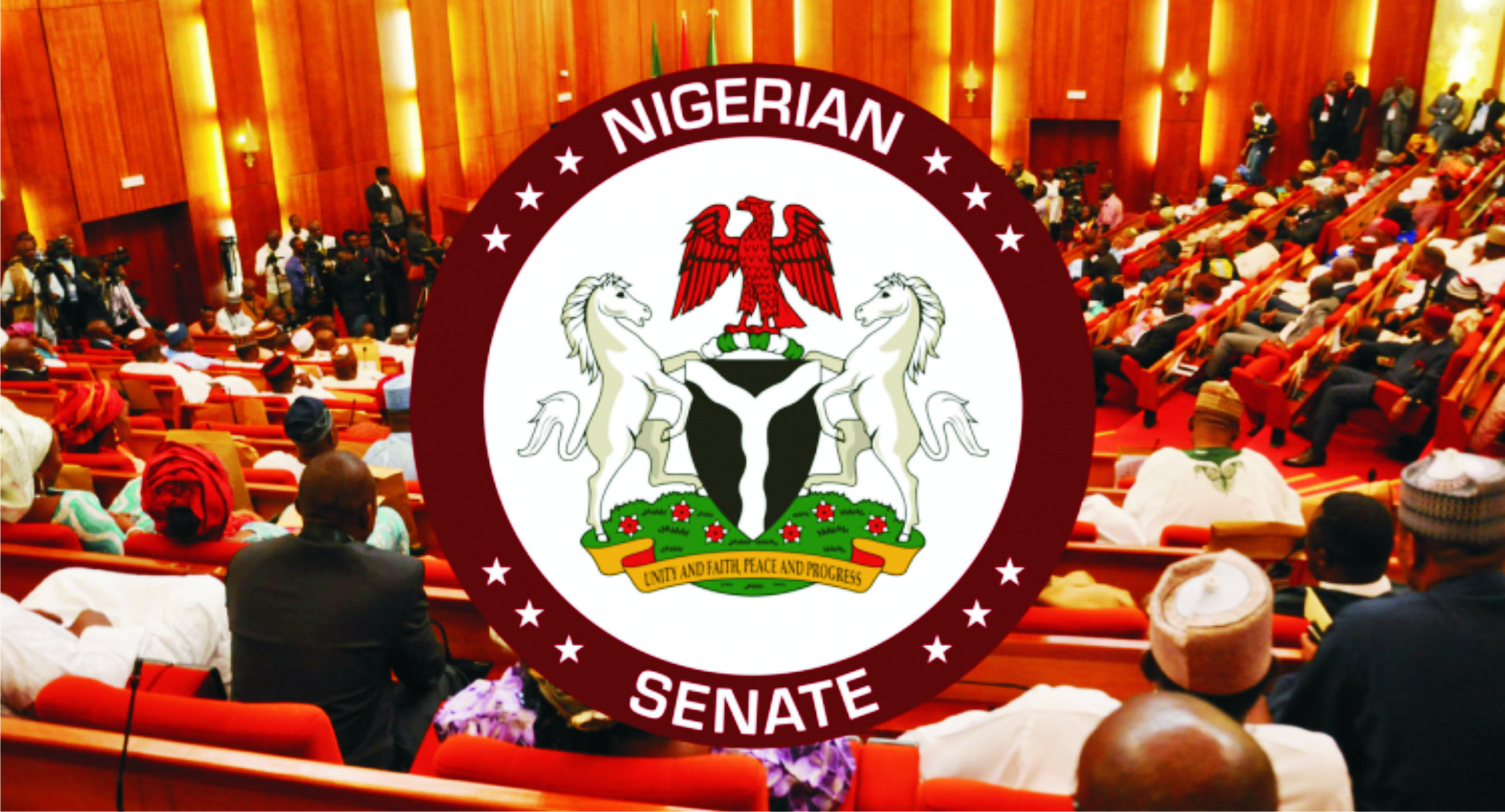
There are moments in the life of a legislature when plain speaking becomes a public service. Senator Adams Oshiomhole provided such a moment on the floor of the Senate when he accused the Minister of Works, Senator David Umahi, of manifestly neglecting critical federal arteries in Edo and Delta States, and implored his colleagues to prevail on the Minister to adopt a more equitable and genuinely national approach to road infrastructure delivery. It was blunt, it was uncomfortable, and it was necessary.
The specifics of his complaint deserve restating. Drawing attention to the recent approval of some 20 new road projects despite the parlous state of existing ones, the former Edo State governor lamented that Nigerians cannot travel from Benin to Warri, Benin to Asaba, Benin to Auchi, or Auchi to Okene without encountering severe distress. He alleged a deliberate omission of these corridors from the national budget in the last three years, save for palliative interventions directed by President Bola Tinubu through tax credit arrangements. His question — “What have we done wrong?” — resonates far beyond the chambers of the National Assembly.
We lend our full and unequivocal support to that call. The Auchi-Benin Road, for instance, has been in a deplorable and near-impassable condition for several years, turning what should be a two-hour journey into an all-day ordeal of broken axles, extortionate fares, and despondent commuters. The media have, on multiple occasions, chronicled the suffering of motorists, traders, and students who ply that route. To describe it as a federal road today is to stretch the meaning of the term beyond recognition.
This pattern of sidelining is not confined to Edo or Delta. Even here in Rivers State, the disposition of the Federal Ministry of Works has left much to be desired, particularly along the Eleme axis of the East-West Road. That road, which ought to be a flagship of federal presence in the Niger Delta, has remained in a wretched state for long. Those who use it daily — workers at the Eleme Petrochemical Complex, the two refineries, Onne Port, and the countless ancillary industries — can attest to its deterioration. Work has proceeded in fits and starts without the sustained urgency such a strategic road demands.
The Eleme stretch is not a mere intra-state byway. It is the gateway to the nation’s economic jugular. According to the Federal Ministry of Works and Housing’s 2023 Highway Condition Survey, only about 35 per cent of the country’s 36,000 kilometres of federal roads are rated as being in good or fair condition, with the remainder classified as poor or very poor. The East-West Road, conceived in the 1970s to bind the entire Niger Delta, remains unfinished in critical sections more than four decades after. If it had been treated as a priority, the perennial gridlock, carnage, and economic loss on the Eleme-Refinery junction would have long been consigned to history.
The irony is as painful as it is glaring. The Niger Delta remains the goose that lays the golden eggs. Data from the Nigeria Extractive Industries Transparency Initiative [NEITI 2023 Oil and Gas Audit] show that the region still accounts for over 78 per cent of Nigeria’s federally collected export earnings and about 65 per cent of total government revenue. The National Bureau of Statistics [NBS Foreign Trade Report Q4 2024] similarly confirms that crude oil continues to dominate export receipts. By every metric of equity and economic logic, a region that sustains the national purse deserves first-rate consideration in the allocation of infrastructure, not afterthoughts and tokenism.
Road infrastructure is not largesse to be dispensed by favour; it is the skeleton upon which commerce, cohesion, and citizenship hang. When contracts are concentrated in one geopolitical zone while other zones are left to contend with craters, it erodes trust in the federation itself. The World Bank’s Nigeria Development Update [June 2023] estimated that poor transport connectivity inflates the cost of moving goods by up to 40 per cent and costs the Nigerian economy an estimated $1.5 billion annually in lost man-hours and vehicle maintenance. If we profess to be one country, then equity must be the compass that guides key institutions before any project is executed. Development must spread round, not pool in one place as though other regions do not matter.
There is also a grave security dimension that can no longer be ignored. The deplorable condition of federal roads has become a veritable enabler of criminality. The NBS Crime Experience and Security Perception Survey reported over 2.5 million incidents of kidnapping-related occurrences nationally, with transport workers identifying bad road spots as prime ambush points. When vehicles are forced to crawl at 10 kilometres per hour through failed sections at Auchi, Sapele Road, or Eleme, they become sitting ducks for armed gangs. Fixing bad roads, therefore, is not merely about convenience; it is about safeguarding lives.
By his intervention, Senator Oshiomhole has hit the nail on the head and reminded Minister Umahi of a fundamental constitutional truth: public office is held in trust. The Ministry of Works is not a personal estate where contracts are awarded according to whim or political convenience. It is a national institution funded by the collective resources of Nigerians, including the oil and gas rents from the very communities whose roads are now neglected. The Minister must demonstrate balance, transparency, and a pan-Nigerian outlook in the distribution of projects that impact the daily existence of citizens. Selective neglect breeds suspicion, and suspicion is corrosive at a time when the nation is preaching unity, oneness, equity, and justice.
Consequently, the National Assembly must go beyond rhetoric and assert its oversight powers with vigour. Sections 88 and 89 of the 1999 Constitution [as amended] empower the legislature to investigate and expose any maladministration in the execution of federal projects. If an office holder is not acting rightly, it is the duty of the Senate and the House of Representatives to call him to order. Oversight must not be reduced to budget approval ceremonies; it must translate to field verification, public hearings, and insistence that the Federal Character principle, as enshrined in Section 14(3) of the Constitution, reflects in road awards.
Let the Auchi-Okene, Benin-Warri, Benin-Asaba, and Eleme East-West gangways be restored to motorable dignity. Let priority be given to completing existing, economically vital roads before embarking on new ones. If those who, through their resources, sustain the federation are sidelined in the distribution of tangible dividends, it tells poorly of our nationhood. Bad roads must be fixed, and they must be fixed now, with fairness as the guiding standard.
-

 News2 days ago
RSG Targets Nine Million Residents in Mosquito Net Distribution Campaign
-

 Oil & Energy2 days ago
Aiyedatiwa Signs New Electricity Bill
-

 Maritime2 days ago
Marine Minister Commends President Tinubu On NPERA Bill Assent
-

 Oil & Energy2 days ago
NLNG Commissions Research And Innovation Centre In RSU
-

 News2 days ago
KenPoly Holds Eight Convocations, August 29
-

 News2 days ago
RSG Begins Another Phase of Projects Commissioning Today
-

 News2 days ago
RMAFC Completes Revenue Sharing Review, Proposes New Pay
-

 Maritime2 days ago
NAGAFF Petitions IGP Over Alleged Maritime Police Harassment