
Oil & Energy
Oil’s Journey From Worthless In Pandemic To $100 Per Barrel

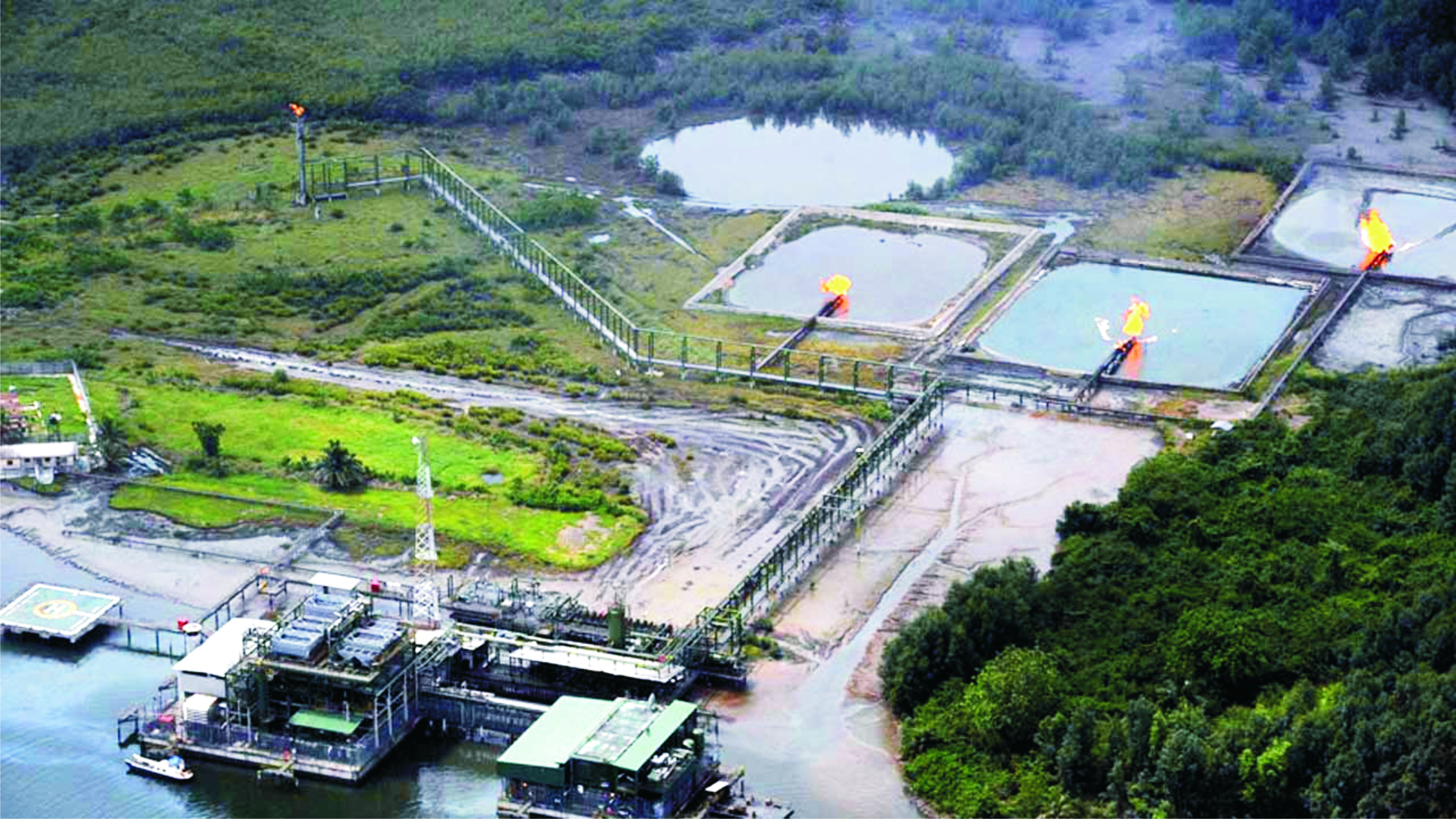
In July 2020, just a few months after the COVID-19 pandemic started to spiral out of control, Shell’s CEO, Ben van Beurden, declared world oil demand may have passed its peak – all but condemning his company’s core business to eventual obscurity.
“Demand will take a long time to recover if it recovers at all,” he told reporters after the Anglo-Dutch energy company reported a sharp drop in second-quarter profit.
Van Beurden wasn’t alone in his gloomy view. Like much else during the pandemic, what was happening in fuel markets was unprecedented. Demand had fallen so sharply as people stopped travelling, the oil industry simply couldn’t cut production fast enough to match it.
Worse, the fall in demand came as Russia and Saudi Arabia – the two most powerful members of the OPEC+ group – were locked in a supply war that flooded markets.
There was so much oil, there was nowhere to put it, and in mid-April 2020 the price of a barrel of West Texas crude went below $0 as sellers had to pay to get rid of it.
But less than two years later, the predictions of Van Beurden and others about oil’s demise look premature.
Benchmark Brent crude futures hit $100 a barrel on Wednesday for the first time since 2014 as Russian President, Vladimir Putin, ordered military operations in Ukraine. The potential for conflict to interrupt supply added more pace to a rally underpinned by a recovery in demand that has been faster than oil producers can match.
Worldwide oil consumption last year outstripped supply by about 2.1 million bpd, according to the International Energy Agency, and will surpass 2019-levels this year.
Oil suppliers had to drain inventories to meet demand, and consumer nations are pleading for companies like Shell to drill more.
BOOM AND BUST
Such a cycle has replayed often throughout the history of oil.
“If you go back to the days of whale oil, oil has been a story of boom and bust,” said Phil Flynn, senior analyst at Price Futures Group in Chicago.
“It’s a peak-to-valley cycle and usually when you hit the valley, get ready because the peak isn’t that far ahead.”
The trough in oil prices in early 2020 triggered political moves that might have otherwise been unimaginable.
Donald Trump, the U.S. President at the time, became so concerned about the potential collapse of domestic oil drillers that he delivered Saudi Crown Prince, Mohammed bin Salman, an ultimatum in an April phone call: ‘cut production or risk the withdrawal of U.S. troops from the kingdom’.
Investor and governmental pressure for oil producers to cut emissions was also on the rise.
In mid-May 2021, the International Energy Agency said there should be no new funding of major oil-and-gas projects if world governments hoped to prevent the worst effects of global warming.
It was an about-face for an organisation long seen as a major fossil fuel cheerleader.
POLICY POWER
The politics of the transition have made European oil majors reluctant to invest in increasing production, so their typical reaction to higher prices – to pump more – has been slower than it might otherwise have been.
Several OPEC+ members simply didn’t have the cash to maintain oilfields during the pandemic as their economies crashed, and now cannot increase output until costly and time-consuming work is completed.
Those with spare capacity such as Saudi Arabia and the United Arab Emirates are reluctant to overstep their OPEC+ supply share agreements.
Even the U.S. shale industry – the world’s most critical swing producer from 2009 through 2014 – has been slow to restore output amid pressure from investors to increase their financial returns rather than spending.
All of this sowed the seeds for the current boom.
The Biden Administration, which wants to fight climate change but also protect consumers from high pump prices, is now encouraging drillers to boost activity and calling for OPEC+ to produce more oil. So is the IEA.
That could be a struggle, according to Scott Sheffield, CEO of U.S. shale producer Pioneer Natural Resources. He told investors last week that OPEC+ does not have enough spare capacity to handle rising world demand, and that his own company would limit production growth to between zero and 5%.
RBC Capital’s Mike Tran said it will be high prices, not new supply, that ultimately balances the market. “It simply does not get more bullish than that,” he wrote in a note this month.
But others think the supply will come eventually. After all, a boom always comes before a bust.
“We think $100 crude brings in all the wrong things – too much supply, too fast,” said Bob Phillips, CEO of Crestwood Equity, a midstream operator based in Houston. “We don’t think it’s sustainable.”
By: Sabrina Valle, Ron Bousso & Liz Hamiton
Valle, Bousso and Hampton report for Reuters.



By Felicity Bradstock for Oilprice.com 16
The State Commissioner for Works (Rural Roads) and Public Information, Charles Aniagwu, disclosed this at a press conference in Asaba, weekend, noting that the initiative was part of wider reforms aimed at opening up the power sector to private investors.
Aniagwu, who was accompanied by the Executive Assistant to the Governor on New Media, Felix Ofou, said the state was exploring alternative sources of electricity to support businesses, households and communities while reducing pressure on the national grid.
He said the government was particularly interested in exploiting Delta’s abundant natural gas resources for power generation, pointing to the Kwale Free Trade Zone, which is part of the state’s special economic zone, as a major opportunity for investors.
According to him, prospective investors were taken to the zone during the state’s recent economic summit to enable them to assess the availability of gas as a key raw material for electricity generation. ComparePower Rates
The commissioner explained that generating more electricity locally would not only increase supply in Delta but also free up power on the national grid for use by other consumers.
Aniagwu cited the 8.5MW Independent Power Plant located behind the state secretariat in Asaba as an example of what could be achieved through alternative power sources.
He said the facility had enabled the secretariat complex to operate independently of the national grid, thereby making the electricity that would otherwise have been consumed there available to other users.
He added that the planned 120MW partnership with Supply Power would further strengthen the state’s electricity supply capacity and provide a more reliable power base for small and medium-sized enterprises.
Aniagwu said the state government was also intervening in areas traditionally regarded as the responsibility of electricity distribution companies because inadequate power supply could no longer be allowed to constrain economic development. LearnQuantum Physics
He identified the extension of the electricity grid from Abraka towards the Ndokwa axis as one of the interventions being undertaken to connect more communities to electricity.
The commissioner, however, raised concerns over the burden placed on communities that are often required to provide transformers and other electricity infrastructure, only for distribution companies to take over the facilities and subsequently collect electricity bills without adequately accounting for the investments made by the communities.
He said the state would continue to support efforts aimed at energising communities, noting that improved electricity supply would stimulate businesses, create jobs and help tackle social problems associated with unemployment and idleness.
On regulation, Aniagwu said the government was working with the Ministry of Energy and a committee set up to develop an appropriate regulatory framework for the state’s emerging power sector. SwitchEnergy Plans
He said the proposed energy commission would be responsible for regulating new electricity producers, determining appropriate tariffs and overseeing distribution networks.
The commissioner stressed that liberalising the sector required effective regulation to protect consumers and investors, adding that decisions on power distribution infrastructure, including the use of overhead or underground lines, must take into account the peculiarities and safety requirements of each location.
He warned that power expansion without adequate regulation could expose residents to electrocution and other hazards, stressing the need to protect electricity infrastructure while ensuring consumers were not subjected to unfair pricing.
Aniagwu said the state government’s broader objective was to build an efficient and sustainable electricity market driven by private investment and capable of powering businesses, households and communities across Delta State.
-

 Education2 days ago
FCE Yola Graduates 3,555 Teachers , Seeks Upgrade to University
-

 Sports2 days ago
Nigerian Trio Target Titles At PFL Africa Finals
-

 Niger Delta2 days ago
Diri Restates Stance On Lagos-Calabar Coastal Highway
-

 Niger Delta2 days ago
C’River, NUJ Pay Tribute To Late Guardian Editor
-

 News2 days ago
NDLEA Recovers Tons Of Illicit Drug Consignments In Nine States
-

 Opinion2 days ago
Checking Voter Apathy In Nigeria’s Electoral Process
-
 Politics2 days ago
2027: DICKSON’S EX-ALLY VOWS TO WORK AGAINST NDC INTEREST IN BAYELSA
-

 Politics2 days ago
2027: GROUP PLEDGES 40,000 SUPPORTERS FOR COALITION CANDIDATES IN RIVERS