
News
Insecurity: We Can’t Continue Like This, NGE Tells FG …Call ‘Unknown Gunmen’ By Names, DSS Charges Media

The Nigerian Guild of Editors (NGE) has again weighed in on the security situation in the country, saying Nigeria cannot continue on its current trajectory.
President of the Guild, Mustapha Isah stated this, yesterday in Abuja at the opening of the 17th All Nigeria Editors Conference ANEC organized by the Guild.
The conference had as its theme, “Media in Times of Crises: Resolving Conflicts, Achieving Consensus”.
Isah said, “There’s no doubting the fact that insecurity is one of the major challenges facing Nigeria today. The entire country is engulfed in one form of crisis or the other. Every day, front pages of newspapers are replete with headlines bordering on insurgency, banditry, kidnappings on the highways and schools, farmers/herders clashes, as well as the activities of known and unknown gunmen.
“Lives are being lost, the economy is bleeding, and scarce resources, which, ordinarily should have been used to address the nation’s infrastructure deficit, are being deployed to tackle the security challenges. The nation can’t continue like this.
“The media can’t afford to be aloof at this time of a national crisis. We have to be part of the solution to insecurity which has become an existential threat to this great nation”, he stated.
This came as the Inspector General of Police, Usman Baba Alkali and the Director General of Department of State Services, Yusuf Magaji Bichi sought for more synergy with the media.
Isah urged his colleagues to rise from the conference with a resolve to be part of the solution, adding that the Nigerian media has a rich history of rising up in times of national challenges.
“We played a major role in the fight against colonial rule. We were in the forefront in the fight for the restoration of democracy. That fight led to the death of some journalists, with others imprisoned and media houses shut. So, we are currently facing another national crisis and the media should play a significant role in finding solutions through our consensus building and agenda setting roles.
“I want to pose a few questions: Should the media play up the occasional successes of insurgents and bandits against our military? Shouldn’t the media deliberately give adequate publicity to the gains of our dedicated military personnel against the bad guys disturbing the peace of this nation?
“Should we give more attention to the voices of those calling for division or those calling for unity?
“I don’t have specific answers to these questions, and I do hope that this important conference will find the answers. But one thing I know is that terrorists and bandits need publicity to sustain their nefarious activities. Denying them that much needed oxygen will be beneficial to Nigeria”, he stated.
He also called on the relevant security agencies to urgently find the Vanguard National Assembly Correspondent, Tordue Henry Salem, who has been missing for over one week.
“We are worried and his family is traumatized. No effort should be spared in locating his whereabouts”, he said.
The IGP who was represented by Force Public Relations Officer FPRO, CP Frank Mba, noted that the point of convergence between the police and the media is more than the point of divergence.
“The only two professions that you find them running towards disaster or emergencies when the rest of the public are running away are security agencies and the media.
“I want to appeal to you in the spirit of the theme of this conference to continue to help us in not just reporting the crises but also going on to diagnose the crises; not just diagnosing the crises but going on to make critical suggestions on how the crises can be dealt with. And even when the crises or a situation of conflict probably manages to slip through your radar or our radar, do us a favour of carrying detailed post-mortem of those conflicts so that we can learn our lessons and move forward.
“Anambra election is around the corner. We will be appealing to distinguished members of the Guild to do all in their power to use the media to take some of the emerging crises, find consensus, tackle the issues of hate speeches, unfair media coverage of some of the contestants and support the Police and the Independent National Electoral Commission INEC in delivering a free, fair and credible election”, the IGP stated.
On his part, Yusuf Magaji Bichi, who was represented by spokesman of the DSS, Dr Peter Afunanya charged the media to call “unknown gunmen” by their names.
“We are confronted today by the menace and challenges of secession, banditry and kidnapping. Why for instance, will an editor continue to call or not call those who in destruction of lives and property by their names? Who are unknown gunmen? If you know them, and I think you should know who they are, call them by who they are. Call them by their names because like one of the speakers had earlier said, terrorism thrives on publicity”, he said.
The DGSS described the media as critical and strategic partners in ‘Project Nigeria’ and so all hands must be on deck to move Nigeria to its desired destination.
“If for instance we were the first in this meeting to suggest that the media should be regulated for sanity or professionalism, you would tell us that is gagging. Bit luckily for us, it came from the Newspaper Proprietors Association Association. We share the same sentiments with the Newspaper Proprietors Association of Nigeria NPAN that the media should be regulated.
“We call on you this morning, that as media handlers and people who set narratives and mobilize national unity, as people who manage public perception and opinions that we have to begin to have a rethink about the kinds of stories we put out, about the kinds of stories we allow.
“We understand you work in precarious situation whether there is divergence between you and owners of your platforms who may be politicians, but it is also time for us to work in good conscience and for common good”, he stated
Also speaking, Director General of the Nigeria Intelligence Agency (NIA), Amb. Ahmed Rufai Abubakar, who was represented by Mr Emma Anzaku, noted that “security is the problem of all of us”.
“It is something that we need to collaborate. We must work together to ensure that there is peace and security. Sustainable economic growth and industrialization will require that we have peace and the only way we can achieve that is when we work together as security agencies and as members of the Fourth Estate of the Realm”, he stated.
Group Managing Director, Nigerian Petroleum Corporation (NNPC), Mallam Mele Kyari lamented how the continued wave of insecurity has impacted negatively on the oil and gas sector.
He alleged that most communities around oil and gas facilities are safe corridors for vandals.
“I can confirm to you that we will fix our refineries. We have started the process. Contractors have been mobilized and I promise they will be delivered soon. You will see what we will deliver before the end of the year.
“Insecurity is also impacting the oil and gas industry, our workers across the country are targets. Many have been kidnapped and ransom paid. We have issues of insecurity around our facets and facilities. We have come to discover that most of those communities around our facilities are communities of thieves. With all the recent security interventions, we have been able to achieve a fall of loss to stealing from 20 to ten percent”, he stated.
Executive Vice-Chairman and Chief Executive Officer (EVC/CEO) of the Nigerian Communications Commission (NCC), Prof. Umar Garba Danbatta, in his goodwill message, advocated what he called the responsible use of the internet.
He said; “because most newspapers or broadcast media also have online versions, the NCC strongly advocates responsible use of the Internet to carry out personal, business and other professional activities in the way and manner as to promote unity, peaceful co-existence and cohesion in the society.”
Chairman of the occasion and Chief Executive Officer of MayFive Media Limited, Mr Ray Ekpu said Nigeria is faced with leaders who have no respect for the tenets of democracy.
“The most significant of our problems today is the lack of security for the lives and properties of our people. Our failure to secure the nation effectively and efficiently despite the commendable efforts of our security personnel is due to what I call The Seven Anomalies”, he stated.
Listing the anomalies, Ekpu said Nigeria is a federation that is culturally, linguistically and traditionally heterogenous but unlike other federations such as United States, Canada, Australia and Germany, Nigeria is being managed in security matters as if it was a homogenous entity.
He said; “Anomaly number two: The governor of a state is designated as the chief security officer of the state. That is merely de jure. In real terms, the commissioner of police assigned to a state is the de facto chief security officer who reports only to the Inspector General of Police in Abuja. The governor is a figure head, pure and simple.
“Anomaly number three: In 23 states of the federation there is one form of local policing system or the other yet we refuse to accept the concept of state police. The states that operate one form of local security outfit or the other are Kaduna, Sokoto, Kano, Zamfara, Borno, Yobe, Rivers, Osun, Benue, Katsina, Cross River, Enugu, Taraba, Adamawa, Anambra, Ondo, Ebonyi, Edo, Nasarawa, Plateau, Niger, Bauchi and Abia. So, who is fooling whom?
“Anomaly number four: The APC panel headed by Governor of Kaduna State, Malam Nasir el-Rufai toured all the zones of the country, gathered memoranda and received verbal presentations on various national issues including security. The overwhelming opinion of Nigerians was that to be able to police the country State Police was a desideratum. Now, the APC government has refused to implement the report of a committee it set up which was headed by an APC Governor and comprised only APC members. So, who is fooling whom?
“Anomaly number five: There is now a regional security outfit in the South-West called Amotekun, in South-East named Ebubeagu and a yet-to-be-named one in South-South approved or recognised or condoned by the Federal Government. But there is no regional security outfit in either the North-East, North-West or North-Central, three of the most serious and extreme theatres of conflict and violence in the country. So, are the three northern zones happy with the security situation in their zones?
“Anomaly number six: The police is the primary security outfit for the regular maintenance of law and order in the country. In cases of serious disturbance the mobile police is supposed to be invited to put down the riot or disturbance. But in Nigeria, the Army is now being used, more or less, as the regular law enforcement outfit to the discomfiture of the police. But the officers of the Army know the boundary of their duties. When they arrest a civilian for any offence they always hand over such suspects to the police for appropriate action.
*Anomaly number seven: It is estimated that more than one third of the funding for equipment and services of the Nigeria Police Force is borne by state governments. Yet, the Federal Government claims that the state governments are in no position to fund state police, a claim that is highly untenable. The real truth, however, is that the Federal Government does not want security power bifurcated in the country. It wants to hold all the power in both hands. However, some of those who oppose state police are of the view that state governments may abuse their power over the police if state police is approved.
“My view is that the media, civil society, lawyers and labour are capable of jointly checkmating through demonstrations and legal processes such potentially power drunk governors. Also, if we have state police, there will be a balance of terror which will be a check on either side as it happened to the super powers during the cold war”, he stated.
President of the Nigeria Union of Journalists (NUJ), Mr Chris Isiguzo said “the danger the media face today is between how we write our stories and how politicians from the various divides frame their positions. We should not allow ourselves to be used to deepen the fault-lines”.
The event also featured a virtual keynote presentation by , Publisher of Premium Times, Mr Dapo Olorunyomi.
By: Nelson Chukwudi



SERAP, in a statement released by its Deputy Director, Kolawole Oluwadare, yesterday, said the allegations involved the Ministry of Humanitarian Affairs and Poverty Reduction, the National Cash Transfer Office and the National Social Safety Nets Coordinating Office.
The allegations were documented in the Auditor-General of the Federation’s 2024 Annual Report, published on August 7, 2026.
According to the report, the findings covered various periods between January 2023 and December 31, 2024.
In the suit, marked ECW/CCJ/APP/42/26 and filed last week, SERAP is seeking a declaration that the government’s failure to account for the funds violates Nigeria’s international human rights obligations.
The organisation is also asking the court to order the government to provide a comprehensive account of the questioned funds, investigate the alleged irregularities, recover any money improperly spent or diverted where established, and strengthen financial oversight of social-protection programmes.
SERAP argued that the alleged financial irregularities could undermine the rights of vulnerable Nigerians to social security and an adequate standard of living, including access to food, clothing and housing.
The statement party read, “The funds were intended to benefit over 3.2 million households across 35 states, whose access to financial assistance has been affected by the allegations made by the Auditor-General.”
The suit, filed by SERAP’s lawyers, Kolawole Oluwadare and Kehinde Oyewumi, stated that the government’s failure to investigate the allegations and recover any improperly spent funds violated its obligations to protect vulnerable households.
“The failure to investigate the N78.8 billion cash-transfer scandal, account for the questioned funds and recover any unlawfully spent amounts violates Nigeria’s obligations to protect the human rights of vulnerable households,” the suit partly read.
The organisation said it instituted the case to protect affected households and ensure accountability for public funds allocated for their benefit.
“SERAP brings this public-interest case to protect the interests of affected households and ensure accountability for public funds allocated for their benefit,” it stated.
The organisation maintained that cash-transfer programmes could help address extreme poverty and enable vulnerable people to meet their basic needs, but argued that the government had a duty to ensure the funds were properly managed.
“The right to social security cannot be effectively realised merely by establishing a formal cash-transfer programme where the State fails to maintain reasonable systems for identifying beneficiaries, maintaining records, reconciling disbursements, monitoring expenditure, investigating irregularities and remedying losses,” the statement further stated.
According to SERAP, the Auditor-General questioned approximately N33.751bn reportedly transferred to more than 3.2 million households across 35 states in 2023, noting that adequate records to verify the payments and reconcile beneficiary records were not provided.
The report also identified N36.744bn in payments allegedly made without prepayment audits, N4.616bn in unsupported expenditures, N350.182m for enrolment, N89.511m for store purchases and N17.422m in diesel advances.
SERAP said the suit was brought under Article 9(4) of the ECOWAS Court Protocol to protect affected households and ensure accountability for public funds intended for social protection.
“The issue is whether the government has discharged its obligations under applicable human-rights treaties to safeguard resources allocated for social protection, investigate documented financial irregularities, provide effective remedies and ensure that those resources are applied for their intended purposes,” it stated.
The organisation also cited the constitutional responsibility of the Auditor-General to audit and report on the public accounts of the Federation and the offices and agencies of the Federal Government, describing the findings in the annual report as important official records of public expenditure.
It relied on Articles 1 and 2 of the African Charter on Human and Peoples’ Rights, arguing that the government had obligations to give effect to protected rights and ensure that failures in administering social-protection programmes did not result in discriminatory exclusion or unequal access to benefits.
“The Nigerian government has the obligation to take effective measures to prevent and address corruption and related misuse of public resources. The government has failed to take appropriate measures in response to the allegations made by the Auditor-General”, the statement added.
SERAP said it had previously urged President Bola Tinubu and relevant authorities to account for the questioned funds, publish audit records, investigate irregular expenditures, recover any funds unlawfully spent or diverted and take appropriate action against those responsible.
Following the publication of the Auditor-General’s report, the organisation issued a public statement and sent a letter dated September 5, 2026, requesting action on the findings. It also sought payment and beneficiary records, verification documents and an explanation for the missing REMITA records.
“The deadline given to the government to address the Auditor-General’s findings had elapsed without adequate action,” it stated.
The organisation further cited Articles 1 and 21 of the African Charter, alongside Article 9 of the United Nations Convention against Corruption, as requiring effective measures to protect rights and resources, promote transparent public financial management, investigate irregularities and recover public funds where losses or improper expenditure were established.
SERAP also relied on the works of legal scholar Kolawole Olaniyan, including Corruption and Human Rights Law in Africa, published by Hart Publishing in 2014, and Ownership of Proceeds of Corruption in International Law, published by Oxford University Press in 2023. It said the publications provided persuasive academic authority on corruption’s effects on human rights, public resources, accountability and international legal remedies.
“SERAP accordingly submits that the Auditor-General’s findings cannot be treated merely as administrative irregularities where public funds allocated for social protection may have been lost, improperly spent or left unaccounted for, and the government fails to take effective corrective action,” the statement added.
SERAP is asking the court to direct the government to conduct an independent, prompt and effective investigation into the identified irregularities, recover public funds improperly spent, diverted or lost where established, and take appropriate legal or administrative action against those found responsible, in accordance with due process.
It also wants the government to strengthen financial accountability, beneficiary verification, auditing, reconciliation and oversight mechanisms to prevent a recurrence of the alleged irregularities and ensure that eligible vulnerable households receive their intended benefits.
The organisation is further seeking an order restraining the government from administering or disbursing cash-transfer and social-protection funds without adequate accountability and oversight mechanisms, as well as appropriate remedies for any established adverse effects on beneficiaries’ protected rights.
No date has, however, been fixed for the hearing of the suit.
The intervention covers 79 universities, 46 polytechnics and 41 colleges of education, with universities receiving the largest share of the allocation.
The Federal Ministry of Finance disclosed this in a statement issued on Sunday by its Head of Media, Efe Ovuakporie, explaining that the funds would support approved projects in beneficiary institutions.
The statement read, “The Federal Government has disbursed N38.93bn to 166 public tertiary institutions nationwide under the Needs Assessment Revitalisation Fund.”
According to the ministry, the university component accounts for N28.5bn, while N5.8bn has been allocated to polytechnics and N4.7bn to colleges of education.
According to the ministry, the university component accounts for N28.5bn, while N5.8bn has been allocated to polytechnics and N4.7bn to colleges of education.
An analysis of the allocations by PUNCH Online showed that universities would receive approximately 73.2 per cent of the announced N38.93bn intervention, making them the largest beneficiaries.
Polytechnics would account for about 14.9 per cent, while colleges of education would receive approximately 12.1 per cent.
The ministry explained that the intervention was intended to address longstanding infrastructure challenges in public tertiary institutions and support the implementation of agreements reached between the Federal Government and the Academic Staff Union of Universities.
It stated, “The intervention forms part of the Federal Government’s efforts to address the needs of public universities and support the implementation of agreed measures under the Memorandum of Understanding between the Federal Government and the Academic Staff Union of Universities.”
The Needs Assessment Revitalisation Fund is designed to support improvements in institutional infrastructure and other identified needs, particularly in public universities, where inadequate facilities have remained a recurring concern in negotiations between the government and academic unions.
The ministry said the latest disbursement would enable beneficiary institutions to begin new projects or continue previously approved interventions aimed at improving their operational capacity.
“The funds are expected to enable beneficiary institutions to commence or advance approved projects addressing critical infrastructure and other identified institutional needs, with the overall objective of strengthening the quality of tertiary education in Nigeria,” it added.
The government also emphasised the need for coordination among the Federal Ministry of Finance, Federal Ministry of Education and beneficiary institutions to ensure that the released funds produced measurable improvements.
It noted that effective collaboration would be necessary to translate the financial intervention into improved infrastructure, institutional capacity and learning conditions.
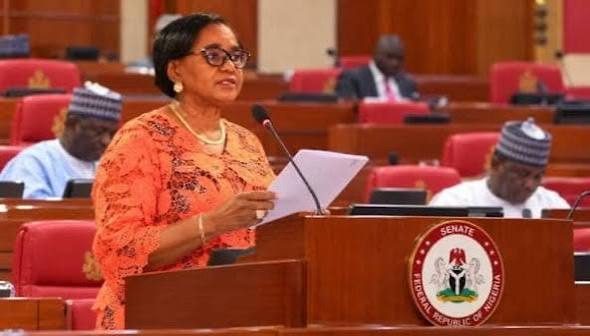
The Bill, titled “A Bill for an Act to Amend the Federal Universities of Agriculture Act, Cap. F22, Laws of the Federation of Nigeria, 2024” was sponsored by Senator Ipalibo Harry Banigo representing Rivers West Senatorial District.
The bill seeks to amend the existing Federal Universities of Agriculture Act to provide for the establishment of the proposed institution in Emughan community in Rivers State.
The passage of the bill by the Senate marks a significant legislative milestone towards the establishment of the proposed university.
When established, the institution is expected to expand access to higher education, promote agricultural research and innovation, develop skilled manpower, and contribute to the economic growth of Rivers State and Nigeria at large.
According to a statement made available to The Tide, the bill, having passed the Third Reading in the Senate, will now proceed to the House of Representatives for concurrence as part of the legislative process towards its enactment into law.
The bill underscores Senator Banigo’s commitment to advancing educational opportunities and strengthening agricultural development in Rivers State.
By: Kevin Nengia
-
 Education1 day ago
FCE Yola Graduates 3,555 Teachers , Seeks Upgrade to University
-

 Sports1 day ago
Nigerian Trio Target Titles At PFL Africa Finals
-
 Niger Delta1 day ago
Diri Restates Stance On Lagos-Calabar Coastal Highway
-
 Niger Delta1 day ago
C’River, NUJ Pay Tribute To Late Guardian Editor
-
 News1 day ago
NDLEA Recovers Tons Of Illicit Drug Consignments In Nine States
-
 Opinion1 day ago
Checking Voter Apathy In Nigeria’s Electoral Process
-
 Politics1 day ago
2027: DICKSON’S EX-ALLY VOWS TO WORK AGAINST NDC INTEREST IN BAYELSA
-
 Politics1 day ago
2027: GROUP PLEDGES 40,000 SUPPORTERS FOR COALITION CANDIDATES IN RIVERS