
News
UNILAG, Three Other Varsities Win £1.9m Research Grant

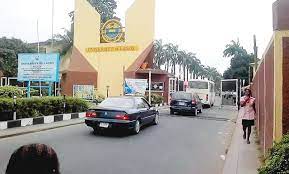
The University of Lagos (UNILAG), alongside two other universities in Africa and one in United Kingdom, have been awarded a research grant worth 1.9 million pounds by the United Kingdom Research Institute (UKRI).
The grant, which is for a three-year research project (2021-2023) and funded by the UKRI, under the UKRI-GCRF ARUA Research Excellence Programme, is also for Addis Ababa University in Ethiopia.
Others are Makerere University Uganda and University of Sheffield, UK, as collaborating institutions.
The universities are expected to support in building research capacities at some other young participating African universities such as Hawassa in Ethiopia, Gulu in Uganda, as well as the University of Jos.
The Vice Chancellor of UNILAG, Prof. Oluwatoyin Ogundipe, disclosed this in his address at a virtual/physical National Inception Workshop of the Migration, Urbanisation and Conflict in Africa (MUCA) Research Project on Thursday in Lagos.
The News Agency of Nigeria (NAN) reports that the workshop, with the theme: Migration, Urbanisation and Conflict in Africa; Toward Peaceful Urban Futures (MUCA), was hosted by UNILAG’s Centre for Housing and Sustainable Development.
Ogundipe who was represented by the institution’s Deputy Vice Chancellor, Research and Academics, Prof. Oluwole Familoni, said that the ARUA Centre of Excellence for Urbanisation and Habitable Cities had a mandate to scale up applied urban research and practice in Africa.
He said that it was also to work toward achieving the Sustainable Development Goals (SDGs).
According to him, the research grant is one of six awarded under the UKRI-GCRF African Universities Research Alliance (ARUA) Research Excellence programme.
He said that it was also one of the several research projects targeted at UNILAG, in fostering stronger research and development partnerships for the actualisation of the SDGs.
The don noted that the research project would focus on unraveling the complexities surrounding migration and urbanisation in Africa, the attendant conflicts and finally chart the pathway to peaceful urban futures.
“This workshop, in kicking off the research, seeks to co-create the sustainable pathway to peace in our cities with stakeholders such as ourselves, private practitioners, policy makers, international development agencies and others.
“The future of African cities cannot be determined outside science policy engagement.
“Effective development strategies cannot be developed without the contributions of knowledge institutions.
“Providing the evidence base for targeted policies and actions in peace keeping, peace making and peace building in Nigerian cities is a game changer.
“The University of Lagos and all other partner universities in this MUCA project bring that expertise as subject specialists and bridge builders for a more sustainable future.
“Let me reiterate here that this project fits neatly within the internationalisation mandate of this university.
“Our faculty members are once again showing our strength and expertise in research and our capacity to collaborate effectively with other universities internationally, to jointly undertake ground-breaking multidisciplinary research aimed at improving our societies,” he stated.
The keynote speaker, Prof. Isaac Albert, pioneer Dean, Faculty of Multidisciplinary Studies, University of Ibadan, said there was an urgent need for universities across the continent to collaborate and step up efforts, in finding lasting solutions to all societal challenges.
According to him, city managers are already overwhelmed by these challenges that come with migration and conflicts especially.
“City managers are trained to manage problems but researchers have a better understanding on how to tackle most of these problems.
“When city managers, scholars, policy makers and industry collaborate, they end up establishing structures that would produce more sustainable management of the urban challenges,” he stated.
The professor of African History, Peace and Conflict Studies added that universities must remain production relevant as well as link up with industries in their quest to research and proffer solutions.
Prof. Timothy Nubi, Director, Centre for Housing and Sustainable Development in UNILAG, expressed joy over the research grant, noting that the development was a challenge to do more.
He noted that the centre would continue to engage in active collaboration, research and practice with the Federal and State Government agencies, NGOs and other critical stakeholders.
“We are indeed very happy to be part of this.
“The grant is essentially to look into issues of migration, urbanisation and conflict in Africa.
“It is huge, most of our institutions in Africa have not up till now, recognised the importance of research and the connection into development.
“When we look around, you will discover that one of the challenges facing us today is that of urban migration.
“This is especially, for economic reason, as well as migration as a result of conflict (displacement) and this is in the highest volume.
“The joy in the grant is that we are working not only as a university, but in collaboration with practitioners, communities, state government and we believe that if we co-produce solution, we are not going to market it to them, because it is a joint effort,” he said.
Prof. Taibat Lawanson, co-director of the centre, said the project would cover Nigerian cities such as Lagos, Lokoja and Jos.
According to Lawanson who is also a co-investigator and Project Lead, Nigeria, it also covers some cities in Ethiopia and Uganda, essentially to look at drivers of conflicts, particularly those caused by migration, driven by mega urbanisation, as in the case of Lagos.
“We shall also look at the ones driven by industrialisation, as in the case of Hawassa in Ethiopia, and Lokoja, Obajana, in Nigeria, and that driven by perennial conflict as it is in the case of Jos, also in Nigeria,” he said.



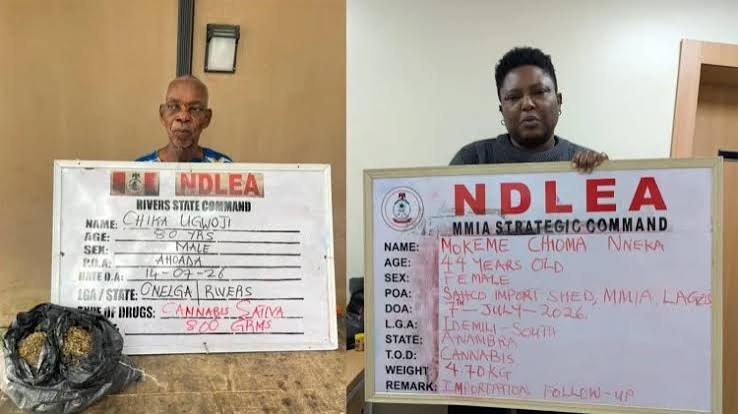
The agency also arrested an 80-year-old suspected drug dealer in Rivers State, a businesswoman linked to cannabis shipments from Canada, a Chadian woman, a couple and other suspects in coordinated operations across Lagos, Edo, Kogi and Rivers states.
The NDLEA’s Director of Media and Advocacy, Femi Babafemi, disclosed this in a statement, yesterday.
According to the statement, the latest intelligence-led operation came barely one week after NDLEA operatives recovered 558,900 pills of tramadol concealed in the false-bottom compartment of a truck that entered Lagos through the Togo-Benin Republic route.
Babafemi said, “Ongoing efforts to dismantle a transnational drug trafficking syndicate smuggling tramadol from Togo, through Benin Republic into Nigeria have yielded another success with the interception of two long trailers used to move One Million Six Hundred and Thirty (1,630,000) pills of tramadol 250mg concealed in fabricated compartments of the trucks across multiple borders into Lagos.”
He added that one of the two trailers was intercepted on July 2 along the Lagos-Ibadan Expressway, where operatives recovered 853,000 pills of tramadol 250mg concealed in a fabricated compartment beneath the cargo floor.
Babafemi said, “One of the two trucks already heading to Kano was tracked and located on 2nd July 2026 along the Lagos-Ibadan Expressway where NDLEA officers recovered 853,000 pills of tramadol 250mg concealed in a fabricated compartment beneath the cargo floor of the trailer and arrested the 22-year-old driver Jabir Kabiru.”
He further disclosed that another trailer was intercepted two days later on the same route.
“Two days later, 4th July, NDLEA operatives acting on processed intelligence successfully tracked and recovered the second trailer from the Lagos-Ibadan Expressway while heading to Kano. A total of 777,000 pills of tramadol 250mg concealed in a fabricated compartment beneath the cargo floor of the truck were evacuated and the 22-year-old driver Muhammed Nuhu arrested,” the statement read.
According to Babafemi, investigations established a link between the three intercepted consignments.
He said, “Investigations revealed that all three trucks and consignments intercepted on 21st June, 2nd July and 4th July belong to the same transnational drug trafficking syndicate operating along the Togo-Benin Republic-Nigeria axis.”
The agency also intercepted 4.70 kilograms of Canadian Loud, a synthetic strain of cannabis, at the import shed of the Murtala Muhammed International Airport, Ikeja, Lagos.
Babafemi said, “Two consignments of Canadian Loud, a synthetic strain of cannabis, with a combined weight of 4.70 kilograms have been intercepted at the import shed of the Murtala Muhammed International Airport (MMIA), Ikeja, Lagos. The cargoes, which arrived the Lagos airport from Canada in cartons with ‘Odugwu’ boldly written on them, came aboard British Airways and Ethiopian Airlines flights on 24th June and 3rd July respectively.”
He said two cargo agents, Ali Rotimi Samson and Orimolade Oluwagbenga, were initially arrested in connection with the shipments, while another suspect, Edeh Onyeamachi Stanislus, was apprehended after arriving at a logistics company to take delivery of the consignments.

The ministry, in a public notice posted on its official X handle, yesterday, described messages, links and websites advertising the alleged programme as fraudulent.
It urged Nigerians to disregard such claims and verify information only through official government channels.
“The Federal Ministry of Humanitarian Affairs and Poverty Reduction has NOT commenced registration for any ?50,000 National Support Allowance,” the ministry said.
It added, “Disregard fraudulent messages, links and websites claiming otherwise. Verify any info only through official govt channels.”
The alert is in response to a circulating scam flyer that falsely claims the program is ongoing under President Bola Tinubu’s directives.
The fake advertisement, which includes text in Hausa and English, directs victims to a suspicious website (kluspz.com) for applications.
The ministry’s warning comes amid heightened concerns over digital fraud targeting vulnerable populations seeking social support.
Similar scams have previously surfaced around programs like N-Power, prompting questions from citizens in replies to the official post.
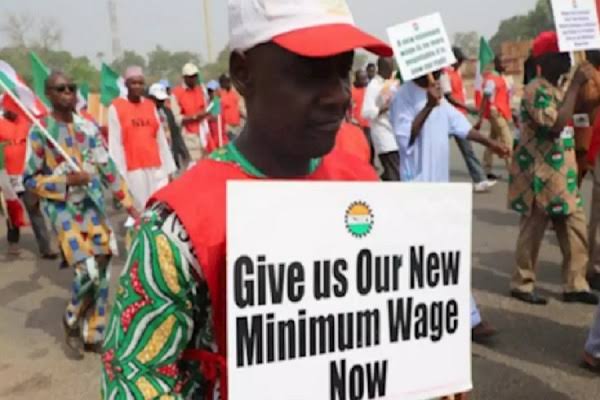
NLC President, Comrade Joe Ajaero, hinted at this while making his remarks at the commissioning of the Comrade Godwin Abumisi Pensioners Legacy House and Multipurpose Hall in Abuja.
Ajaero said it is no longer acceptable to discuss the welfare of workers without also discussing the welfare of those who have completed their active years of service.
He advised workers and pensioners to get prepared for the ideological and economic battles that lie ahead.
According to the NLC president, “The Nigeria Union of Pensioners (NUP) is one of the proud affiliates of the Nigeria Labour Congress. Therefore, your struggle is our struggle, and your welfare remains a priority for the organised labour movement.
“We are currently in the preparatory stages for a major national struggle for a comprehensive review of the national minimum wage.
“However, let me state unequivocally that it is no longer acceptable to discuss the welfare of workers without also discussing the welfare of those who have completed their active years of service.
“Accordingly, the Nigeria Labour Congress will not only push for a new national minimum wage but will also demand the establishment of a national minimum pension. It is a historical injustice that men and women who devoted their youth, strength and productive years to the service of this nation should be condemned to live below the poverty line after retirement.”
Ajaero noted that the cost of living has risen astronomically as food, healthcare and transportation have become increasingly unaffordable.
“We cannot continue to allow our senior citizens to survive on pensions that have become poverty wages. Every retiree deserves to live with dignity after decades of faithful service to the nation,” he said.
He urged pensioners across the country to remain united and prepared as the process begins, adding: “This Legacy House should not merely be seen as a physical structure; it should become a centre for mobilisation, strategic engagement and solidarity as we prepare for the struggles ahead.”
The NLC president pointed out that the working class has always understood that “those who exploit workers are united in advancing their interests. We too must remain united in defending our collective interests and ensuring that government fulfils its obligations to both serving workers and retirees.”
He urged pensioners across the country to remain united and prepared as the process begins, adding: “This Legacy House should not merely be seen as a physical structure; it should become a centre for mobilisation, strategic engagement and solidarity as we prepare for the struggles ahead.”
The NLC president pointed out that the working class has always understood that “those who exploit workers are united in advancing their interests. We too must remain united in defending our collective interests and ensuring that government fulfils its obligations to both serving workers and retirees.”
He said the completion of the project should serve as a clarion call to all workers and lovers of the masses.
“We must not only build physical structures but also build a strong movement capable of compelling government to honour its commitments,” he said.
Ajaero further stated: “We will continue to demand the immediate payment of all outstanding pension arrears and the implementation of a pension regime that guarantees every retiree a life of dignity and security.
“Together, we shall continue to fight until every Nigerian worker and pensioner receives the justice, respect and welfare they deserve.”
-

 News4 days ago
Rivers NUJ Seeks Recruitment Into State Media Houses …Urges Govt To Reposition Public Service
-

 News4 days ago
Family Seeks Police Help As Woman Goes Missing After Fleeing Female Circumcision Threat
-
 News4 days ago
NDLEA Intercepts 1.63m Tramadol Pills, Arrests 80-Year-Old Suspect
-
 Oil & Energy4 days ago
Abia Secures $145m Investment Commitment To Establish Solar Manufacturing Plant
-
 Oil & Energy4 days ago
NCDMB Partner Renaissance To Train 300 Youths On oil, gas Skills
-
 News4 days ago
Nigeria Hosts World Public Relations Forum Sept …As Experts Seek Inclusion Of PR In Decision Making
-

 News4 days ago
FG Alerts Nigerians Of N50,000 Allowance Registration Scam
-

 News4 days ago
Spain Are World Champions ….. End Argentina, Messi’s Dreams