
Opinion
Leakages In Nigeria’s Economy

During his tenure as Nigeria’s head of state, retired General Ibrahim Babangida confessed that he was surprised why the Nigerian economy had not collapsed, with all the bashing and buffeting from various quarters. What the retired General did not tell us or express any surprise about was what roles the military played in the precarious state of the nation’s economy during his tenure. Anyone who has read Major-General Jibril Musa Sarki’s work: Born to Rule (1999), would appreciate the roles of the military in Nigeria’s current state of affairs.
While recriminations and pointing of fingers would not take us anywhere, it is needful that on-going leakages and profligacies in the Nigerian economy be examined with honesty. We should also remind ourselves of Oliver Goldsmith’s prophetic poem: “Ill fares the land, to hastening ill, a prey, where wealth accumulates but men decay”. Perhaps, it is too late to remind ourselves of our wrong doings and negligences of the past, because we are not predisposed to doing anything to correct them.
It would be unnecessary to remind ourselves that Nigeria has worn the sad tag of corruption, but what is needful would be to examine the subtle ways that it is practised. Corruption goes beyond taking and giving bribes to get things done or to escape justice. Rather, corruption would include taking undue advantage of the trust, confidence, ignorance, docility and loop-holes of the masses and the social system, to cheat by those who manage the affairs of the nation. Leadership is a trust and those who abuse such trust lack integrity necessary for leadership. Must leadership be synonymous with cunning?
It is corruption and failed leadership where those who lead the masses would grow pot-belly through gourmandism while the masses grow lean and die because of starvation and unemployment. Crime rate increases where the masses are impoverished, with no alternative means of earning a legitimate living.
So much had been said and heard about looting and plundering of the nation’s wealth by various clever people, which was why General Babangida expressed surprise at the resilience of the economy. Of all heads of state, it was late General Sani Abacha who was called a looter while others are innocent patriots. Even the loots said to have been recovered end up being relooted by some smart alecks and smooth operators. Surely, only a small fraction of the plunderers and looters of the nation’s wealth come to light or get penalised. There is also the politics of plea-bargaining and joining the party in power to have a clean slate.
The milk-cow providing the enormous wealth fit to be plundered and looted, oil and gas resources of the Niger Delta, also run into the lair of Ali Baba. Thanks to Land Use Act and the Petroleum Industry Act (PIA), the people of Niger Delta can be content with sharing 3% annual allocation of oil profit with other communities where oil pipelines pass through. Who would say that oil pipelines, as well as the oil and gas industry, are not clever sources of economic leakages in Nigeria? Are such leakages not facilitated by some technical and legal jargon and ambiguities too hard for other stakeholders to understand?
Leakages in Nigeria’s economy can be described as haemorhage with regards to profligate spending of public funds on non-profit-yielding foreign travels by state officials. From pilgrimages to medical tours, the ways that funds have been lavishly spent in the past have not been fair to the declining state of the nation’s economy. What can be quite annoying in this regard is the lip service we pay to the concept of patriotism and accountability, whereby those supposed to manage the affairs of the nation with utmost prudence become hypocritical.
Even more annoying is the attitude of political office holders in not showing genuine concern over the state of the nation’s economy, if we use the current exchange rate of the Naira as a measure. When Chrysler, a leading American company, was close to bankruptcy in 1980, chief executive of that company, Lee Iacoca, among other measures, reduced his salary and allowances by 90% as a sacrifice to save the company. Iacoca did not feed fat or engage in foreign travels when his company was in crisis.
Here in Nigeria, Babangida as a military President, introduced a similar sacrifice to save the Nigerian economy. He declared a 20% cut in his salary and those of state governors under his regime, but average Nigerians knew that the measure was a window-dressing. Today, there is Ibrahim Badamasi Babangida University (IBBUL) in Lapai, Niger State, asking for increment of tuition fees. Neither is Babangida alone in the ownership of private universities. Yet, Nigeria ranks as second poorest in food affordability, according to UK-based Institute of Development Studies.
Next to profligate and unmerciful squandering of public funds is the scandalous and unjustifiable remunerations packaged for political office holders by the out-gone military regime (1999). According to the Academic Staff Union of Universities (ASUU), a Nigerian senator earns four times the salary of the President of the United States of America. Senator Shehu Sani disclosed that each senator gets N13.5 million monthly as running cost and N700,000 as salary, while there are several other allowances, plus N200 million as constituency allowance.
Then comes tax evasion and frauds by which the Nigerian nation loses enormous revenue annually. There are available research documents in various university libraries and archives, revealing clever ways that corporate tax evasions and frauds take place, such that even forensic auditors can be hood winked and out-witted. If the above listed sources of leakages and several others that we know little about are blocked, Nigeria may not go borrowing money here and there, as if we are a poor nation.
Honest and patriotic Nigerians are alarmed and uncomfortable about current borrowings and rising debt profile which place the future of this nation in a precarious position. What have we done with loots said to have been recovered over the years and what are we doing with the money being borrowed here and there? Perhaps, building of rail lines and feeding of school children take huge chunk of borrowed money and recovered loots. Meanwhile, the image of Nigeria and the current regime demand serious attention, with reference to pensions for governors, etc.
By: Bright Amirize
Dr Amirize is a retired lecturer from the Rivers State University, Port Harcourt.



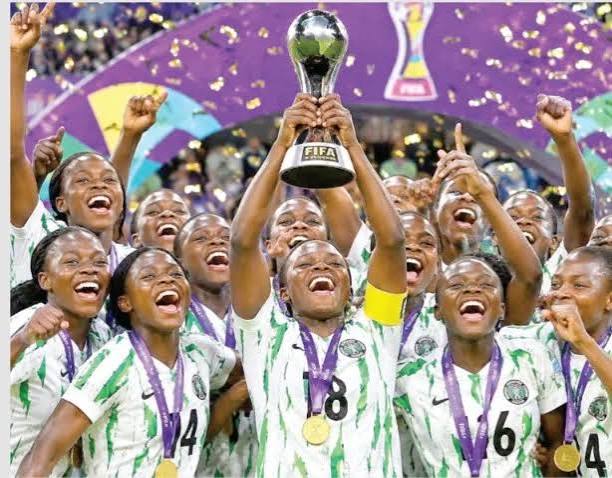
Quote: “The Flamingos have conquered the world; Nigeria must now rise to its responsibility of nurturing the next generation of champions.”
Sometimes, sporting victories
More significantly, they
Umejiaku deserves special
Umejiaku received the award
Nigeria has now broken into
For too long, young girls in
But beyond the reward, this
As Nigerians celebrate this
By; Calista Ezeaku
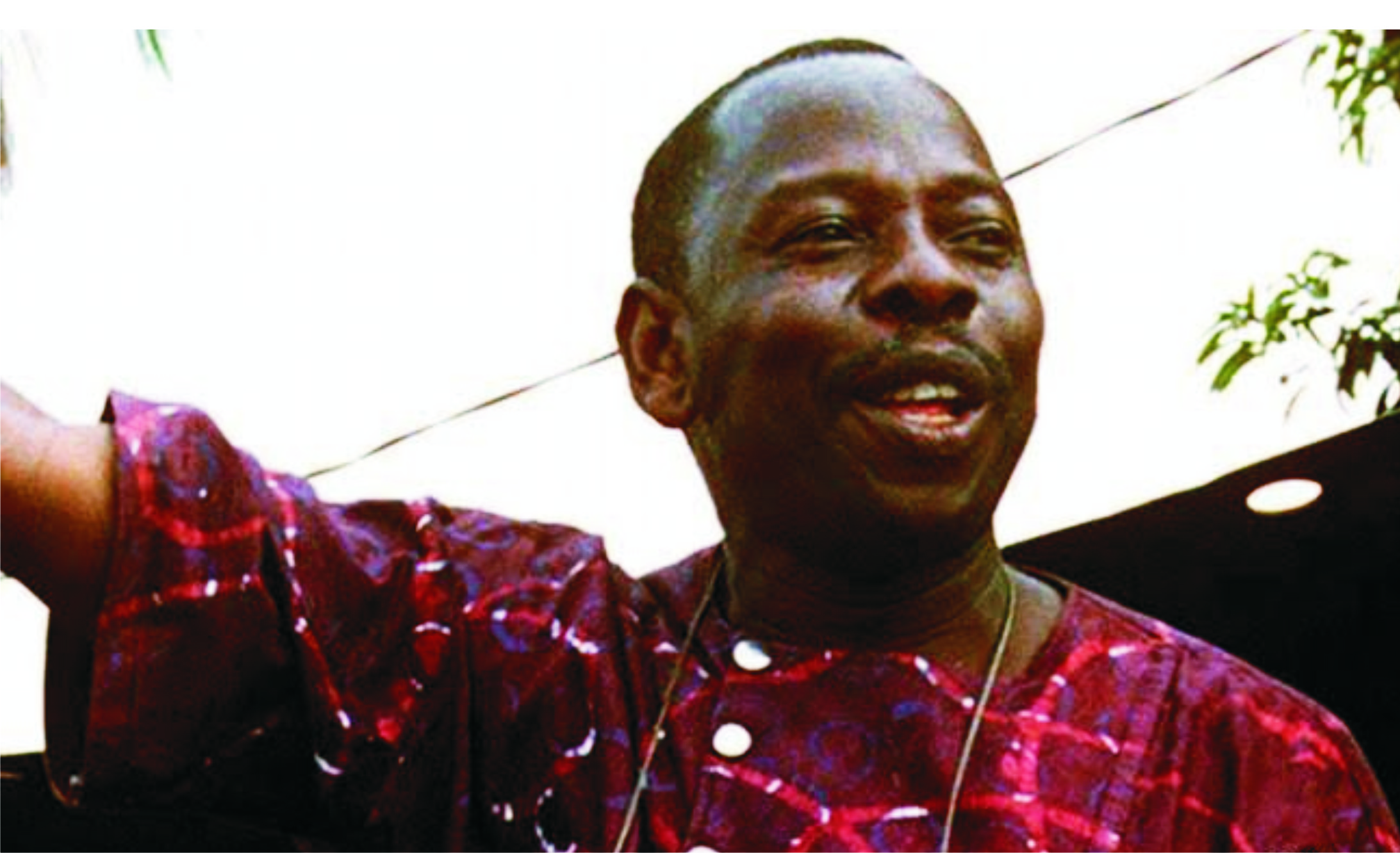
Nonetheless, he believed the suffering of the Ogoni people demanded a courageous response. While oil was extracted from their land, they were left with polluted rivers, damaged farmland, declining livelihoods and an environment hostile to human survival. Fishing grounds and sources of livelihood were threatened, while the people struggled to secure basic amenities. The wealth beneath their soil brought neither adequate development nor a fair share of national resources. For him, silence in the face of injustice would have amounted to complicity. Through the Movement for the Survival of the Ogoni People (MOSOP), he organised a peaceful campaign that took the Ogoni question to the international community. MOSOP gave ordinary people an organised platform through which to express their grievances and insist on recognition.
The Ogoni Bill of Rights, presented to the Federal Government in 1990, demanded political autonomy, economic justice, environmental protection and control over the people’s resources. The campaign exposed the human and ecological costs of oil operations, particularly those associated with Shell, and challenged the apparent alliance between corporate interests and an unresponsive State. The Ogoni struggle became a defining expression of minority rights and environmental justice in Nigeria and Africa. Saro-Wiwa’s writings and mobilisation drew attention to communities treated as expendable because of their limited population and political influence. He argued that numerical strength should never determine a people’s value or rights.
A minority community does not become less deserving of justice because it cannot command electoral numbers or political power. In Nigeria, every ethnic group deserves dignity, protection and a fair opportunity to benefit from the commonwealth. Rather than respond to peaceful agitation with dialogue, the Abacha regime resorted to repression. Ogoni leaders were harassed, detained and killed; others fled into exile. The crisis intensified after four Ogoni chiefs were killed in May 1994. Saro-Wiwa and other MOSOP leaders were arrested, tried by a special tribunal and executed despite international appeals for clemency and serious concerns about the trial’s fairness. The executions drew worldwide condemnation and intensified scrutiny of Nigeria’s human-rights record and oil companies in the Niger Delta.
They demonstrated the danger of using State institutions to suppress peaceful demands. The proceedings remain a reminder of the need for judicial independence and due process. Saro-Wiwa’s courage rested on the conviction that justice must be pursued despite the cost. His method combined non-violent resistance, public education and grassroots organisation. His struggle recalled the civil-rights campaign of Martin Luther King Jr. and the power of peaceful mobilisation against injustice. Saro-Wiwa linked environmental degradation to political exclusion, economic exploitation and the denial of democratic rights. Oil-producing communities, he insisted, should not remain zones from which wealth is removed to develop other parts of the country.
Their people must benefit through roads, schools, healthcare, jobs and clean water. Resource extraction carries a duty to protect host communities. His argument extended to the structure of the Nigerian federation. He challenged a revenue-allocation system that made oil-producing communities bear the environmental and social costs of extraction without commensurate benefits. Like advocates of fiscal federalism, he believed resources should be managed and shared equitably. He envisaged a society in which no community would be disadvantaged by its size, ethnicity, political affiliation, culture or religion. His vision was a country bound together by justice and equal citizenship. Saro-Wiwa was also a gifted writer, dramatist and public intellectual.
Through books, essays, plays and television, he documented Nigerian society’s contradictions and challenged abuses of power. His popular television series, Basi and Company, demonstrated his creative range, while his leadership of the Association of Nigerian Authors encouraged writers to engage national questions. He believed literature should not be detached from society’s struggles. His pen exposed environmental injustice, political repression and the dangers of silencing courageous voices. He used storytelling, satire and drama to shape public consciousness and expose social contradictions. His literary achievements gave his activism wider reach and made the Ogoni experience part of national conversation. His commitment to the Ogoni people extended beyond the oil question.
During the Civil War, he worked to protect his vulnerable community. He urged younger generations to reject subservience and complacency and pursue change through lawful, peaceful means. Citizens, he believed, must not surrender their responsibility to challenge wrong doing. An injury to one community threatens the rights and security of all. The return to democratic government in 1999 and the establishment of the Niger Delta Development Commission, the Ministry of Niger Delta Affairs and the Hydrocarbon Pollution Remediation Project (HYPREP) are among developments that have kept the region’s demands in public view. Saro-Wiwa did not create these institutions, but his movement helped expose the urgency of intervention and sustain pressure for redress.
His death made it harder to ignore the Niger Delta’s environmental and political grievances. Yet, interventionist institutions do not prove that the original demands have been met. Their effectiveness depends on competent leadership, transparent spending, measurable outcomes and community participation. Yet, thirty-one years after his execution, the central concerns of the Ogoni struggle remain unresolved. The HYPREP-led clean-up has offered hope, but many residents await meaningful improvements. Questions persist about the programme’s pace, quality and transparency, and whether its benefits reach ordinary people. A clean-up should be judged not by ceremonies or contracts, but by restored land and waterways, safe drinking water, improved livelihoods and better public health.
It must include long-term monitoring to ensure treated sites remain safe. Residents deserve information about contamination, remediation methods and completion timelines. Reports that water projects in Gwara and Ebubu Communities, in Khana and Eleme Local Government Areas respectively, failed weeks after commissioning have raised further concerns. If confirmed, the failures would indicate weaknesses in supervision, procurement and quality control.
To be continued in our next edition.
Taneh Beemene
-
Business4 days ago
BSG Partiner American Coy To Invest $100m In Gas Processing
-

 Oil & Energy4 days ago
FG To Double Oil, Gas Reserves, Moves To Intensified fresh Exploration
-
Business4 days ago
Seme Customs Intercepts Live Pacific Ridley Sea Turtle
-
Sports4 days ago
Fernandes Turns Down Man Utd Offer
-
Business4 days ago
159m small businesses registered on database in three years – SMEDAN boss
-
Sports4 days ago
Rivers To Host National Table Tennis Championship
-
Maritime4 days ago
Nimasa,China MSA Sign Bilateral Maritime Agreement
-

 Sports4 days ago
Kenyans Win PH International Marathon, Cart Home $10,000