
Nation
Insecurity: Experts Call For Community Policing

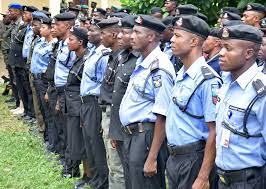
Security experts at a virtual meeting organised by the Nigeria Diaspora Network (NDN), United Kingdom (UK) chapter, have said that a well coordinated community policing system would address the present security challenge in Nigeria.
Some of the participants, who spoke at the meeting monitored in Abuja, stressed that all hands must be on deck to check security problems.
The title of the meeting was: “Security Challenges and Community Policing.”
A security expert in Global Community Policing, Dr Aminu Audu, was optimistic that if adopted in line with international best practice, community policing would work in the country.
Audu, who authored a publication titled: “Police Corruption and Community Policing in Nigeria: A Sociological Case Study,” said the issue of insecurity was not a new thing in the country.
“What we are seeing today is a product of series of activities that have transpired in the past. So it is a build up,” he said.
He said though there is insecurity in Nigeria, the way forward is community policing.
“According to Freeman in 1992, community policing is about policy and strategy to achieve more effective crime control, reduce fear of crime, improve quality of life, improve police services and police legitimacy through proactive reliance on community resources that seeks to change crime causing conditions,” he said.
He stated further that community policing would ensure the need for greater accountability of police, greater public share in decision making and greater concern for civil rights and liberty.
Audu said it was disheartening that when talking about community policing, “what comes to our minds is about forming vigilante group and arming them with weapons for them to begin to delve into prejudicial killings and manhandling of crime suspects.
The expert, who acknowledged the influence of foreign factor in the security challenge, said community policing would not be a success if the problem of poverty and other factors were not addressed.
He also said over the years, community policing had not worked effectively in the country because there has been a wide communication gap between the community and the security providers.
He urged people to desist from politicising the initiative.
Audu, however, commended President Muhammadu Buhari for his support for community policing.
“I really commend President Buhari for taking the step to implement community policing with a funding investment to the tune of about 26 million pounce.
“But how many governors or local government chairmen have taken it upon themselves to implement these policies according to specification?” he asked.
The National Economic Council (NEC) had in a virtual meeting chaired by Vice-President Yemi Osinbajo had, on Aug. 20, 2020, approved the sum of N13.3 billion for the take-off of community policing initiative across the country.
“I am happy that the Federal Government is implementing based on empirical research. Now at the moment, they are undergoing process,” Audu said.
A Preventive Terrorism Consultant, Mr Temitope Olodo, said all the stakeholders should be ready to take it seriously if community policing would work.
He said the system was the easiest way of policing but corruption had been the bane.
He said people had to own community policing to work.
“Community policing is all about people telling the authority what the security needs are and channelling the effort and resources to those areas to tackle them,” he added.
He also said to solve the problem, the country needed to look at the past and how we got to this present position.
According to Olodo, in Nigeria, we are not policing by consent, we are policing by force.
“If we police by consent, a lot of things that are happening in Nigeria will not be happening. I think that is where we have got it wrong,” he said.
Olodo, who is the president, African Security Forum and a retired Metropolitan police officer in the UK, enjoined the Federal Government to introduce a system of Key Performance Indicator (KPI) to measure the performance of all security officers in the country.
“We need practical changes that we can turn around and say, this is the change that we want.
“I was a former civil servant. If you ask me today, I have never seen the job description of IGP (inspector-general of police) and I am not making it personal.
“I don’t know what kind of KPI he is being measured against but I can tell you that we know the KPI of commissioner of police for the Metropolitan Police, we know the one for New York, Australia, etc.
“We know how police are being measured.
I was once a constable and I have KPI.
“When I was leaving the Metropolitan Police on secondment, I was measured on KPI.
“They brought out my KPI and that was the basis upon which if I am entitled to other benefits, in terms of my salary going up.
“But I don’t know what KPIs are for the Nigerian Police. If there is no KPI, what do you measure them against?” he asked.
Olodo explained that if there is no KPI, security officers’ performance indicators would not be proportionate to their work done.
A Cyber Security Professional, Mr Deji Adebayo, who is one of the NDN coordinators in the UK, said the meeting was organised as part of the effort by Nigerians living abroad to see how the security challenge could be solved towards creating a better and secured society for the country.

Nation
Rumuaholu Community Denies Land Grabbing Allegations, Accuses Obio/Akpor Chairman of Interference in Land Dispute


The Rivers State Commissioner for Education, Dr. Peters Nwagor, has commended the orderly conduct of the ongoing 2026 West African Senior School Certificate Examination in the state and urged schools to sustain the standard.
Dr. Nwagor gave the commendation on Tuesday during a monitoring tour of selected secondary schools in Port Harcourt and environs where the WAEC exam is ongoing.
The commissioner, who was accompanied by directors and monitors from the Ministry of Education, said he was impressed with the peaceful atmosphere at the centres visited.
“The students conducted themselves properly and wrote their papers under conducive conditions. Invigilators and supervisors also performed their duties professionally,” he stated.

Nwagor noted that the Rivers State Government had invested heavily to ensure the smooth and credible conduct of the examination across the state
He urged candidates to reciprocate government’s effort by shunning all forms of examination malpractice and focusing on their studies.
“Government has done so much to ensure successful examinations in our schools. Students should take advantage of it by remaining focused,” the commissioner said.
While no case of malpractice was recorded in the centres inspected, Dr. Nwagor warned that any principal, teacher, invigilator, or official caught aiding malpractice would face strict sanctions in line with regulations.
He also commended school administrators, teachers, WAEC officials, and security personnel for upholding the integrity of the process.
Centres visited included County Grammar School, Ikwerre/Etche; Government Comprehensive Secondary School, Borokiri; Government Secondary School, Borokiri; and Pabod Model Secondary School.
-

 Niger Delta2 days ago
Warri Airport Manager Disputes Air Peace Bird Strike Claim
-

 News2 days ago
Nigeria Won’t Surrender Any Territory To Criminals -Tinubu
-

 News2 days ago
FG Begins Trial Of Over 600 Terrorism Suspects
-

 Rivers2 days ago
79th IAUE Inaugural Lecture: Prof Anero Advoctes Tuition-Free Education For Children
-

 Politics2 days ago
Parties’ Deregistration: How Justice Lifu Overruled Appeal Court Justices
-

 News2 days ago
Rivers Judges Commence Annual Vacation, July 20
-

 Politics2 days ago
ADC: Okonkwo Rejects Amaechi As Presidential Running Mate, Withdraws Support
-

 Politics2 days ago
2027: Tinubu’s Projects Give APC Edge In South East – Yilwatda