
Nation
CVR: INEC Urges CSOs To Sensitise Nigerians

The Independent National Electoral Commission (INEC) has appealed to civil society organisations (CSOs) to sensitise Nigerians on the ongoing Continuous Voters Registration (CVR).
INEC Resident Electoral Commissioner in Lagos State, Sam Olumekun, made the plea yesterday at a workshop for CSOs organised in partnership with African Youths Initiative on Crime Prevention (AYICRIP) in Lagos.
The Tide source reports that the one-day workshop focused on Role of Civil Society Organisations and the Youth in the Mobilisation of Citizens for Electoral Participation and Education.
The workshop, themed, “The Fight Against Electoral Violence and Voter Apathy: The Role of Civil Society Organisations”, was organised in commemoration of the United Nations International Youth Day 2021.
Olumekun, who was represented by Mr James Popoola, INEC Administrative Secretary, urged the CSOs to be at the vanguard of voter education and sensitisation to curb voter apathy and deepen democracy.
The REC said that the workshop was held at an auspicious time when INEC had commenced the dual CVR online and physical registration exercise.
He commended AYICRIP for being a worthy partner with the commission in sensitisation of voters, adding that INEC also partnered the group for the door-to-door sensitisation of voters in preparation for the 2019 General Elections.
“As partners in progress, you assist through your various platforms to encourage more Nigerians who are able to use the online portal for their pre-registration to do so in order to reduce congestion at the state and local government offices of the commission.
“As representatives of various Civil Society Organisations, you will no doubt play a crucial role in sensitising the people, not only on how to register, but on how to imbibe voter education and electoral information.
“INEC cannot do it alone, we therefore enjoin other relevant stakeholders in their own way to be vanguard of voter education.
“They should help to spread the electoral knowledge to others,” he said.
According to him, CVR exercise is only for those who are 18 years and above and have not registered previously.
He added that the exercise was also for registered voters who had had any problem during accreditation in any past election with either the Permanent Voters Cards or their fingerprints not being read by the Smart Card Reader.
He added that registered voters who wanted to transfer their voting location from one place to another could also used the CVR window.
The INEC boss said that registered voters who wanted to correct issues with their data, such as misspelt names, dates of birth and others, and those whose PVCs had been lost or damaged could use the window.
Speaking, Mr Waheed Ishola, Director, National Orientation Agency (NOA) in Lagos State, said that INEC had been doing its own bit on voter education in collaboration with NOA and other critical stakeholders.
Ishola said: “It behoves on our youths who have always been complaining of being left out of the decision making process to now take it upon themselves to get registered and take part in electoral process.”
Commenting, Mr Nelson Ekujumi, from the Committee for the Protection of People’s Mandate, said that the event was to enlighten Nigerians as well as to educate other CSOs on their roles to the society in engendering active citizens participation in elections.
Ekujumi added that the workshop was aimed at mitigating electoral violence, urging CSOs to swing into action towards addressing “the issues of voter apathy that has bedeviled elections in recent past”.
Earlier, Amb. Christogonus Ibe, Founder/Executive Director, AYICRIP, said that citizens had roles in the fight against electoral violence and voter apathy as well as other forms of challenges and vices in the electoral system.
Ibe, who noted that though the world was marking the International Youth Day, the CSOs considered electoral system the nation’s greatest problem because had thrown up bad leaders.
According to him, when the nation has a reformed electoral system and informed citizens, leaders that understand the plights of the citizens will emerge to tackle all other issues facing the masses.
He said that the group had monitored the ongoing CVR and discovered the lackadaisical attitude of most Nigerian youths, thereby disenfranchising themselves.
Ibe said: “It is incumbent on all of us if we claim we are representatives of the people and voices of the people. Most of us are resting on our oars.
“It is time we came out of our comfort zones and start talking to the people, the need for them to register in the ongoing CVR, be equipped and be armed with their voter card because that is their strength.
“World over, the process of registration actually determines the outcomes of elections, not the votes itself. If citizens don’t register to vote, they will not have the right of opportunity to cast their votes.”
He urged CSOs to go back to churches, mosques, markets, streets, community, religious and professional organisations with economy-friendly programmes of sensitisation, saying that most Nigerians were no longer interested in the electoral system.
Mrs Briana Olson, Political/ Economic Officer at U.S. Consulate General in Lagos, commended the CSOs’ role in electoral process, particularly in preventing electoral violence, voter apathy and engaging citizens.
She said that US shared a common interest with Nigeria in conducting peaceful, transparent and fair elections, which made Nigeria stronger and a more reliable partner of U.S.
She said that CSOs had a lot of roles to play including keeping voters engaged, increasing the participation of voters, monitoring election results as well as electoral malpractices.



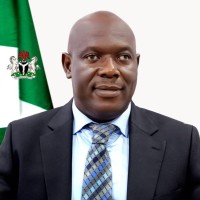
In a statement signed by the Project Coordinator, Prof Nenibarini Zabbey, to commemorate the anniversary, HYPREP described the anniversary as a significant milestone in Nigeria’s environmental restoration efforts, noting that the project has made remarkable progress in implementing the recommendations of the landmark UNEP report released on August 4, 2011.
The UNEP report had revealed extensive oil pollution across Ogoniland, severe environmental degradation, and serious public health risks resulting from decades of petroleum operations. It also recommended an initial $1 billion fund to commence the cleanup of the affected communities.
According to HYPREP, the Federal Government formally launched the Ogoni clean-up in 2016, while the Project Coordination Office was established in 2017 to drive the implementation of UNEP’s recommendations.
Zabbey said the current administration has continued to prioritise the project under the Renewed Hope Agenda.
Providing an update on the cleanup, the Project Coordinator disclosed that 30 of the 65 contaminated sites identified by UNEP have been fully remediated, while work is ongoing at several medium- and high-risk locations. It also stated that more than 1.5 million mangrove seedlings have been planted as part of what it described as the world’s largest restoration of oil-degraded mangroves, with over 1,000 hectares of shoreline already rehabilitated.
Zabbey further revealed that 49 Ogoni communities have been connected to potable water schemes through multiple water projects and booster stations aimed at providing safe drinking water across the region.
In the health sector, he said the 100-bed Ogoni Specialist Hospital in Kpite and the 43-bed Cottage Hospital in Buan are nearing completion, adding that several existing health facilities have been upgraded with modern medical equipment, while five ambulances have been donated to improve emergency healthcare services. The Project Coordinator also disclosed that a three-year human health biomonitoring study is being conducted in collaboration with the World Health Organization’s International Agency for Research on Cancer (IARC).
On economic empowerment, Zabbey stated that the Project has created more than 8,000 direct jobs and trained thousands of Ogoni youths and women in various vocational and technical skills, including software development, cybersecurity, aviation, commercial diving, seafaring, mechatronics, and creative arts. The project also reported awarding scholarships to more than 1,000 students, providing grants to small businesses, and supporting persons living with special needs through skills acquisition programmes.
The statement further highlighted ongoing legacy projects, including the Ogoni Power Project and the Centre of Excellence for Environmental Restoration, which it said is about 96 per cent complete. HYPREP also welcomed the recent designation of the Ogoni Wetland as a Ramsar Site of International Importance and pledged to continue promoting biodiversity conservation and sustainable management of the ecosystem.
Marking the anniversary, Zabbey said the progress achieved over the past 15 years demonstrates the collective commitment of government, development partners, stakeholders, and local communities to restoring Ogoniland. He called for renewed collaboration to sustain the cleanup effort, promote environmental sustainability, and support the long-term development of the region. 3
-

 News2 days ago
RSG Targets Nine Million Residents in Mosquito Net Distribution Campaign
-

 Oil & Energy2 days ago
Aiyedatiwa Signs New Electricity Bill
-

 Oil & Energy2 days ago
NLNG Commissions Research And Innovation Centre In RSU
-

 Maritime2 days ago
Marine Minister Commends President Tinubu On NPERA Bill Assent
-

 News2 days ago
KenPoly Holds Eight Convocations, August 29
-

 News2 days ago
RSG Begins Another Phase of Projects Commissioning Today
-

 News2 days ago
RMAFC Completes Revenue Sharing Review, Proposes New Pay
-

 Maritime2 days ago
NAGAFF Petitions IGP Over Alleged Maritime Police Harassment