
Oil & Energy
Total Hails NCDMB For Local Content Dev In Oil, Gas

Total Exploration and Production Nigeria Limited has commended the Nigerian Content Development and Monitoring Board (NCDMB) for its effort to develop local content in the oil and gas industry.
General Manager- Partners, Authorities and Nigerian Content (GM-PANC), Total E&P Nigeria Limited, Mrs Ivana Akaraiwe, made the commendation last Thursday.
She spoke at the 5th Edition of the Sub-Saharan African International Petroleum Exhibition and Conference.
The Tide gathered that the three-day virtual was organised by the Petroleum Technology Association of Nigeria (PETAN).
Akaraiwe said Total remained committed to development of local capacity and capability in the petroleum sector and had continued to engage indigenous contractors in execution of some of its projects.
She said that some fabrication and engineering works which were hitherto not being executed in Nigeria were now being done in-country through the doggedness of the NCDMB and other stakeholders, including Total.
According to her, the National Content Initiative which is being driven by the Nigerian Content Intervention (NCI) Fund has provided opportunities for many local companies to access funds for project execution.
She said :” Local content has come a long way in Nigeria. There is a great improvement in the country’s capability and capacity.
“All set targets will be met if stakeholders continue to collaborate.”
Akaraiwe said Total would continue to train Nigerian youths to boost their capacity and establish them as entrepreneurs to curb unemployment in the country.
Earlier, Executive Secretary, NCDMB, Mr Simbi Wabote, said the NCI Fund had been expanded from $200 million to $350 million to boost its existing loan products.
Wabote explained that access to funding was key to developing local content and participation in the petroleum industry, adding that the fund was being disbursed by the Bank of Industry and the Afri-Exim Bank.
He said : The fund can be accessed for manufacturing, asset acquisition, contract financing, loan refinancing and community contractor financing.
“We have also added two newly developed loan product types.
“These are the Intervention Fund for Women in Oil and Gas and Petroleum Technology Association of Nigeria (PETAN) products, which include working capital loans and capacity building loans for PETAN member companies.”
Wabote said the NCI Fund was instituted in 2017 to facilitate on-lending to qualified stakeholders in the Nigerian oil and gas industry on five loan product types.
He said the fund was a portion of the Nigerian Content Development Fund (NCDF), aggregated from the one percent deduction from the value of contracts executed in the upstream sector of the oil and gas industry.
On his part, Chairman, PETAN, Mr Nicolas Odinuwe, said the main objective of the association was to ensure that indigenous companies have adequate and commendable participation in the Nigerian oil and gas industry.
Odinuwe said PETAN had been in the forefront of advocating for the development of in-country capacities for oil and gas industry in Nigeria, through entrepreneurship training, workshops, conferences, seminars, internship and apprenticeship endeavours.



By Felicity Bradstock for Oilprice.com 16
The State Commissioner for Works (Rural Roads) and Public Information, Charles Aniagwu, disclosed this at a press conference in Asaba, weekend, noting that the initiative was part of wider reforms aimed at opening up the power sector to private investors.
Aniagwu, who was accompanied by the Executive Assistant to the Governor on New Media, Felix Ofou, said the state was exploring alternative sources of electricity to support businesses, households and communities while reducing pressure on the national grid.
He said the government was particularly interested in exploiting Delta’s abundant natural gas resources for power generation, pointing to the Kwale Free Trade Zone, which is part of the state’s special economic zone, as a major opportunity for investors.
According to him, prospective investors were taken to the zone during the state’s recent economic summit to enable them to assess the availability of gas as a key raw material for electricity generation. ComparePower Rates
The commissioner explained that generating more electricity locally would not only increase supply in Delta but also free up power on the national grid for use by other consumers.
Aniagwu cited the 8.5MW Independent Power Plant located behind the state secretariat in Asaba as an example of what could be achieved through alternative power sources.
He said the facility had enabled the secretariat complex to operate independently of the national grid, thereby making the electricity that would otherwise have been consumed there available to other users.
He added that the planned 120MW partnership with Supply Power would further strengthen the state’s electricity supply capacity and provide a more reliable power base for small and medium-sized enterprises.
Aniagwu said the state government was also intervening in areas traditionally regarded as the responsibility of electricity distribution companies because inadequate power supply could no longer be allowed to constrain economic development. LearnQuantum Physics
He identified the extension of the electricity grid from Abraka towards the Ndokwa axis as one of the interventions being undertaken to connect more communities to electricity.
The commissioner, however, raised concerns over the burden placed on communities that are often required to provide transformers and other electricity infrastructure, only for distribution companies to take over the facilities and subsequently collect electricity bills without adequately accounting for the investments made by the communities.
He said the state would continue to support efforts aimed at energising communities, noting that improved electricity supply would stimulate businesses, create jobs and help tackle social problems associated with unemployment and idleness.
On regulation, Aniagwu said the government was working with the Ministry of Energy and a committee set up to develop an appropriate regulatory framework for the state’s emerging power sector. SwitchEnergy Plans
He said the proposed energy commission would be responsible for regulating new electricity producers, determining appropriate tariffs and overseeing distribution networks.
The commissioner stressed that liberalising the sector required effective regulation to protect consumers and investors, adding that decisions on power distribution infrastructure, including the use of overhead or underground lines, must take into account the peculiarities and safety requirements of each location.
He warned that power expansion without adequate regulation could expose residents to electrocution and other hazards, stressing the need to protect electricity infrastructure while ensuring consumers were not subjected to unfair pricing.
Aniagwu said the state government’s broader objective was to build an efficient and sustainable electricity market driven by private investment and capable of powering businesses, households and communities across Delta State.
-

 Sports3 days ago
Nigerian Trio Target Titles At PFL Africa Finals
-
 Education3 days ago
FCE Yola Graduates 3,555 Teachers , Seeks Upgrade to University
-

 Niger Delta3 days ago
Diri Restates Stance On Lagos-Calabar Coastal Highway
-

 Niger Delta3 days ago
C’River, NUJ Pay Tribute To Late Guardian Editor
-
 News3 days ago
NDLEA Recovers Tons Of Illicit Drug Consignments In Nine States
-
 Opinion3 days ago
Checking Voter Apathy In Nigeria’s Electoral Process
-
 Politics3 days ago
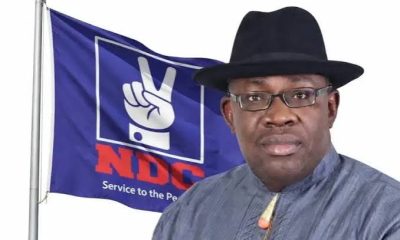
2027: DICKSON’S EX-ALLY VOWS TO WORK AGAINST NDC INTEREST IN BAYELSA
-

 Politics3 days ago
2027: GROUP PLEDGES 40,000 SUPPORTERS FOR COALITION CANDIDATES IN RIVERS