
Editorial
May Day! May Day!! May Day!!!

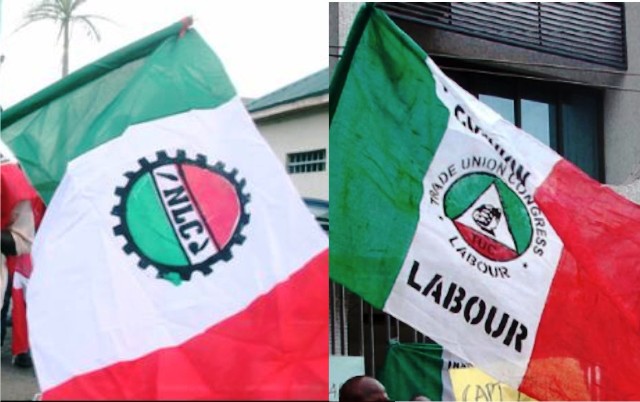
Nigerian workers will tomorrow be part of their counterparts worldwide to observe this year’s Workers’ Day popularly called May Day. Workers may also bemoan their deteriorating situations as they mark the 2021 version of the event tomorrow. May Day in Nigeria has constantly been used by the labour movement to spotlight problems that are threatening the industrial peace of the country.
It is a day workers have a good time and interface with their employers in a ceremonial mood. It is a day workers speak up and get answers on issues affecting them, even as the governments are expected to understand them. We join all well-meaning people to congratulate workers all over the world, especially Nigerian workers, on their contributions to humanity.
The most likely applicative issues this year may be the full implementation of the N30,000 minimum wage bill signed into law by President Muhammadu Buhari and the move by the National Assembly, particularly the House of Representatives, to change the minimum wage system in the country.
A bill now under discussion in the House of Representatives suggests a change wherein the country’s 36 states would each set their minimum wage rather than being decided by the Federal Government. Members of the Nigeria Labour Congress (NLC) and the Trade Union Congress (TUC), which constitute millions of workers across most sectors of Nigeria’s economy, filled the streets in Abuja as well as state capitals in protest at the proposed move.
Workers’ role in growing the economy, in addition to life and living as we have come to know it is huge. While the rest of the world may be celebrating that day, we strongly hope that the same will happen in Nigeria in earnest, where workers may have to come to terms with what they are up against. We think that labour may need to be circumspect and raise the mariners’ cry for help to save their straying and sinking ship.
The current state of insecurity in Nigeria has negatively impacted workers and their productivity. The insecurity variables range from theft to organised armed robbery, kidnapping and call for ransom, assassinations, repeated invasions and blockading of business installations, social injustice, lack of access to livelihood, the rising cost of living, and bombings. All these social maladies have made the Nigerian work environment complex.
Since the Covid-19 pandemic heat, the state of affairs of Nigerian workers has got worse. Several jobs were lost due to the pandemic. It is likely to be worsened given the impact the pandemic has had on trade globally. This is besides numerous government pronouncements that certain categories of workers remain at home. All of this means more Nigerians, especially in the lower class, could potentially be compelled to live below the poverty line.
Nobody goes dancing when his house is on fire. More than ever before, labour needs to wake up at least for the suffering families of Nigeria. In 2020, with Covid-19 disrupting everything in the world including relationships, with Nigeria suffering a debt and revenue crisis, the collapse of fiscal buffers, and sheer adversity, the Federal Government decided to pull the plugs. It blamed all of these factors and chose to announce the elimination of fuel subsidy.
The pump price of fuel, benchmarked to the spot price of crude oil in the international market, jumped through the roof and Nigerians groaned. The Federal Government argued that it was not left with any other option. Everyone expected that Organised Labour would intervene. But surprisingly they didn’t quite do so. Groups in civil society had to picket the Abuja headquarters of the NLC for the union to speak up and call the people out on the streets because life had become unbearable for the average Nigerian.
After being nudged, a combined team of the NLC and TUC finally declared that they would call out Labour on strike and shut down the country. They gave the Federal Government stringent conditions: a complete reversal of the hike in fuel price and electricity tariffs. Or else, Nigeria would be shut down indefinitely starting from September 28, 2020.
Labour’s sincerity of purpose was questioned. Nigerians felt they were just playing a game. The biggest tragedy that has befallen Organised Labour in the country is the thinking since 1999, that Labour’s leadership can be used as a stepping stone to a bigger role. Labour leaders use their positions to negotiate big benefits. They mouth revolutionary slogans and parrot aggressive rhetoric which has been confirmed to be a falsehood.
It is sad that since the paltry current minimum wage of N30,000 was signed into law by President Buhari, only a few states have started full implementation even though Nigeria has enough to save and much more for politicians to misappropriate. Added to the hardship faced by the worker, the value of the Naira has dropped beyond redemption and the prices of goods and services skyrocketed yet the survivability of the worker does not appear to matter.
In the private sector, Nigerians are in reality abused and treated as disposables and paid very ridiculous wages. They are disengaged without severance benefits. Some work for as long as 12 hours or more as casuals and Labour does nothing. The workers stand alone without help from any quarters, misunderstood and unsung. In the midst of this oddity, workers lose their voice, they cannot cry; they can neither speak to their employers nor reach their union leaders.
However, civil servants in Rivers State are exhilarated over the resolution of some pending labour concerns such as the full implementation of the minimum wage in the state. Governor Nyesom Wike deserves our commendation for his gesture in that regard. We urge the Beatrice Itubor led Labour to liaise with the government on the quick resolution of other issues recently considered by the tripartite committee.
Though it is inspiring that the governor has promised to look into the workers’ demands, we advise the tripartite committee to expedite action on the remainder of the assignment. Labour’s issues include arrears of minimum wage, promotion of civil servants from 2015, gratuity to pensioners, arrears of salaries to some civil servants who were not paid their February and March 2016 salaries due to the aborted biometric verification exercise of that year, etc.
As workers celebrate their day, Organised Labour in the country should realise that the current labour leadership has completely failed and exposed their gross incompetence and hypocrisy in the way labour matters are dealt with. Their lack of rigour, transparency and intellect provide a strong case for a pressing reform of labour leadership in Nigeria. Therefore, labour must reinvent itself or risk the tragedy of becoming insignificant.




The prolonged suffering of Rivers State pensioners who have remained unpaid since retiring in July 2025 demands urgent executive and legislative intervention. The Nigeria Labour Congress (NLC) has rightly put its finger on the Contributory Pension Scheme (CPS) as the root cause of this crisis. The state government must now bite the bullet, dismantle this failed experiment, and bring the pensioners’ protracted ordeal to an end.
Since July 2025, the affected retirees have been left high and dry, their monthly pensions unpaid, and their dignity worn away. The NLC, under the leadership of Comrade Alex Agwuanwon, has also linked this deplorable situation to the political storm that engulfed the state, while expressing cautious optimism that the prevailing calm will pave the way for the payment of outstanding arrears. The Tide shares that optimism. However, optimism alone will not put food on the table for men and women who gave the best years of their lives to the service of the state.
The genesis of this crisis is not shrouded in mystery. The CPS was introduced in Rivers State in 2012 under the administration of former Governor Chibuike Rotimi Amaechi, pursuant to the Rivers State Pension Reform Law of that year. The scheme was ostensibly designed to bring the state into line with the federal Pension Reform Act of 2004, which had established a contributory framework for retirement benefits across the country. What was sold as a progressive reform has, in truth, become a millstone round the neck of the very workers it was meant to protect.
The CPS has failed in the state, and it has failed spectacularly. Its fundamental flaw lies in the government’s chronic inability, or unwillingness, to honour its counterpart funding obligations. The arrangement was meant to be a joint endeavour: employees contribute a portion of their salaries, and the employer matches it. But the state has consistently failed to keep its side of the bargain, leaving the pension fund anaemic and unable to meet its obligations. The result is as predictable as it is unconscionable. Retirees are left with only their own contributions to fall back on, a mere pittance that cannot see them through their twilight years.
The human cost of this institutional failure is staggering. Men and women who devoted decades to the civil service now find themselves cast adrift, their legitimate expectation of a secure retirement shattered. The psychological toll of such betrayal is beyond measure. A pension is not an act of charity. It is a contractual obligation, a deferred wage for services already rendered. To withhold it is to break a sacred trust. The authorities must understand that every delay in resolving this crisis costs lives, both in the literal sense as elderly retirees struggle to pay for healthcare and sustenance, and in the figurative sense as the social contract between the state and its workforce wears thinner with each passing month.
This development does not show the government in a favourable light. For a state to allow people who served it with dedication and integrity to languish in penury after retirement is morally indefensible. It sends a chilling message to serving civil servants that loyalty will be repaid with abandonment. This is precisely why organised labour must not rest on its oars. The NLC’s call for the termination of the CPS is not mere grandstanding. It is a necessary corrective. The scheme, as presently administered, is irredeemably broken and must be done away with.
The most damning indictment of the CPS since its inception is its one-sidedness. The government has failed to pay its counterpart funding, reducing the scheme to a hollow shell. Of what use is a contributory arrangement when only one party contributes? Retirees cannot be expected to live on the meagre sums they themselves set aside, sums which have been steadily eroded by inflation and administrative charges. Workers have been short-changed, left to carry the can while the government looked the other way. It is a quiet expropriation of their future.
The time to put this right is now in the interest of justice, equity, and fairness. The NLC should push harder for the swift implementation of its committee’s report to Governor Siminalayi Fubara. That report contains a sensible and pragmatic recommendation: that the CPS should apply only to those employed in the year it was enacted, thereby allowing existing civil servants to remain under the Defined Benefit Scheme (DBS) to which they were originally entitled. This is not a radical proposal. It is a reasonable compromise that recognises the legitimate expectations of long-serving workers and rights the wrongs of the past.
The authorities must act with dispatch. Governor Fubara should, without further ado, send a draft amendment of the Pension Law to the House of Assembly for passage into law. With such legislative intervention, those who retired from July 2025 to date would be returned to the DBS, receiving pensions calculated on their terminal salaries and years of service rather than the paltry sums available under the failed contributory arrangement. The NLC, for its part, should keep its foot on the pedal through dialogue, advocacy, and, if necessary, peaceful protest. Pensioners deserve not just fine words but concrete action.
Rivers State cannot lay claim to be progressive while its retirees are forced to go cap in hand for their rightful entitlements. The measure of any civilised society is how it treats its elderly. By that yardstick, the present situation is a blot on the state’s escutcheon. The government must clear the backlog of arrears, scrap the CPS for the category of workers it should never have applied to, and restore the DBS in full. Nothing less will suffice.
The recent public health disaster in Ondo State, which claimed 48 lives and left 182 people severely ill, is a gloomy reminder of the dangers posed by unregulated beverages. According to NAFDAC Director-General, Prof. Mojisola Adeyeye, the victims consumed contaminated local alcoholic and herbal drinks in communities in Odigbo Local Government Area. The drinks contained high levels of industrial methanol, while 11 of 15 samples also contained Cannabis indica. The substances were linked to organ failure, neurological deterioration, and permanent blindness. The tragedy should serve as a warning to the entire country.
The incident underscores the wider problem of unregulated and adulterated drinks across Nigeria. From roadside kiosks and motor parks to informal markets, unverified alcoholic and herbal products are readily available, often marketed as cheap alternatives or medicines. The World Health Organisation estimates that about 25 per cent of alcohol consumed globally is unrecorded. Such products operate outside formal regulatory control and may expose consumers to toxic substances and serious health risks.
The problem is compounded by deliberate evasion of regulatory requirements. Products under NAFDAC’s mandate must be registered and subjected to regulatory checks before manufacture, distribution, or sale. Yet some producers ignore these requirements for profit, while others falsify NAFDAC registration numbers and markings and use them on substandard products. Such practices deceive consumers and undermine public confidence in the regulatory system.
The reported arrest of 15 suspects linked to the Ondo distribution network is an important first step. Those found responsible should be prosecuted and, where convicted, appropriately punished. However, enforcement must go beyond responding to tragedies. NAFDAC should strengthen preventive measures through regular post-market surveillance, random testing at transit points, and intelligence-led inspections of informal production centres.
Consumers also have a responsibility to exercise caution. Economic hardship, high inflation, and declining purchasing power have created opportunities for unscrupulous producers to market cheaper but potentially dangerous products. Consumers should, therefore, avoid unlabelled drinks, suspiciously cheap products, and goods sold through unverified outlets. Public education and consumer vigilance can help deny unscrupulous traders the opportunity to put profit before human life.
The danger extends beyond alcoholic and herbal drinks to medicines. Counterfeit and substandard medicines have entered both formal and informal supply chains, causing treatment failure, poisoning, and avoidable deaths. The WHO estimates that at least one in 10 medicines in low and middle-income countries is substandard or falsified, although the prevalence varies. Ensuring the safety and authenticity of medicines is essential to protecting lives and maintaining confidence in the healthcare system.
Food safety is another concern. Poor practices in food handling, processing, and preservation expose consumers to serious health risks, particularly when commercial interests override safety. Concerns over the improper use of chemical agents such as calcium carbide to accelerate the ripening of fruits further demonstrate the need for stronger monitoring throughout the food-supply chain.
These challenges expose weaknesses in Nigeria’s regulatory system and reinforce the need to strengthen it. NAFDAC faces the enormous task of monitoring products across all 774 local government areas. Meeting this challenge requires greater operational capacity, reduced bureaucratic delays, and modern systems capable of tracking regulated products from production to the point of sale.
Inadequate personnel, laboratory facilities, equipment, and logistics remain major obstacles. NAFDAC field offices, especially those serving remote communities, need modern testing equipment, reliable screening tools, and adequate transportation. The Federal Government should provide sustained funding to recruit specialised personnel, upgrade laboratories, and deploy technologies capable of rapidly detecting dangerous substances such as methanol.
Preventing the spread of adulterated products also requires coordinated action by federal and state governments. The Federal Ministry of Health, NAFDAC, and other relevant agencies should intensify operations to remove unregistered alcoholic and herbal products from motor parks, transit centres, and informal markets. The National Assembly should review existing laws and strengthen penalties for deliberately producing, falsifying, or distributing toxic and unregistered food, beverages, and medicines.
NAFDAC should expand its digital verification systems to enable consumers to confirm product registration before purchase. State ministries of health, local government councils, and community institutions should intensify grassroots education on the dangers of unlabelled drinks, unsafe food practices, and counterfeit medicines. Traditional, religious, and community leaders can also help identify and report illegal production and distribution activities.
The Ondo tragedy must not become another statistic that is quickly forgotten. The loss of 48 lives and the permanent blindness suffered by some survivors are devastating and unacceptable. Nigeria must respond by strengthening regulatory institutions, providing adequate funding, enforcing the law, and educating the public. A sustained, coordinated effort is essential to protect the nation’s food, beverage, and medicine supply chains and prevent another tragedy caused by products that should never have reached the market.