
Opinion
Challenges Of Our Social Media Dependency

Nigerians have been so accustomed to social media platforms to the extent that almost everybody knows about Facebook, Twitter, WhatsApp, Instagram, YouTube, to mention but a few. Both old and young, no matter thestatus, as far as one can purchase airtime and data bundle. Students are not left out in the use of social media platforms as their academic studies are made easier through them.
Research has shown that for over a decade, the number of users has risen steadily such that one in every seven persons out of the world’s population has a Facebook page.
Recently, there was an outage that affected the use of the platforms and it lasted for some hours. It raised a lot of concerns among users. After resolving the issue, the operators apologised for any inconveniences the disruption might have caused the users. According to reports, it was not the first time that such was happening.
This also happens to other devices used by other organisations like financial institutions. Sometimes when you visit the banks for financial transaction, their systems also go off and they demand that you wait for a while.With the level of exposure so far in the use of Facebook, WhatsApp, Twitter, and others I don’t know how one will feel if in a day, he or she could not check social media profiles.Some people have become so addicted that they spend greater percentage of their time using the Apps.
I’m not sure some people can do without the social media. Our dependence on the platforms has reached the extent that as you wake up in the morning, the first thing you do is to check the timeline to know the update.
Nigerians need to be prepared in case the platforms go off for two to three days. Many of us in the media now use the social media everyday for jobs. Information gathering and reports are made easy as you can send them to your organisation’s server from anywhere. In fact, we are in a digital world. If the Apps develop any problems, as it stands now, I will definitely encounter some challenges. It won’t be easy going back to the old systems.
For me, I cannot do without the social media because I won’t know the latest in terms of information gathering and reporting. The social media help people to interact especially from far distances. It has made the world to be a global village. You now stay in Nigeria and communicate and interact with a friend or relative in another country through video call. This is the most interesting aspect of it.
Organisations globally today interract with clients via the platforms.The importance of using the social media platforms via the Internet in our lives today cannot be overemphasised. Some people have argued that we have become slaves to our devices. Our dependence on the social media platforms does not and cannot make us become slaves.
Although some people are so addicted to it that they may not know and others of the view that it should be shutdown and argued that before the innovation of the social media, contacts for better friendship were established. Duping of persons was also minimal.
Addiction to social media is not an exception, there are drug addiction, phone addition and other forms. You cannot claim that those who transact their businesses genuinely are addicted to it. We are in the digital era and going back to analogue means retrogression.
Let’s assume that there are people who have become addicted to it then they can seek medical advice. Take a look at Google with its importance. During the outbreak of COVID-19 pandemic when schools at every level were shutdown, the ones that are ICT-compliant moved on with lessons, via Telegram, WhatsApp and so on. Meetings were Zoom and virtual even till now.
Members of groups and associations interact with colleagues. Notices of meetings are posted on WhatsApp. These days some public office holders have Twitter handles where statements are posted.
System failure is a common phenomenon with financial institutions also. Sometimes when you visit banks for transactions, you hear them say that their servers are down and you may need to wait for a while. They are sorted.You see someone moving on the street pinging, a driver of a vehicle, even a person in church.
The issue of addiction can be solved by engaging the youths who are vulnerable in employment. The youths are greatly affected as many of them are jobless and are tied to social media. But if they are engaged meaningfully, the number if hours spent on pinging and browsing will definitely reduce.
But researches have shown that the younger generation of people who are performing well in interaction digitally may not be able to do so offline.
Face-to-face communication seems to be declining. Effective communication on the part of the youths is nothing to write home about as they find it difficult to write simple and correct expressions as well as typing them, some can only ping. There is increase in the use of coded languages which may not help in academic work. There are messages on incidents posted on any of the platforms that can cause excitement or depression. In as much as we cannot deny the adverse effect of social media on the society, the merits outweigh the demerits.
Businesses are thriving these days because the social media. You can purchase a product from another city or country through awareness created on a platform. The benefits are enormous. The challenge is on what we should do if the platforms stop working as we depend on them so much. We need to have a balance.
Yes, the Internet has come to stay, so it may be difficult to move away from where we are. Our lives have been interconnected through the use of machines and services globally. To avoid sudden breakdown of social media platforms, managers or operators of the platforms should do necessary upgrading of the systems from time to time.
No matter the challenges the use of social media may impose on the users, the innovators should expand and create additional stages to avoid unnecessary shutdown as the rate of usage increases steadily. One approach that can help if there is shutdown in operation of the social media is that people should not put all eggs in one basket. Business owners should devise alternative means not securing their businesses that are online driven. Backups are necessary in this regard.
The social media originated from the West, and to avoid any consequence that may come up as a result of sudden shutdown in operation, it is high time Nigerians produced their own as the importance cannot be overlooked.
By: Eunice Choko-Kayode




Quote: “The Flamingos have conquered the world; Nigeria must now rise to its responsibility of nurturing the next generation of champions.”
Sometimes, sporting victories
More significantly, they
Umejiaku deserves special
Umejiaku received the award
Nigeria has now broken into
For too long, young girls in
But beyond the reward, this
As Nigerians celebrate this
By; Calista Ezeaku
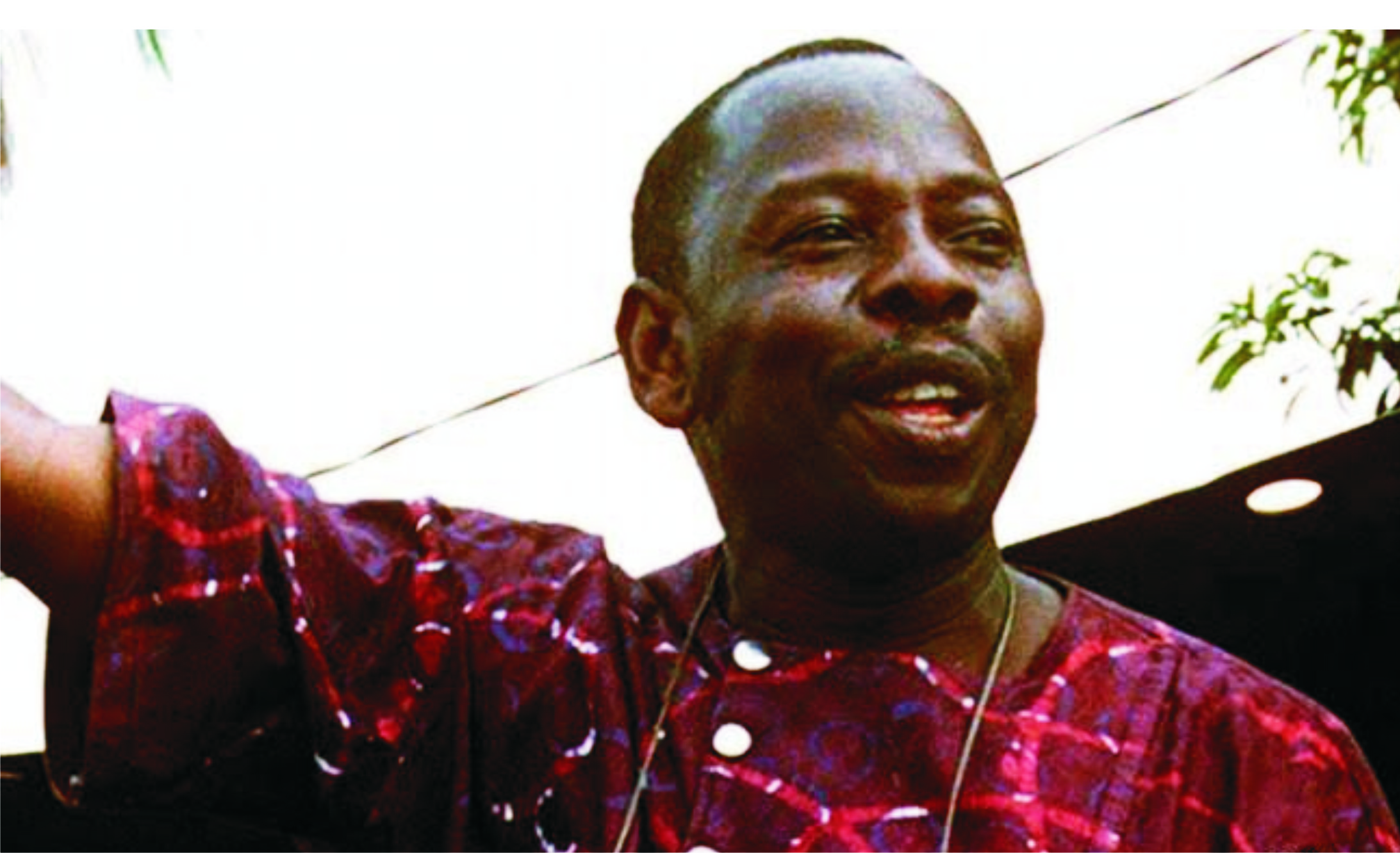
On November 10, 1995, the Nigerian military government of General Sani Abacha executed Ken Saro-Wiwa and eight other Ogoni leaders after a deeply controversial trial. Their deaths marked one of the darkest chapters in Nigeria’s history. At a time when fear silenced citizens and sycophancy flourished around military power, Saro-Wiwa chose to confront tyranny. Many Nigerians retreated into silence, while others praised the regime to secure favour. He knew the risks, yet refused to abandon a people whose land had been devastated by oil exploration and whose lives remained trapped in poverty. His courage arose from the conviction that public responsibility sometimes demands resistance to authority. Saro-Wiwa understood that speaking against a military government could lead to imprisonment or death.
Nonetheless, he believed the suffering of the Ogoni people demanded a courageous response. While oil was extracted from their land, they were left with polluted rivers, damaged farmland, declining livelihoods and an environment hostile to human survival. Fishing grounds and sources of livelihood were threatened, while the people struggled to secure basic amenities. The wealth beneath their soil brought neither adequate development nor a fair share of national resources. For him, silence in the face of injustice would have amounted to complicity. Through the Movement for the Survival of the Ogoni People (MOSOP), he organised a peaceful campaign that took the Ogoni question to the international community. MOSOP gave ordinary people an organised platform through which to express their grievances and insist on recognition.
The Ogoni Bill of Rights, presented to the Federal Government in 1990, demanded political autonomy, economic justice, environmental protection and control over the people’s resources. The campaign exposed the human and ecological costs of oil operations, particularly those associated with Shell, and challenged the apparent alliance between corporate interests and an unresponsive State. The Ogoni struggle became a defining expression of minority rights and environmental justice in Nigeria and Africa. Saro-Wiwa’s writings and mobilisation drew attention to communities treated as expendable because of their limited population and political influence. He argued that numerical strength should never determine a people’s value or rights.
A minority community does not become less deserving of justice because it cannot command electoral numbers or political power. In Nigeria, every ethnic group deserves dignity, protection and a fair opportunity to benefit from the commonwealth. Rather than respond to peaceful agitation with dialogue, the Abacha regime resorted to repression. Ogoni leaders were harassed, detained and killed; others fled into exile. The crisis intensified after four Ogoni chiefs were killed in May 1994. Saro-Wiwa and other MOSOP leaders were arrested, tried by a special tribunal and executed despite international appeals for clemency and serious concerns about the trial’s fairness. The executions drew worldwide condemnation and intensified scrutiny of Nigeria’s human-rights record and oil companies in the Niger Delta.
They demonstrated the danger of using State institutions to suppress peaceful demands. The proceedings remain a reminder of the need for judicial independence and due process. Saro-Wiwa’s courage rested on the conviction that justice must be pursued despite the cost. His method combined non-violent resistance, public education and grassroots organisation. His struggle recalled the civil-rights campaign of Martin Luther King Jr. and the power of peaceful mobilisation against injustice. Saro-Wiwa linked environmental degradation to political exclusion, economic exploitation and the denial of democratic rights. Oil-producing communities, he insisted, should not remain zones from which wealth is removed to develop other parts of the country.
Their people must benefit through roads, schools, healthcare, jobs and clean water. Resource extraction carries a duty to protect host communities. His argument extended to the structure of the Nigerian federation. He challenged a revenue-allocation system that made oil-producing communities bear the environmental and social costs of extraction without commensurate benefits. Like advocates of fiscal federalism, he believed resources should be managed and shared equitably. He envisaged a society in which no community would be disadvantaged by its size, ethnicity, political affiliation, culture or religion. His vision was a country bound together by justice and equal citizenship. Saro-Wiwa was also a gifted writer, dramatist and public intellectual.
Through books, essays, plays and television, he documented Nigerian society’s contradictions and challenged abuses of power. His popular television series, Basi and Company, demonstrated his creative range, while his leadership of the Association of Nigerian Authors encouraged writers to engage national questions. He believed literature should not be detached from society’s struggles. His pen exposed environmental injustice, political repression and the dangers of silencing courageous voices. He used storytelling, satire and drama to shape public consciousness and expose social contradictions. His literary achievements gave his activism wider reach and made the Ogoni experience part of national conversation. His commitment to the Ogoni people extended beyond the oil question.
During the Civil War, he worked to protect his vulnerable community. He urged younger generations to reject subservience and complacency and pursue change through lawful, peaceful means. Citizens, he believed, must not surrender their responsibility to challenge wrong doing. An injury to one community threatens the rights and security of all. The return to democratic government in 1999 and the establishment of the Niger Delta Development Commission, the Ministry of Niger Delta Affairs and the Hydrocarbon Pollution Remediation Project (HYPREP) are among developments that have kept the region’s demands in public view. Saro-Wiwa did not create these institutions, but his movement helped expose the urgency of intervention and sustain pressure for redress.
His death made it harder to ignore the Niger Delta’s environmental and political grievances. Yet, interventionist institutions do not prove that the original demands have been met. Their effectiveness depends on competent leadership, transparent spending, measurable outcomes and community participation. Yet, thirty-one years after his execution, the central concerns of the Ogoni struggle remain unresolved. The HYPREP-led clean-up has offered hope, but many residents await meaningful improvements. Questions persist about the programme’s pace, quality and transparency, and whether its benefits reach ordinary people. A clean-up should be judged not by ceremonies or contracts, but by restored land and waterways, safe drinking water, improved livelihoods and better public health.
It must include long-term monitoring to ensure treated sites remain safe. Residents deserve information about contamination, remediation methods and completion timelines. Reports that water projects in Gwara and Ebubu Communities, in Khana and Eleme Local Government Areas respectively, failed weeks after commissioning have raised further concerns. If confirmed, the failures would indicate weaknesses in supervision, procurement and quality control.
To be continued in our next edition.
Taneh Beemene
-
Business4 days ago
BSG Partiner American Coy To Invest $100m In Gas Processing
-

 Oil & Energy4 days ago
FG To Double Oil, Gas Reserves, Moves To Intensified fresh Exploration
-
Business4 days ago
Seme Customs Intercepts Live Pacific Ridley Sea Turtle
-
Sports4 days ago
Fernandes Turns Down Man Utd Offer
-
Business4 days ago
159m small businesses registered on database in three years – SMEDAN boss
-
Sports4 days ago
Rivers To Host National Table Tennis Championship
-
Maritime4 days ago
Nimasa,China MSA Sign Bilateral Maritime Agreement
-

 Sports4 days ago
Kenyans Win PH International Marathon, Cart Home $10,000