Connect with us

Opinion

Born To Rule?

Published

on

Born To Rule is the title of a 180-page book which was published in 1999 by Minerva Press, Atlanta, USA. Author of the book, Major General Jibril Musa Sarki, used a pseudonym to pass on his message concerning various inconsistencies and anomalies in Nigeria’s political and economic arrangements which account for her current plight. Like a controversial old book titled Maria Monk, Born To Rule, being an “awful revelation” by an insider, did not enjoy unrestricted circulation in Nigeria, because of its sensitive message. So, it is likely that many Nigerian elite have not read the book and, besides, there are groups who claim to be born to rule, who may consider the book as an affront to their right or might.
As a fiction written in the form of an autobiography, Born To Rule describes in satirical details Nigeria’s as well as the various characteristics of her ethnic groups. There was a confession by the author: “I was always mindful of the consequences of anyone in authority finding out I had Igbo blood in my veins… I had been warned by my parents…that my hope for future progress in the Army hinges on my place of origin”.
As a student, the author said that he was so dull that he had only one credit pass in the school certification examination. Therefore, to be able to gain admission into the military school, it was necessary for him to become “a Housa boy” which entailed having to change his names. What if Gabriel becomes Jibril, Moses becomes Musa and Sunday becomes Sarki? The author succeeded and has remained General Sarki.
The Nigerian game of survival has to be learned early in life, so that one does not become “mumu” as an adult. Born To Rule as a book, may be described as a fascinating autobiography full of satire, wit, sarcasm and innuendos, pointing out inconsistencies, imbalances, corruptions and shenanigans common in the Nigerian state. Obviously, citizens of a nation adopt such lifestyles and behavioural patterns which would facilitate their survival. Leadership sets the pace and standard, with the political will and courage to do what is right always. Rarely!
The role of the military and the vices which combined to pull down, to a lamentable level, a proud, promising and resourceful African nation, featured prominently in the fictional autobiography. A reader of the work can get quite angry with some of the revelations, if not that the author is a clever writer, capable of hiding his intents in humorous narratives. The style of the author may be compared to Jonathan Swift’s Gullivers Travels, in which national and human aberrations and follies are portrayed in humorous satires.
The 8-chapter book began with the author celebrating his 50th birthday, lavish preparations made for the occasion, the large turnout of guests and the numerous gifts from friends and well-wishers. It was a celebration of success at the age of 50; a success measured in terms of many houses and exotic property acquired at that age; thanks to a successful military career. The General’s birthday celebration was comparable to that of Arthur Nzeribe in London where guests danced on top of sterling currency notes, to show that “the money was there” and that at 29 a young Nigerian drove in the poshest car and lived in the poshest area of London. Great success!
Hear General Sarki’s personal testimony: “As of February 1994 when I turned 50 years, I have had a good modern building in each of the 30 state capitals of Nigeria, apart from a duplex and a big guest house at Abuja…” Gifts at the birthday celebration were over 500 items, with two parcels and three envelopes, one of which came from an oil company. Expectedly, the numerous gift items included expensive household property, a house built in his name on Lekki Island in Lagos, an aircraft and a cheque for the sum of £500,000 sterling by distinguished colleagues.
Born To Rule as a book also portrayed hypocrisies in politics, religion, lifestyles, etc, as prevailing norms whose patrons are the ruling elite. Sarki described how those whose religion forbids alcohol would be served different brands of beer, hot drinks and wines in big and small white kettles, coloured plastic cups and other guises, for social security. Similarly, the worst forms of lechery are practised daily by those who would quickly endorse the stoning to death of those who have fun outside wedlock. Great and honourable hypocrites!
With regards to the history of the Nigerian Civil War, Sarki revealed lots of intrigues, shenanigans and the roles played by foreign powers and individual advisers, which resulted in the outcome of that sad Nigerian experience. For example, proposals made by Northern delegates as means of resolving the issues and to pacify the North, were dropped and disowned, arising from the advice of foreign powers. Same foreign powers and interests advised that as long as population figures are used to determine representation, distribution of resources and political appointments, the North would have an edge.
It was considered expedient that larger population and land mass should serve as bargaining chips if the North would continue to rule over the country. Some humorous comments were added that cattle and cows can boost population permutation and figures. To say that population figures and controversies connected with past census exercises are quite unreliable and constitute veritable sources of distrust in this country, is to put the matter mildly. Large land mass does not always translate to larger populations.
Born To Rule as a fictional book of humour, satire and sarcasm, gives insight into the character of the Nigerian political economy, as well as the mechanism of internal colonialism. The born-to-rule political posture of some section of the country expresses some mindset, as well as how power culture employs force, intimidation, treachery and deceit as vital strategies and instruments of power politics. The danger in letting crude power have a sway in a democracy is that mediocrity would reign supreme. Is competence the goal of politics?
Surely, a thorough perusal of General Sarki’s book would convince the reader that Born To Rule is a work of a genius who does not want to offend or wound directly but provide a mirror to portray the state of the nation. The power game is the crux of the matter and Sarki is intelligent enough to use a pseudonym to tell us the story of his life and experience. He was not born to rule but to tell the truth under a good cover. Congratulations to enigmatic General Jibril Musa Sarki for warning that a nation is in danger where shame vanishes!
Dr. Amirize is a retired lecturer from the Rivers State University, Port Harcourt.


Continue Reading

Opinion

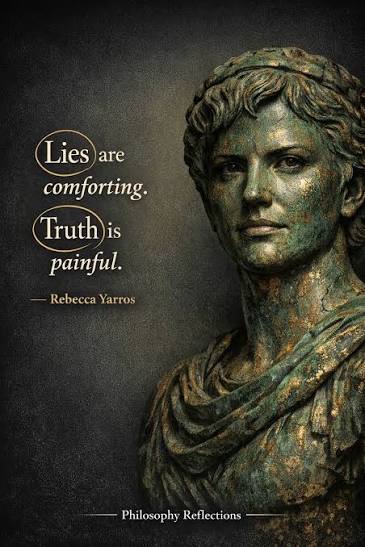
When Comfort Silences The Truth  

Published

on

Quote: “Privilege should never silence principle, influence should never replace integrity, and personal gain should never outweigh the public good.”

There is an old saying that truth does not fear investigation. Genuine truth neither depends on applause nor seeks permission to exist. It remains constant whether celebrated or rejected, defended or ignored. Yet, in today’s society, truth often competes with comfort, convenience, loyalty and personal interest. This raises an important question: Can a person remain objective after beginning to benefit from the very system he once criticised? Throughout history, reform movements have been driven by courageous individuals willing to challenge injustice despite personal risks. Their commitment to truth sometimes cost them popularity, comfort, freedom and even their lives. History has also recorded instances where influential voices became quieter after receiving appointments, promotions, contracts, political favours or other advantages.

While motivations cannot always be known, such patterns remind us that personal benefit can sometimes influence public conviction. Human beings naturally seek security, stability and opportunities for themselves and their families. There is nothing wrong with success or advancement. The concern arises when personal comfort replaces public responsibility, or privilege becomes a reason to ignore problems affecting others. One of the greatest dangers facing society is not only corruption or poor governance but the normalisation of silence. Systems rarely collapse overnight. They deteriorate gradually when people who know better decide that speaking the truth is no longer worth the personal cost. Every society therefore depends on citizens willing to ask difficult questions, demand accountability and defend justice, regardless of who benefits or feels uncomfortable.

A person who benefits from a broken system may become less inclined to challenge it. This is not true of everyone, and individuals should not be judged without evidence. Many principled people continue to advocate reform while working within imperfect institutions. Nevertheless, personal interests can sometimes soften criticism, dilute conviction or redirect attention from uncomfortable realities.Perhaps the greatest threat to truth is not open opposition but quiet compromise. Censorship is easy to recognise; silence purchased through convenience is harder to detect. When people gradually stop asking questions, demanding transparency or defending principles they once considered important, society should ask whether something has changed. Perspectives may genuinely evolve with new information, but incentives can also influence what people say—or choose not to say.

This is why citizens should not place blind trust in personalities. Ideas, principles and actions should be examined independently. Loyalty to individuals must never exceed loyalty to truth. Political affiliation, professional status, financial success or social influence should not exempt anyone from accountability. A healthy democracy depends on independent thinking, not unquestioning allegiance.The responsibility to speak truth does not belong only to journalists, activists, judges, religious leaders or opposition politicians. It belongs to every citizen. The teacher who refuses to manipulate facts, the public servant who rejects corruption, the business owner who acts with integrity, the parent who teaches honesty and the young person who chooses principle over popularity all contribute to a more just society. However, defending truth also requires humility.

We must not assume that everyone who disagrees with us has been compromised.

By: Michael  Abraham

Continue Reading

Opinion

Poor Federal Roads: The Oshiomhole’s  Outburst

Published

on

Quote:”Although the Federal Ministry of Works is responsible for road construction and rehabilitation while the Federal Roads Maintenance Agency (FERMA) oversees maintenance, road maintenance has consistently taken a back seat”

The recent outburst by the lawmaker representing Edo North Senatorial District, Senator Adams Oshiomhole, over the deplorable condition of federal roads in Edo and Delta states has once again drawn national attention to one of Nigeria’s most persistent infrastructure challenges. During Senate plenary last Wednesday, Oshiomhole criticized the Minister of Works, David Umahi, accusing the Federal Ministry of Works of neglecting major federal highways in Edo and Delta while prioritizing new road projects. According to him, the government should focus on rehabilitating existing roads that have become impassable before embarking on new construction. He identified the Benin-Warri, Benin-Asaba, Benin-Auchi and Auchi-Okene highways as strategic economic corridors that have deteriorated to alarming levels, making travel difficult for commuters and motorists while increasing the cost of transporting goods and services.

The senator also alleged that road projects affecting Edo and Delta states were repeatedly omitted from budgetary provisions and that some interventions were only undertaken following directives from President Bola Tinubu. Ironically, the Federal Government has consistently reiterated its commitment to reconstructing and rehabilitating federal roads across the country. The Minister of Works has repeatedly assured Nigerians that the government is deploying reinforced concrete technology to build more durable highways capable of withstanding the country’s climatic conditions. Despite these assurances, vast sections of federal road across the country remain in deplorable condition. The consequences are enormous. Federal highways serve as the backbone of the nation’s economy, carrying more than 90 per cent of passengers and freight.

They connect ports, airports, industrial centres, state capitals and agricultural belts, facilitating the movement of food, fuel, cement and manufactured goods. When these roads fail, the entire economy suffers. Although the Federal Ministry of Works is responsible for road construction and rehabilitation while the Federal Roads Maintenance Agency (FERMA) oversees maintenance, road maintenance has consistently taken a back seat. The result is a recurring cycle in which newly completed roads quickly deteriorate while existing ones are left to collapse. The economic consequences are severe. Bad roads increase transportation costs, contribute to food inflation, delay the movement of goods from ports to markets, increase vehicle maintenance expenses and lead to avoidable road crashes that claim countless lives every year.

To address these challenges, the Federal Government has introduced initiatives such as the Highway Development and Management Initiative (HDMI), which seeks to attract private investment into road maintenance through concessions and tolling. While the initiative holds promise, public acceptance will depend largely on visible improvements in road quality and transparent management of toll revenues. Similarly, the Road Infrastructure Tax Credit Scheme is designed to encourage companies to finance the reconstruction of strategic highways in exchange for tax credits. While the scheme has shown promise, its ability to address road infrastructure challenges equitably across the country remains to be seen. Other countries facing similar infrastructure challenges have demonstrated that sustainable road management requires a different approach.

Rwanda and Morocco, for instance, have prioritized dedicated road maintenance funds, performance-based contracts that reward quality rather than kilometers constructed, and policies that allocate a significant proportion of road budgets to maintenance instead of new construction. Nigeria can draw useful lessons from these experiences. Maintenance funding should be increased and protected because preventive maintenance is far cheaper than complete reconstruction. Public-private partnerships should be expanded with adequate safeguards, transparent tolling policies and independent monitoring. Development finance institutions should support contractors with affordable financing to minimize disruptions caused by delayed government payments. Road designs should withstand heavier rainfall and flooding, while compensation and right-of-way issues must be resolved before projects begin to avoid unnecessary delays.

FERMA should also prioritize durable, high-quality road maintenance over the shoddy repairs that have become all too common. Ultimately, Nigerians are not asking for perfect roads; they simply want roads that are safe, durable and properly maintained. While new highways are desirable, a well-maintained five-kilometer stretch is often far more valuable to road users than a much longer road that quickly falls into disrepair. The media, civil society, the National Assembly and Nigerians must continue to hold the government accountable by monitoring road projects and demanding better results. Good roads are not a privilege but a right of every citizen. With tax credit schemes, concessions and other funding mechanisms already in place, what is now required is political will, transparency and consistent implementation. However, Senator Oshiomhole’s criticism also invites legitimate public reflection. 

Many Nigerians have asked what the condition of these same federal roads was during his eight-year tenure as Governor of Edo State. Several governors, including those of Rivers State at different times, undertook repairs on critical federal roads within their states and subsequently sought reimbursement from the Federal Government. It is therefore fair to ask whether similar interventions were pursued during Oshiomhole’s administration. Public officials, whether serving or former, should be judged by the same standard. Constructive criticism is essential in a democracy, but it carries greater weight when matched by a demonstrable record of action. Nigerians expect those entrusted with public office to address pressing challenges while they have the authority to do so, rather than becoming vocal critics only after leaving office

By:  Calista Ezeaku
Continue Reading

Opinion

Sacrificing Humanity for Politics? 

Published

on

“Politics is temporary, but humanity is permanent. No politician is worth sacrificing genuine friendships, family bonds, or peaceful coexistence.””Politics is temporary, but humanity is permanent”.

Every election season leaves behind more than ballot papers and campaign posters. It often leaves broken friendships, divided families, fractured communities, and hearts filled with resentment. In the heat of political competition, many people forget a simple but profound truth: politics is temporary, but humanity is permanent. Across our communities, it has become increasingly common to see people sever lifelong relationships simply because they support different political parties or candidates. Individuals who once shared meals, celebrated milestones, and stood by each other during difficult times suddenly become strangers not because they committed any personal offence, but because they exercised their democratic right to think differently. This growing trend should concern every citizen. Politics is designed to provide leadership, shape public policy, and improve society.

It was never intended to become a weapon for destroying relationships or creating permanent enemies. When politics begins to erode our humanity, it ceases to serve its true purpose. A democratic society thrives on diversity of thought. Every citizen possesses the constitutional right to support any political party, candidate, or ideology without fear of intimidation or hatred. Political disagreement is not a crime; rather, it is evidence that democracy is alive and functioning. The true measure of political maturity is not our ability to silence opposing voices but our willingness to respect them. Unfortunately, many people have mistaken political loyalty for personal hostility. Instead of debating ideas, they attack personalities. Instead of discussing policies, they spread insults and misinformation. Instead of building bridges, they construct walls of bitterness.

Such behaviour weakens not only our relationships but also the democratic values we claim to defend. The reality is simple: elections are temporary. Political offices have fixed tenures. Governments change. Political alliances shift. Today’s political rivals may become tomorrow’s allies, while today’s allies may become tomorrow’s opponents. History has repeatedly demonstrated that politicians who once exchanged harsh words eventually sit together at negotiation tables in pursuit of shared interests. Yet ordinary citizens often remain trapped in unnecessary hatred long after political leaders have reconciled.This reality offers an important lesson. No politician should be worth sacrificing genuine friendships, family bonds, or peaceful coexistence. Political support should never require personal hatred. We can campaign passionately for our preferred candidates while still respecting those who choose differently.

Democracy flourishes when disagreement remains civil. One of the most dangerous habits in politics is inheriting other people’s enemies. Far too often, supporters adopt the personal conflicts of political leaders as though they were their own. People who have never met begin insulting one another on social media, damaging relationships, and sometimes engaging in violence simply because influential figures disagree.Such misplaced loyalty serves no meaningful purpose. Political leaders often possess the opportunity to reconcile, negotiate, and move forward after elections. Their supporters, however, are frequently left with damaged relationships, regret, and lasting divisions within their communities. Wisdom demands that citizens distinguish between political competition and personal relationships. Rather than inheriting hostility, we should cultivate independent judgment.

Judge individuals by their character, integrity, honesty, and personal conduct not merely by the colour of the political party they support. A person’s political affiliation does not automatically define their values, competence, or humanity. Equally important is the need to elevate the quality of our political conversations. Instead of engaging in personal attacks, we should focus on issues that genuinely affect people’s lives. Discussions should revolve around education, healthcare, infrastructure, security, economic growth, employment, agriculture, and accountable governance. These are the matters that determine the future of our nation not endless exchanges of insults. Social media has further amplified political intolerance. Behind anonymous profiles and smartphone screens, many people say things they would never express in person.

Every post, comment, and shared message has the potential either to promote understanding or to deepen division. Responsible citizenship requires restraint, accuracy, and respect, especially during politically sensitive periods. Politics should inspire service, not hostility. Leadership should unite rather than divide. Citizens should be free to disagree without becoming enemies. After all, beyond our political preferences, we remain neighbours, colleagues, business partners, classmates, worshippers, and fellow citizens who share the same hopes for peace, prosperity, justice, and national development. As another political season approaches, let us remember what truly matters. Campaigns will end. Elections will pass. Winners will celebrate, and losers will regroup. But the relationships we preserve, the respect we extend, and the humanity we uphold will remain long after the campaign slogans have faded.

The greatest victory in politics is not defeating an opponent at the polls; it is preserving our values while participating in democracy. Let us choose dialogue over division, understanding over intolerance, and respect over hatred. Above all, let us never forget this timeless principle: Politics should never be more important than humanity. And perhaps the wisest political advice anyone can embrace is this: Never inherit people’s enemies. In doing so, we preserve not only our relationships but also the very spirit of democracy itself.

By: Michael T. Abraham

Continue Reading

Trending