
Nation
Troops Crush 10 Bandits, Loses One Soldier In Fierce Battle In Katsina

The Nigerian Army, yesterday, says it has neutralized not fewer than 10 bandits and inflicted injuries on several others in a fierce battle with the bandits in Batsari and Faskari local government areas of Katsina State.
This was also as it says it loses one of its gallant soldiers while two others sustained injuries from the encounter.
The Acting Director, Defence Media Operations, Brig-Gen Bernard Onyeuko, who disclosed this in a statement made available to newsmen, yesterday, also said the Army arrested three collaborators and informants of the bandits as well as recovered arms and ammunition.
Onyeuko said troops of the Operation Sahel Sanity carried out the offensive onslaught against the bandits which saw to the death of the five bandits in each of the council areas in the state.
According to him, “In furtherance of their operational activities and in line with the Chief of Army Staff, Lt-Gen Tukur Yusufu Buratai’s directive extending Operation Sahel Sanity to March, the gallant troops have increased the momentum of the operation.
“They have continued to dominate the North-West theatre with confidence building patrols, robust and aggressive ambushes coupled with clearance operations. This is with a view to completely wipe out the remnant bandits and other criminal elements from the region.
“Consequently, on January 2, 2021, based on credible human intelligence about the movement of armed bandits sighted crossing Garin Inu in Batsari LGA heading towards Bugaje in Jibiya LGA both in Katsina State, troops deployed at Batsari swiftly mobilized and laid ambush along the bandit’s route at Garin Garus.
“While at the ambush position, the gallant troops made contact with the marauding armed bandits and engaged them with overwhelming firepower thereby neutralizing five bandits while others escaped with varying degrees of injuries as indicated by traces of blood along their escape routes.
“Further exploitation of the area by the gallant troops led to the capture of three AK-47 rifles and two AK-47 rifle magazines loaded with 18 rounds of 7.62mm special ammunition.
“In another development, on January 10, 2021, troops deployed at Sabon Layi while clearing bandits enclaves around Maigora general area in Faskari LGA of Katsina State, came in contact with armed bandits at Unguwar Rimi leading to a fierce gun battle.
“The troops were swiftly reinforced by another team from Faskari and supported by helicopter gunship delivering a lethal blow to the criminals thereby forcing the bandits to withdraw in disarray into the forest due to the troop’s superior firepower.
“During the exploitation phase of the operation, five bodies of neutralized bandits were found while several others were suspected to escape with gunshot wounds as indicated by bloodstains on their escape route.
“Regrettably, one brave soldier paid the supreme price while two others sustained minor injuries during the encounter. The wounded soldiers are in stable condition and currently responding to treatment in a military medical facility.
“Relatedly, on January 3, 2021, troops deployed at Dan Ali village acting on reliable information from reliable sources arrested a suspected bandits’ collaborator named Ya’u Tukur at Sabon Gida village in Kankara LGA of Katsina State.
“During preliminary investigations, the suspect confessed to being working for a notorious bandit gang that has been masterminding nefarious crimes, including kidnapping for ransom in various places. Troops are on the trail of other members of the notorious gang.
“Furthermore, on January 4, 2021, troops deployed at Maraban Maigora, acting on credible information arrested one Yahaya Aliyu while riding on a new motorcycle.
“The arrest was executed following reports from reliable sources on the suspect’s alleged involvement in the kidnapping and facilitating payment of ransom for kidnap victims in the area.
“During preliminary investigations, the suspect admitted his involvement in the alleged crimes, adding that the motorcycle he was riding was part of a bounty as ransom from a kidnapped victim.
“Additionally, on January 8, 2020, troops deployed at Yankara while acting on a tip-off arrested a suspected bandit’s collaborator named Alhaji Adamu Mamman around Yankara general area in Faskari LGA of Katsina State. The suspect has been at large following his involvement in harbouring bandits in his house.
“To this end, the gallant troops of Operation Sahel Sanity are commended for the successes and their unequalled commitment. They are further urged not to rest on their oars until the North-West zone is rid of all criminal elements.
“Additionally, the good people of the North-West are once more assured of the Nigerian Army’s commitment to the safety of lives and properties within the zone.
“They are also encouraged to avail the troops with timely and credible information that will assist in the conduct of their operations,” Onyeuko, however, appealed.



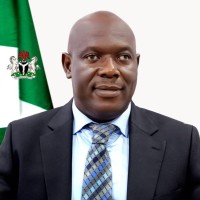
The Hydrocarbon Pollution Remediation Project (HYPREP) has commemorated the 15th anniversary of the release of the United Nations Environment Programme (UNEP) Environmental Assessment Report on Ogoniland, reaffirming its commitment to restoring the environment and improving the livelihoods of affected communities.
In a statement signed by the Project Coordinator, Prof Nenibarini Zabbey, to commemorate the anniversary, HYPREP described the anniversary as a significant milestone in Nigeria’s environmental restoration efforts, noting that the project has made remarkable progress in implementing the recommendations of the landmark UNEP report released on August 4, 2011.
The UNEP report had revealed extensive oil pollution across Ogoniland, severe environmental degradation, and serious public health risks resulting from decades of petroleum operations. It also recommended an initial $1 billion fund to commence the cleanup of the affected communities.
According to HYPREP, the Federal Government formally launched the Ogoni clean-up in 2016, while the Project Coordination Office was established in 2017 to drive the implementation of UNEP’s recommendations.
Zabbey said the current administration has continued to prioritise the project under the Renewed Hope Agenda.
Providing an update on the cleanup, the Project Coordinator disclosed that 30 of the 65 contaminated sites identified by UNEP have been fully remediated, while work is ongoing at several medium- and high-risk locations. It also stated that more than 1.5 million mangrove seedlings have been planted as part of what it described as the world’s largest restoration of oil-degraded mangroves, with over 1,000 hectares of shoreline already rehabilitated.
Zabbey further revealed that 49 Ogoni communities have been connected to potable water schemes through multiple water projects and booster stations aimed at providing safe drinking water across the region.
In the health sector, he said the 100-bed Ogoni Specialist Hospital in Kpite and the 43-bed Cottage Hospital in Buan are nearing completion, adding that several existing health facilities have been upgraded with modern medical equipment, while five ambulances have been donated to improve emergency healthcare services. The Project Coordinator also disclosed that a three-year human health biomonitoring study is being conducted in collaboration with the World Health Organization’s International Agency for Research on Cancer (IARC).
On economic empowerment, Zabbey stated that the Project has created more than 8,000 direct jobs and trained thousands of Ogoni youths and women in various vocational and technical skills, including software development, cybersecurity, aviation, commercial diving, seafaring, mechatronics, and creative arts. The project also reported awarding scholarships to more than 1,000 students, providing grants to small businesses, and supporting persons living with special needs through skills acquisition programmes.
The statement further highlighted ongoing legacy projects, including the Ogoni Power Project and the Centre of Excellence for Environmental Restoration, which it said is about 96 per cent complete. HYPREP also welcomed the recent designation of the Ogoni Wetland as a Ramsar Site of International Importance and pledged to continue promoting biodiversity conservation and sustainable management of the ecosystem.
Marking the anniversary, Zabbey said the progress achieved over the past 15 years demonstrates the collective commitment of government, development partners, stakeholders, and local communities to restoring Ogoniland. He called for renewed collaboration to sustain the cleanup effort, promote environmental sustainability, and support the long-term development of the region. 3
-

 News2 days ago
RSG Targets Nine Million Residents in Mosquito Net Distribution Campaign
-

 Oil & Energy2 days ago
Aiyedatiwa Signs New Electricity Bill
-

 Maritime2 days ago
Marine Minister Commends President Tinubu On NPERA Bill Assent
-

 Oil & Energy2 days ago
NLNG Commissions Research And Innovation Centre In RSU
-

 News2 days ago
KenPoly Holds Eight Convocations, August 29
-

 News2 days ago
RSG Begins Another Phase of Projects Commissioning Today
-

 News2 days ago
RMAFC Completes Revenue Sharing Review, Proposes New Pay
-

 Maritime2 days ago
NAGAFF Petitions IGP Over Alleged Maritime Police Harassment