
Opinion
Checking Examination Malpractices


As a result of over-emphasis on paper qualification, examination cheating has become a vogue in Nigeria. Our children now prefer enjoying themselves at the expense of their studies. Because they are unsure of their ability to pass examinations, they resolve to find cheap ways of doing so. Often, they rely on pre-knowledge of examination question papers otherwise known as expo. Unfortunately, the result of this practise is a fall in the standard of education.
Examination malpractice will hardly be sustained if it is not encouraged. Disappointingly, some examiners encourage the students to indulge in this obnoxious practice by collaborating with them. These examiners sometimes use this medium for economic gain as huge sums of money are necessary to obtain expo. For example, the early White men introduced this examination malpractice in Nigeria in the early1960s; that brought about this gradual changing attitude of assessing students who forge papers.
This behaviour has caused so many Nigerians to fall from the academic performance and thereby focus their mind on examination malpractices, rather than reading and writing to acquire knowledge.
Examination malpractices have become a conscious behaviour. The concomitant effects of these malpractices cannot entirely be expressed here; but suffice it to say that the effects range from the inability to publicly express oneself in good English Language, inability to defend one’s course of study; leading to inability to secure employment.
The downturn effect is usually frustration because the individual has placed his or herself in the place of a graduate whom people expect to be intelligent and productive, but turns out to be a wastrel after spending long years in school.
Many of our youths become frustrated and disillusioned when they see their colleagues, whose academic standard is rated low, being given admission either because they can afford the necessary bribe or have godfathers who speak on their behalf.
The problem of examination malpractice can only be stopped with the attention and help of the government. I am personally convinced that with government’s readiness to fight the menace, there will be a change of attitude.
Over the years, emphasis has been placed on providing education for the people. This is premised on the belief that education inculcates in the people the sense of belonging. Unfortunately, Nigeria has not sustained this vision and objective. We should all know that the training of our children is a collective responsibility of teachers, parents and the government. We should drum it to the ears of our parents that education malpractices are not important tools for acquiring knowledge needed to enhance the upliftment of our society.
Disappointingly, many educated people in the society exhibit the greatest acts of indiscipline. They indulge in various vices which render the nation impotent. In this country where majority of the populace are not enlightened, the cue is taken from the learned minority. This minority is seen as the eyes of the people. Any of their indulgences is seen as acceptable because they are expected to be more disciplined without malpractice by virtue of their education.
In view of this, any learned person who fails to exemplify rectitude does a great damage to the nation as he or she stands to contaminate many around him who expect him to be an embodiment of good virtues.
In conclusion, the best way examination malpractice can be reduced in the country, is for government to be more proactive by not only making examination malpractices a serious offence, but to also ensure that culprits are properly punished according to the law.
Etim wrote from Port Harcourt.
Sintrials Etim



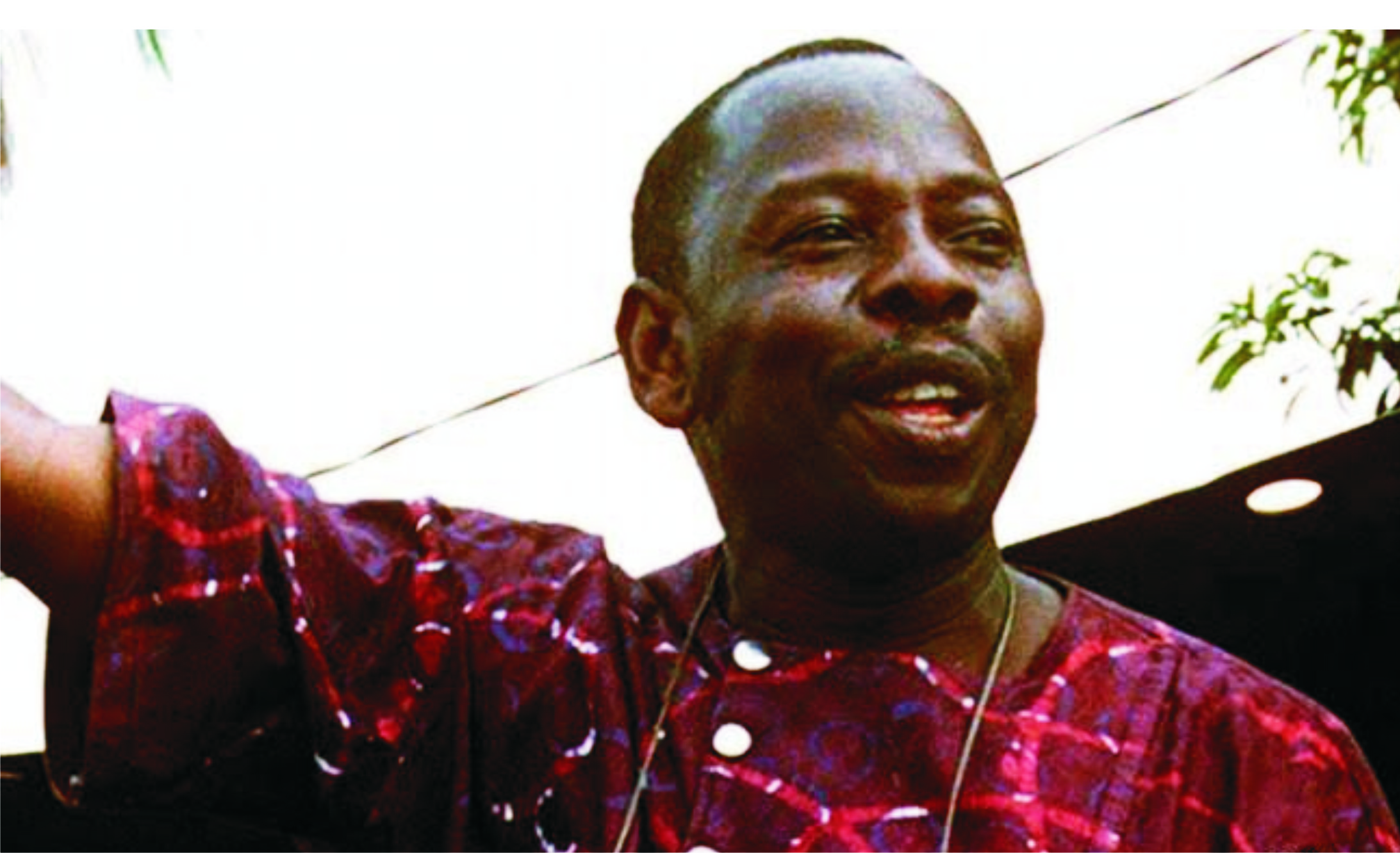
Nonetheless, he believed the suffering of the Ogoni people demanded a courageous response. While oil was extracted from their land, they were left with polluted rivers, damaged farmland, declining livelihoods and an environment hostile to human survival. Fishing grounds and sources of livelihood were threatened, while the people struggled to secure basic amenities. The wealth beneath their soil brought neither adequate development nor a fair share of national resources. For him, silence in the face of injustice would have amounted to complicity. Through the Movement for the Survival of the Ogoni People (MOSOP), he organised a peaceful campaign that took the Ogoni question to the international community. MOSOP gave ordinary people an organised platform through which to express their grievances and insist on recognition.
The Ogoni Bill of Rights, presented to the Federal Government in 1990, demanded political autonomy, economic justice, environmental protection and control over the people’s resources. The campaign exposed the human and ecological costs of oil operations, particularly those associated with Shell, and challenged the apparent alliance between corporate interests and an unresponsive State. The Ogoni struggle became a defining expression of minority rights and environmental justice in Nigeria and Africa. Saro-Wiwa’s writings and mobilisation drew attention to communities treated as expendable because of their limited population and political influence. He argued that numerical strength should never determine a people’s value or rights.
A minority community does not become less deserving of justice because it cannot command electoral numbers or political power. In Nigeria, every ethnic group deserves dignity, protection and a fair opportunity to benefit from the commonwealth. Rather than respond to peaceful agitation with dialogue, the Abacha regime resorted to repression. Ogoni leaders were harassed, detained and killed; others fled into exile. The crisis intensified after four Ogoni chiefs were killed in May 1994. Saro-Wiwa and other MOSOP leaders were arrested, tried by a special tribunal and executed despite international appeals for clemency and serious concerns about the trial’s fairness. The executions drew worldwide condemnation and intensified scrutiny of Nigeria’s human-rights record and oil companies in the Niger Delta.
They demonstrated the danger of using State institutions to suppress peaceful demands. The proceedings remain a reminder of the need for judicial independence and due process. Saro-Wiwa’s courage rested on the conviction that justice must be pursued despite the cost. His method combined non-violent resistance, public education and grassroots organisation. His struggle recalled the civil-rights campaign of Martin Luther King Jr. and the power of peaceful mobilisation against injustice. Saro-Wiwa linked environmental degradation to political exclusion, economic exploitation and the denial of democratic rights. Oil-producing communities, he insisted, should not remain zones from which wealth is removed to develop other parts of the country.
Their people must benefit through roads, schools, healthcare, jobs and clean water. Resource extraction carries a duty to protect host communities. His argument extended to the structure of the Nigerian federation. He challenged a revenue-allocation system that made oil-producing communities bear the environmental and social costs of extraction without commensurate benefits. Like advocates of fiscal federalism, he believed resources should be managed and shared equitably. He envisaged a society in which no community would be disadvantaged by its size, ethnicity, political affiliation, culture or religion. His vision was a country bound together by justice and equal citizenship. Saro-Wiwa was also a gifted writer, dramatist and public intellectual.
Through books, essays, plays and television, he documented Nigerian society’s contradictions and challenged abuses of power. His popular television series, Basi and Company, demonstrated his creative range, while his leadership of the Association of Nigerian Authors encouraged writers to engage national questions. He believed literature should not be detached from society’s struggles. His pen exposed environmental injustice, political repression and the dangers of silencing courageous voices. He used storytelling, satire and drama to shape public consciousness and expose social contradictions. His literary achievements gave his activism wider reach and made the Ogoni experience part of national conversation. His commitment to the Ogoni people extended beyond the oil question.
During the Civil War, he worked to protect his vulnerable community. He urged younger generations to reject subservience and complacency and pursue change through lawful, peaceful means. Citizens, he believed, must not surrender their responsibility to challenge wrong doing. An injury to one community threatens the rights and security of all. The return to democratic government in 1999 and the establishment of the Niger Delta Development Commission, the Ministry of Niger Delta Affairs and the Hydrocarbon Pollution Remediation Project (HYPREP) are among developments that have kept the region’s demands in public view. Saro-Wiwa did not create these institutions, but his movement helped expose the urgency of intervention and sustain pressure for redress.
His death made it harder to ignore the Niger Delta’s environmental and political grievances. Yet, interventionist institutions do not prove that the original demands have been met. Their effectiveness depends on competent leadership, transparent spending, measurable outcomes and community participation. Yet, thirty-one years after his execution, the central concerns of the Ogoni struggle remain unresolved. The HYPREP-led clean-up has offered hope, but many residents await meaningful improvements. Questions persist about the programme’s pace, quality and transparency, and whether its benefits reach ordinary people. A clean-up should be judged not by ceremonies or contracts, but by restored land and waterways, safe drinking water, improved livelihoods and better public health.
It must include long-term monitoring to ensure treated sites remain safe. Residents deserve information about contamination, remediation methods and completion timelines. Reports that water projects in Gwara and Ebubu Communities, in Khana and Eleme Local Government Areas respectively, failed weeks after commissioning have raised further concerns. If confirmed, the failures would indicate weaknesses in supervision, procurement and quality control.
To be continued in our next edition.
Taneh Beemene

Security is another serious concern. Corps members may be posted to communities affected by kidnapping, communal violence, insurgency or other threats. Government cannot eliminate every danger, but it must assess locations, provide reliable security information and avoid deployments where safety cannot reasonably be assured. National service should promote patriotism, not expose graduates to preventable harm. There is also the problem of securing meaningful places of primary assignment. A graduate trained in engineering may perform duties unrelated to engineering; a journalist may spend the year in an office with no opportunity to practise journalism. Graduates in agriculture, health, education and other specialised fields may likewise be assigned routine tasks that contribute little or nothing to their professional growth. Some depend on personal contacts or incur expenses to obtain suitable placements.
A year is significant for a young graduate entering a competitive labour market. National service should not be merely a compulsory waiting period before the search for employment begins. It should help bridge the gap between academic learning and practical work. The time has therefore come to review the structure of NYSC, not necessarily abolish it. I propose that the one-year programme should become vocational and professionally oriented. Graduates should, as far as practicable, be posted to institutions where they can gain supervised experience in their fields of study. Teachers should serve in schools; health graduates in suitable health facilities; engineers in technical organisations and public works departments; agricultural graduates in farms and extension services; and communication graduates in media and public information establishments.
NYSC should partner with ministries, state and local governments, private companies, professional bodies, universities, hospitals, schools and credible organisations to identify genuine training opportunities. Each member should have defined duties, a supervisor and clear learning objectives. At the end of the year, each should receive a record of duties performed and competencies acquired. The reform must also address remuneration and welfare. Corps members should receive fair pay that reflects the demands of their placements, while host organisations should provide reasonable support where possible. Government must establish transparent funding arrangements so that the new system does not become another burden imposed on employers or parents. Transport or accommodation assistance should be considered for difficult postings.
Graduates seeking jobs after service would have more than a discharge certificate: they would possess practical experience, workplace discipline and demonstrable skills. Employers would gain access to young people who have received supervised preparation. However, professional relevance should not erase the scheme’s founding objective of national integration. Inter-State deployment can remain, provided it is balanced with security, suitable placements and the availability of basic facilities. Where a safe and meaningful placement cannot be guaranteed outside a graduate’s State, an alternative should be considered. Orientation and community development activities can continue to promote cultural exchange, citizenship and service.
The Federal Government and NYSC management should convene consultations involving corps members, parents, universities, employers, security agencies and State Governments. Decisions should be based on evidence and the experiences of serving and former corps members. NYSC was created to help rebuild a nation divided by war. Its ideals remain important, but institutions must adapt to changing realities. Success should not be measured only by the number of graduates mobilised or certificates issued. It should also be measured by the skills acquired, the contribution made and whether young Nigerians complete their service safely and with dignity. It can better preserve the scheme’s founding ideals while meeting today’s economic and professional needs. A vocationally driven; adequately remunerated NYSC would turn national service from a costly obligation into a bridge between education, employment and national development. The purpose should not simply be to occupy graduates for twelve months, but to prepare them to work, serve and contribute meaningfully to Nigeria’s future.
Sylvia ThankGod-Amadi
Quote: “Democracy is not
As the 2027 general elections
Organisers said they had
Police intervention
In Kaduna, the ADC accused
These claims require prompt
These rights apply equally to
No ambition, party or
By: Sylvia ThankGod-Amadi
-
News2 days ago
RSG Reaffirms Commitment To STEM Education, Technological Advancement
-
Business2 days ago
‘NUJ, NPA’s Partnership Would Boost Port Producrivity, Economic Growth’
-

 News2 days ago
IGP Warns Police Officers Against Partisanship …Directs Regular Engagement With Journalists
-
Business2 days ago
Fire Threat Interrupts Asaba Air Peace Flight
-
 News2 days ago
Customs To Deploy AI, Scanners Against Snuggling
-
Business2 days ago
Fish Production Deficit, A Major Investment Opportunity – Minister
-
Business2 days ago
NCDMB, NLNG Unveil $9m For Professorial Endowment Research Chairs In Six Varsities
-
 Politics2 days ago
2027: INEC Begins Deployment Of Non-Sensitive Materials