
Opinion
Discrimination Taken Too Far

Tribalism and ethnicism are two major issues holding Nigeria down. It is seen everywhere – in the government circle, in churches, professional bodies, trade unions, just name it. A non-indigene of a particular state may devote his time, energy and resources serving the state or organisations in the state and no one will raise an eye brow, but the moment he wants to vie for certain positions in the place or is penciled down for an appointment, the issue of tribalism and ethnicism come up. He is reminded that he is not an indigene of that state and so cannot occupy that position even though he has all it takes. It’s so unfortunate and painful.
The pain is more when the person being discriminated upon is a woman, married to a man from the state in question just as it happened in Cross River State three days ago. The state House of Assembly rejected the appointment of Akon Ikpeme as substantive chief judge of the state because she is from Akwa Ibom State even though she is married to a Cross Riverian. Despite the fact that she is qualified for the office based on age-long tradition of appointing the most senior judge to head the judiciary of states and was recommended by the National Judicial Council (NJC), the lawmakers rejected her nomination, terming her a security threat to the state just because she hails from neighbouring Akwa Ibom but was born, bred, schooled, spent all her life in Cross River State and married to a full-fledged Cross River man. Meanwhile, she was said to have gotten security clearance from the Department of State Services (DSS).
It’s worrisome that Nigeria still toes this path of discrimination when other nations of the world are opening their doors of employment and other opportunities to people from all parts of the world, who are qualified and competent to carry out the jobs and help in the development of their nations. Can we count the number of Nigerian lawyers, doctors, scientists and other professionals who have worked and are still working for governments of other countries across the globe? Just last November, a Nigerian, Joseph Chukwueke, was elected as the mayor of the city of Woodlynne in New Jersey, United States. Similarly, the current UK Minister of Children and Families, otherwise known as Parliamentary Under-Secretary of State for Children and Families, is a UK-born Nigerian, Kemi Badenoch. She was appointed some months back by Prime Minister Boris Johnson. A lot more other examples abound.
But for the coronavirus outbreak, members of Nigeria Association of Women Journalists (NAWOJ), Medical Women Association of Nigeria (MWAN), female lawyers and other female professional bodies, NGOs and CSOs, would have been heading to New York for the United Nations Commission on Status of Women (CSW64) that would have ticked off on International Women’s Day, Monday March 9. Nigerian women would have joined women from different parts of the world to advocate for equity, women’s right, end to discrimination and all forms of violence against women, but right here in our land, a woman is denied her hard-earned, well deserved right because of senseless, mundane reason.
If one may ask, when did married women in Nigeria stop being indigenes of their husbands’ homeplace? We have always known that once a woman gets married to a man from the next clan, village, local government area or wherever, she automatically becomes an indigene of that place. The House of Representatives even took the matter higher in 2018 through the passage of the “Bill for an act to amend the Federal Character Commission (Establishment, etc) Act, 2010, Law of the Federation of Nigeria, CAP F7 to give married women the option of indigeneship and for other related matters”.
If only this bill will be passed into law to stop the kind of grave injustice meted on Justice Ikpeme as described by FIDA, “The action of the Executive Governor of Cross River State in appointing a junior judge instead of the Hon Justice Akon B. Ikpeme, who is the next senior judge in the hierarchy of Cross River State Judiciary is a grave injustice… FIDA restates that discrimination based on the state of origin amounts to grave injustice being that the constitution says, “the most senior judge of the High Court… and not the most senior indigenous judge of the High court”.
The female lawyers called on Gov Ben Ayade to retrace his steps by swearing in the right person for the office of the Chief Judge of the state and prove to the world that he abhors all forms of discrimination by swearing in the most senior Judge who had been acting effectively.
In the view of the President of Nigerian Bar Association, Mr Paul Usoro: “This absurdity and naked injustice and prejudice must not be allowed to stand. The Nigerian Bar Association (NBA) is unequivocally opposed to the appointment of Eneji J as the Acting Chief Judge of the State and even more opposed to the unsavory political intrigues within the Executive and Legislative arms of the Cross River State that has so far resulted in the unconstitutional failure of both arms to confirm and swear in Ikpeme J as the substantive Chief Judge of the State”.
He further reminded the governor and the state lawmakers of the oat they took to uphold the Nigerian Constitution, the provision of which, among other things, forbids discrimination on grounds of ethnic background.
One, therefore, thinks Governor Ayade should listen to these and other voices of reason and rewrite the wrong in the interest of peace and unity in the country. Any action capable of causing further division in the country, especially along ethic, tribal and religious lines, should be avoided as we can all attest to the disastrous effect of such action. Cross River and other states should borrow a leaf from Rivers State where the current Chief Judge is not from the state by birth, yet she was appointed on the basis of seniority.
Most importantly, unless we, as a nation and people, learn to shun ethnic, tribal, religious, political and all manner of sentiments during employment, appointment, admission and others and focus on merit, competence and qualification, we will remain where we are.
Calista Ezeaku



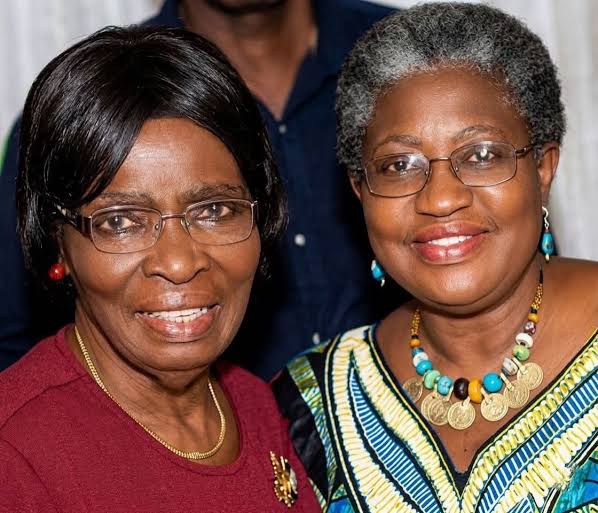
Quote “Professor Kamene Okonjo
Some women leave behind more t
Yet, to remember Professor Kam
Professor Okonjo was the belov
one of the most dramatic chapt
On December 14, 2012, the then
She leaves behind children, gr
Professor Kamene Okonjo deserv
By: Sylvia ThankGod-Amadi

Quote: An African who invokes
This is the concluding part
… Given the fact that I was
At the end of the visit by the
Back to my apartment, at abo
Under normal circumstances, yo
That all she asks is that Chie
For some reason that I do not
I believe that everyone in hu
Our ancestors have not gone fa
By: Jason Osai
The Federal Government’s approval of a N70,000 monthly transport intervention for public service workers for six months, beginning in November 2026, offers hope to employees struggling with the rising cost of living. The agreement with the Nigeria Labour Congress (NLC), reached at a conciliation meeting in Abuja on October 27, is intended to cushion transport costs and ease pressure on workers’ incomes. But for public servants in Rivers State, it raises a familiar question: will the State Government key into the intervention and ensure that its workers benefit? The agreement provides for N70,000 monthly across all levels, for six months. The Federal Government also approved peculiar allowance arrears effective from May 1, 2026, to be paid in three equal instalments beginning in November.
The parties agreed to reconvene after one month to assess implementation. Ultimately, the value of these resolutions will be measured not by announcements but by whether eligible workers receive the money. Transport costs consume a substantial share of many civil servants’ earnings before they can meet household needs. Support for commuting is therefore not a luxury or political favour; it is temporary assistance to help workers remain at their jobs without sinking further into hardship. For lower-paid employees, transport costs can turn modest salaries into a daily exercise in difficult choices and sacrifice.
The agreement also urges State and Local Governments to participate and unions to press for implementation. The federal agreement does not automatically guarantee that every State and Local Government employee will receive the support. State authorities must clarify how it will apply to their workforce, make the necessary arrangements and publish a payment timetable. Rivers State must approach the arrangement with urgency and transparency. The Government should State whether it will implement the intervention and when payments will begin. Any administrative or financial question should be addressed promptly with organised labour, not allowed to become excuses for delay.
The concern is sharpened by the earlier N35,000 monthly wage award introduced by the Federal Government in 2023 after petrol subsidy removal. It was intended as temporary relief pending a new national minimum wage. While several States negotiated and paid wage awards or related sums, implementation nationwide was uneven. Reports in 2024 indicated that many States had failed to pay the federal award, while others provided different amounts. In Rivers, labour and media reports raised concerns about implementation of the N35,000 award for State workers, amid separate announcements and arrangements concerning Local Government employees.
The wage award was meant to ease the immediate effects of subsidy removal, yet workers faced uncertainty over whether the promised relief would reach them. In February 2024, the Rivers State Government announced approval of the N35,000 award for local government workers, but subsequent reports showed that implementation across worker categories remained a concern. The lesson is clear: approval and implementation are not the same. A declaration at a meeting offers little comfort to a worker whose account does not reflect the promised payment. For workers who travel to their offices daily, the implications of delayed support are significant. Transportation expenses compete with food, rent, school fees, healthcare and other essential household needs.
As fares rise, employees may be forced to reduce spending on necessities or borrow to sustain their families. A timely transport intervention would therefore provide practical relief and demonstrate that government understands the economic pressures confronting its workforce. Its temporary nature makes prompt implementation even more important. It is fair to acknowledge that this transport intervention is a new agreement and that its administrative details may require clarification. Rivers State should not be condemned in advance for a failure that has not occurred. Nevertheless, the earlier experience gives workers legitimate grounds to seek assurances before the November commencement date. The State should avoid allowing uncertainty to persist until workers begin asking why the promised assistance has not arrived.
The NLC and unions in Rivers State should engage the State Government immediately and seek a written commitment, an implementation plan and a process for reporting missed payments. If clarification from the Federal Government is needed, the State should seek it without abandoning the goal of providing relief. Labour leaders must also keep members informed about progress and insist that any agreed arrangements are applied fairly and transparently. The Rivers State Government should treat this intervention as an opportunity to rebuild confidence. Timely support would show that workers’ welfare is more than a talking point and that the State recognises the economic realities confronting its employees.
Silence, delay or selective implementation, by contrast, would revive frustration over earlier relief measures and weaken trust between government and labour. Every month lost to administrative delay leaves workers facing the same transport burden without the intended assistance. The State should consult labour, publish arrangements and pay eligible workers on time. Rivers workers should not have to wonder whether federal relief will reach them. The Federal Government has announced the support; now the State must make its position clear. We hope the N70,000 monthly transport intervention will not follow the troubling path of the earlier wage award. Rivers State should learn from that experience and ensure that this time, relief is not merely promised but delivered.
Sylvia ThankGod-Amadi
-
Rivers1 day ago
NUJ Set To Attend UNIPORT’s 217th Inaugural Lecture
-
 News1 day ago
NJC Suspends Three Judges, Sanctions Eight Others
-
Politics1 day ago
Atiku Kicks-Off 2027 Campaign, Promises To Tackle Nigeria’s Challenges
-
 Featured1 day ago
APC Presidential Campaign Storms PH, ‘Morrow
-
News1 day ago
FG Explains Supply Disruption As Power Generation Drops To 3,659MW
-
Metro2 days ago
Port Harcourt Prepares For 10,000 Runners As International Marathon Returns
-
 News1 day ago
Bille Gas Leak: Coalition Tasks FG On Proactive Measures
-

 News1 day ago
IGP Orders Arrest, Prosecution Of Campaign Billboard Vandals