
Oil & Energy
Why Nigeria Should Brace Up For Oil Decline – Minister

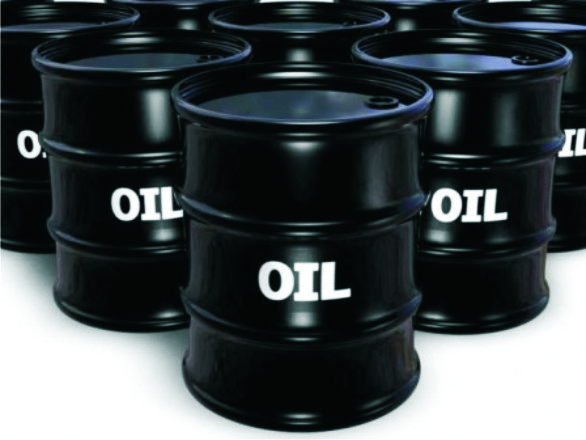
Nigeria is Africa’s largest oil-producing country, and understands it will have little choice but to wean its economy off a reliance on fossil fuels as the world inches onto a low-carbon path, its environment minister said.
Mohammad Mahmood Abubakar said he did not see a long-term future for Nigeria’s oil industry if governments follow through on their promise under the 2015 Paris Agreement to cut planet-warming emissions to net-zero by the second half of the century.
“These days, anything to do with fossil fuel may have its days numbered, or years numbered,” he told The Tide source at this month’s U.N. climate talks in Madrid.
Abubakar said Nigeria should use the royalties and export earnings it receives from oil – which account for about half of its revenues – to invest in alternative sources of energy, in order to “be ready” for a global transition to cleaner energy.
“If the world is truly willing… to quit fossil fuel, then if you are not ready and finally the world comes to terms with that and there are alternatives and no one is buying enough oil from you, at that point you are in trouble,” he said.
The federal government has started to diversify into renewable power generated from solar, wind and waste and is moving its universities onto solar power systems, he added.
It is also making efforts to end gas flaring from oil-industry operations on its soil by 2030, as part of its national climate action plan submitted to the United Nations.
Burning off the gas is a waste of energy and a major source of planet-warming emissions, and Nigeria is procuring technology to capture the gas instead to produce power or heat water, said the minister, a biologist and environmental protection expert.
Nigeria’s climate action plan also pledges to improve its energy grid and expand the use of efficient gas power plants, in an effort to cut widespread use of polluting diesel generators.
Nigeria has an overall target of cutting its emissions by 45% by 2030 from 2010-2014 levels, conditional on receiving international support to achieve that.
Like many other emerging economies, it is seeking funding from wealthy governments to pursue low-carbon development and adapt to climate change impacts such as creeping desertification in the north and rising sea levels affecting its coastal areas.
Abubakar said finance was “very critical” for Nigeria and called for processes to gain access to it, which many countries struggle with, to be “made easy”.
Nigeria faces what the minister called significant “climate disruption”, such as the shrinking of Lake Chad to less than a tenth of its size in 1960, depriving local fishermen and farmers of their livelihoods and forcing them to leave their homes.
The lake’s deterioration was one reason Islamist insurgent group Boko Haram had flourished in the region, he added.
“I am sure their recruiters used that opportunity to prey on young people, and even the old ones, because there are no jobs… they are sitting ducks for extremist organizations,” he said.
Deforestation is another issue Nigeria needs to tackle, he noted, as rural communities continue to use wood as their main fuel for heat and cooking, making climate change impacts worse as rainfall-stabilizing and carbon-absorbing trees disappear.
At the same time, Nigeria faces a huge task to repair the environmental damage caused by oil extraction in the Niger Delta, which has contaminated water supplies and soils as a result of spills.
International oil companies have recognized their role in causing that pollution, and agreed to provide about $1 billion to restore the affected areas, Abubakar said.
He recently visited some of the roughly 20 sites where clean-ups are underway so far and met with the companies and United Nations officials in Geneva to review progress. More effort was still required, he added.
Businesses that exploit fossil fuels, gold, diamonds or other resources in Africa should be held accountable if those activities harm local communities, the minister said.
“Wherever there is oil or mining or whatever it is, let them pay for the clean-up but also for the restoration of livelihoods of the people that are being displaced there,” he added.



By Felicity Bradstock for Oilprice.com 16
The State Commissioner for Works (Rural Roads) and Public Information, Charles Aniagwu, disclosed this at a press conference in Asaba, weekend, noting that the initiative was part of wider reforms aimed at opening up the power sector to private investors.
Aniagwu, who was accompanied by the Executive Assistant to the Governor on New Media, Felix Ofou, said the state was exploring alternative sources of electricity to support businesses, households and communities while reducing pressure on the national grid.
He said the government was particularly interested in exploiting Delta’s abundant natural gas resources for power generation, pointing to the Kwale Free Trade Zone, which is part of the state’s special economic zone, as a major opportunity for investors.
According to him, prospective investors were taken to the zone during the state’s recent economic summit to enable them to assess the availability of gas as a key raw material for electricity generation. ComparePower Rates
The commissioner explained that generating more electricity locally would not only increase supply in Delta but also free up power on the national grid for use by other consumers.
Aniagwu cited the 8.5MW Independent Power Plant located behind the state secretariat in Asaba as an example of what could be achieved through alternative power sources.
He said the facility had enabled the secretariat complex to operate independently of the national grid, thereby making the electricity that would otherwise have been consumed there available to other users.
He added that the planned 120MW partnership with Supply Power would further strengthen the state’s electricity supply capacity and provide a more reliable power base for small and medium-sized enterprises.
Aniagwu said the state government was also intervening in areas traditionally regarded as the responsibility of electricity distribution companies because inadequate power supply could no longer be allowed to constrain economic development. LearnQuantum Physics
He identified the extension of the electricity grid from Abraka towards the Ndokwa axis as one of the interventions being undertaken to connect more communities to electricity.
The commissioner, however, raised concerns over the burden placed on communities that are often required to provide transformers and other electricity infrastructure, only for distribution companies to take over the facilities and subsequently collect electricity bills without adequately accounting for the investments made by the communities.
He said the state would continue to support efforts aimed at energising communities, noting that improved electricity supply would stimulate businesses, create jobs and help tackle social problems associated with unemployment and idleness.
On regulation, Aniagwu said the government was working with the Ministry of Energy and a committee set up to develop an appropriate regulatory framework for the state’s emerging power sector. SwitchEnergy Plans
He said the proposed energy commission would be responsible for regulating new electricity producers, determining appropriate tariffs and overseeing distribution networks.
The commissioner stressed that liberalising the sector required effective regulation to protect consumers and investors, adding that decisions on power distribution infrastructure, including the use of overhead or underground lines, must take into account the peculiarities and safety requirements of each location.
He warned that power expansion without adequate regulation could expose residents to electrocution and other hazards, stressing the need to protect electricity infrastructure while ensuring consumers were not subjected to unfair pricing.
Aniagwu said the state government’s broader objective was to build an efficient and sustainable electricity market driven by private investment and capable of powering businesses, households and communities across Delta State.
-
 Education1 day ago
FCE Yola Graduates 3,555 Teachers , Seeks Upgrade to University
-

 Sports1 day ago
Nigerian Trio Target Titles At PFL Africa Finals
-

 Niger Delta1 day ago
Diri Restates Stance On Lagos-Calabar Coastal Highway
-

 Niger Delta1 day ago
C’River, NUJ Pay Tribute To Late Guardian Editor
-

 News1 day ago
NDLEA Recovers Tons Of Illicit Drug Consignments In Nine States
-

 Opinion1 day ago
Checking Voter Apathy In Nigeria’s Electoral Process
-
 Politics1 day ago
2027: DICKSON’S EX-ALLY VOWS TO WORK AGAINST NDC INTEREST IN BAYELSA
-

 Politics1 day ago
2027: GROUP PLEDGES 40,000 SUPPORTERS FOR COALITION CANDIDATES IN RIVERS