
Politics
100 Days: Wike Declares Projects Ready


The Rivers State Governor, Chief Nyesom Wike, used the first two days of last week to inspect ongoing projects in the state to ascertain their readiness for commissioning as part of activities to mark the first 100 days of his second term administration.
Last Monday, Governor Wike inspected the Mother and Child Hospital, Birabi Road, and the Judges Quarters. He also inspected the Rumuwoji Market, popularity known as Mile One Market, as well as the Port Harcourt Fruit Garden Market.
The State Chief Executive continued his project inspection last Tuesday as he visited the Real Madrid Football Academy and the Craft Development Centre, both in Port Harcourt, the state capital.
The governor who addressed Government House Press at the end of the inspection expressed satisfaction at the quality and speed of work at the project sites. He particularly noted that the quality of work at the Craft Development Centre shows that indigenous contractors also have the capacity to deliver in line with approved specification.
He expressed satisfactions with the operations of the Taskforce on Street Trading, saying: “ With what we have seen, it means they will do well”.
He declared that the state government would employ additional 450 youths to be involved in the operation to clean up Port Harcourt city.
Wike explained that offenders were not prosecuted so far, because his administration is a friendly one but that from this week the era of grace would be over and those caught contravening the state street trading law, will be made to face the law.
The disquiet created last week in the state by the false allegation by the Muslim Rights Concern (MURIC), that Rivers State Government demolished a mosque in the state forced the state governor to visit site of the controversial mosque last Monday.
Wike who confirmed the allegation to be false, said, “ It is most unfortunate that fickle-minded persons will claim that a mosque was demolished at this place, when no mosque existed”, adding that the story was concocted by mischief makers to score cheap political points.
The Brick House landlord, played host to three high profile visitors who were in Government House, Port Harcourt last week. They are; the United Nations Special Rapporteur on Human Rights, Ms Callamard Agnes , the British new Deputy High Commissioner to Nigeria, Ms Gill Atkinson and the National Programme Coordinator, World Bank Better Education Service Delivery for All ( BESDA), Prof Gidado Tahir.
Wike who spoke last Wednesday, while granting audience to the UN Special Rapporteur on Human Rights, called for the establishment of state police in the country.
He said the present security structure makes it difficult for the federal police to respond quickly to security challenges against a state police system that would guarantee swift and a more effective approach to security challenges.
“ We believe that there should be state police for us to effectively fight crime in the country. Our system is fashioned towards the United States, which has federal, state and local police. Each of them have their responsibilities”, he said.
Wike further stated that his administration established the Neighborhood Safety Corps Agency which would have helped the security agencies with information, but that the federal government politicised it by sending the Nigerian Army to ensure that it did not come to fruition.
The UN Special Rapporteur on Human Rights, Ms Callamard Agnes had earlier stated that she was interested in documenting the nature and extent of killings by state and non-state actors.
“ I am interested on how the federal and state governments respond to the challenges of violence by state and non state actors “, she said.
Speaking during a courtesy visit by the World Bank Better Education Service Delivery for All ( BESDA), Thursday in Government House, Governor Wike said his administration temains committed to creating access to basic education for rural and oceanic communities.
He said his administration has embarked on reconstruction and furnishing of 253 basic schools mostly located in the rural areas, trained over 3000 teachers, approved the employment of 10,000 teachers and abolished all forms of fees in both primary and seconfary school levels among other laudable efforts.
Chris Oluoh



Prof. Amupitan gave the warning on Saturday, in Port Harcourt, Rivers State, during the South-South Zonal Readiness Assessment and Interactive Staff Engagement organised ahead of the 2027 general elections.
He said insecurity remained a potential challenge to the electoral process but stressed that the Commission would not allow threats against its personnel to undermine its constitutional responsibilities.
“Insecurity may pose a challenge, but our collective constitutional resolve is far stronger. Let me again send a clear message from Port Harcourt: anyone who attempts to threaten, intimidate, or harm our ad-hoc staff, NYSC members, or permanent personnel will be brought to justice under the full weight of the law,” he said.
The INEC Chairman, who was accompanied by National Commissioners, directors and technical aides, disclosed that the South-South engagement was the fifth in a series of zonal assessments, following similar exercises in the South-West, North-West, South-East and North-East.
He explained that his physical presence across the geopolitical zones reflected the Commission’s field-first approach, emphasising that electoral integrity must be established through effective operations at the grassroots.
According to him, the assessment would cover operational preparedness across the 123 Local Government Areas in the six South-South states.
On election security, Prof. Amupitan said INEC had moved away from reactive security arrangements traditionally activated around election day to a proactive, intelligence-driven framework known as the “ICCES Tentacle”.
He explained that the framework was designed to extend inter-agency security coordination from national and state headquarters to local government areas and Registration Area Centres, including remote communities.
He identified three critical pillars of the framework as mapping and mitigating security threats, protecting electoral personnel and infrastructure, and guaranteeing safe access to polling units.
The INEC boss said the security arrangement would provide comprehensive protection for electoral personnel, technological infrastructure, including Bimodal Voter Accreditation System (BVAS) devices and server infrastructure, as well as voters.
He added that the framework was intended to ensure that every polling unit, irrespective of its geographical location or history of security challenges, remained safe and accessible for the exercise of democratic rights.
Prof. Amupitan disclosed that the South-South security architecture comprised approximately 60 major operational formations, headquarters and state commands operating under the Inter-Agency Consultative Committee on Election Security (ICCES).
The network, he said, brings together military, naval, air, police and other security and intelligence agencies across the six states.
“Together, this integrated multi-agency network represents the operational backbone that guarantees intelligence-led protection across every riverine creek, coastal axis, and land-based polling unit in the Niger Delta,” he stated.
Providing an overview of the region’s electoral significance, the INEC Chairman said the South-South had the fourth-largest voting bloc in the country, with 15,823,550 registered voters, representing 15.30 per cent of the national register.
Rivers State alone, he said, accounts for 3,736,434 registered voters spread across the 23 local government areas.

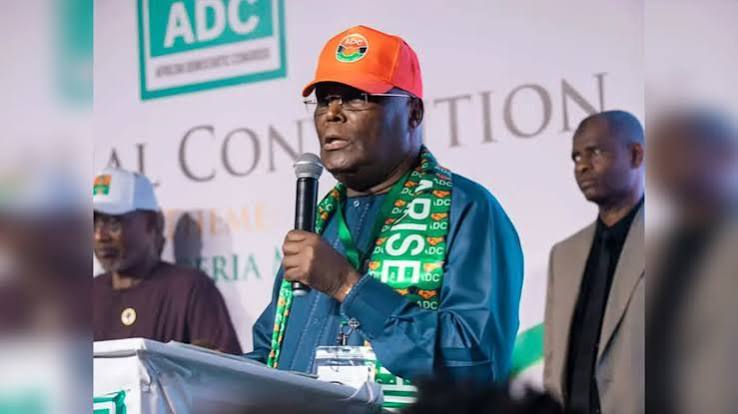
Alhaji Abubakar made the demand following revelations that some INEC registration officers allegedly abused their access to the voter registration system to introduce irregular records into the database.
In a statement issued by his Director of Strategic Communications, Mr Phrank Shaibu, the former vice-president described the development as a serious breach of the Commission’s internal safeguards and raised concerns about the integrity of the electoral process.
He urged INEC to identify the officials implicated in the alleged misconduct and explain what disciplinary or legal measures had been taken against them.
Alhaji Abubakar also called for an independent forensic audit of the preliminary voters’ register to establish the scale of the alleged manipulation, identify affected records and determine how the questionable entries were introduced into the system.
He further insisted that INEC preserve all relevant voter records, image files, system access logs and electronic audit trails to prevent the destruction or alteration of evidence before an independent examination could be conducted.
The former vice-president also demanded that the Commission disclose the identities of companies contracted to produce sensitive election materials ahead of the 2027 polls, arguing that transparency was essential to building public confidence in the electoral process.
INEC’s Director of Information and Communication Technology, Dr Lawrence Bayode, had earlier disclosed during a television interview that some registration officers across the country allegedly used their official login credentials to introduce irregularities into the voters’ database.
Dr Bayode explained that the Commission’s Automated Biometric Identification System helped identify questionable records and establish how some irregularities entered the system.
He, however, clarified that not all suspicious photographs were AI-generated, as some resulted from poor registration procedures.
The development followed public concerns over suspected AI-generated photographs, alleged duplicate entries and other inconsistencies discovered in the preliminary voters’ register published online on October 26, 2026.
INEC has maintained that the published document is a preliminary register and that it is reviewing questionable records ahead of the certification of the final Register of Voters.
The controversy has intensified calls for greater transparency and accountability in the management of the voters’ register as preparations gather momentum for the 2027 general elections.
-
Opinion3 days ago
Ancestorial Worship: My Take (1)
-

 News3 days ago
FG Must Address Nigerians’ Concerns On Reforms -Shettima …Warns Against Misuse of AI, Social Media
-

 Featured3 days ago
Tinubu Jets To S’Arabia For Lesser Hajj …Unveils Free Healthcare For Pensioners
-
News3 hours ago
Customs Partners EFCC, NDLEA, Others To Tackle Money Laundering, Terrorism Financing
-
Niger Delta3 days ago
Police Rescue Woman, 24, From Online Dating Kidnappers … Arrest Five Suspects
-
 Featured3 days ago
2027: Be Politically Neutral, Fubara Tasks Traditional Rulers
-
News3 days ago
FG Approves King Amachree Airport In Rivers, Sets Conditions For Construction
-
News3 days ago
Lawmaker Sets Sights On Assembly Return …As Mammoth Crowd Grace Flag Handover Rally