
Opinion
Improving Day Care Centres

Every mother needs extra hands especially when it comes to childcare. If and when this time comes, special care needs to be given to the quality of helpers. Today’s mothers, especially the working class ones, are left with the choice of whether or not the helpers are needed. For working mothers, day care is a must, a place where their young infants are catered for by paid caretakers while they are at work. For this group of women, proper day care system takes a lot of pressure off an already pressured lifestyle. Combining family with work has to be balanced. This is what day care does for the working mother. She has to be a master planner to succeed if she wants to keep her home intact.
Day care system is also a good platform for formal education. Children exposed to day care are taught early, they are fast learners and can absorb quickly. Proper day care system also prevents accidents from occurring as kids left on their own in the house are exposed to self and external dangers.
However, the persistent negative stories surrounding day-care system, especially in Nigeria, have made many to wonder if day-care is a necessary evil. Every now and then one hears stories both in the developed societies and Africa of how these innocents are exposed to various abuses ranging from psychological, emotional, physical and others. Several video clips had gone viral on social media of extreme torture of these infants by those under whose care they were kept.
Just three months ago we heard the story of how a six months old baby, Mitchele Onoja, was allegedly killed by caregivers in a day care at Lokogoma, Abuja.
According to the story, the baby who was hale and hearty when his mother dropped her at the day care in the morning, died a few hours later in strange circumstances. An autopsy conducted at a federal medical center indicated that she died as a result of asphyxiation.
Who could have deprived a harmless child of oxygen in a place she was brought for safety and care? The answer is still being awaited as the police is said to be carrying out an investigation into the matter.
It is usually very worrisome hearing how infants are exposed to self medication by careers who in a bid to keep them “quiet” administer tranquilizers and sleeping syrups unknown to their parents and the authorities involved. The constant drug abuse could eventually lead to serious health problems in the children.
These innocent lads in day care centers are sometimes exposed to psychological dangers which come in the form of violent or ill language from the careers. They are shouted at and sometimes verbally abused. These in turn results in low self esteem from a very tender age.
Again, some of these kids are left for long hours in the care of strangers and this often makes them feel abandoned, unloved and unwanted. The emotional scar often follows those kids to adulthood.
In some developed countries, there are reports of kids being sexually and physically abused by ex-child offenders who had not been properly checked by the authorities before engaging them as careers.
Many of such victims later come forward to relate how careers have subjected them to all forms of abuse many years back unknown to their parents. These victims tell of how they have lived in that shadow of abuse that can only heal when those criminals are prosecuted. In Nigeria, such stories are not always heard as it is rather seen as shameful, so the victims carry such abuse as guilt.
But one disturbing issue that cannot be hidden about some day care centers in Nigeria is the poor, unhealthy environment in which they operate. Some so-called day care centers can easily pass for prison cells as the poor lads are confined in poorly ventilated, unkempt rooms. This, of course, leads to diseases and sicknesses.
Also, there are allegations that children kept in some day care centers are not fully given the needed nourishment, as they are left in the hands of people who really don’t care what these kids are given to eat. There is a detached attitude as they are only doing their jobs for money. Hence, kids are subjected to very poor diet which eventually results in ill health.
As it is typical of Nigerians, many people see day care system as a lucrative venture and want to dabble into it with or without any professional knowledge thereby exposing the kids to a lot of problems. That is why one has to appreciate the effort of Anambra State government towards reducing quacks in the operation of day care, centers.
During the administration of the immediate past governor, Peter Obi, his wife, Mrs Margret Obi, in a one-day workshop for all day care centers in the state, disclosed the government’s readiness to close all unregistered day care centers in the state.
She said issues concerning children in the society should be handled with utmost care and diligence, noting that the era of abuse of the children in daycare centers was over in the state. She spoke of the need to document the staff and environment of every day care centre to avoid a situation where such centers were left in the hands of non-professionals.
If only other state governments should take a similar bold step to improve child care services in Nigeria. Employees of day care centers should be thoroughly screened. There should be regular check on these centers by government agencies, while labour should advocate nursery bay system to aid and encourage nursing mothers. Besides, longer maternity leave period for working mothers, especially those in the private sector, should be introduced.
Most importantly, owners of day care centers should be encouraged to install closed Circuit Television System (CCTV), as a watching lenses to monitor the internal activities of the centers.
All necessary steps must be taken towards improved child care services which are critical to children development.
Calista Ezeaku




Quote: “The Flamingos have conquered the world; Nigeria must now rise to its responsibility of nurturing the next generation of champions.”
Sometimes, sporting victories
More significantly, they
Umejiaku deserves special
Umejiaku received the award
Nigeria has now broken into
For too long, young girls in
But beyond the reward, this
As Nigerians celebrate this
By; Calista Ezeaku
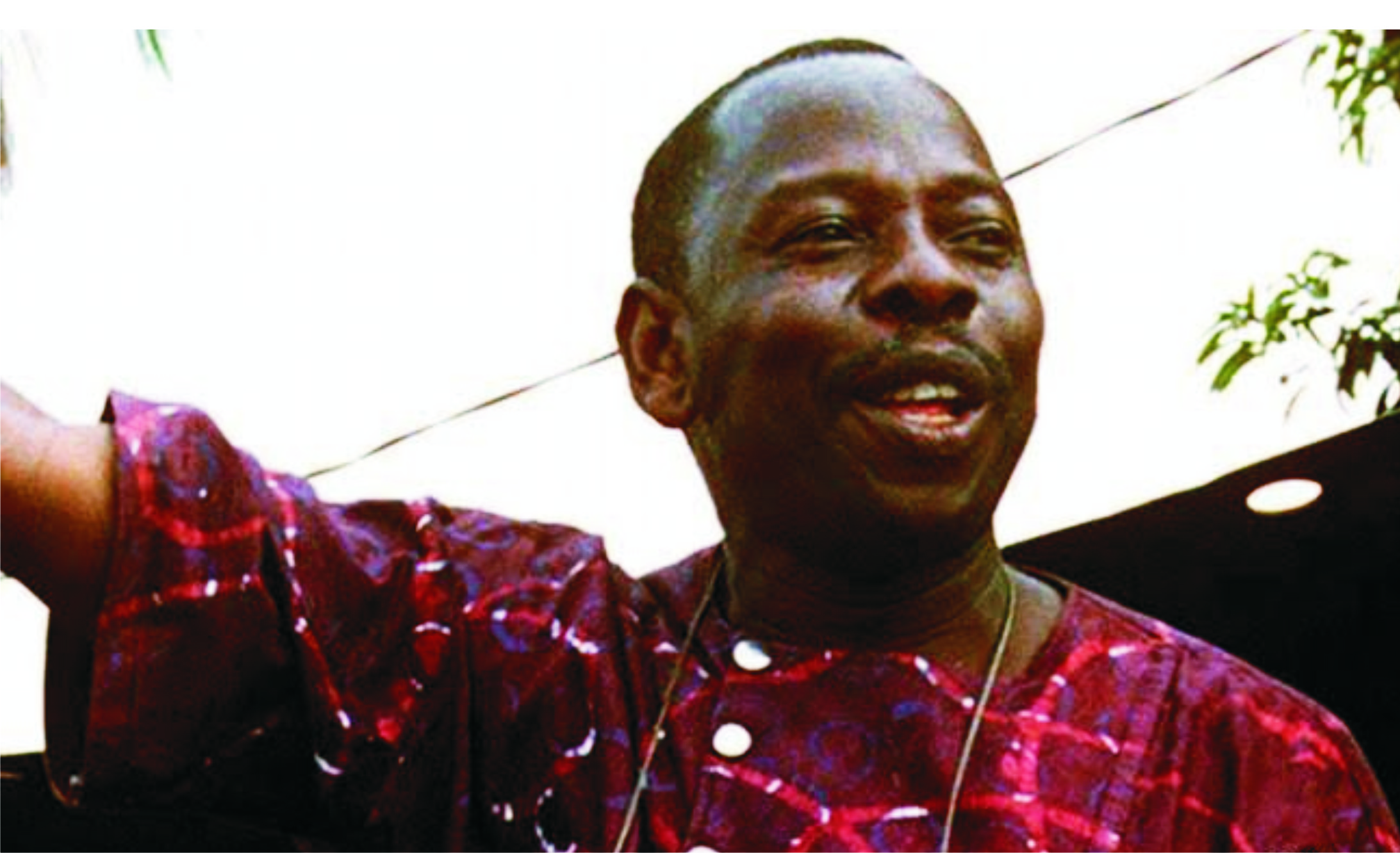
On November 10, 1995, the Nigerian military government of General Sani Abacha executed Ken Saro-Wiwa and eight other Ogoni leaders after a deeply controversial trial. Their deaths marked one of the darkest chapters in Nigeria’s history. At a time when fear silenced citizens and sycophancy flourished around military power, Saro-Wiwa chose to confront tyranny. Many Nigerians retreated into silence, while others praised the regime to secure favour. He knew the risks, yet refused to abandon a people whose land had been devastated by oil exploration and whose lives remained trapped in poverty. His courage arose from the conviction that public responsibility sometimes demands resistance to authority. Saro-Wiwa understood that speaking against a military government could lead to imprisonment or death.
Nonetheless, he believed the suffering of the Ogoni people demanded a courageous response. While oil was extracted from their land, they were left with polluted rivers, damaged farmland, declining livelihoods and an environment hostile to human survival. Fishing grounds and sources of livelihood were threatened, while the people struggled to secure basic amenities. The wealth beneath their soil brought neither adequate development nor a fair share of national resources. For him, silence in the face of injustice would have amounted to complicity. Through the Movement for the Survival of the Ogoni People (MOSOP), he organised a peaceful campaign that took the Ogoni question to the international community. MOSOP gave ordinary people an organised platform through which to express their grievances and insist on recognition.
The Ogoni Bill of Rights, presented to the Federal Government in 1990, demanded political autonomy, economic justice, environmental protection and control over the people’s resources. The campaign exposed the human and ecological costs of oil operations, particularly those associated with Shell, and challenged the apparent alliance between corporate interests and an unresponsive State. The Ogoni struggle became a defining expression of minority rights and environmental justice in Nigeria and Africa. Saro-Wiwa’s writings and mobilisation drew attention to communities treated as expendable because of their limited population and political influence. He argued that numerical strength should never determine a people’s value or rights.
A minority community does not become less deserving of justice because it cannot command electoral numbers or political power. In Nigeria, every ethnic group deserves dignity, protection and a fair opportunity to benefit from the commonwealth. Rather than respond to peaceful agitation with dialogue, the Abacha regime resorted to repression. Ogoni leaders were harassed, detained and killed; others fled into exile. The crisis intensified after four Ogoni chiefs were killed in May 1994. Saro-Wiwa and other MOSOP leaders were arrested, tried by a special tribunal and executed despite international appeals for clemency and serious concerns about the trial’s fairness. The executions drew worldwide condemnation and intensified scrutiny of Nigeria’s human-rights record and oil companies in the Niger Delta.
They demonstrated the danger of using State institutions to suppress peaceful demands. The proceedings remain a reminder of the need for judicial independence and due process. Saro-Wiwa’s courage rested on the conviction that justice must be pursued despite the cost. His method combined non-violent resistance, public education and grassroots organisation. His struggle recalled the civil-rights campaign of Martin Luther King Jr. and the power of peaceful mobilisation against injustice. Saro-Wiwa linked environmental degradation to political exclusion, economic exploitation and the denial of democratic rights. Oil-producing communities, he insisted, should not remain zones from which wealth is removed to develop other parts of the country.
Their people must benefit through roads, schools, healthcare, jobs and clean water. Resource extraction carries a duty to protect host communities. His argument extended to the structure of the Nigerian federation. He challenged a revenue-allocation system that made oil-producing communities bear the environmental and social costs of extraction without commensurate benefits. Like advocates of fiscal federalism, he believed resources should be managed and shared equitably. He envisaged a society in which no community would be disadvantaged by its size, ethnicity, political affiliation, culture or religion. His vision was a country bound together by justice and equal citizenship. Saro-Wiwa was also a gifted writer, dramatist and public intellectual.
Through books, essays, plays and television, he documented Nigerian society’s contradictions and challenged abuses of power. His popular television series, Basi and Company, demonstrated his creative range, while his leadership of the Association of Nigerian Authors encouraged writers to engage national questions. He believed literature should not be detached from society’s struggles. His pen exposed environmental injustice, political repression and the dangers of silencing courageous voices. He used storytelling, satire and drama to shape public consciousness and expose social contradictions. His literary achievements gave his activism wider reach and made the Ogoni experience part of national conversation. His commitment to the Ogoni people extended beyond the oil question.
During the Civil War, he worked to protect his vulnerable community. He urged younger generations to reject subservience and complacency and pursue change through lawful, peaceful means. Citizens, he believed, must not surrender their responsibility to challenge wrong doing. An injury to one community threatens the rights and security of all. The return to democratic government in 1999 and the establishment of the Niger Delta Development Commission, the Ministry of Niger Delta Affairs and the Hydrocarbon Pollution Remediation Project (HYPREP) are among developments that have kept the region’s demands in public view. Saro-Wiwa did not create these institutions, but his movement helped expose the urgency of intervention and sustain pressure for redress.
His death made it harder to ignore the Niger Delta’s environmental and political grievances. Yet, interventionist institutions do not prove that the original demands have been met. Their effectiveness depends on competent leadership, transparent spending, measurable outcomes and community participation. Yet, thirty-one years after his execution, the central concerns of the Ogoni struggle remain unresolved. The HYPREP-led clean-up has offered hope, but many residents await meaningful improvements. Questions persist about the programme’s pace, quality and transparency, and whether its benefits reach ordinary people. A clean-up should be judged not by ceremonies or contracts, but by restored land and waterways, safe drinking water, improved livelihoods and better public health.
It must include long-term monitoring to ensure treated sites remain safe. Residents deserve information about contamination, remediation methods and completion timelines. Reports that water projects in Gwara and Ebubu Communities, in Khana and Eleme Local Government Areas respectively, failed weeks after commissioning have raised further concerns. If confirmed, the failures would indicate weaknesses in supervision, procurement and quality control.
To be continued in our next edition.
Taneh Beemene
-
Business2 days ago
BSG Partiner American Coy To Invest $100m In Gas Processing
-

 Oil & Energy2 days ago
FG To Double Oil, Gas Reserves, Moves To Intensified fresh Exploration
-
Business2 days ago
Seme Customs Intercepts Live Pacific Ridley Sea Turtle
-

 Politics5 days ago
2027: INEC Begins Deployment Of Non-Sensitive Materials
-

 News5 days ago
FG Spends N10tn On Power Since Privatisation
-
News5 days ago
Fubara: Why We Engage Only Qualified Engineers, Indigenous Contractors On Projects …As Governor Bags NATE Platinum Award, Inducted Into Highest Membership Cadre
-

 Niger Delta5 days ago
Onuchuku Urges More Funding For Vocational, Technical Education …Calls For Collective Responsibility Among Stakeholders
-

 Featured5 days ago
Rivers Capable Of Delivering Massive Votes For Tinubu, Chinda, Others -Fubara …Charges APC, Rainbow Coalition To Embrace Team Work