
Opinion
Trivialising The Mass Media

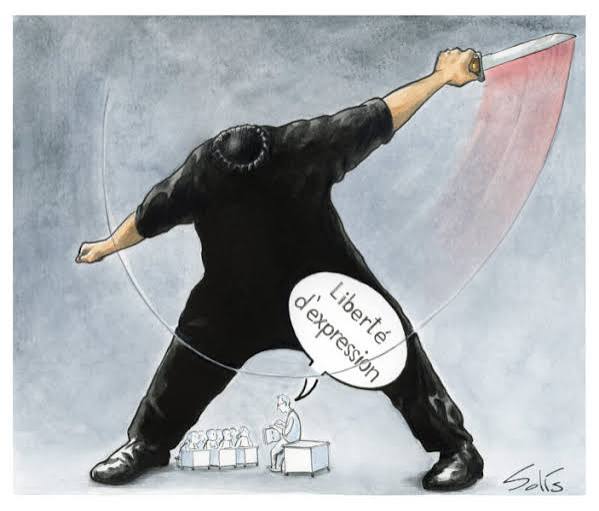
In an era of anomie, triviality and frivolity are usually some of the distinctive features of public life. It is usually through the mass media that prevailing social trends can be most easily observed. As institutions meant to promote democratic culture and public enlightenment, the mass media try to fulfill their social roles by encouraging audience participation through appropriate programmes. Such public participatory programmes include provisions for expression of personal opinions in the print media and phone-in responses to national issues in the electronic media. Nation-building demands collective participation.
Conditions in such public participatory programmes include the observance of some decorum in speech or writing, giving of names and addresses, avoidance of “hate speech” or making libelous statements, etc. Despite such appeals from programme presenters there are numerous callers on the electronic media who speak in such unguarded and frivolous manner that listeners often wonder if such callers mean well. Some become quite obtuse and mean.
The impression which anyone can get from the statements and manners of expression of personal opinions by some callers on radio programmes, is that such callers are sponsored by some interest groups. The fact that some definite persons feature regularly on phone-in radio programmes also gives the impression that some vested interests are at work. It would be unfortunate if the mass media, under the principle of freedom of speech, would be dragged into political partisanship.
Every mass media professional would be aware of the fact that there are mischief makers in every society who can use the mass media to carry out their pranks. Ranging from advertisements and other commercial programmes, to politically sponsored information on the grapevine, mischief makers would stop at nothing to ply their trade. Happily, editors and programme presenters are usually quick to detect materials and statements which can put a media house in bad light if accepted. Therefore, personal discretion is a part of the caution necessary in the mass media industry.
The mass media industry should play more vital roles than dissemination of information or news, articulation of public opinions, provision of materials for history and conscientisation or education of the masses. As the watch-dog of public conscience, instruments of social justice and check on political abuses, the mass media also have such integrity that should not be under-mined by frivolous persons and their sponsors. Like the judiciary which is commonly regarded as the hope of the common man, the mass media are strong instruments of maintaining sanity in the society.
Situations in the country currently demand that individuals and institutions should be cautious in order to avoid making conditions worse than they are already. Those who feel embittered for whatever reasons should not use the mass media as means of expressing their bitterness without due regards for public interest and stability. A major purpose of media participatory programmes is to raise consciousness of the masses regarding social, economic, political and other issues and problems facing the nation generally.
It would be unfair if such public interactive and enlightenment programmes would degenerate into an opportunity for frivolous engagements. If participants in such programmes cannot articulate their ideas and comments effectively, precisely and with decorum, then such participants should be advised to discontinue. A culture of frivolity should not be encouraged, neither should the noble roles of the mass media be trivialized and brought into disrepute. Those who would want to talk endlessly and with little or nothing to offer to listeners should not participate in interactive programmes. Prattlers should stay away.
For the possible sponsors of mischief–motivated participants in mass media programmes, there is a need to caution that security agencies can be on the trail of those who place public interest in jeopardy. Those who do not have anything serious to say, or who cannot articulate their message in a concise and brief manner, should stay away from public participatory programmes. Would it be undemocratic to ban those who trivialize the mass media from participation in their programmes?
Dr. Amirize is a retired lecturer, Rivers State University, Port Harcourt.



Quote: “Ogoniland does not
The latest attack by Chief
Instead, the gathering and
The proposal for a unified
The question should be: who
It is easy to criticise
The people are looking beyond
onest people can reach
Society must therefore
Quote: “Privilege should
There is an old saying that
While motivations cannot
A person who benefits from a
This is why citizens should
We must not assume that
By: Michael Abraham
Quote:”Although the Federal
The recent outburst by the
The senator also alleged
They connect ports, airports,
To address these challenges,
Rwanda and Morocco, for
FERMA should also prioritize
Many Nigerians have asked
-

 News2 days ago
RSG Targets Nine Million Residents in Mosquito Net Distribution Campaign
-

 Oil & Energy2 days ago
Aiyedatiwa Signs New Electricity Bill
-

 Maritime2 days ago
Marine Minister Commends President Tinubu On NPERA Bill Assent
-

 Oil & Energy2 days ago
NLNG Commissions Research And Innovation Centre In RSU
-

 News2 days ago
KenPoly Holds Eight Convocations, August 29
-

 News2 days ago
RSG Begins Another Phase of Projects Commissioning Today
-

 News2 days ago
RMAFC Completes Revenue Sharing Review, Proposes New Pay
-

 Maritime2 days ago
NAGAFF Petitions IGP Over Alleged Maritime Police Harassment